


嫦娥七号低能离子与低能电子探头设计与地面定标
doi: 10.11728/cjss2026.02.2025-0095 cstr: 32142.14.cjss.2025-0095
-
 苏斌 男, 1992年出生, 博士, 现为中国科学院国家空间科学中心副研究员, 主要从事空间等离子体探测载荷研制与数据应用研究. E-mail: subin@nssc.ac.cn
作者简介:
Design and Ground Calibration of the Low-energy Ion Analyzer and Low-energy Electron Analyzer onboard the Chang’E-7 Mission
-
摘要: 低能离子和低能电子探头作为嫦娥七号探测器着陆器月表环境探测系统的组成单机, 主要用于开展月表低能带电粒子就位探测, 为揭示太阳风与月表的相互作用与耦合机制, 研究月表空间环境微观结构的形成机理提供关键背景数据, 并为月球科研站的空间环境评估及保障提供科学支撑. 低能粒子和低能电子探头采用相同的传感器设计方案, 利用半球形静电分析器与非对称式静电偏转板实现对月表低能带电粒子的大视场和宽能量范围探测, 利用可变几何因子功能实现大通量动态范围. 采用地面标准等离子体束源对两台探头的性能进行详细定标. 定标结果显示, 低能离子低能电子探头可实现0.001~30 keV能量范围的等离子体探测, 能量分辨率优于15%, 通量探测范围可覆盖7个数量级, 探测视场为90°×360°, 角度分辨率优于15°×22.5°, 所有技术指标均满足任务要求.Abstract: The Low-Energy Ion Analyzer (LEIA) and Low-Energy Electron Analyzer (LEEA), integral components of the Chang’E-7 lander’s lunar surface environment detection system, conduct in-situ measurements of low-energy charged particles (0.001~30 keV) to elucidate solar wind-regolith interaction mechanisms, investigate microstructure evolution in the lunar near-surface plasma environment, and support space-environment assessment for future lunar research stations. Employing identical hemispherical electrostatic analyzers with asymmetric electrostatic deflectors, both analyzers achieve wide-field detection (90°×360° FOV), broad energy coverage, and voltage-controlled variable geometric factors. Ground calibration using standard plasma beam sources confirmed compliance with mission requirements: energy resolution <15% (ΔE/E), dynamic flux range spanning seven orders of magnitude, and angular resolution <15°×22.5°, collectively enabling comprehensive characterization of lunar surface plasma phenomena.
-
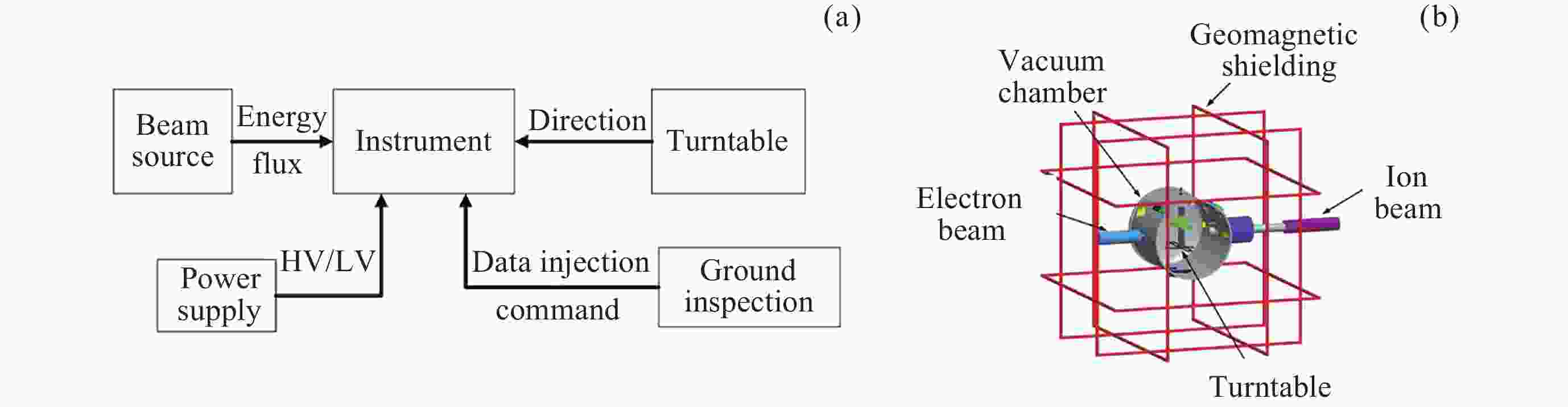
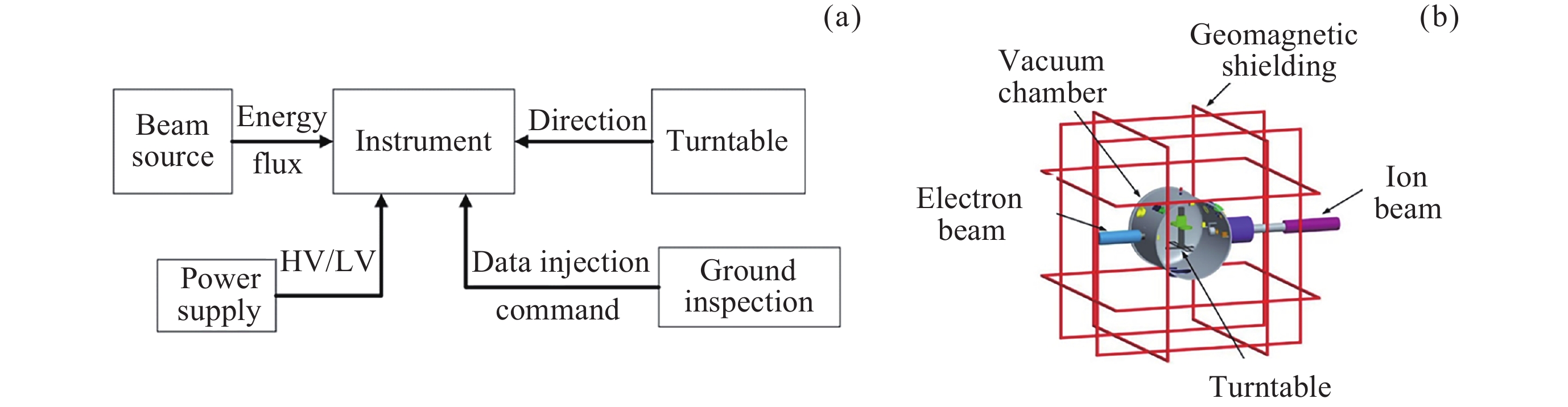
图 4 定标组织框架 (a) 与系统组成(b)
Figure 4. Flowchart for the calibration operation (a) and components of the calibration system (b)
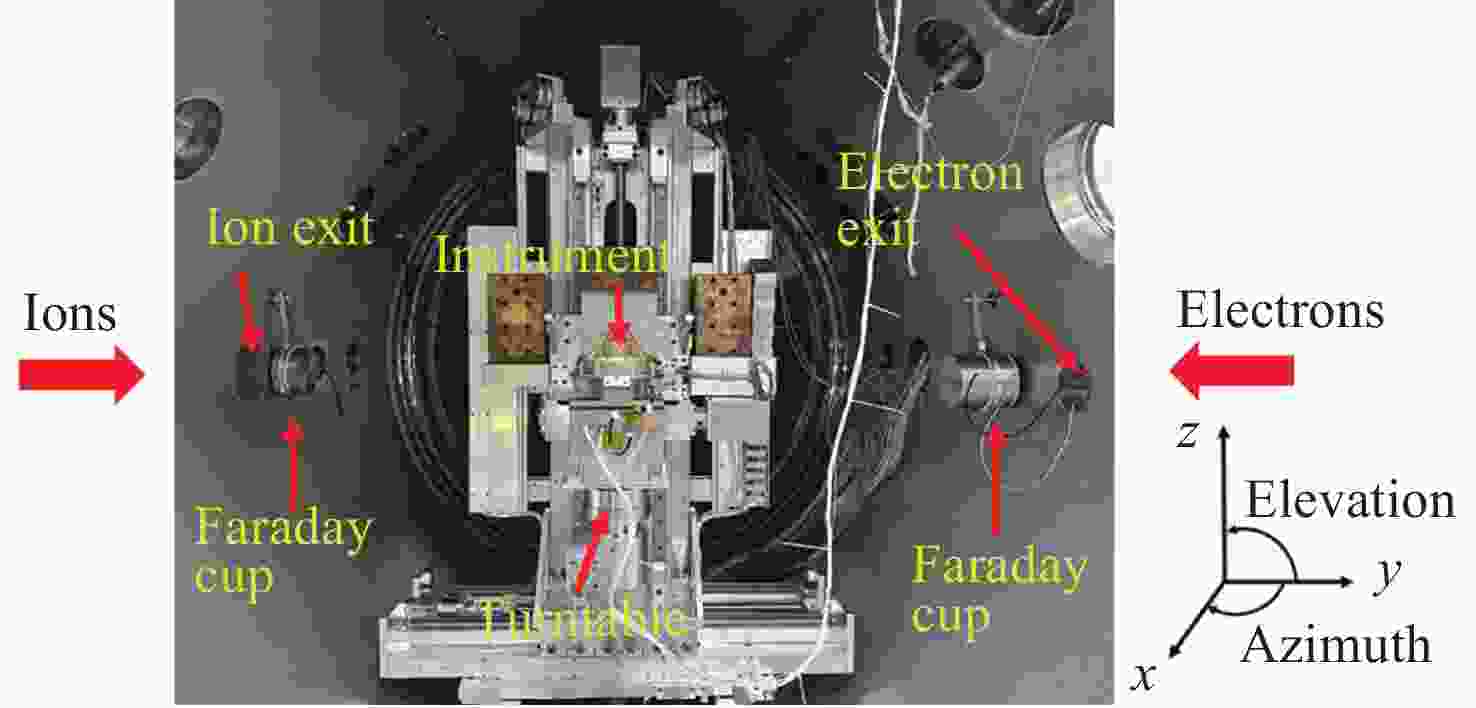
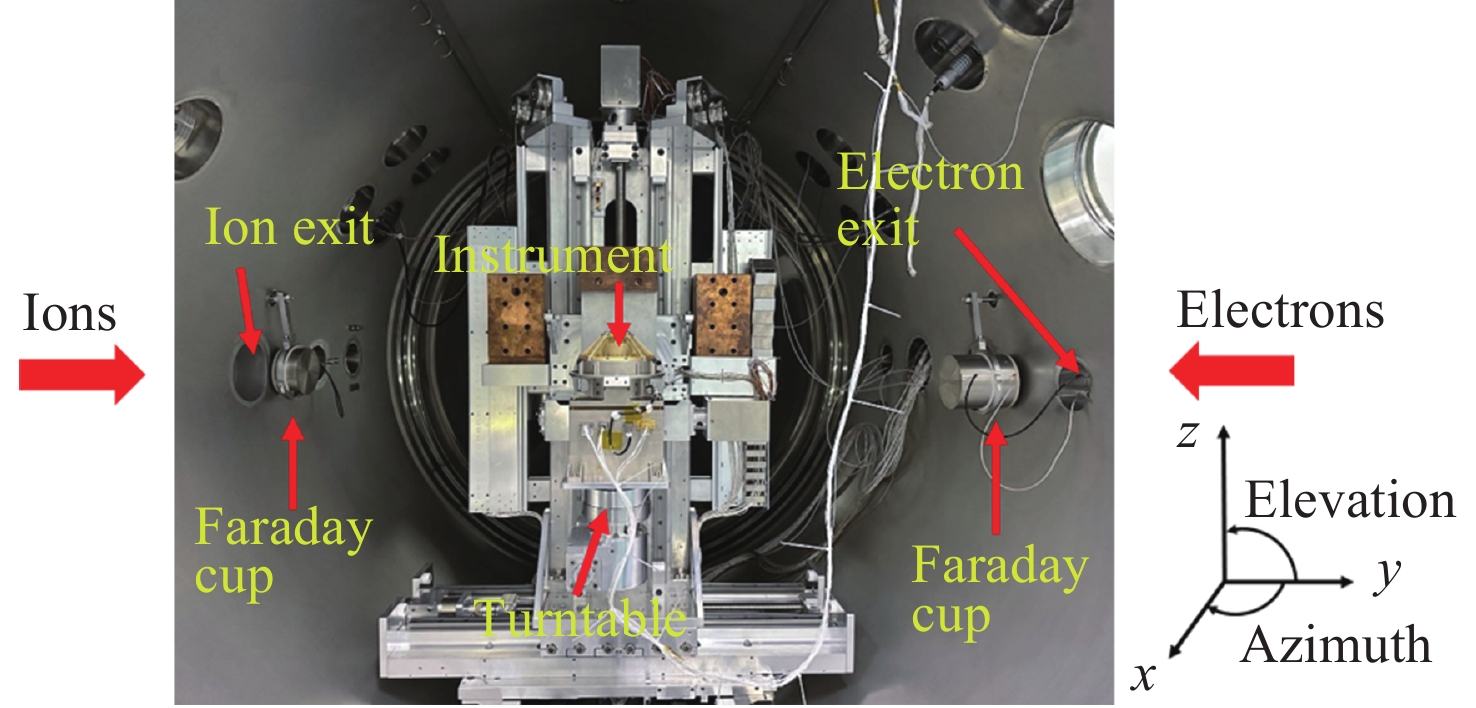
图 5 低能离子探头在定标系统内部的位置及系统内部组成
Figure 5. Position of low-energy ion probe in calibration system and internal composition of the system
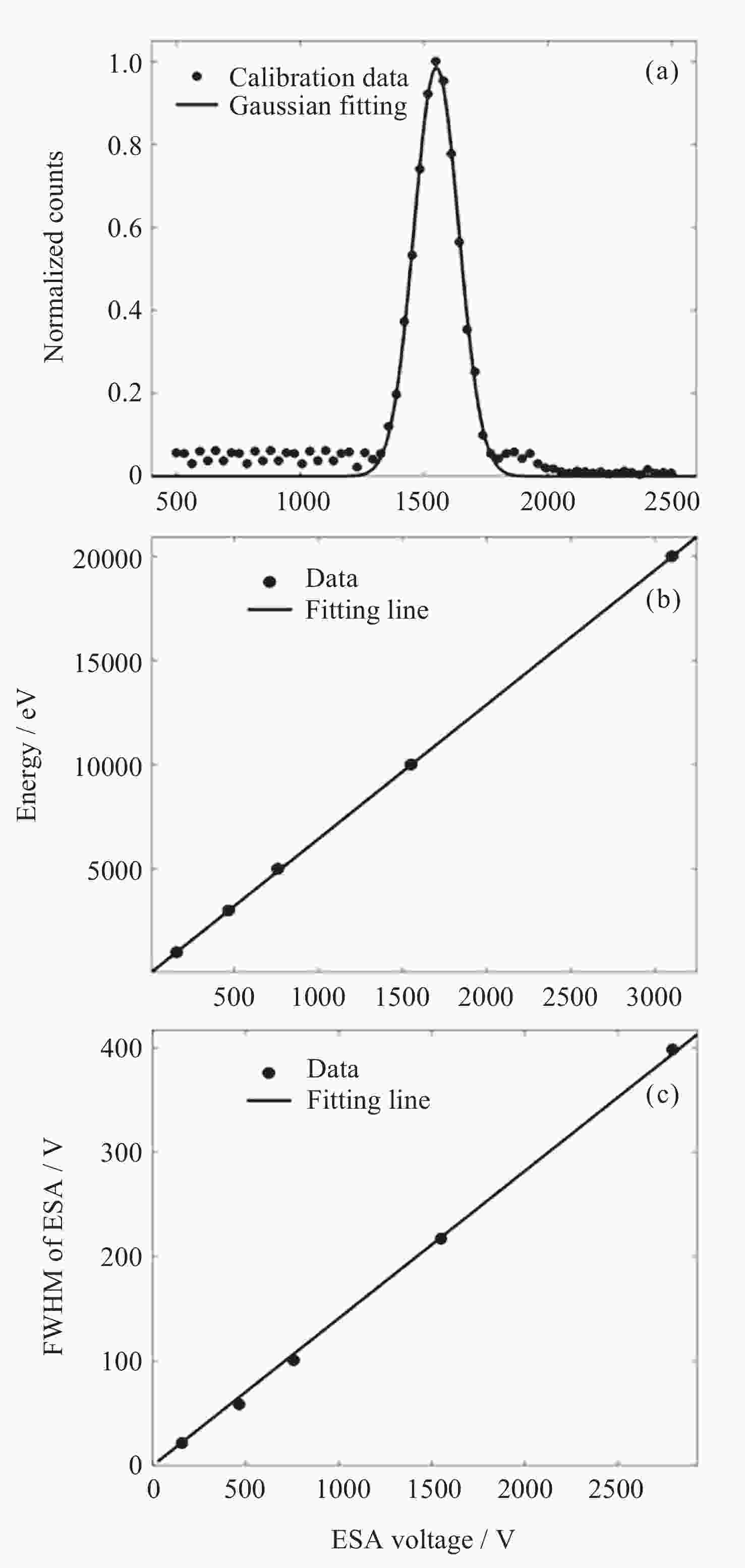
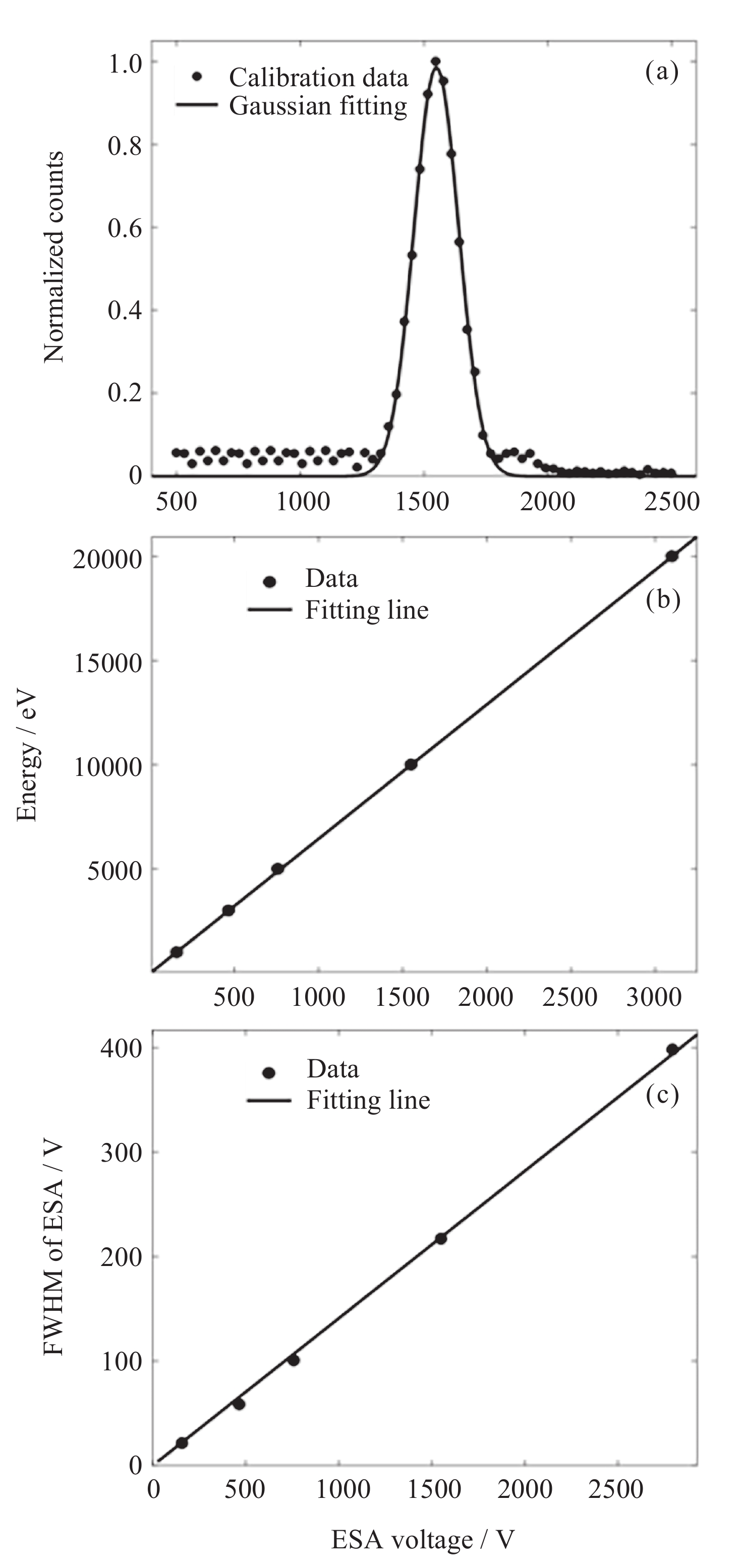
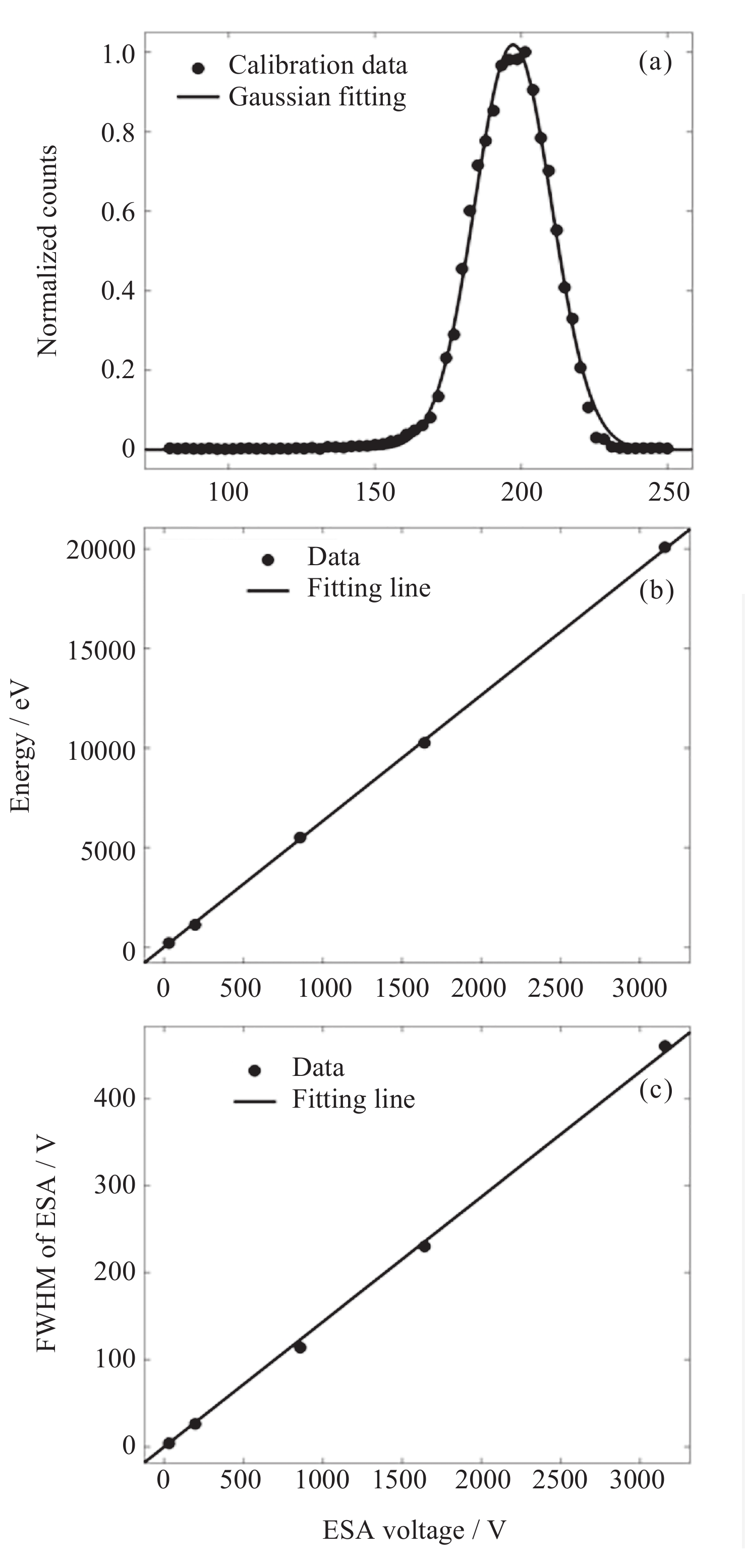
图 6 10 keV离子能谱(a)与离子静电分析器常数拟合(b)及离子能量分辨率拟合(c)曲线
Figure 6. Ion energy spectrum at 10 keV (a), ion analyzer constant fitting line (b), and ion energy resolution fitting line (c)
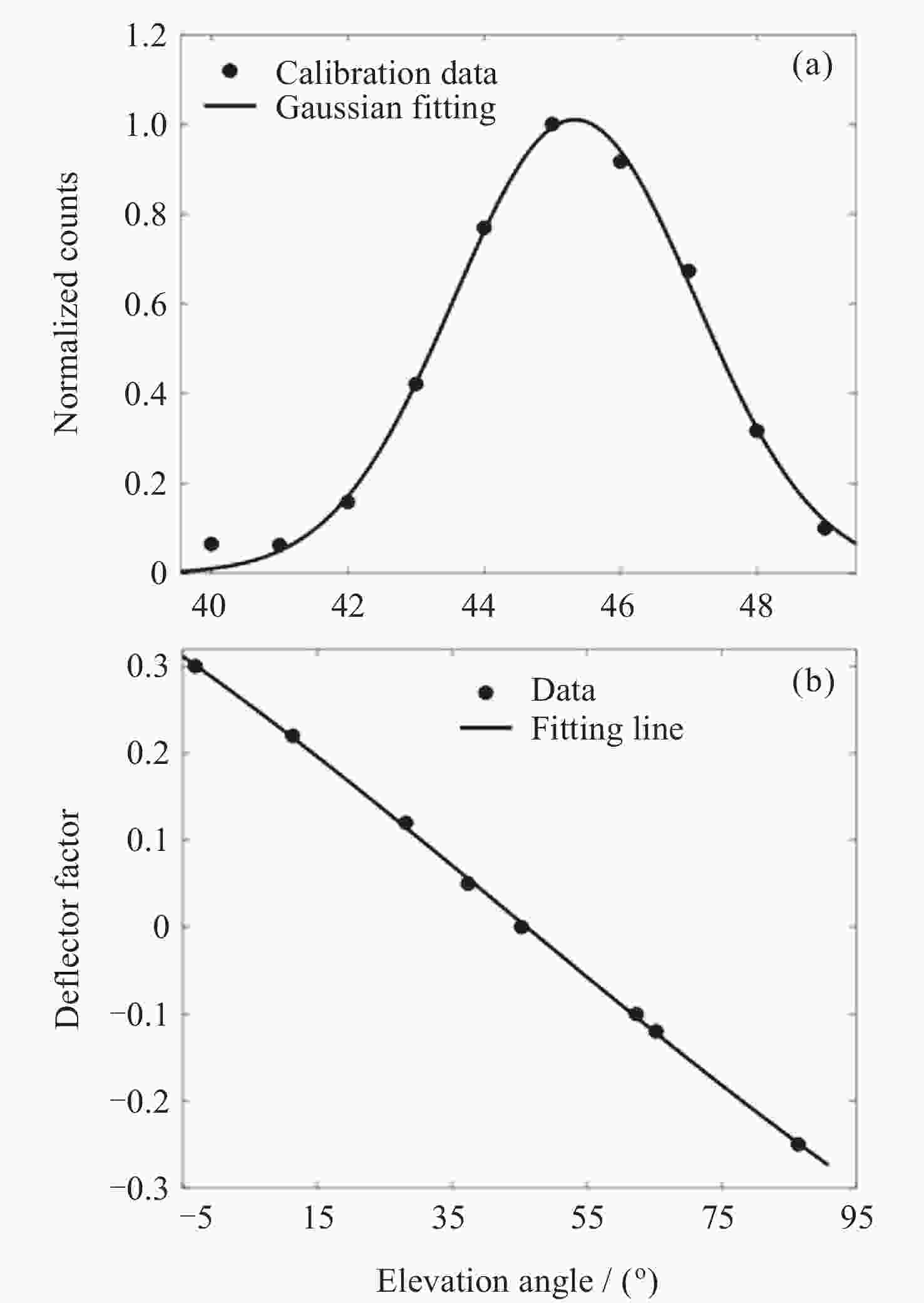
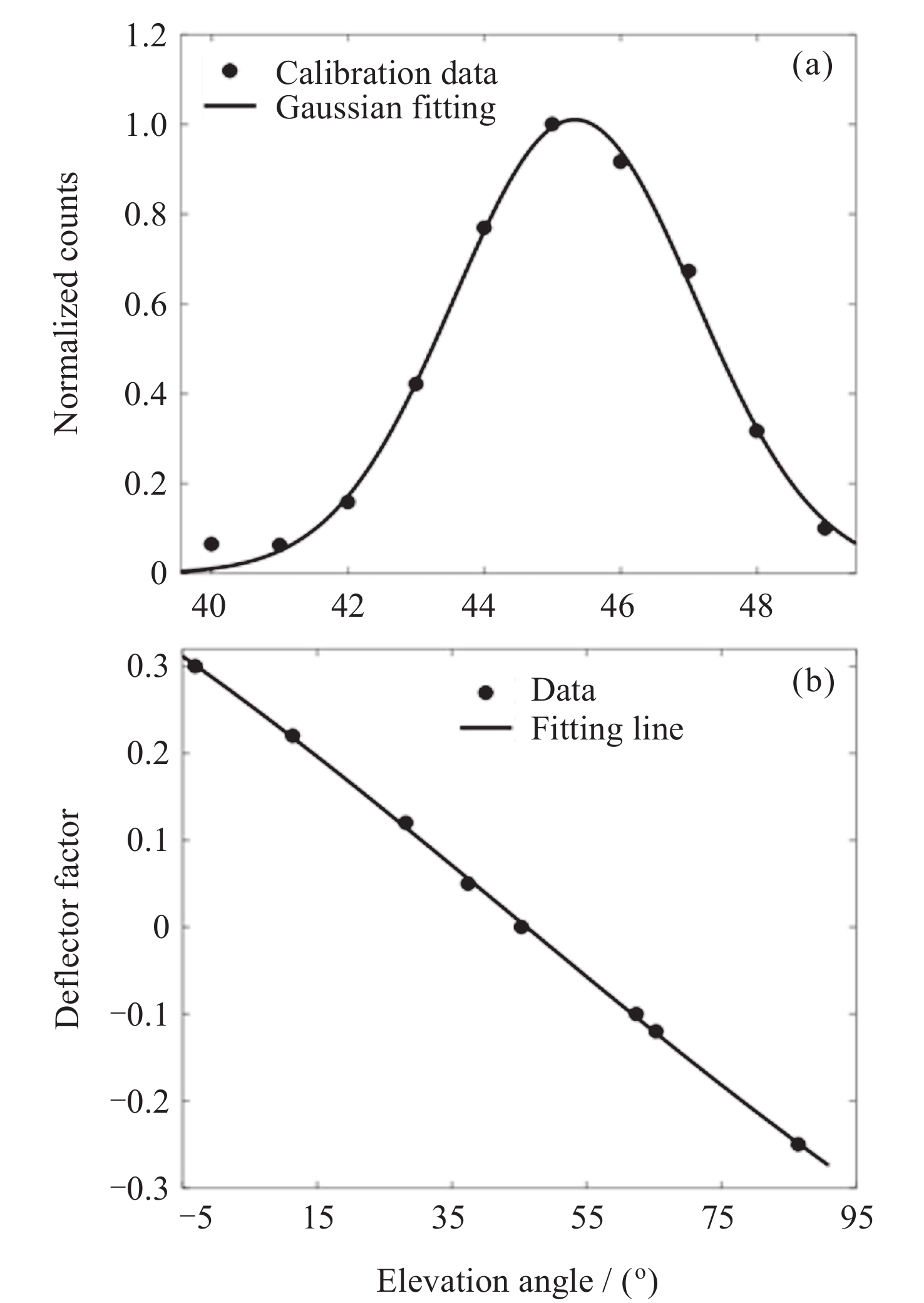
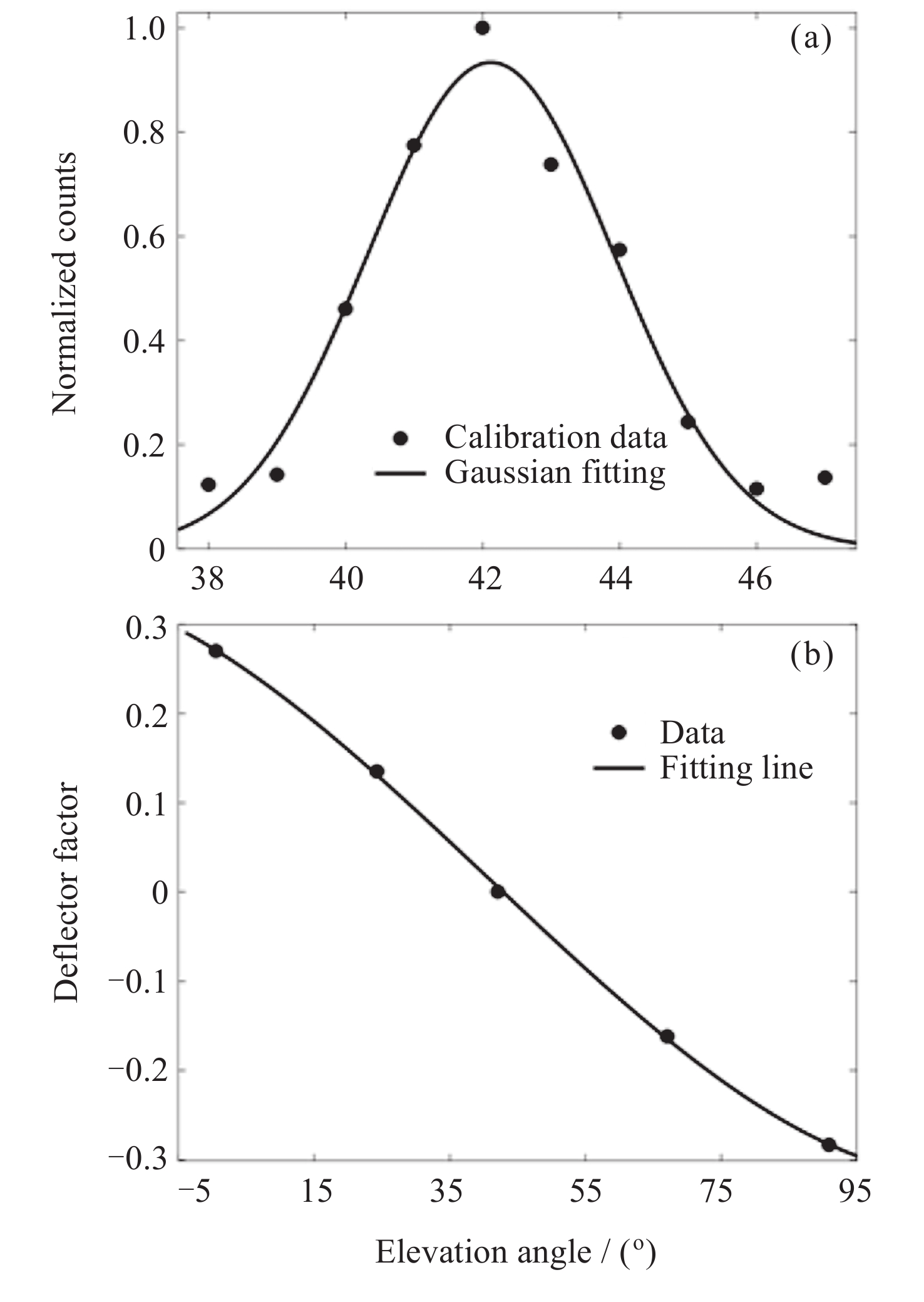
图 8 偏转板0 V时3 keV离子俯仰角响应 (a)及离子偏转电极常数与俯仰角关系曲线 (b)
Figure 8. Ion elevation angle spectrum at 3 keV when both deflectors are grounded (a), and relationship of ion deflector factor and elevation angle (b)
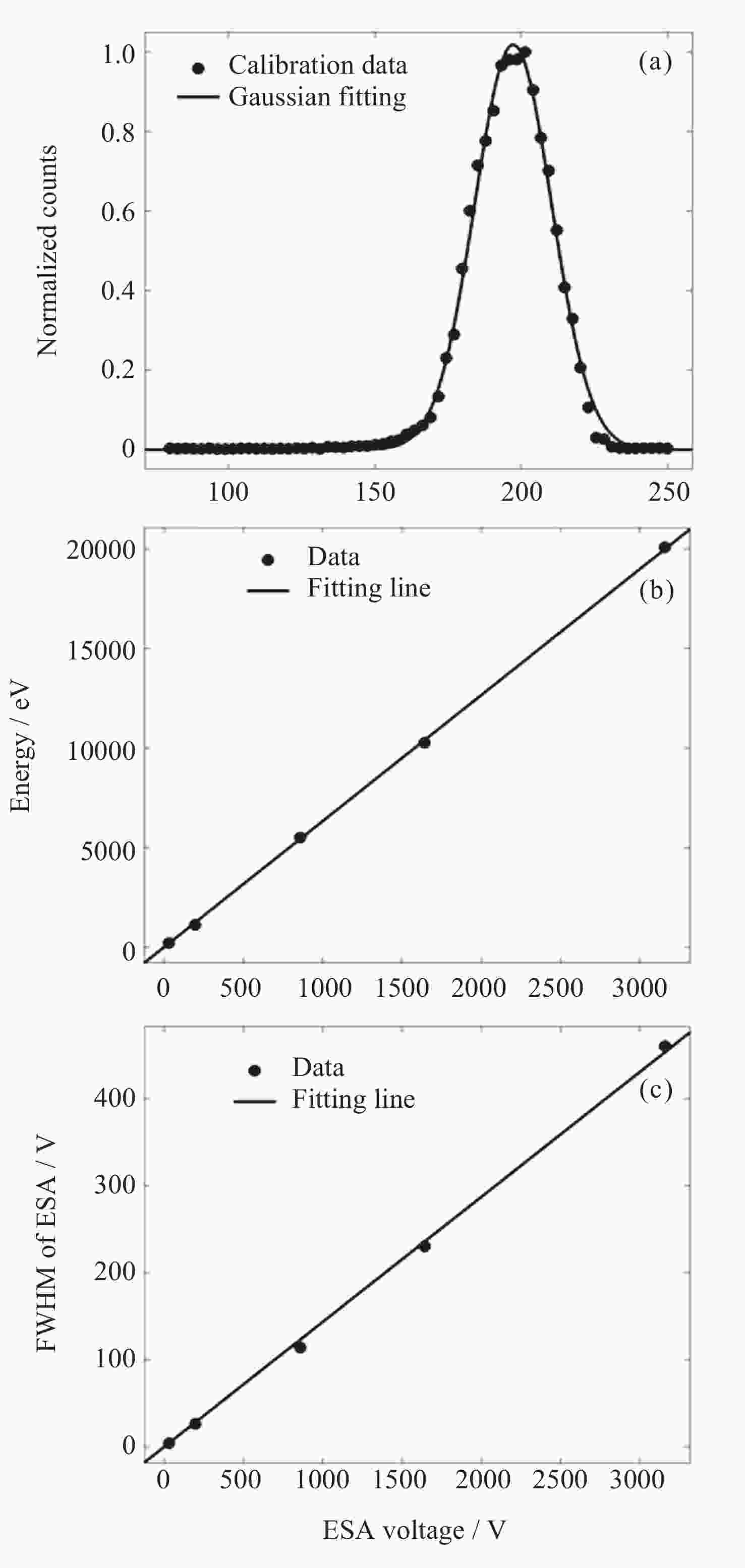
图 10 1.1 keV电子能谱(a)与电子静电分析器常数拟合曲线(b)及电子能量分辨率拟合曲线(c)
Figure 10. Electron energy spectrum at 1.1 keV (a), electron analyzer constant fitting line (b), and electron energy resolution fitting line (c)
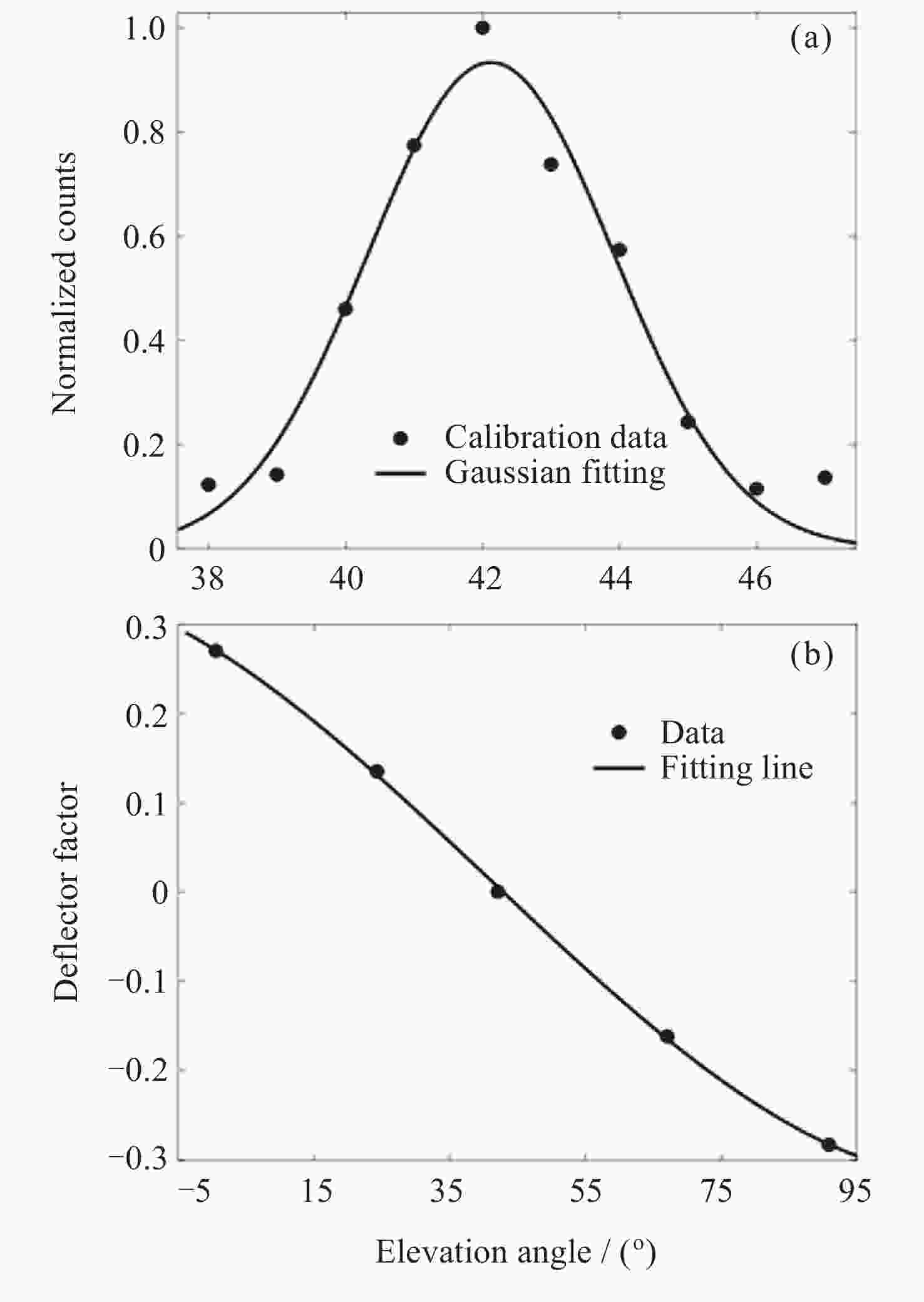
图 12 偏转板为0 V时1 keV电子俯仰角响应 (a) 及电子偏转电极常数与俯仰角关系曲线 (b)
Figure 12. Elevation angle spectrum at 1 keV when both deflectors are grounded (a), and relationship of electron deflector factor and elevation angle (b)
表 1 低能离子与低能电子探头技术指标要求
Table 1. Technical parameter requirements of LEIA and LEEA
指标名称 指标要求 低能粒子能量范围 电子: 0.001~30 keV
离子 (含质子): 0.001~30 keV低能粒子探头视场 360° (方位角)×90° (俯仰角) @0.001~30 keV 低能粒子通量动态范围 107 @0.001~30 keV 低能粒子角分辨率 方位角分辨率: ≤22.5°
俯仰角分辨率: ≤15.0°低能粒子能量分辨率 ≤15% @10 keV  下载: 导出CSV
表 2 低能离子与低能电子探头定标试验项目
Table 2. Calibration items of LEIA and LEEA
探头 定标试验项目 低能离子探头 静电分析器常数和能量分辨率 方位角视场范围和角度分辨率 俯仰角视场范围和角度分辨率 通量动态范围 低能电子探头 静电分析器常数和能量分辨率 方位角视场范围和角度分辨率 俯仰角视场范围和角度分辨率 通量动态范围定标
下载: 导出CSV
表 3 低能离子与低能电子探头所有定标项目定标结果与指标要求的对比
Table 3. Comparison between calibration results of all calibration items and index requirements for LEIA and LEEA
指标名称 指标要求 定标结果 低能粒子能量范围 电子: 0.001~30 keV
离子 (含质子): 0.001~30 keV电子: 0.63~31650 eV
离子 (含质子): 0.65~32250 eV低能粒子探头视场 360° (方位角)×90° (俯仰角)
@0.001~30 keV电子: 360° (方位角)×90° (俯仰角) @0.63~31650 eV
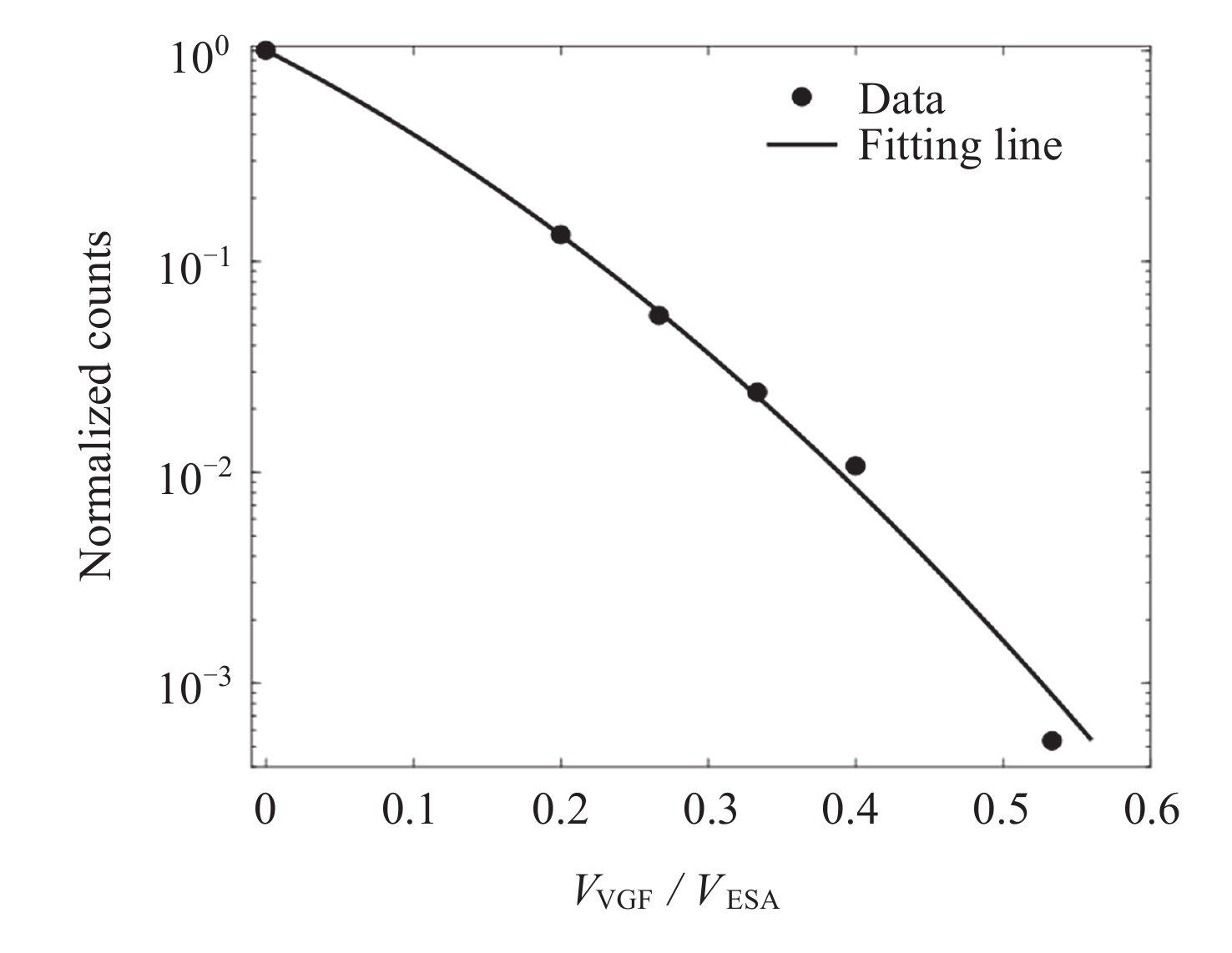
离子: 360° (方位角)×90° (俯仰角) @0.65~32250 eV低能粒子通量动态范围 107@0.001~30 keV 电子: 2.78×10⁷ @0.63~31650 eV
离子: 3.94×10⁷ @0.65~32250 eV低能粒子角分辨率 方位角分辨率: ≤22.5°
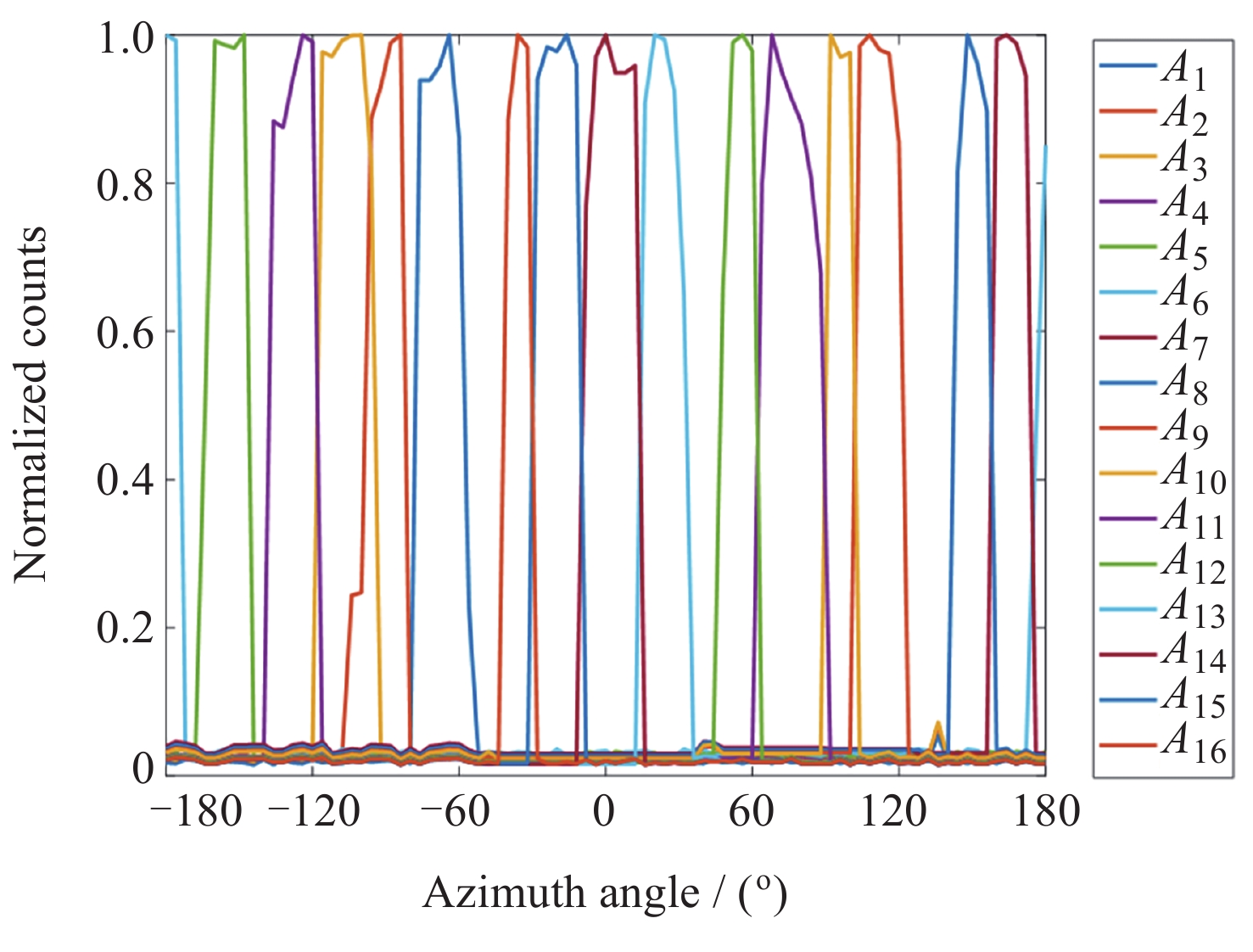
俯仰角分辨率: ≤15.0°方位角分辨率: ≤22.5°
俯仰角分辨率: 电子≤5.92°, 离子≤5.23°低能粒子能量分辨率 ≤15% @10 keV 电子: 14.36% @1~30000 eV
离子: 14.11% @ 1~30000 eV
下载: 导出CSV
-
[1] 罗冰显, 张贤国, 孙天然, 等. 月球空间天气探测与研究进展[J]. 深空探测学报(中英文), 2024, 11(2): 159-168 doi: 10.15982/j.issn.2096-9287.2024.20220086LUO Bingxian, ZHANG Xianguo, SUN Tianran, et al. Progress in lunar space weather detection and research[J]. Journal of Deep Space Exploration, 2024, 11(2): 159-168 doi: 10.15982/j.issn.2096-9287.2024.20220086 [2] 史全岐, 宗秋刚, 乐超, 等. 月球表面及空间环境对太阳风与地球风的响应[J]. 中国科学基金, 2022, 36(6): 871-879SHI Quanqi, ZONG Qiugang, YUE Chao, et al. Response of the lunar space environment to solar wind and Earth wind[J]. Bulletin of National Natural Science Foundation of China, 2022, 36(6): 871-879 [3] GRIGOROV N L, MADUYEV V L, MANDELSHTAM S L, et al. Study of the Soft Corpuscular Radiation on the AMS “Luna-10”[R]. Washington: NASA, 1966 [4] LIN R P, MITCHELL D L, CURTIS D W, et al. Lunar surface magnetic fields and their interaction with the solar wind: results from lunar prospector[J]. Science, 1998, 281(5382): 1480-1484 doi: 10.1126/science.281.5382.1480 [5] BAUM J J, HARMAN R W, MARONDE R G, et al. Design of the particles experiment subsystem of the Apollo Lunar Subsatellite[J]. IEEE Transactions on Nuclear Science, 1972, 19(1): 632-639 doi: 10.1109/tns.1972.4326569 [6] BÜHLER F, EBERHARDT P, GEISS J, et al. Apollo 11 solar wind composition experiment: first results[J]. Science, 1969, 166(3912): 1502-1503 doi: 10.1126/science.166.3912.1502 [7] BHARDWAJ A, WIESER M, DHANYA M B, et al. The SUB-keV Atom Reflecting Analyzer (SARA) experiment aboard chandrayaan-1 mission: instrument and observations[J]. Advanced Science, 2010, 19: 151 doi: 10.1142/9789812838162_0012 [8] SAITO Y, YOKOTA S, ASAMURA K, et al. Low-energy charged particle measurement by MAP-PACE onboard SELENE[J]. Earth, Planets and Space, 2008, 60(4): 375-385 doi: 10.1186/BF03352802 [9] KONG L G, WANG S J, WANG X Y, et al. In-flight performance and preliminary observational results of Solar Wind Ion Detectors (SWIDs) on Chang’E-1[J]. Planetary and Space Science, 2012, 62(1): 23-30 doi: 10.1016/j.pss.2011.12.001 [10] WIESER M, BARABASH S, WANG X D, et al. The Advanced Small Analyzer for Neutrals (ASAN) on the Chang’E-4 rover Yutu-2[J]. Space Science Reviews, 2020, 216(4): 73 doi: 10.1007/s11214-020-00691-w [11] CANU-BLOT R, WIESER M, KÉRÉNYI M, et al. The Negative Ions at the Lunar Surface (NILS) instrument on the Chang’E-6 mission[J]. Space Science Reviews, 2025, 221(3): 38 doi: 10.1007/s11214-025-01162-w [12] HALEKAS J S, POPPE A, DELORY G T, et al. Solar wind electron interaction with the dayside lunar surface and crustal magnetic fields: evidence for precursor effects[J]. Earth, Planets and Space, 2012, 64(2): 73-82 doi: 10.5047/eps.2011.03.008 [13] POPPE A R, HALEKAS J S, LUE C, et al. ARTEMIS observations of the solar wind proton scattering function from lunar crustal magnetic anomalies[J]. Journal of Geophysi-cal Research: Planets, 2017, 122(4): 771-783 doi: 10.1002/2017JE005313 [14] SAITO Y, NISHINO M N, FUJIMOTO M, et al. Simultaneous observation of the electron acceleration and ion deceleration over lunar magnetic anomalies[J]. Earth, Planets and Space, 2012, 64(2): 83-92 doi: 10.5047/eps.2011.07.011 [15] LUE C, FUTAANA Y, BARABASH S, et al. Strong influence of lunar crustal fields on the solar wind flow[J]. Geophysical Research Letters, 2011, 38(3): L03202 doi: 10.1029/2010gl046215 [16] 王赤, 李磊, 张爱兵, 等. 月表太阳风和粒子辐射环境—“嫦娥四号”观测新结果[J]. 深空探测学报(中英文), 2022, 9(3): 239-249 doi: 10.15982/j.issn.2096-9287.2022.20220020WANG Chi, LI Lei, ZHANG Aibing, et al. The solar wind and particle radiation environment on the surface of the Moon—new observations from Chang’E-4[J]. Journal of Deep Space Exploration, 2022, 9(3): 239-249 doi: 10.15982/j.issn.2096-9287.2022.20220020 [17] 谢良海, 张爱兵, 李磊, 等. 嫦娥四号能量中性原子观测揭示太阳风与月面相互作用新特征[J]. 2022, 42(1): 11-24XIE Lianghai, ZHANG Aibing, LI Lei, et al. Chang’E-4 energetic neutral atom observation reveals new features about the solar wind-moon interaction[J]. Chinese Journal of Space Science, 2022, 42(1): 11-24 [18] 吴伟仁, 于登云, 王赤, 等. 月球极区探测的主要科学与技术问题研究[J]. 深空探测学报(中英文), 2020, 7(3): 223-231, 240 doi: 10.15982/j.issn.2095-7777.2020.20200113001WU Weiren, YU Dengyun, WANG Chi, et al. Research on the main scientific and technological issues on lunar polar exploration[J]. Journal of Deep Space Exploration, 2020, 7(3): 223-231, 240 doi: 10.15982/j.issn.2095-7777.2020.20200113001 [19] HALEKAS J S, SAITO Y, DELORY G T, et al. New views of the lunar plasma environment[J]. Planetary and Space Science, 2011, 59(14): 1681-1694 doi: 10.1016/j.pss.2010.08.011 [20] 余后满, 饶炜, 张益源, 等. “嫦娥七号”探测器任务综述[J]. 深空探测学报(中英文), 2023, 10(6): 567-576 doi: 10.15982/j.issn.2096-9287.2023.20230119YU Houman, RAO Wei, ZHANG Yiyuan, et al. Mission analysis and spacecraft design of Chang’E-7[J]. Journal of Deep Space Exploration, 2023, 10(6): 567-576 doi: 10.15982/j.issn.2096-9287.2023.20230119 [21] WANG C, JIA Y Z, XUE C B, et al. Scientific objectives and payload configuration of the Chang’E-7 mission[J]. National Science Review, 2023, 11(2): nwad329 [22] KONG L G, ZHANG A B, TIAN Z, et al. Mars Ion and Neutral Particle Analyzer (MINPA) for Chinese Mars exploration mission (Tianwen-1): design and ground calibration[J]. Earth and Planetary Physics, 2020, 4(4): 333-344 [23] 苏斌, 张爱兵, 孔令高, 等. 天问二号探测器带电粒子与中性粒子分析仪[J]. 中国科学: 物理学 力学 天文学, 2025, 55(7): 279511SU Bin, ZHANG Aibing, KONG Linggao, et al. Charged and neutral particle analyzer for Tianwen-2 mission[J]. Scientia Sinica Physica, Mechanica & Astronomica, 2025, 55(7): 279511 [24] HALEKAS J S, TAYLOR E R, DALTON G, et al. The solar wind ion analyzer for MAVEN[J]. Space Science Reviews, 2015, 195(1): 125-151 doi: 10.1007/s11214-013-0029-z [25] MCFADDEN J P, KORTMANN O, CURTIS D, et al. MAVEN Suprathermal and Thermal Ion Compostion (STATIC) instrument[J]. Space Science Reviews, 2015, 195(1): 199-256 doi: 10.1007/s11214-015-0175-6 [26] 苏斌, 孔令高, 张爱兵. SMILE卫星低能离子分析仪的设计与仿真[J]. 宇航学报, 2018, 39(3): 347-354SU Bin, KONG Linggao, ZHANG Aibing. Design and simulation of light ion analyzer for SMILE satellite[J]. Journal of Astronautics, 2018, 39(3): 347-354 [27] 苏斌, 孔令高, 张爱兵. 一种2π视场高分辨热等离子体分析仪设计与仿真[J]. 宇航学报, 2019, 40(5): 604-610SU Bin, KONG Linggao, ZHANG Aibing. Design and simulation of a hot plasma analyzer with a 2π field-of-view and high resolution[J]. Journal of Astronautics, 2019, 40(5): 604-610 [28] COLLINSON G A, KATARIA D O. On variable geometric factor systems for top-hat electrostatic space plasma analyzers[J]. Measurement Science and Technology, 2010, 21(10): 105903 doi: 10.1088/0957-0233/21/10/105903 [29] 孔令高, 张爱兵, 王世金, 等. 萤火一号火星探测器离子分析器设计和仿真技术[J]. 上海航天, 2013, 30(4): 164-168 doi: 10.3969/j.issn.1006-1630.2013.04.033KONG Linggao, ZHANG Aibing, WANG Shijin, et al. Design and simulation of ion analyzer onboard YH-1 Mars probe[J]. Aerospace Shanghai, 2013, 30(4): 164-168 doi: 10.3969/j.issn.1006-1630.2013.04.033 [30] 张爱兵, 孔令高, 王世金, 等. 萤火一号火星探测器电子分析器设计和试验[J]. 上海航天, 2013, 30(4): 187-191ZHANG Aibing, KONG Linggao, WANG Shijin, et al. Design and test of electron analyzer onboard YH-1 Mars probe[J]. Aerospace Shanghai, 2013, 30(4): 187-191 [31] SU B, CHEN A Q, LIU M H, et al. Ground calibration and in-flight performance of the low energy particle analyzer on FY-4B[J]. Atmosphere 2023, 14(12): 1834 [32] 孔令高, 张爱兵, 田峥, 等. 自主火星探测高集成离子与中性粒子分析仪[J]. 深空探测学报, 2019, 6(2): 142-149 doi: 10.15982/j.issn.2095-7777.2019.02.005KONG Linggao, ZHANG Aibing, TIAN Zheng, et al. Integrated ion and neutral particle analyzer for Chinese Mars mission[J]. Journal of Deep Space Exploration, 2019, 6(2): 142-149 doi: 10.15982/j.issn.2095-7777.2019.02.005 -
-

 下载:
下载:

计量
- 文章访问数: 1475
- HTML全文浏览量: 726
- PDF下载量: 86
-
被引次数:
0(来源:Crossref)
0(来源:其他)

