


嫦娥七号月表尘埃探头地面定标方法与试验
doi: 10.11728/cjss2026.02.2025-0116 cstr: 32142.14.cjss.2025-0116
-
 李存惠 男, 1984年9月出生于甘肃省白银市, 现为兰州空间技术物理研究所研究员, 主要研究方向为空间环境类探测载荷的研制以及空间就位探测科学数据分析等. E-mail: licunhui@lipcast.cn
通讯作者:
Ground Calibration Method and Experiments of Lunar Surface Dust Sensor in Chang’E-7 Mission
-
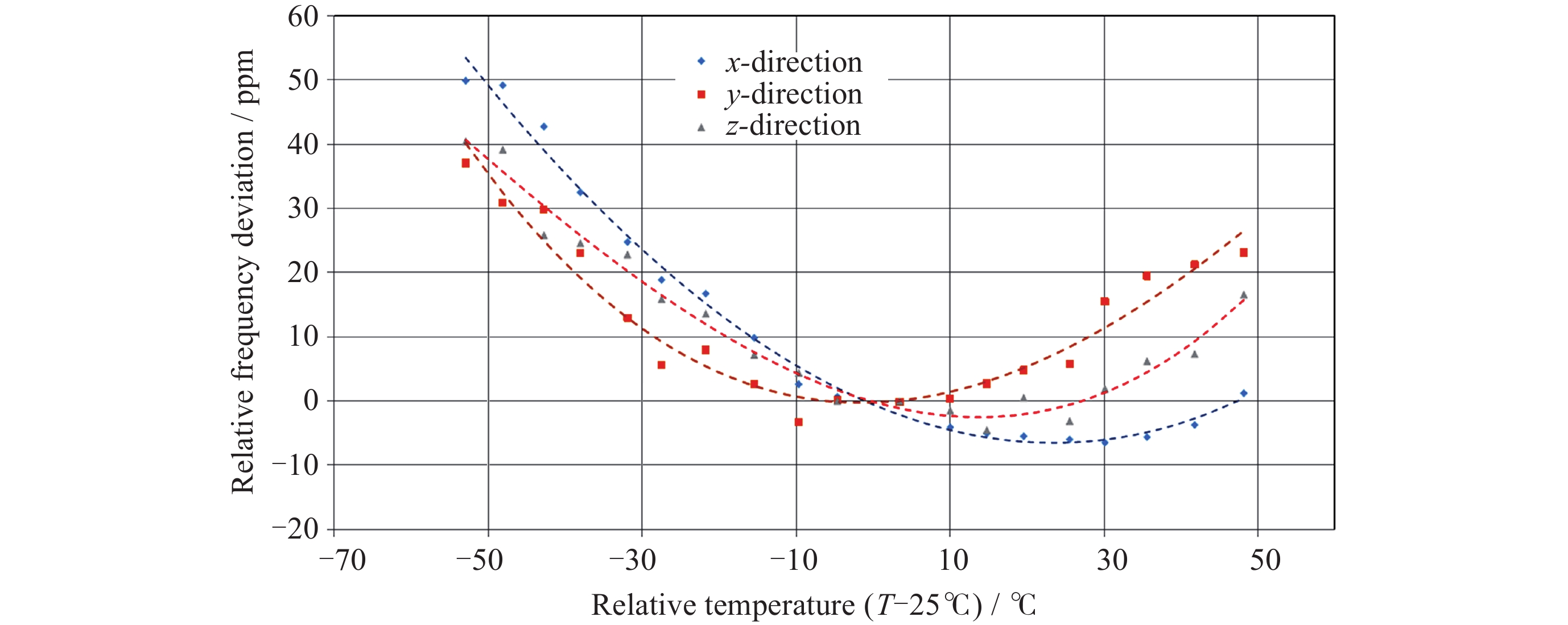
摘要: 嫦娥七号探测器将在月球南极区域的艾特肯盆地着陆, 开展月球南极月表环境的综合探测与研究. 其中月表尘埃探头将对极区撞击坑附近自然悬浮的尘埃粒径、速度以及累积质量通量等关键特性参数进行原位测量. 为实现高精度的科学探测, 开展了系统的地面定标试验. 其中粒径定标采用单颗粒自由落体方法, 结合中性滤波片等效测试方案, 实现了1~5000 µm粒径范围的覆盖. 试验结果显示, 粒径反演误差不超过17%. 速度定标通过自由落体颗粒在不同高度下的飞行时间测量, 测速误差在13%以内. 通量定标采用溶液滴定法获得了石英晶体微量天平的质量灵敏度, 三方向质量灵敏度均在10–9 g·Hz–1·cm–2量级, 线性度良好, 同时建立了温度–频率修正曲线, 以支持在轨数据的归一化处理. 定标结果表明, 尘埃探头各项性能指标满足月球南极极端环境下的探测需求, 所建立的定标方法和反演模型为后续在轨科学数据的解译提供了可靠依据.Abstract: The Chang’E-7 spacecraft is scheduled to be landed in the Aitken Basin region of the lunar south pole to conduct comprehensive exploration and research on the lunar surface environment. As one of the main detectors onboard the Chang’E-7 spacecraft, a lunar dust detector is developed for in-situ measurements of naturally suspended dust in the polar region, key parameters such as the particle size, velocity, and cumulative mass flux will be obtained. To achieve high-precision scientific detection, systematic ground calibration experiments were conducted. For particle size calibration, a single-particle free-fall method combined with an equivalent test scheme using neutral density filters was employed, achieving coverage of the particle size range from 1 µm to 5000 µm. Experimental results demonstrate that the particle size retrieval error does not exceed 17%. Velocity calibration was performed by measuring the time-of-flight of free-falling particles from different heights, yielding a velocity measurement error within 13%. For mass flux calibration, the solution titration method was used to obtain the sensitivity of the Quartz Crystal Microbalances, with sensitivities in three orthogonal directions all on the order of 10–9 g·Hz–1·cm–2 and exhibiting good linearity. Furthermore, temperature-frequency correction curves were established to support the normalization of in-orbit data. The calibration results indicate that the performance indicators of the dust detector meet the requirements for detection in the extreme environment of the lunar south pole. The established calibration methods and retrieval models provide a reliable foundation for the interpretation of subsequent in-orbit scientific data.
-
Key words:
- Chang’E -7 mission /
- Lunar dust detector /
- Calibration method /
- Calibration experiment
-
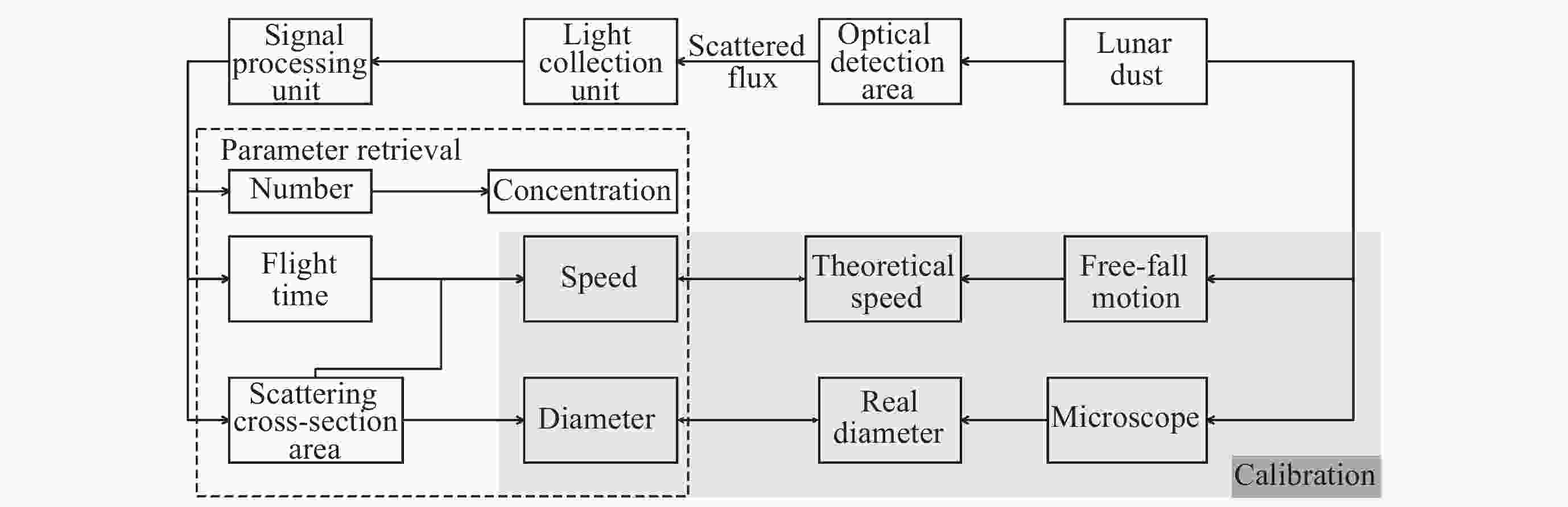
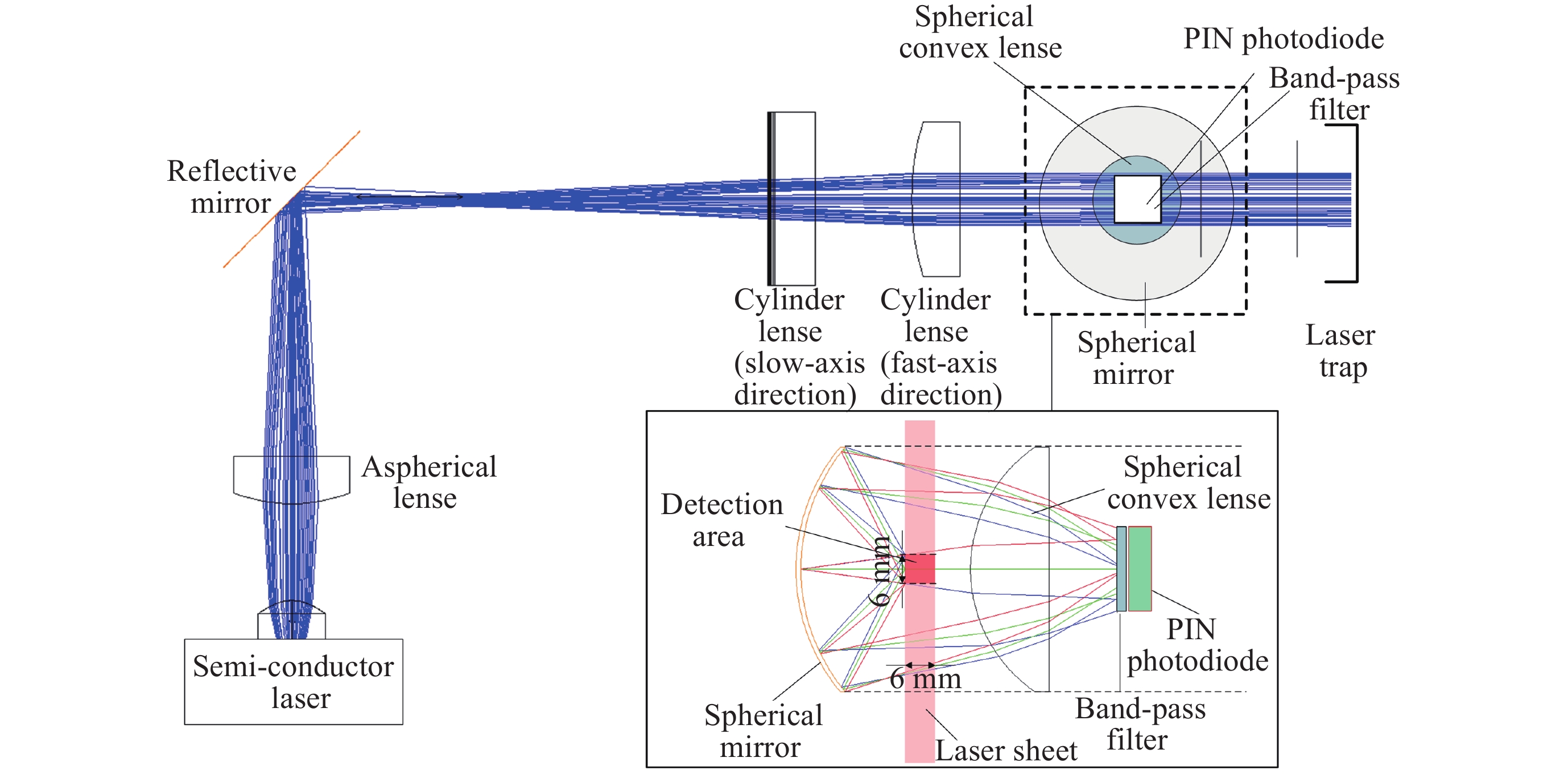
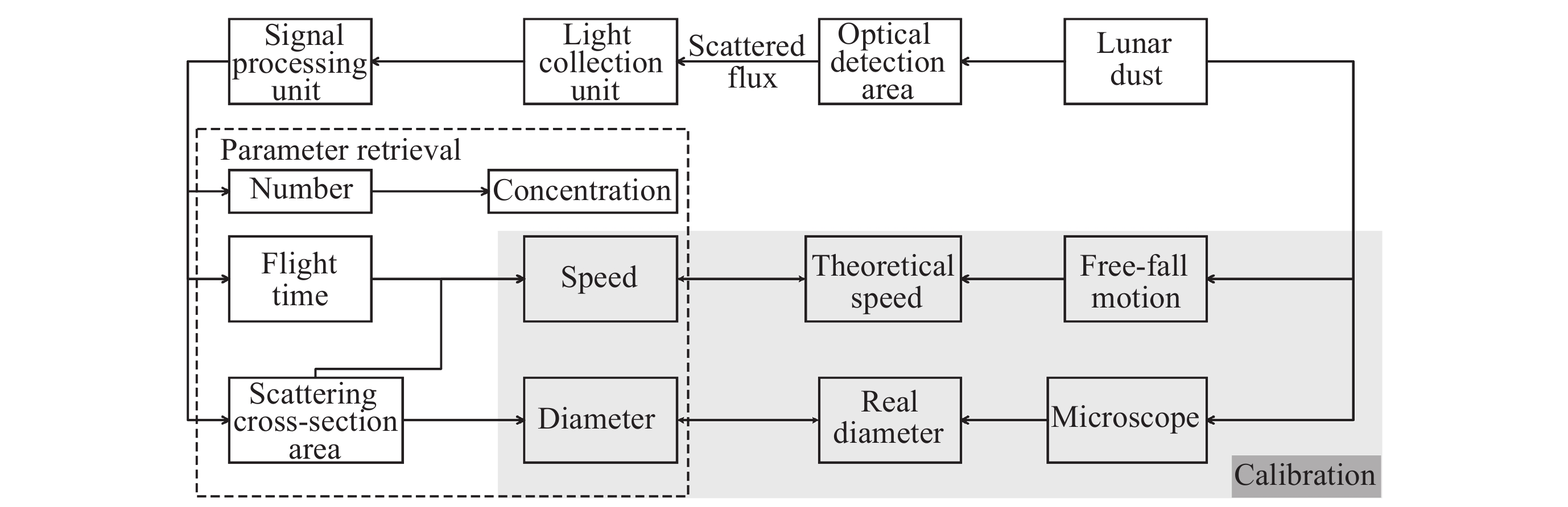
图 3 嫦娥七号尘埃探头月尘粒径与速率测量地面定标方案
Figure 3. Ground calibration of size and speed measurements for Chang’E-7 lunar dust probe
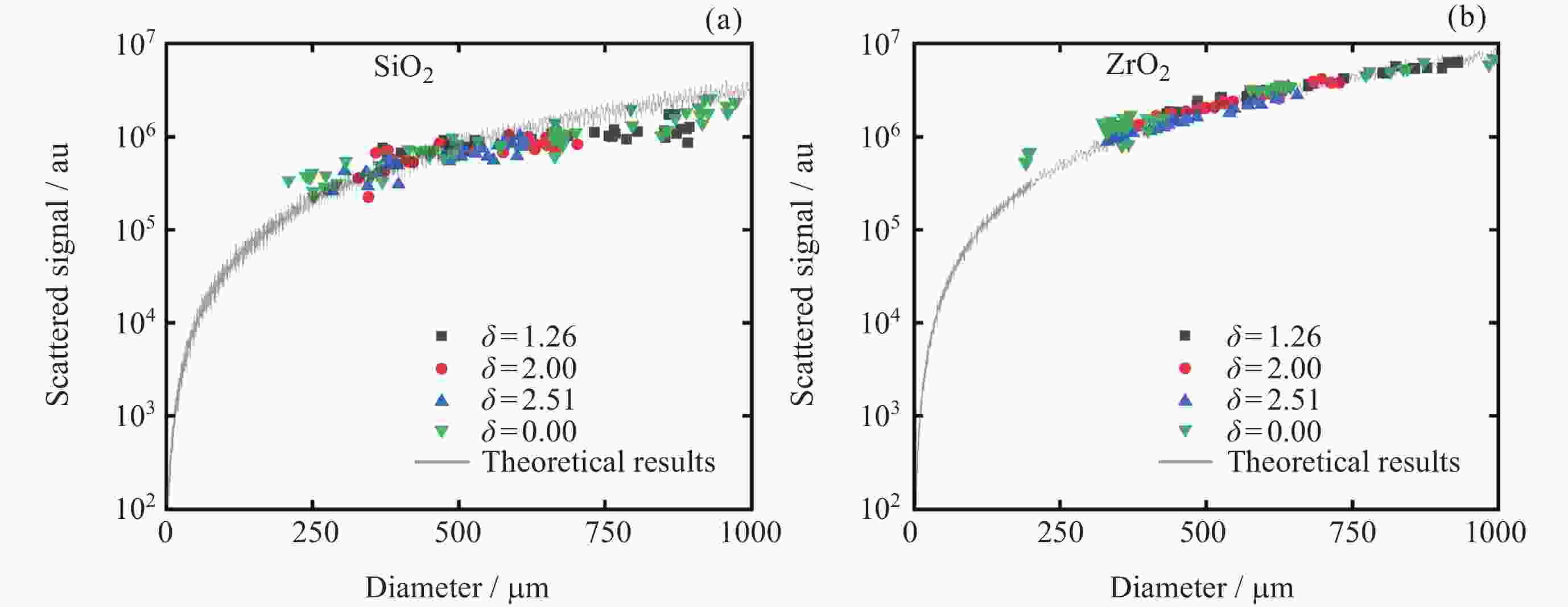
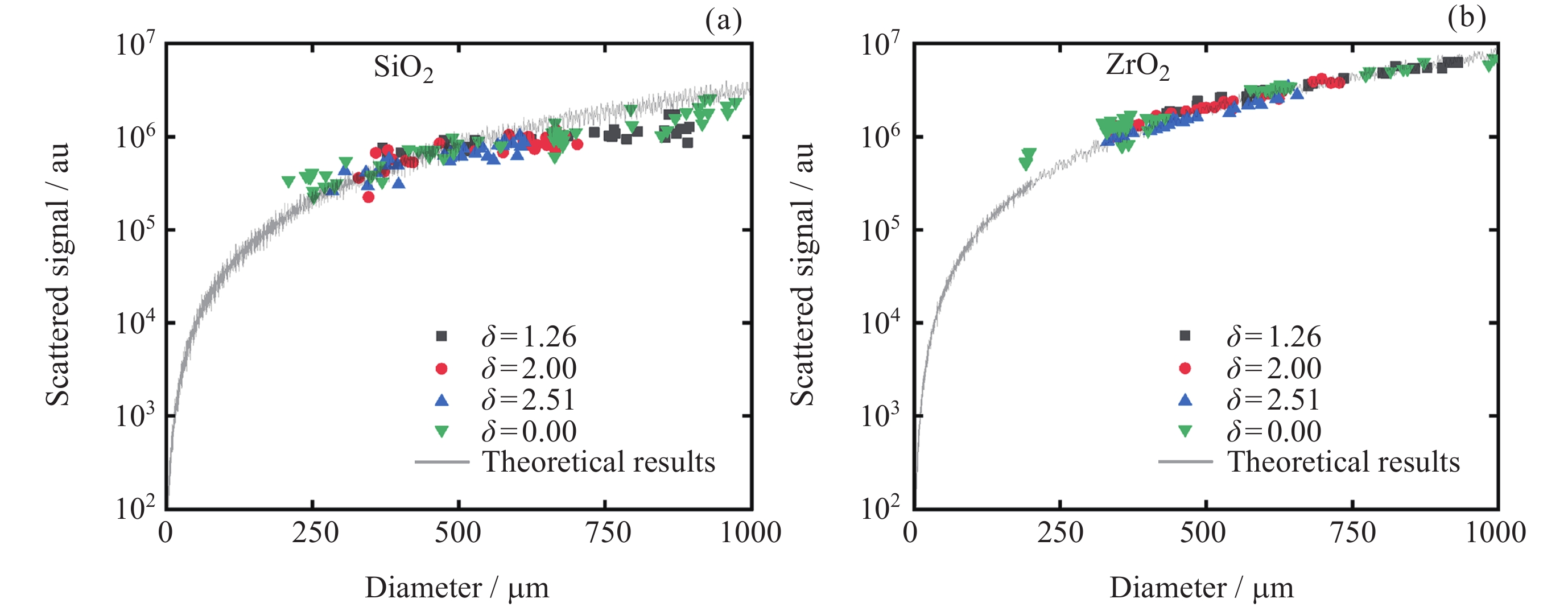
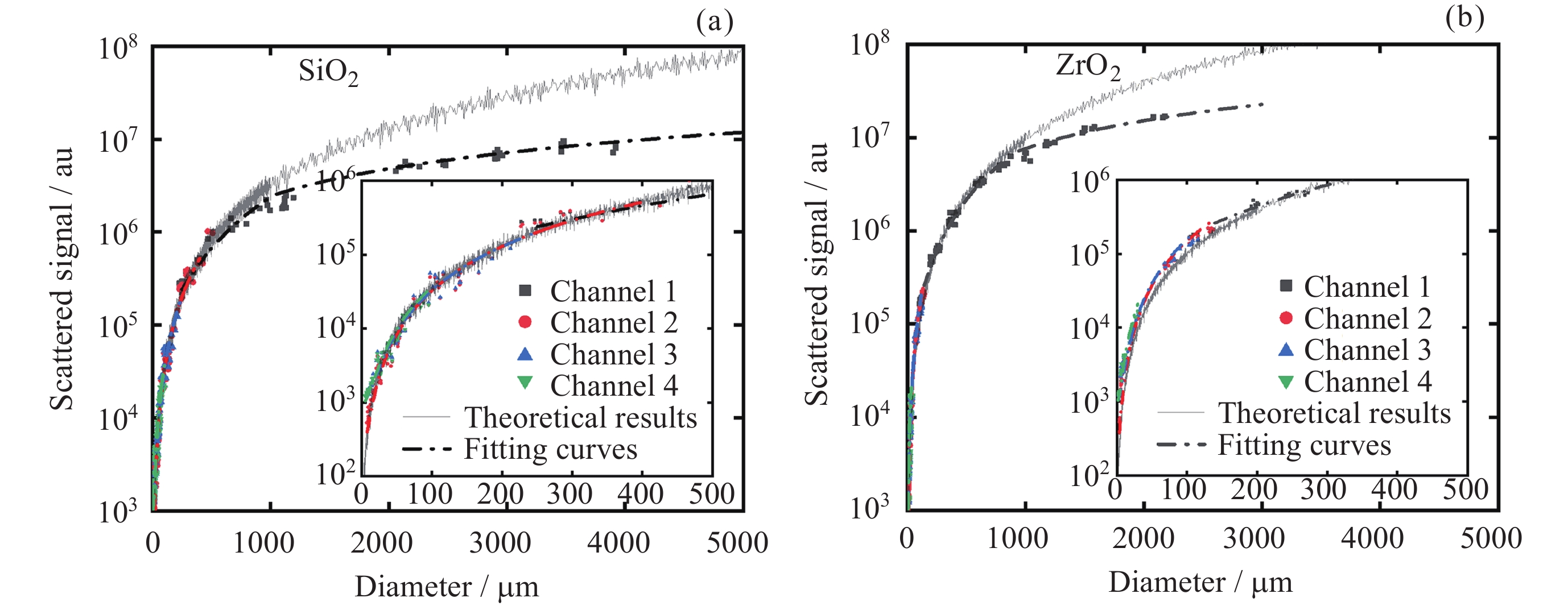
图 4 SiO2 和ZrO2颗粒的等效法测试结果
Figure 4. Validation results of equivalent method with SiO2 and ZrO2 spherical particles
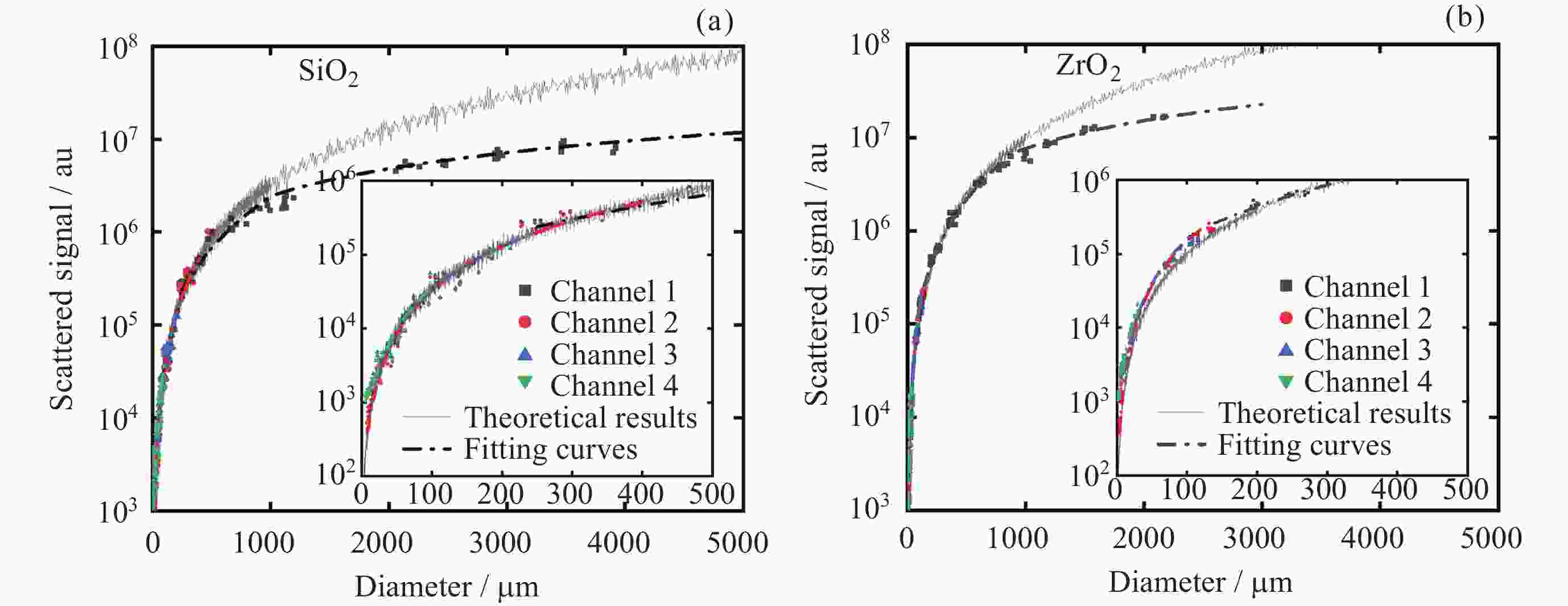
图 5 SiO2 和ZrO2定标测试结果与理论散射曲线和拟合曲线的对比
Figure 5. Comparison of experimental results with theoretical scattering curves and fitting results for SiO2 and ZrO2 spherical particles
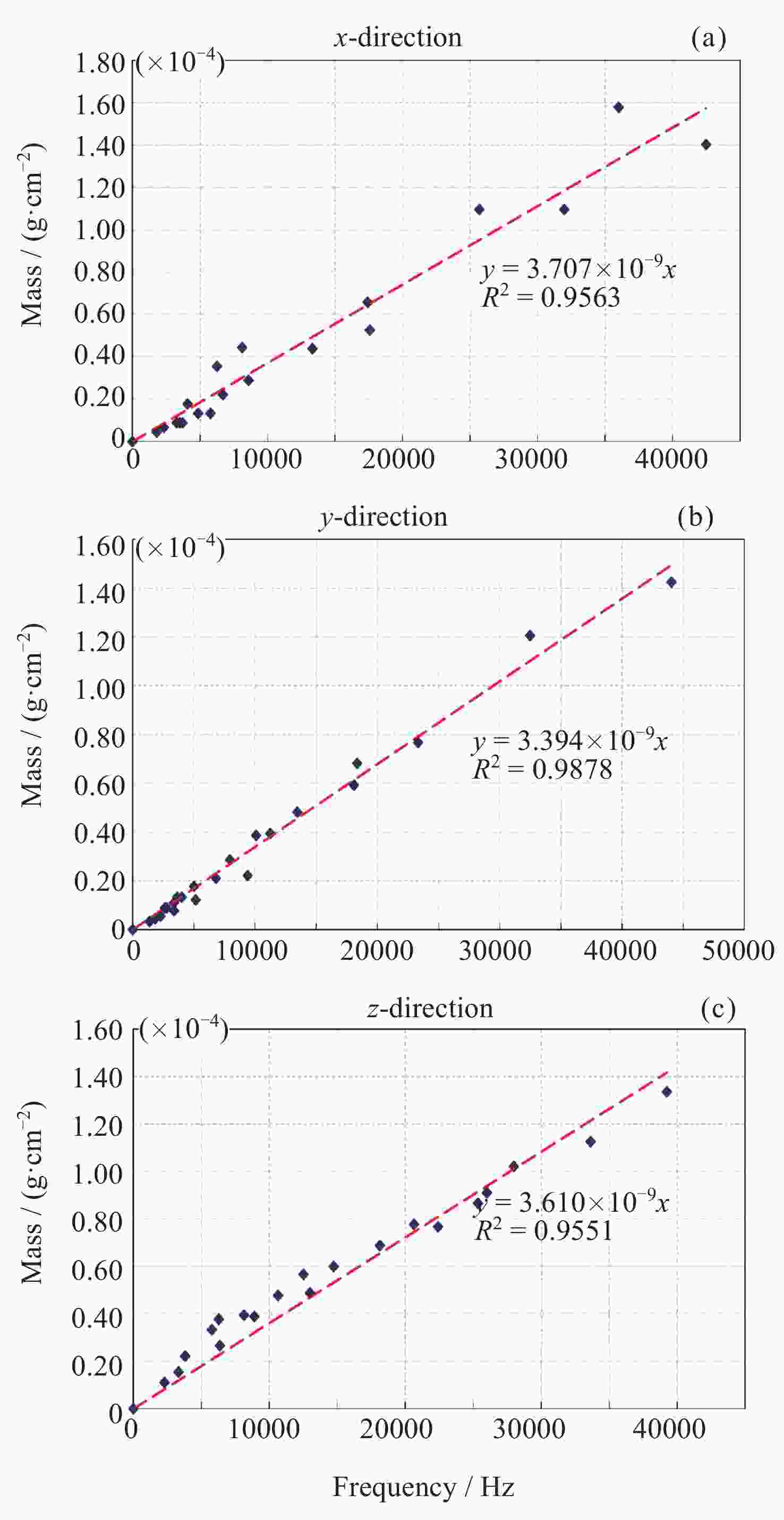
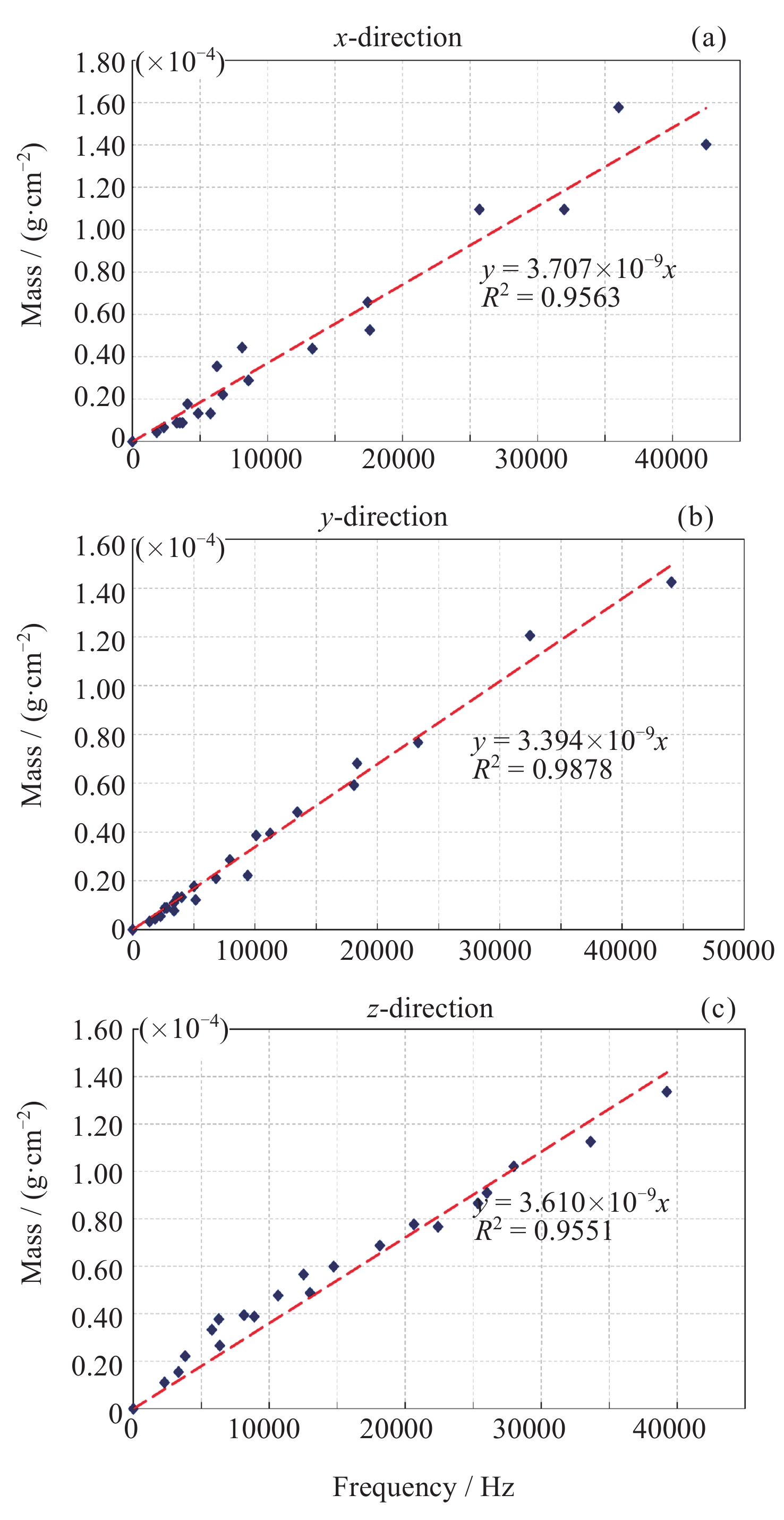
图 6 三个方向QCM的灵敏度标定曲线
Figure 6. Sensitivity calibration curves for QCM in three directions
表 1 尘埃探头主要探测指标
Table 1. Detection indicators of Chang’E-7 lunar dust probe
指标名称 测量范围 尘埃累计质量/(g·cm–2) 1×10⁻⁹~3×10⁻⁴ 尘埃粒径/μm 1~5000 尘埃速度/(m·s–1) 0.01~500  下载: 导出CSV
表 2 实验室标准条件下尘埃探头定标测试各信号通道粒径探测范围
Table 2. Diameter measurement range of 4 signal channels in calibration tests of lunar dust probe under standard conditions in the laboratory
颗粒材料 探测范围/µm 第一通道 第二通道 第三通道 第四通道 SiO2 230~5000 8~500 6~212 4~84 ZrO2 100~3000 3.6~140 3~116 2~32
下载: 导出CSV
表 3 尘埃探头实验室定标测试各通道粒径反演的拟合系数
Table 3. Fitted parameter of retrieval deviation of all channels in calibration test of lunar dust detector
颗粒材料 二次拟合式 一次拟合式 a1 a2 a3 a4 b1 b2 b3 b4 k b1 SiO2 2.3 3.25 3.22 3.57 96540 187 962 947 2352 96540 ZrO2 8.37 14.83 15.42 22.23 96540 187 962 947 7557 96540
下载: 导出CSV
表 4 尘埃探头实验室定标测试各通道粒径探测结果的平均反演误差
Table 4. Averaged diameter retrieval deviation of all channels in calibration test of lunar dust detector
颗粒材料 粒径反演平均误差/(%) 第一通道 第二通道 第三通道 第四通道 SiO2 9.36 13.41 13.52 16.65 ZrO2 5.50 14.81 15.66 14.66
下载: 导出CSV
表 5 不同自由落体高度下SiO2颗粒速度的定标测试结果
Table 5. Results of free-fall speed of SiO2 spherical particles at different heights
测试量 自由落体高度/mm 30 40 50 60 理论速度/(m·s–1) 0.783 0.900 1.003 1.096 测量速度均值/(m·s–1) 0.882 0.998 1.081 1.156 相对误差/(%) 12.69 10.84 7.73 5.43
下载: 导出CSV
-
[1] WANG C, JIA Y Z, XUE C B, et al. Scientific objectives and payload configuration of the Chang’E-7 mission[J]. National Science Review, 2024, 11(2): nwad329 doi: 10.1093/nsr/nwad329 [2] 余后满, 饶炜, 张益源, 等. 嫦娥七号探测器任务综述[J]. 深空探测学报(中英文), 2023, 10(6): 567-576YU Houman, RAO Wei, ZHANG Yiyuan, et al. Mission analysis and spacecraft design of Chang’E-7[J]. Journal of Deep Space Exploration, 2023, 10(6): 567-576 [3] 程安云, 王世杰, 李雄耀, 等. 月球南北两极研究进展与发展趋势[J]. 地球物理学进展, 2007, 22(4): 1070-1074 doi: 10.3969/j.issn.1004-2903.2007.04.009CHENG Anyun, WANG Shijie, LI Xiongyao, et al. Researches on lunar poles: advances and trends[J]. Progress in Geophysics, 2007, 22(4): 1070-1074 doi: 10.3969/j.issn.1004-2903.2007.04.009 [4] ANAND M, CRAWFORD I A, BALAT-PICHELIN M, et al. A brief review of chemical and mineralogical resources on the Moon and likely initial In Situ Resource Utilization (ISRU) applications[J]. Planetary and Space Science, 2012, 74(1): 42-48 doi: 10.1016/j.pss.2012.08.012 [5] ZHAO C X, GAN H, XIE L H, et al. Theoretical analysis of the electric potential and the electrostatic dust transport around the Shackleton crater in the Lunar south pole region[J]. Science China Earth Sciences, 2023, 66(10): 2278-2286 doi: 10.1007/s11430-022-1143-3 [6] HESS S L G, SARRAILH P, MATÉO-VÉLEZ J C, et al. New SPIS capabilities to simulate dust electrostatic charging, transport, and contamination of lunar probes[J]. IEEE Transactions on Plasma Science, 2015, 43(9): 2799-2807 doi: 10.1109/TPS.2015.2446199 [7] MAZZOTTA EPIFANI E, BUSSOLETTI E, COLANGELI L, et al. The grain detection system for the GIADA instrument: design and expected performances[J]. Advances in Space Research, 2002, 29(8): 1165-1169 doi: 10.1016/S0273-1177(02)00133-3 [8] GLASSMEIER K H, BOEHNHARDT H, KOSCHNY D, et al. The Rosetta mission: flying towards the origin of the solar system[J]. Space Science Reviews, 2007, 128(1): 1-21 doi: 10.1007/978-0-387-77518-0_1 [9] COLANGELI L, DELLA CORTE V, ESPOSITO F, et al. The GIADA experiment for the ROSETTA mission[M]//COLANGELI L, MAZZOTTA EPIFANI E, PALUMBO P. The New Rosetta Targets. Dordrecht: Springer, 2004: 271-280 [10] CUI Z C, WANG J J, LI C H, et al. Optical response of a single spherical particle in a laser sheet with application to the dust detection system onboard Tianwen-2[J]. Applied Optics, 2025, 64(17): 4851-4859 doi: 10.1364/AO.558537 [11] DIRRI F, PALOMBA E, LONGOBARDO A, et al. A review of quartz crystal microbalances for space applications[J]. Sensors and Actuators A: Physical, 2019, 287: 48-75 doi: 10.1016/j.sna.2018.12.035 [12] LANDIS G A, JENKINS P, FLATICO P, et al. Development of a Mars dust characterization instrument[J]. Planetary and Space Science, 1996, 44(11): 1425-1431,1433 doi: 10.1016/S0032-0633(96)00042-6 -
-

 下载:
下载:

计量
- 文章访问数: 1292
- HTML全文浏览量: 773
- PDF下载量: 89
-
被引次数:
0(来源:Crossref)
0(来源:其他)

