


嫦娥七号电场探头等离子体环境物理验证试验
doi: 10.11728/cjss2026.02.2025-0137 cstr: 32142.14.cjss.2025-0137
-
 翁成翰 男, 1988年生于江苏苏州, 现为中国科学院国家空间科学中心高级工程师, 主要研究方向是空间电场和磁场探测技术, 担任嫦娥七号着陆器月表空间环境探测系统副主任设计师, 主要负责电场探头的研制. E-mail: saber719@nssc.cn
 -
 周斌 男, 1979 年10月出生于辽宁沈阳, 中国科学院国家空间科学中心教授级高级工程师, 博士生导师, 主要从事空间环境磁场、电场探测技术研究. E-mail: zhoubin@nssc.ac.cn
作者简介:
通讯作者:
Physical Verification Test of Plasma Environment for Chang’E-7 Electric Field Probe
-
摘要: 月球表面在太阳风和阳光的作用下会带电, 表面电位的差异在月球表面形成不同尺度的电场环境, 这是月球表面物质迁移的主要机制之一, 嫦娥七号电场探头将在月球表面首次实现原位电场探测. 电场探头的基本原理是等离子体电探针原理, 将探针电流钳制在特定值上, 根据等离子体伏安特性曲线, 探针的电位是确定的, 不同探针的电位差是电场在等离子体上形成的电位差. 进行等离子体伏安特性曲线测量是探针设计的关键. 针对电场探头, 提出了探头在等离子体环境中的物理特性的验证试验的设计. 借助地面的低能等离子体模拟装置开展这一试验, 进行了固定电流的驱动和扫描电流的测量, 试验结果表明, 嫦娥七号电场探头能够正确反映模拟装置内部的等离子体环境, 并得到稳定的伏安特性曲线, 证明电场探头在月面工作时可以通过对探针电流的驱动实现获取等离子体电位的功能, 探头的物理特性通过试验得到充分验证.Abstract: The lunar surface becomes charged under the influence of solar wind and sunlight, and the potential differences on the surface form an electric field environment of various scales, which is the main mechanism for material transfer on the lunar surface. The electric field probe of Chang’E-7 will, for the first time, conduct in-situ electric field detection on the lunar surface. This paper introduces the design and results of the physical verification test of the probe in plasma environment based on the qualification model of the electric field probe. The basic principle of the electric field probe is the plasma electric probe principle. By clamping the probe current at a specific value, the potential of the probe can be determined according to the plasma V-I characteristic curve. The potential difference between different probes is the potential difference formed by the electric field environment on the plasma environment. Whether the probe can measure the plasma V-I characteristic curve is the key to the success of the probe design. With the help of a ground low-energy plasma simulation device, this test was carried out, and fixed current drive and scanning current measurement were conducted. The test results show that the electric field probe of Chang’E-7 can correctly reflect the plasma environment inside the simulation device and obtain a stable V-I characteristic curve. This proves that the electric field probe can achieve the function of obtaining the plasma potential by driving the probe current when working on the lunar surface, and the physical characteristics of the probe have been fully verified through the test.
-
Key words:
- Chang’E-7 /
- Lunar surface /
- Electric field /
- Plasma
-
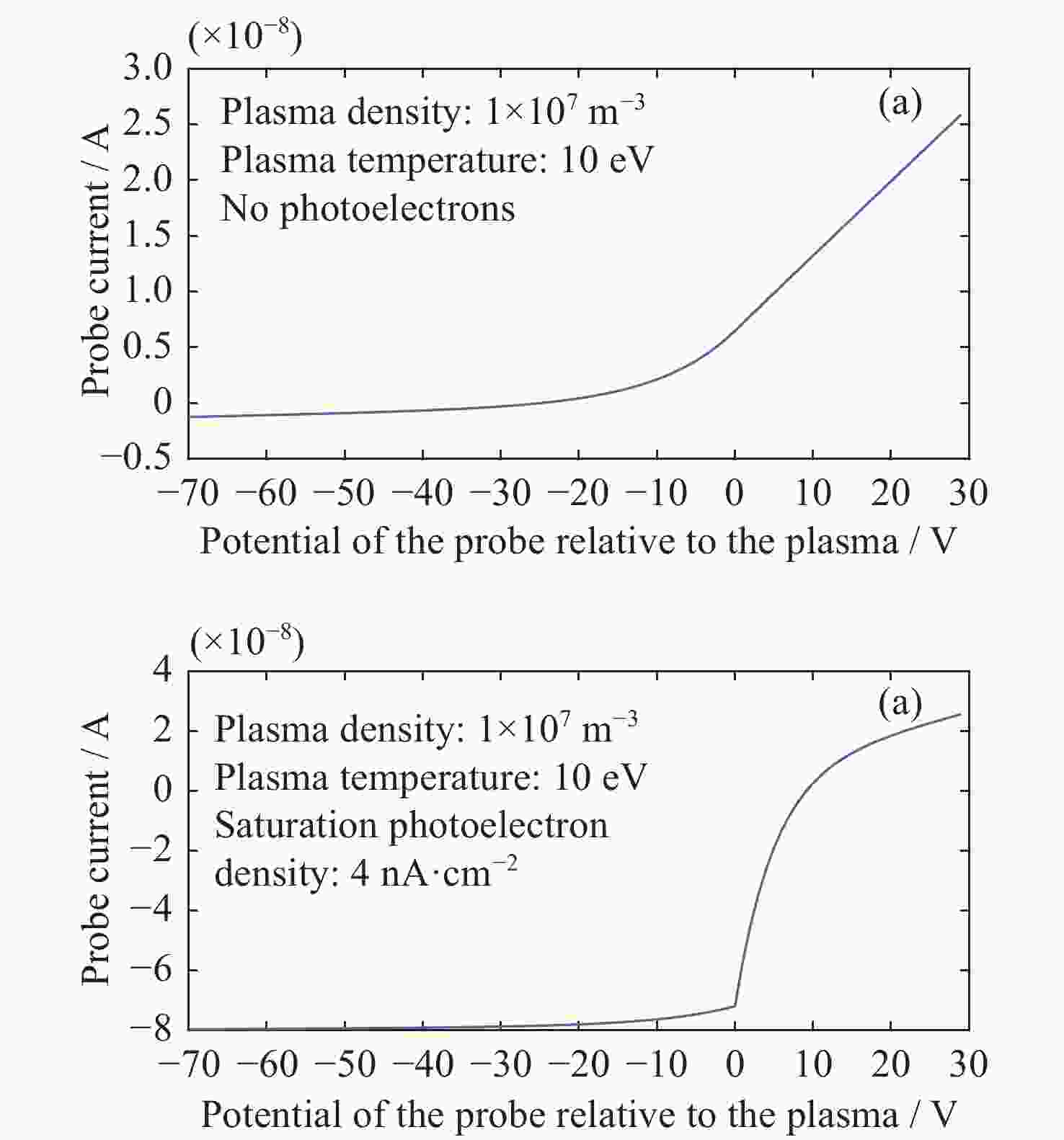
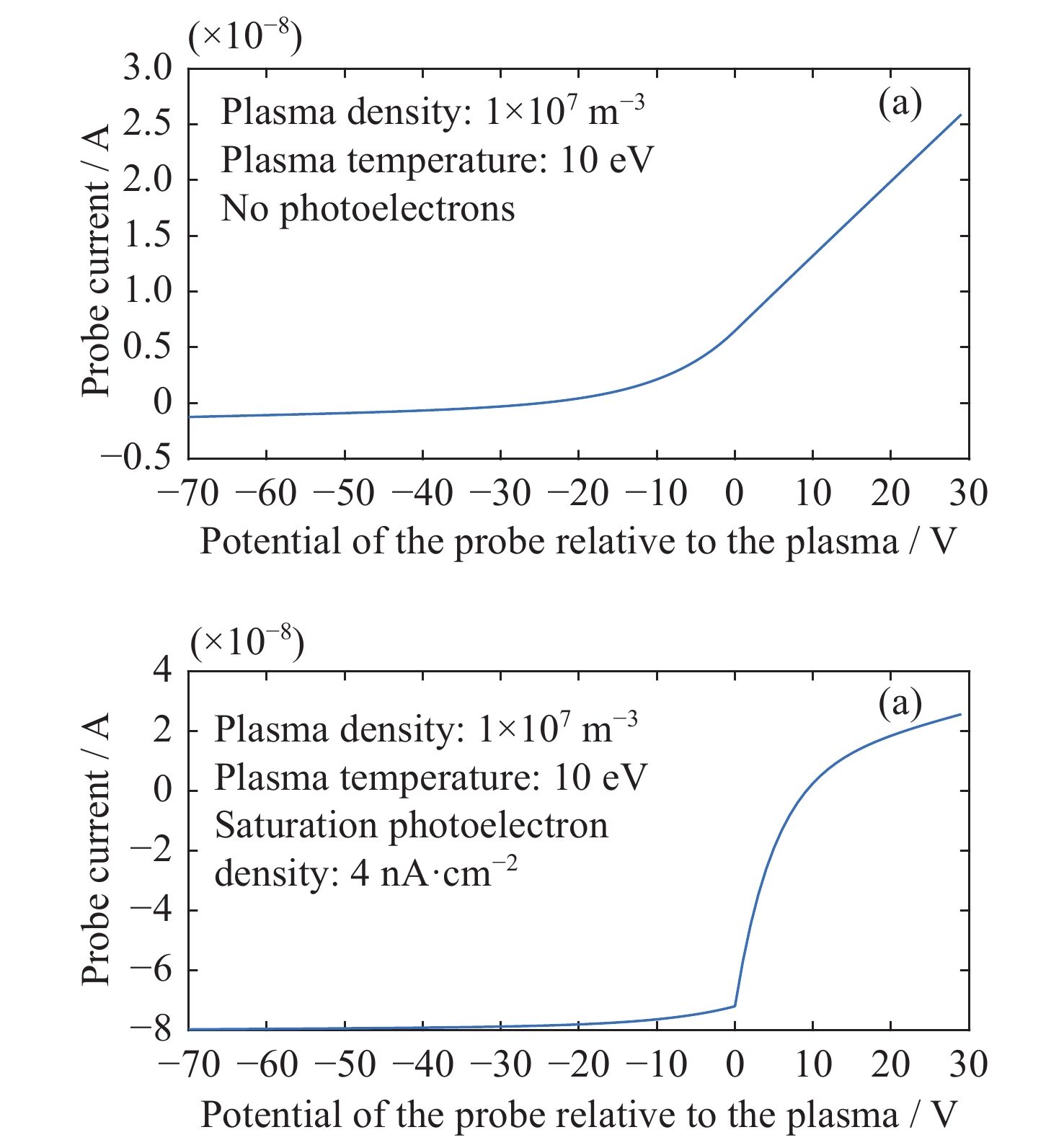
图 1 月表等离子体V-I曲线仿真. (a)不考虑光照条件, (b)考虑光电流
Figure 1. Simulation of plasma V-I curve on the lunar surface. (a) Without considering lighting conditions, (b) considering photocurrent
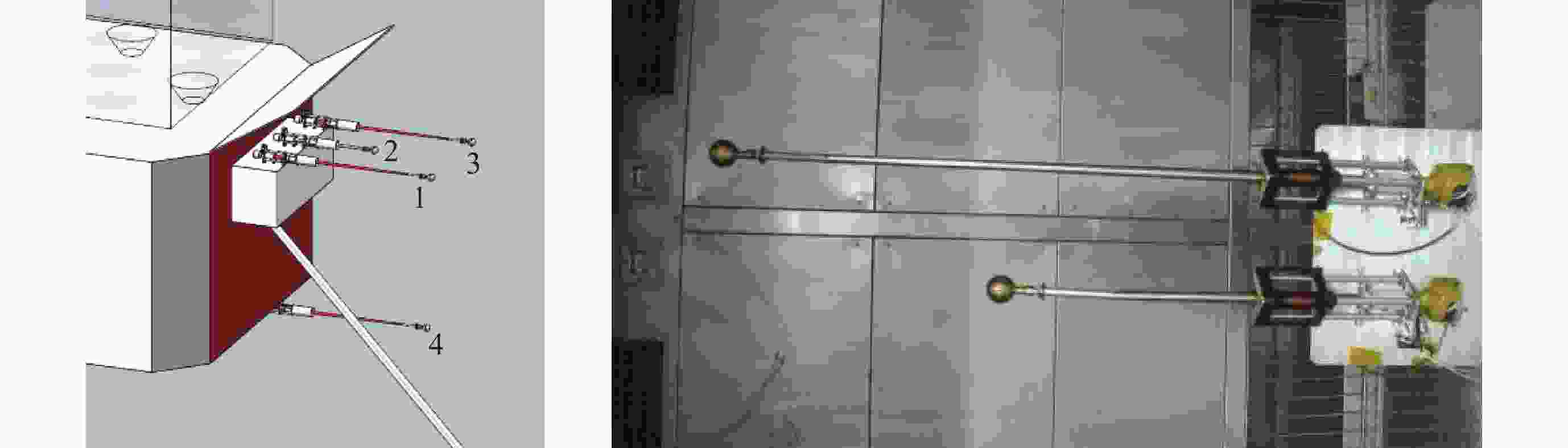
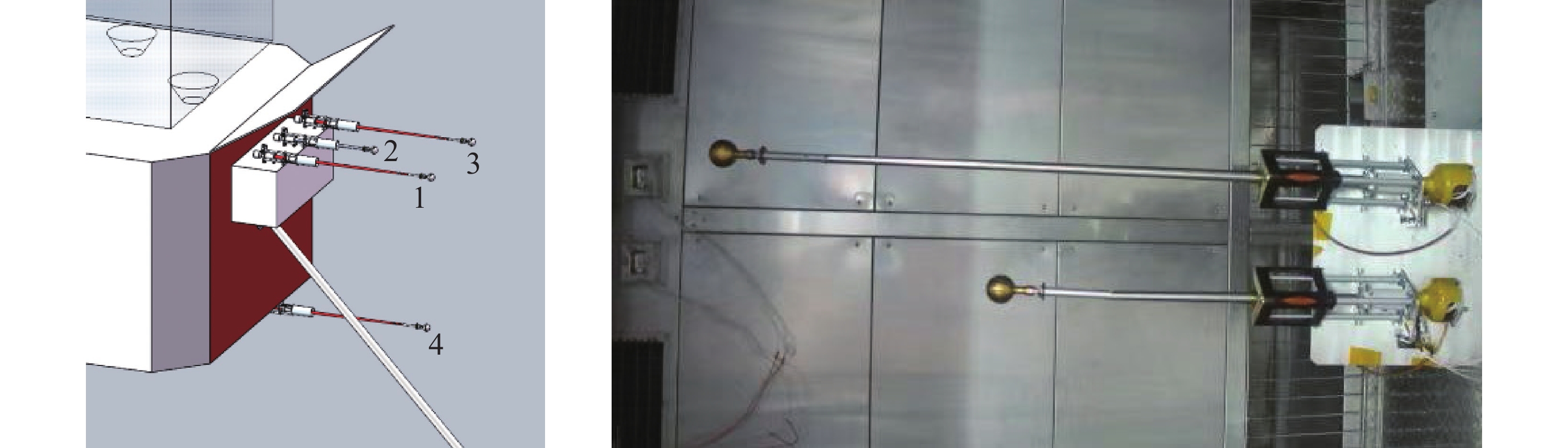
图 2 电场探头在嫦娥七号着陆器上的部署 (a) 和实物照片 (b)
Figure 2. Deployment of the electric field probe on Chang’E-7 lander (a) and photo of the electric field probe (b)
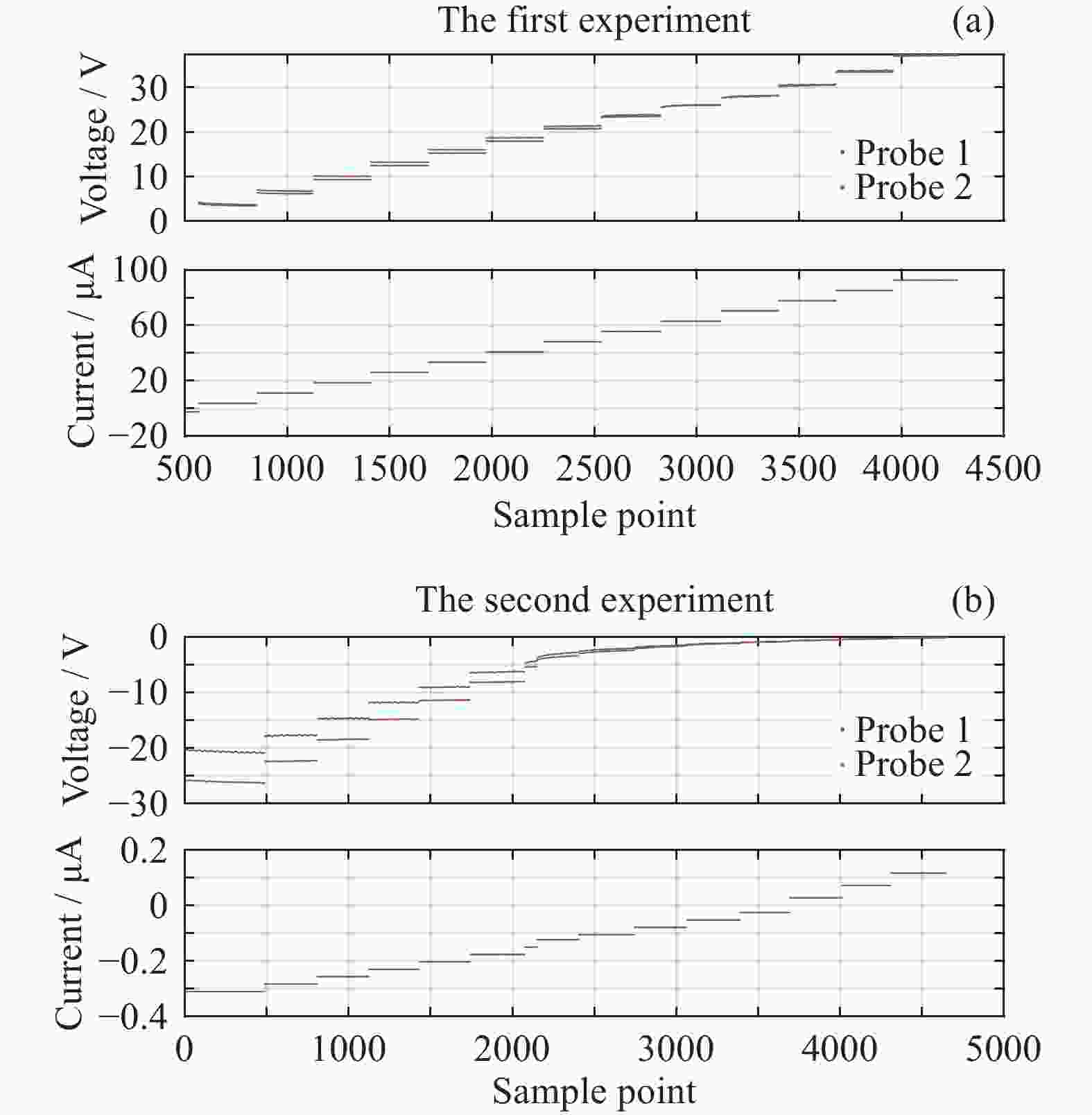
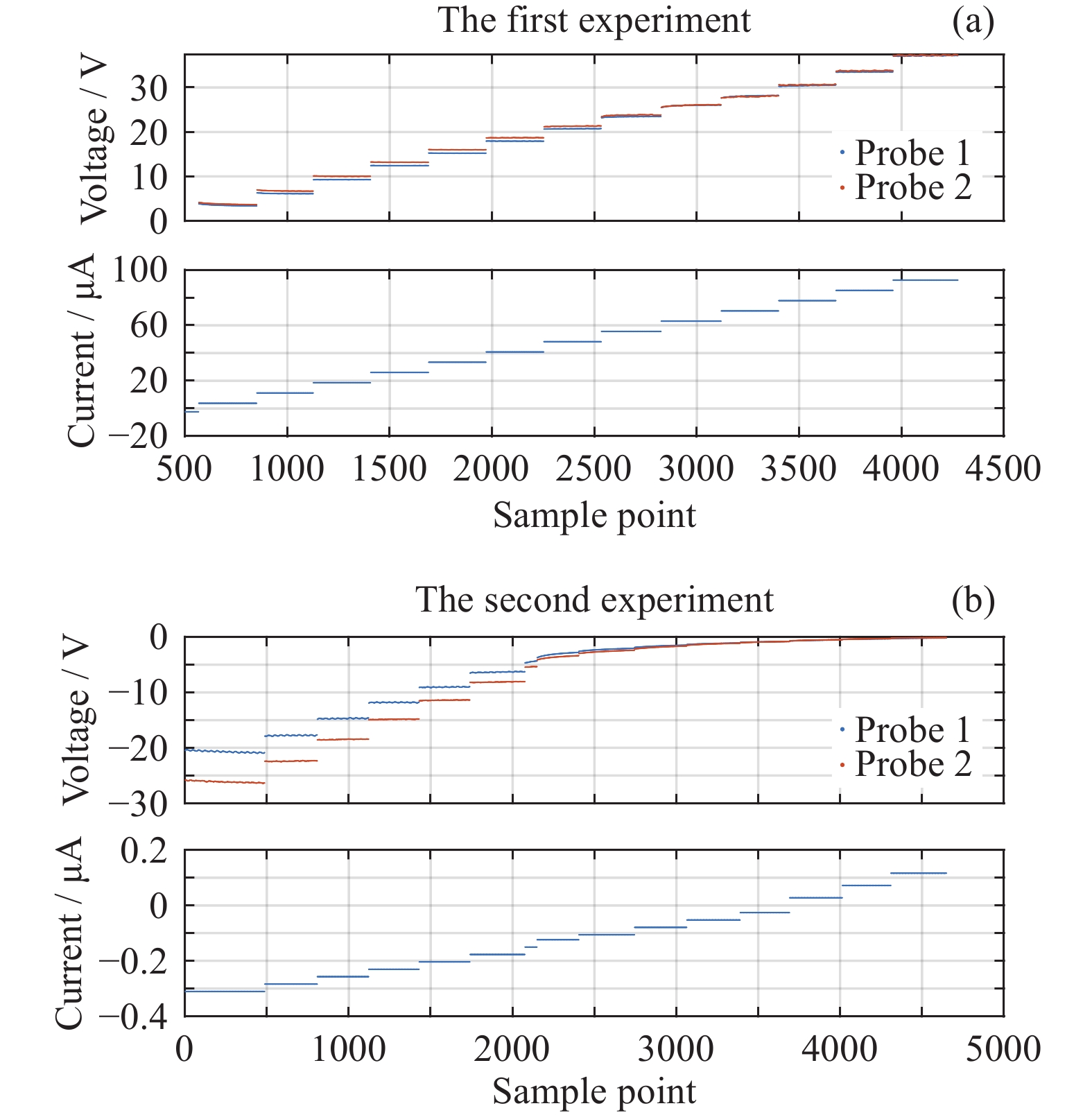
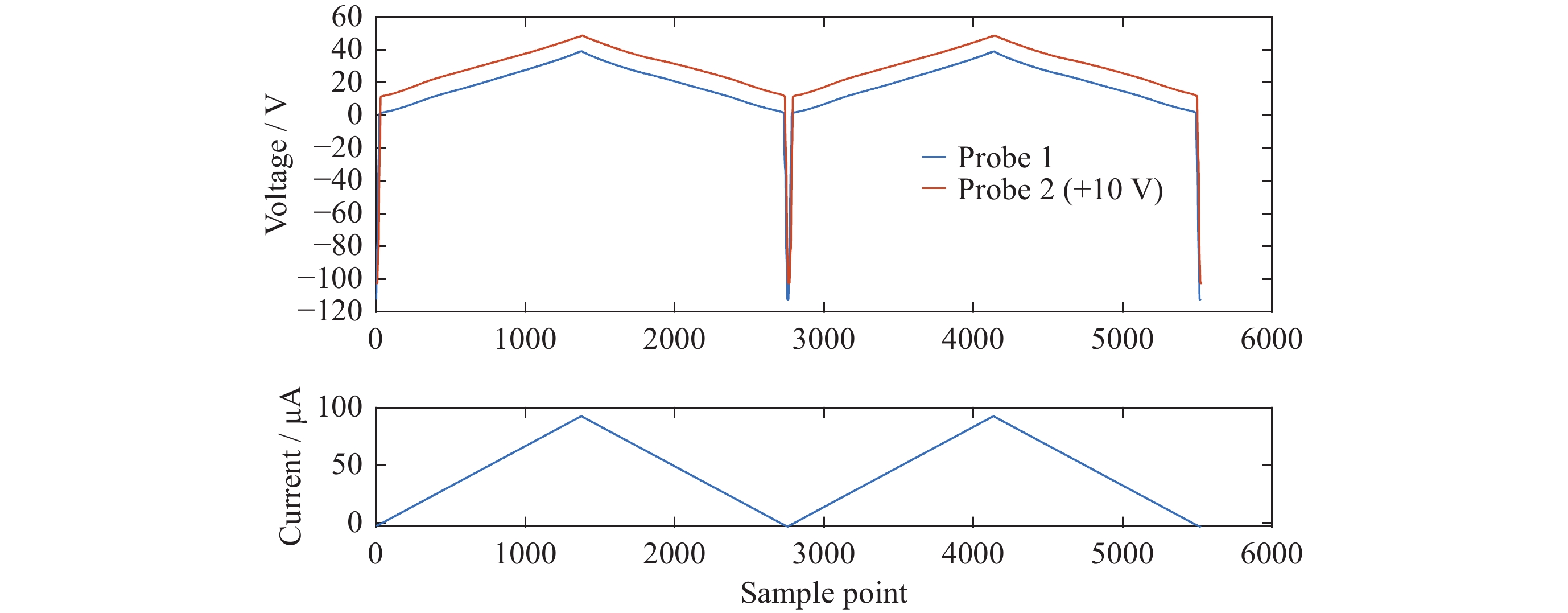
图 5 两次试验电流驱动和电压测量曲线
Figure 5. Current drive and voltage measurement curves of the two experiments
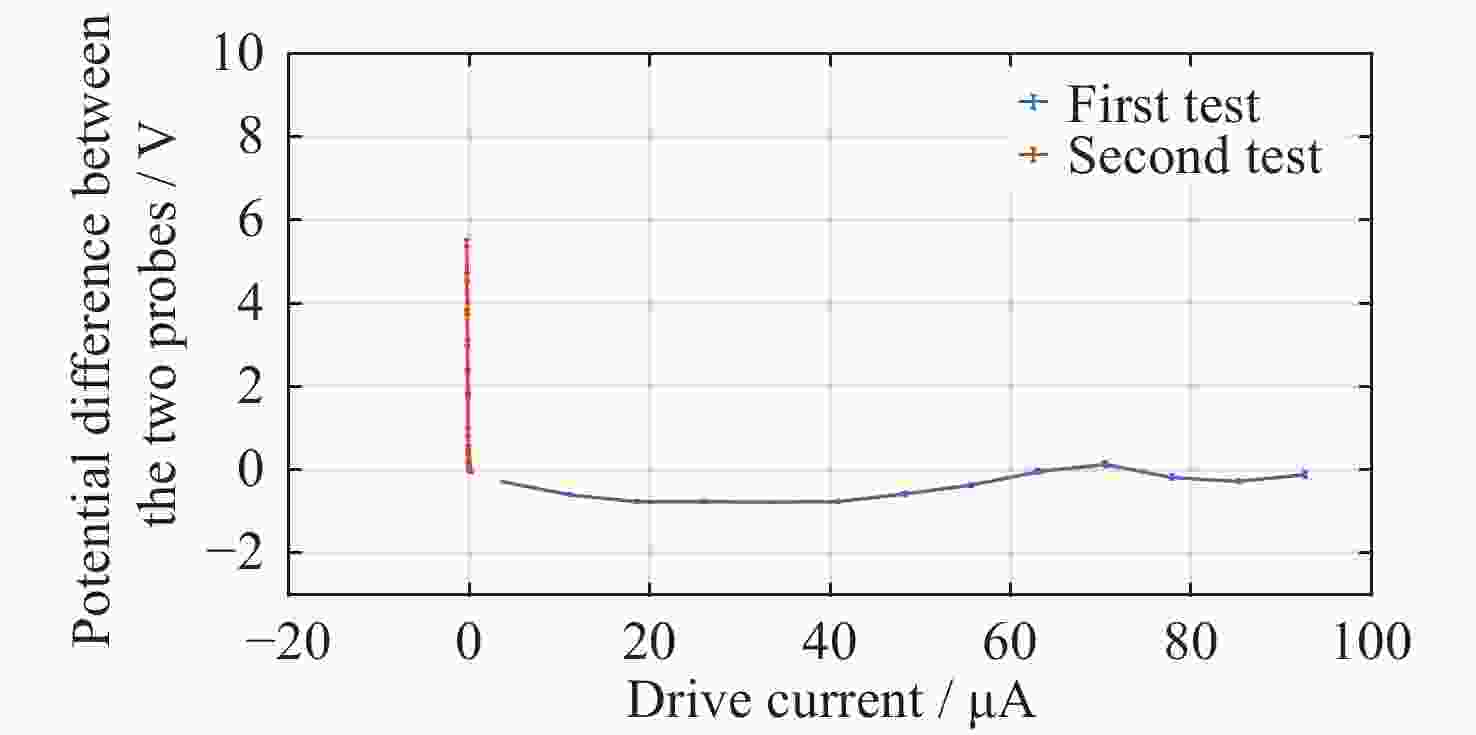
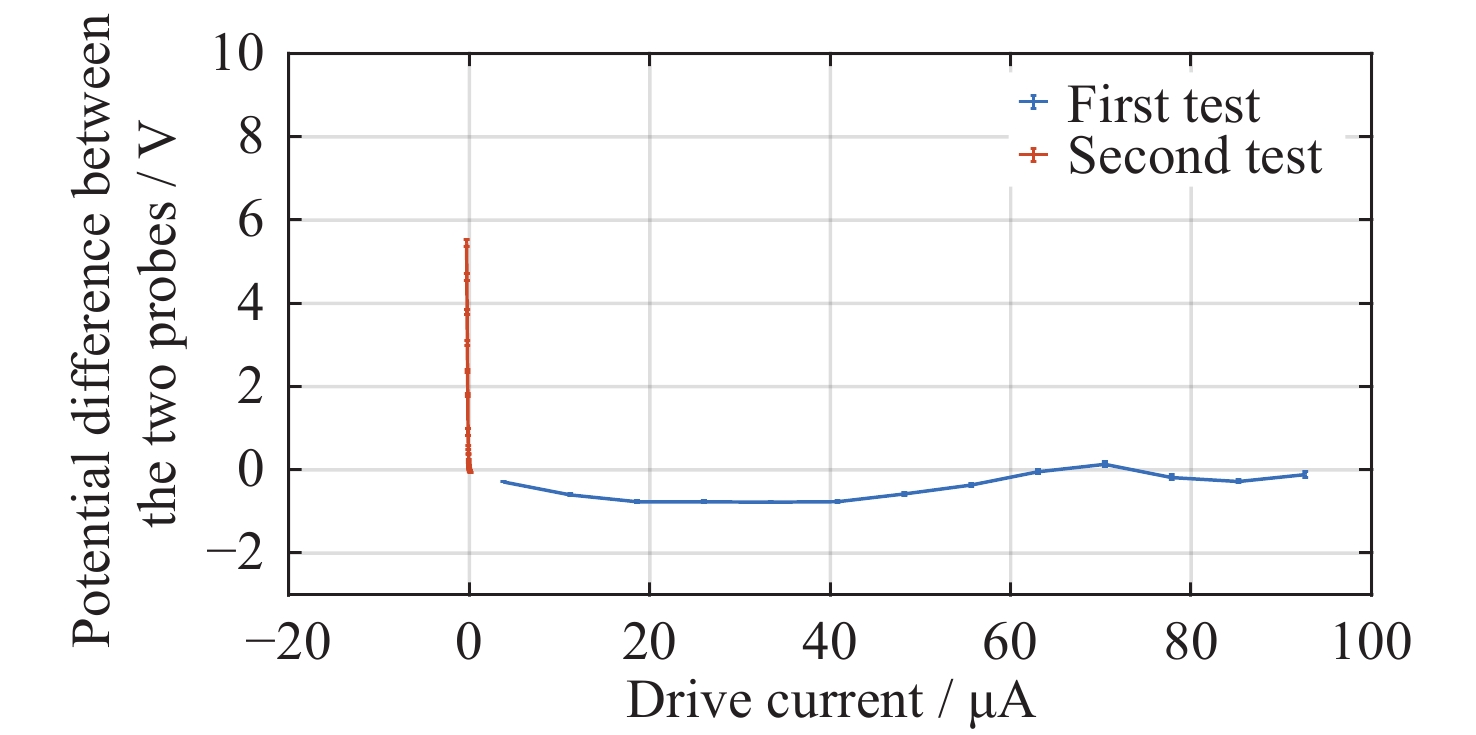
图 6 两个探头之间电位差随驱动电流的变化
Figure 6. Variation of the potential difference between the two probes with the drive current
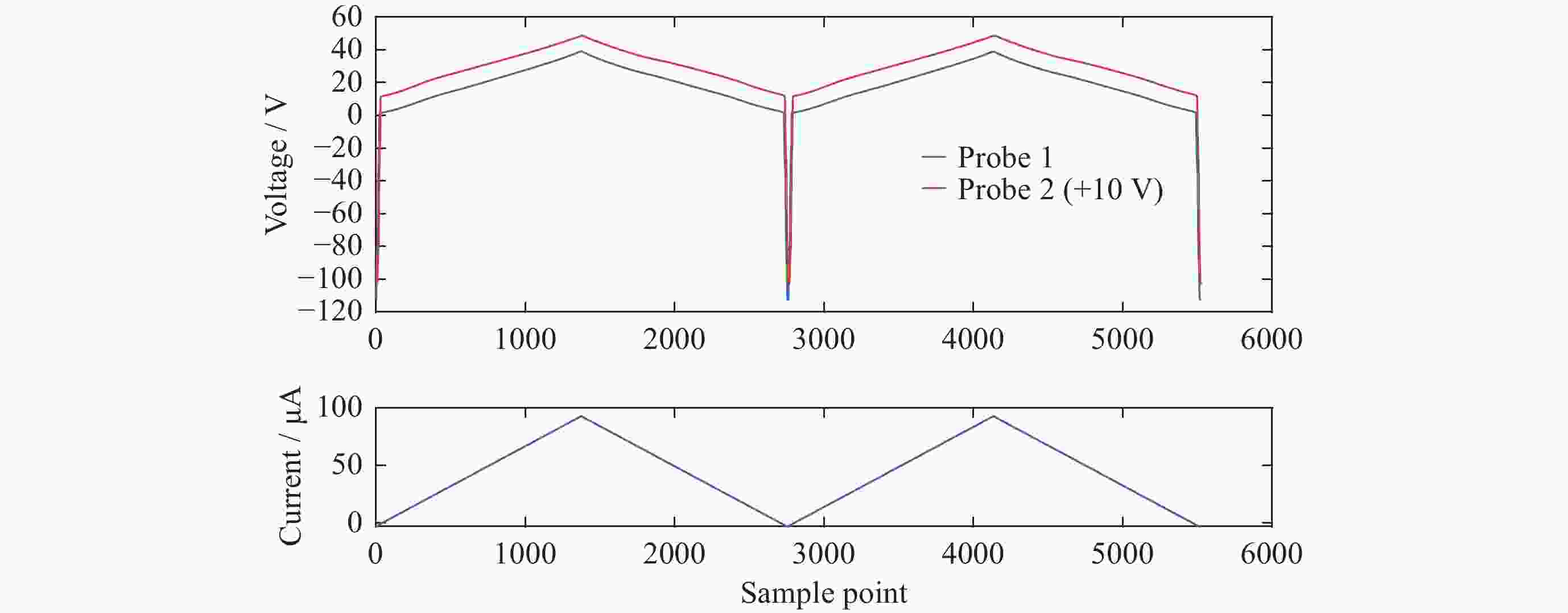
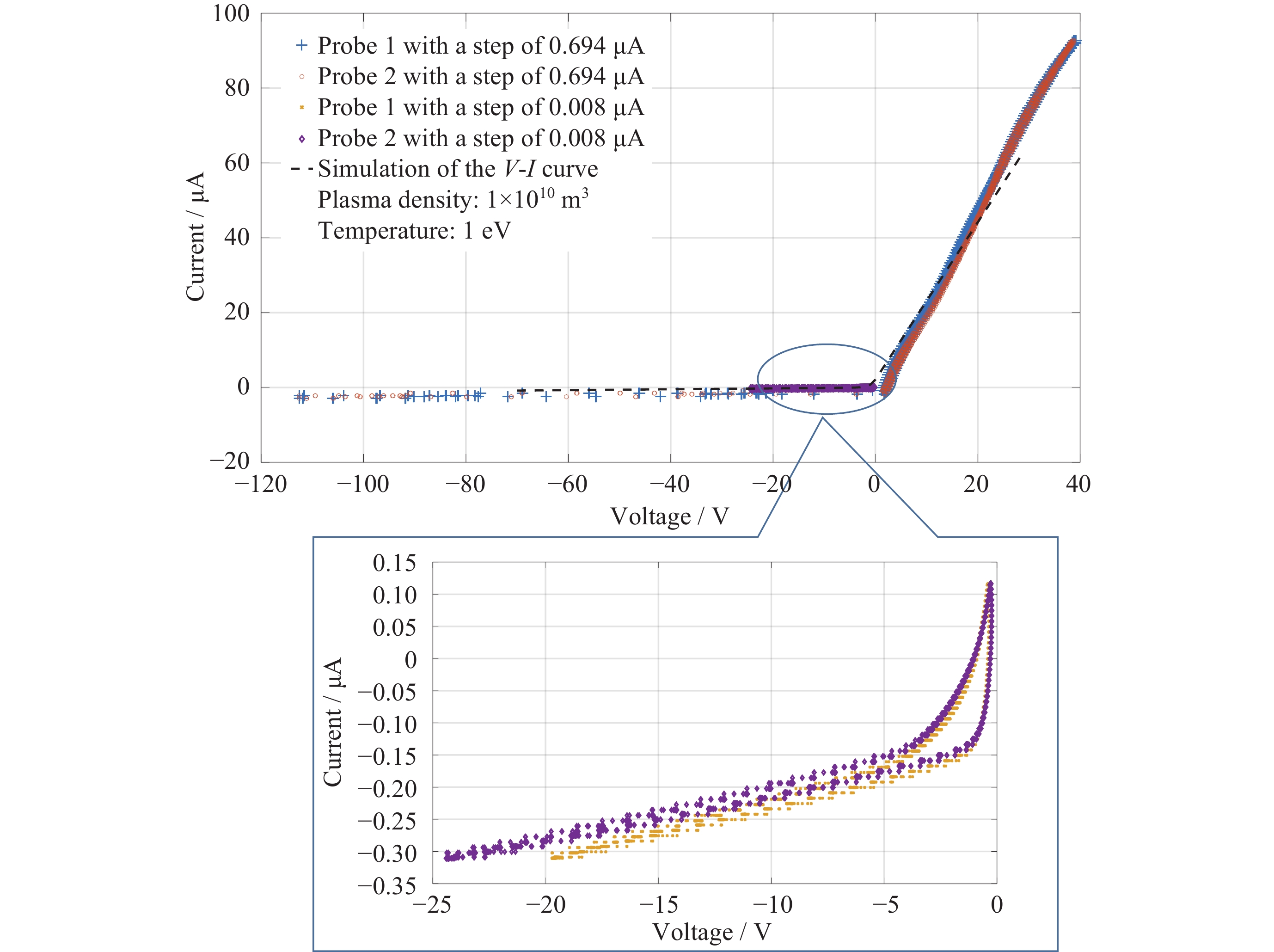
图 7 步长0.694 μA时的电流扫描和电压测量结果
Figure 7. Current scanning and voltage measurement results with a step size of 0.694 μA
表 1 通过V-I曲线反演的离子密度与电子密度
Table 1. Ion density and electron density inverted from V-I curve
电探针 扫描步长/μA Ni (×1010)/m–3 Ne (×1010)/m–3 第一次 第二次 第三次 第四次 第一次 第二次 第三次 第四次 1 0.694 0.970 1.543 1.109 1.420 1.368 1.875 1.392 1.882 2 0.694 1.640 1.606 1.632 1.621 1.475 2.257 1.464 2.236 1 0.008 1.060 0.901 1.048 1.048 - - - - 2 0.008 1.000 0.766 1.000 1.000 - - - -  下载: 导出CSV
-
[1] LI L, ZHANG Y T, ZHOU B, et al. Lunar surface potential and electric field[J]. Research in Astronomy and Astrophysics, 2019, 19(6): 077 doi: 10.1088/1674-4527/19/6/77 [2] XIE L H, LI L, ZHANG Y T, et al. Numerical investigation of the electrostatic dust transport around a lunar lander[J]. Advances in Space Research, 2024, 73(1): 1198-1207 doi: 10.1016/j.asr.2023.09.058 [3] ZHAO C X, GAN H, XIE L H, et al. Theoretical analysis of the electric potential and the electrostatic dust transport around the Shackleton crater in the Lunar south pole region[J]. Science China Earth Sciences, 2023, 66(10): 2278-2286 doi: 10.1007/s11430-022-1143-3 [4] BERTHELIER J J, GODEFROY M, LEBLANC F, et al. ICE, the electric field experiment on DEMETER[J]. Planetary and Space Science, 2006, 54(5): 456-471 doi: 10.1016/j.pss.2005.10.016 [5] HUANG J P, LEI J G, LI S X, et al. The Electric Field Detector (EFD) onboard the ZH-1 satellite and first observational results[J]. Earth and Planetary Physics, 2018, 2(6): 469-478 doi: 10.26464/epp2018045 [6] GUSTAFSSON G, BOSTRÖM R, HOLBACK B, et al. The electric field and wave experiment for the Cluster mission[J]. Space Science Reviews, 1997, 79(1/2): 137-156 doi: 10.1007/978-94-011-5666-0_6 [7] BONNELL J W, MOZER F S, DELORY G T, et al. The Electric Field Instrument (EFI) for THEMIS[J]. Space Science Reviews, 2008, 141(1): 303-341 doi: 10.1007/978-0-387-89820-9_14 [8] LINDQVIST P A, OLSSON G, TORBERT R B, et al. The spin-plane double probe electric field instrument for MMS[J]. Space Science Reviews, 2016, 199(1): 137-165 doi: 10.1007/978-94-024-0861-4_6 [9] 李梦谣, 夏清, 蔡明辉, 等. 月球南极尘埃等离子体环境特性[J]. 物理学报, 2024, 73(15): 155201 doi: 10.7498/aps.73.20240599LI Mengyao, XIA Qing, CAI Minghui, et al. Characteristics of dust plasma environment at lunar south pole[J]. Acta Physica Sinica, 2024, 73(15): 155201 doi: 10.7498/aps.73.20240599 [10] MOTT-SMITH H M, LANGMUIR I. The theory of collectors in gaseous discharges[J]. Physical Review, 1926, 28(4): 727-763 doi: 10.1103/PhysRev.28.727 [11] ALLEN J E, BOYD R L F, REYNOLDS P. The collection of positive ions by a probe immersed in a plasma[J]. Proceedings of the Physical Society. Section B, 1957, 70(3): 297-304 doi: 10.1088/0370-1301/70/3/303 [12] LAFRAMBOISE J G. Theory of Spherical and Cylindrical Langmuir Probes in a Collisionless, Maxwellian Plasma at Rest[R]. Fort Belvoir: Defense Technical Information Center, 1966 (DTIC Report No. AD0634596) [13] ZHUANG Y Y, LIU Y Q, XIA H, et al. Effective work function of TiN films: profound surface effect and controllable aging process[J]. AIP Advances, 2022, 12(12): 125222 doi: 10.1063/5.0131050 [14] SAMANIEGO J I, WANG X, ANDERSSON L, et al. Investigation of coatings for Langmuir probes: effect of surface oxidation on photoemission characteristics[J]. Journal of Geophysical Research: Space Physics, 2019, 124(3): 2357-2361 doi: 10.1029/2018JA026127 [15] WAHLSTRÖM M K, JOHANSSON E, VESZELEI E, et al. Improved Langmuir probe surface coatings for the Cassini satellite[J]. Thin Solid Films, 1992, 220(1/2): 315-320 doi: 10.1016/0040-6090(92)90591-x [16] 胡云, 周斌, 赵华. 磁层电场仪前端信号处理电路研究[J]. 空间科学学报, 2015, 35(1): 104-109 doi: 10.11728/cjss2015.01.104HU Yun, ZHOU Bin, ZHAO Hua. Research of the front-end signal processing circuit for the magnetospheric electric field instrument[J]. Chinese Journal of Space Science, 2015, 35(1): 104-109 doi: 10.11728/cjss2015.01.104 [17] 刘超, 关燚炳, 张爱兵, 等. 电磁监测试验卫星朗缪尔探针电离层探测技术[J]. 物理学报, 2016, 65(18): 189401 doi: 10.7498/aps.65.189401LIU Chao, GUAN Yibing, ZHANG Aibing, et al. The ionosphere measurement technology of Langmuir probe on China seismo-electromagnetic satellite[J]. Acta Physica Sinica, 2016, 65(18): 189401 doi: 10.7498/aps.65.189401 [18] PLAINAKI C, ANTONUCCI M, BEMPORAD A, et al. Current state and perspectives of space weather science in Italy[J]. Journal of Space Weather and Space Climate, 2020, 10: 6 doi: 10.1051/swsc/2020003 -
-

 下载:
下载:

计量
- 文章访问数: 1118
- HTML全文浏览量: 645
- PDF下载量: 103
-
被引次数:
0(来源:Crossref)
0(来源:其他)

