


面向深空探测耐极端环境的新型宽温域钠固态电池
doi: 10.11728/cjss2026.03.2025-0075 cstr: 32142.14.cjss.2025-0075
-
 杨偲赈 男, 北京理工大学机电学院2024级硕士研究生, 研究方向为钠离子电池、准固态/固态电解质. E-mail: czyang1122@icloud.com
 -
 于琪瑶 女, 2020年12月至今为北京理工大学机电学院副教授、博士生导师, 主要研究方向为储能电池、新能源材料、军用特种能源、多功能材料可控制备等. E-mail: qiyaoyu@bit.edu.cn
作者简介:
通讯作者:
A Wide Temperature Range Sodium Solid-state Battery Resistant to Extreme Environments for Deep Space Exploration
-
摘要: 为满足深空探测、极地观测等极端环境下对能源系统宽温域适应性与高安全性的迫切需求, 设计并制备了一种新型有机–无机复合钠固态电解质, 用于构建宽温域高性能钠固态电池. 研究采用具有钙钛矿结构的甲胺氯化铅(MAPbCl3)作为无机离子导体, 与海藻酸钠(SA)及多官能团单体ETPTA复合, 并通过原位紫外光引发聚合, 形成稳定致密的聚合物网络骨架, 实现无机填料的均匀分散与界面紧密结合. 电化学测试结果表明, 该复合电解质在室温下表现出较高的离子电导率(5.65×10⁻⁴ S·cm–1)和Na+迁移数(0.65), 显著优于非原位分散体系. 在–40~80℃温域内, 组装的NVP|MSE-s|Na全固态电池在50 mA·g–1电流密度下循环500圈后, 容量保持率达71.5%, 且仍能保持稳定循环与良好的倍率性能. 进一步分析表明, 原位构建的复合结构显著改善了电解质/电极界面的相容性, 提高了热稳定性与机械强度, 有效抑制枝晶生长. 研究表明, 该复合电解质可实现宽温域稳定运行与长期循环, 为极端环境下钠固态电池的发展提供了一种具有前景的材料体系.
-
关键词:
- 有机–无机复合电解质 /
- 钠固态电池 /
- 低温性能 /
- 原位聚合
Abstract: To address the urgent demand for energy storage systems with wide-temperature-range adaptability and high safety under extreme environments such as deep space exploration and polar observation, a novel organic-inorganic composite sodium solid electrolyte has been developed for constructing high-performance sodium solid-state batteries. The electrolyte was synthesized by combining methylammonium lead chloride (MAPbCl3) with a perovskite structure as the inorganic ion conductor, Sodium Alginate (SA) as the flexible polymer backbone, and Ethoxylated Trimethylolpropane Triacrylate (ETPTA) as a multifunctional crosslinker. Through in-situ Ultraviolet (UV)-initiated polymerization, a dense and robust composite polymer network was formed, ensuring homogeneous dispersion of inorganic fillers and intimate interfacial contact. Electrochemical characterization revealed that the as-prepared composite electrolyte exhibited a high ionic conductivity of 5.65×10⁻⁴ S·cm–1 and a sodium-ion transference number of 0.65 at room temperature, which are significantly higher than those of conventional ex-situ mixed systems. The assembled NVP|MSE-s|Na all-solid-state battery delivered excellent cycling stability, retaining 71.5% of its initial capacity after 500 cycles at 50 mA·g–1 and maintaining good electrochemical performance across a wide temperature range from –40℃ to 80℃. Even at subzero temperatures, the cell showed stable charge/discharge behavior and suppressed dendritic growth. Further analyses confirmed that the in-situ formed composite structure effectively enhanced interfacial compatibility, thermal stability, and mechanical integrity, leading to reduced interfacial impedance and improved long-term cycling durability. These synergistic effects enabled the electrolyte to withstand harsh thermal and mechanical conditions while maintaining fast Na+ transport. This work demonstrates that integrating perovskite-type inorganic conductors within a UV-cured polymer matrix via in-situ polymerization is an effective strategy for constructing wide-temperature solid electrolytes. The proposed composite electrolyte system holds great promise as a safe and reliable energy storage solution for sodium solid-state batteries in extreme environments, particularly for applications such as deep space exploration, polar expeditions, and aerospace electronics. -
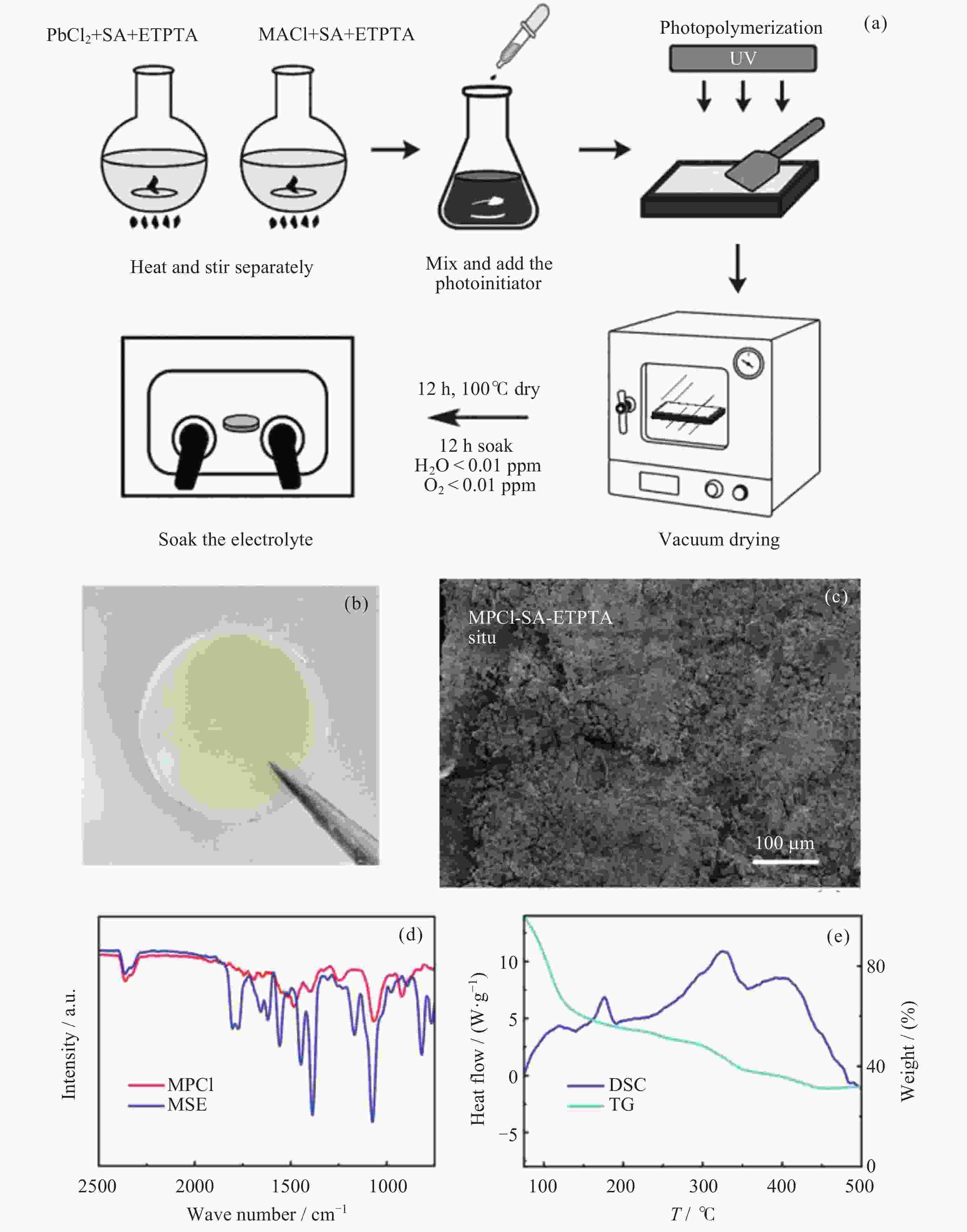
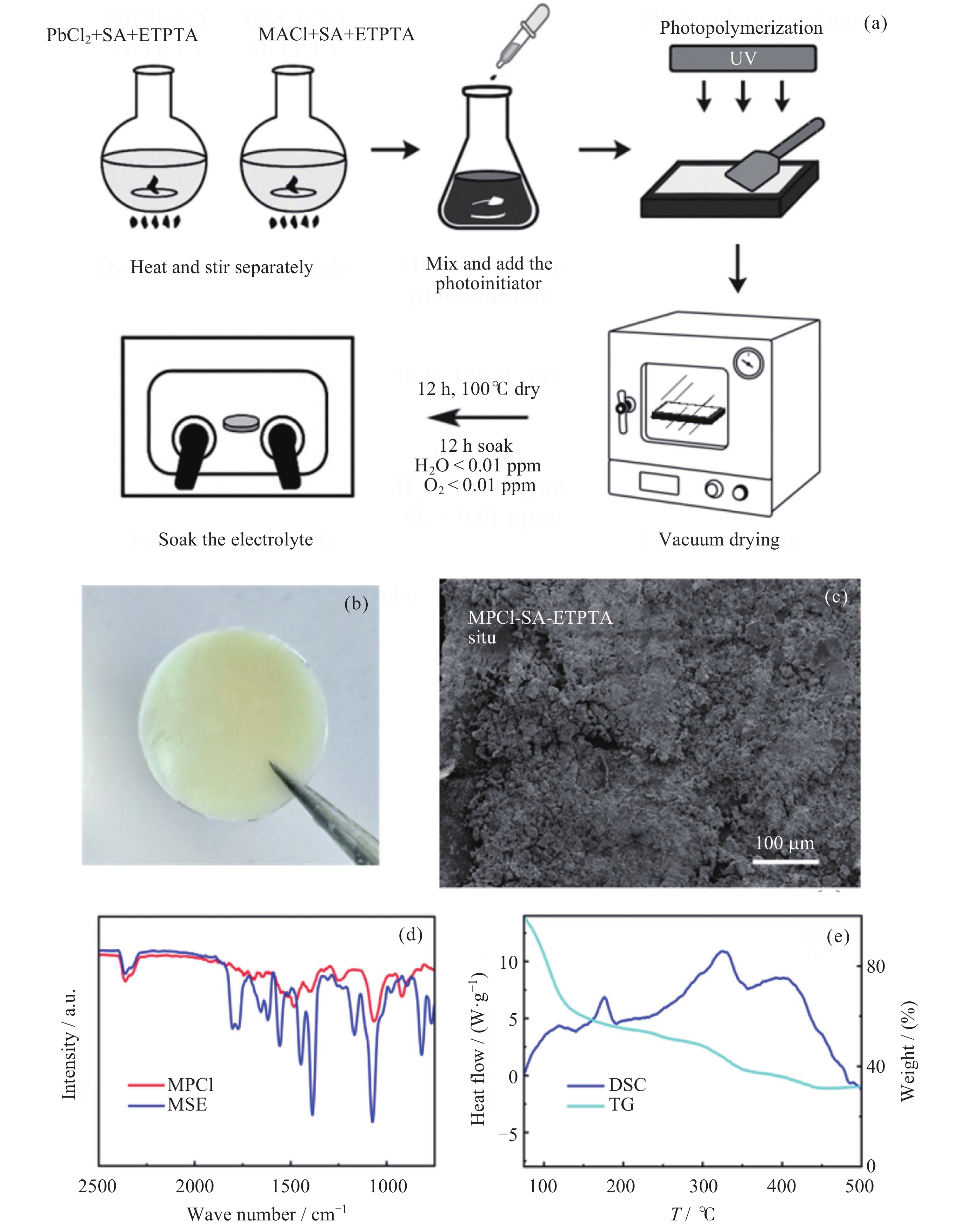
图 1 (a) MSE的合成路线, (b) 数码照片, (c) 扫描电子显微镜照片, (d) MPCl与MSE的红外变换光谱, (e) DSC-TG曲线
Figure 1. (a) Synthetic route map of MSE, (b) digital photos, (c) SEM, (d) FT-IR of MPCl and MSE, (e) DSC-TG curves
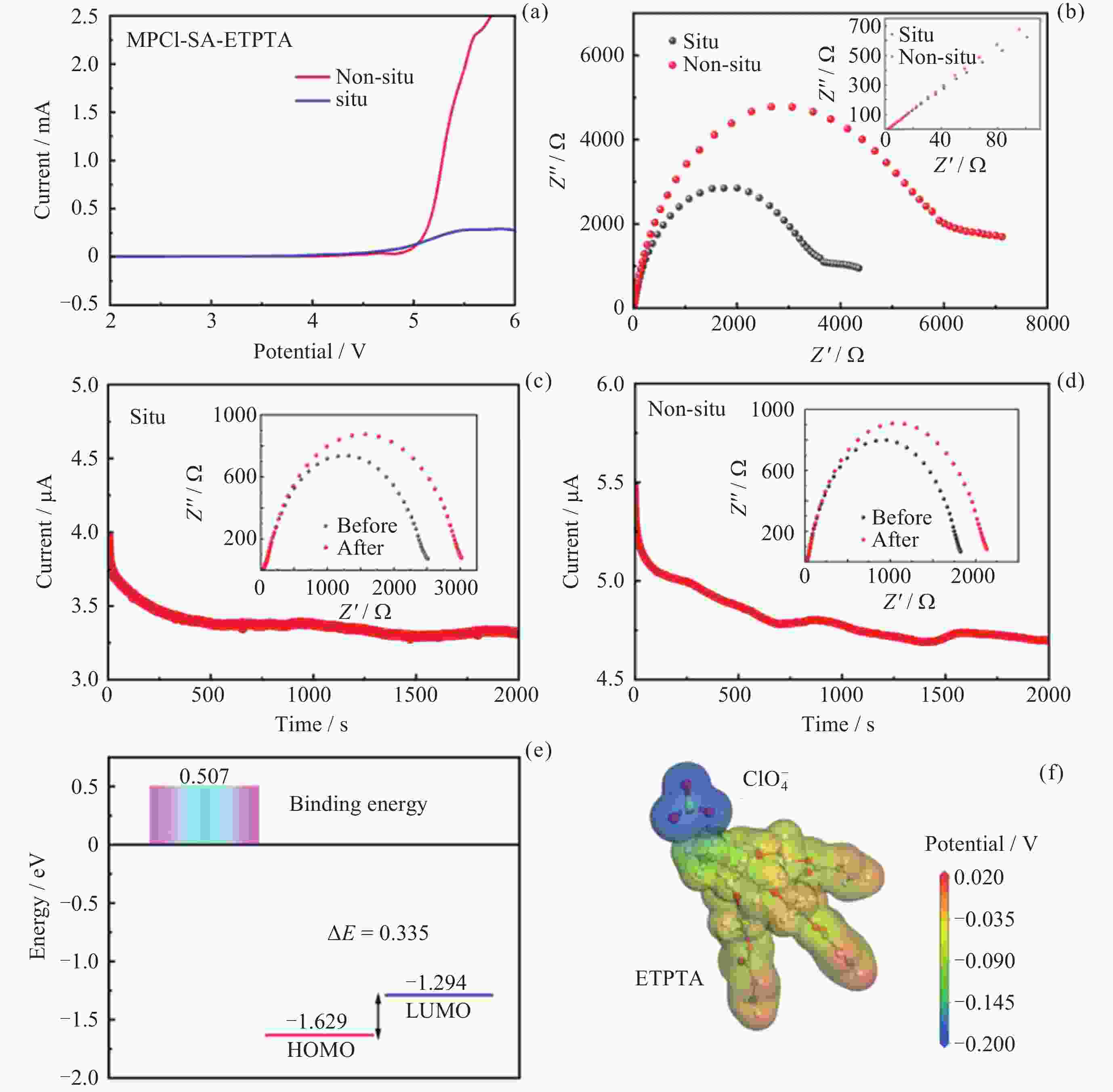
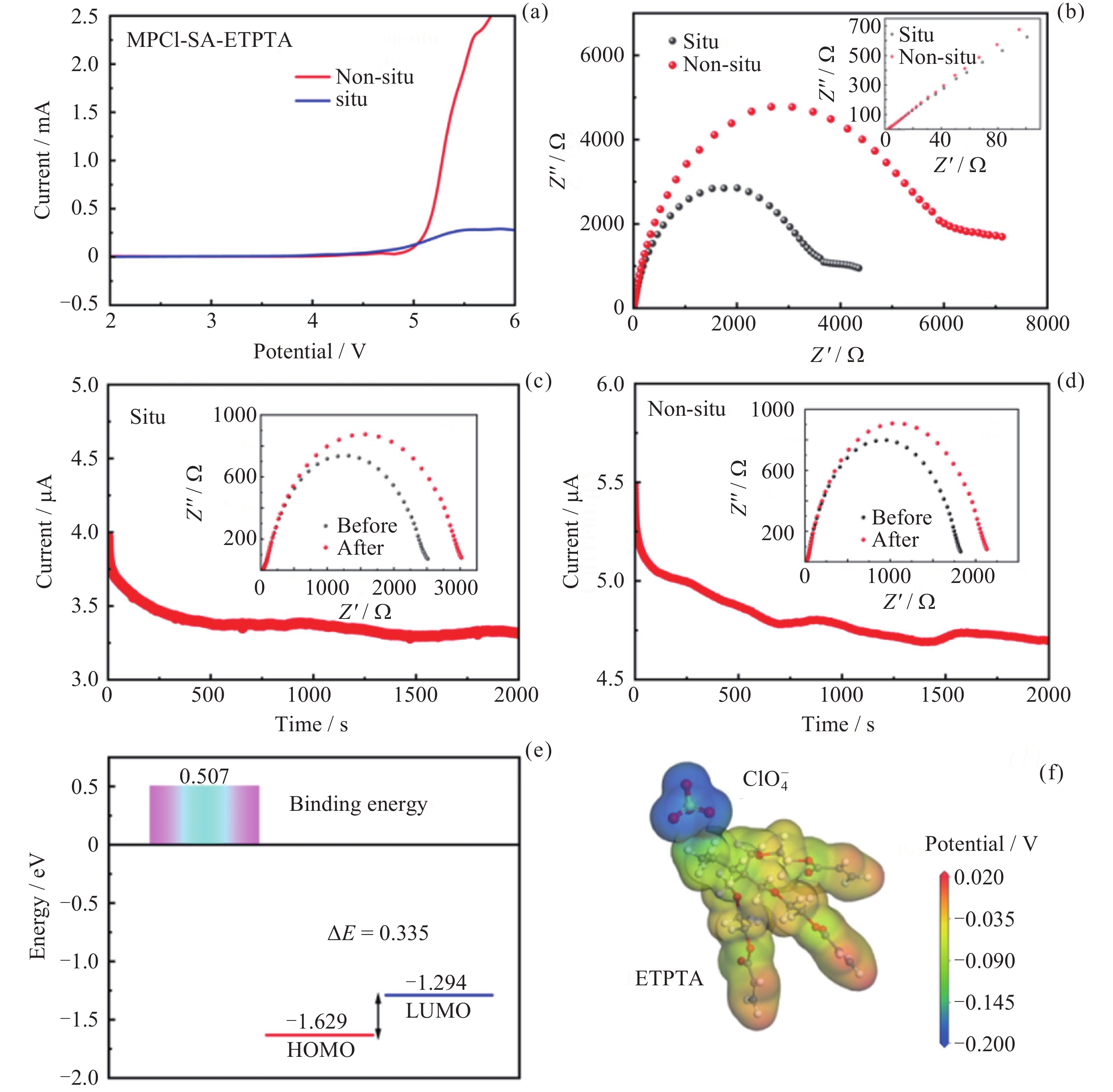
图 2 (a) MSE的LSV曲线, (b) 离子电导率曲线, (c) 极化前电流–时间曲线, (d) 极化后电流–时间曲线, (e) ETPTA与ClO4–的结合能、轨道能级密度泛函, (f) ETPTA与ClO4–的静电势的密度泛函
Figure 2. (a) LSV curves of MSE, (b) ion conductivity curves, (c) current-time curves of MSE before polarization, (d) current-time curves of MSE after polarization, (e) binding energy and orbital energy levels DFT calculations of ETPTA and ClO4–, (f) electrostatic potential DFT calculations of ETPTA and ClO4–
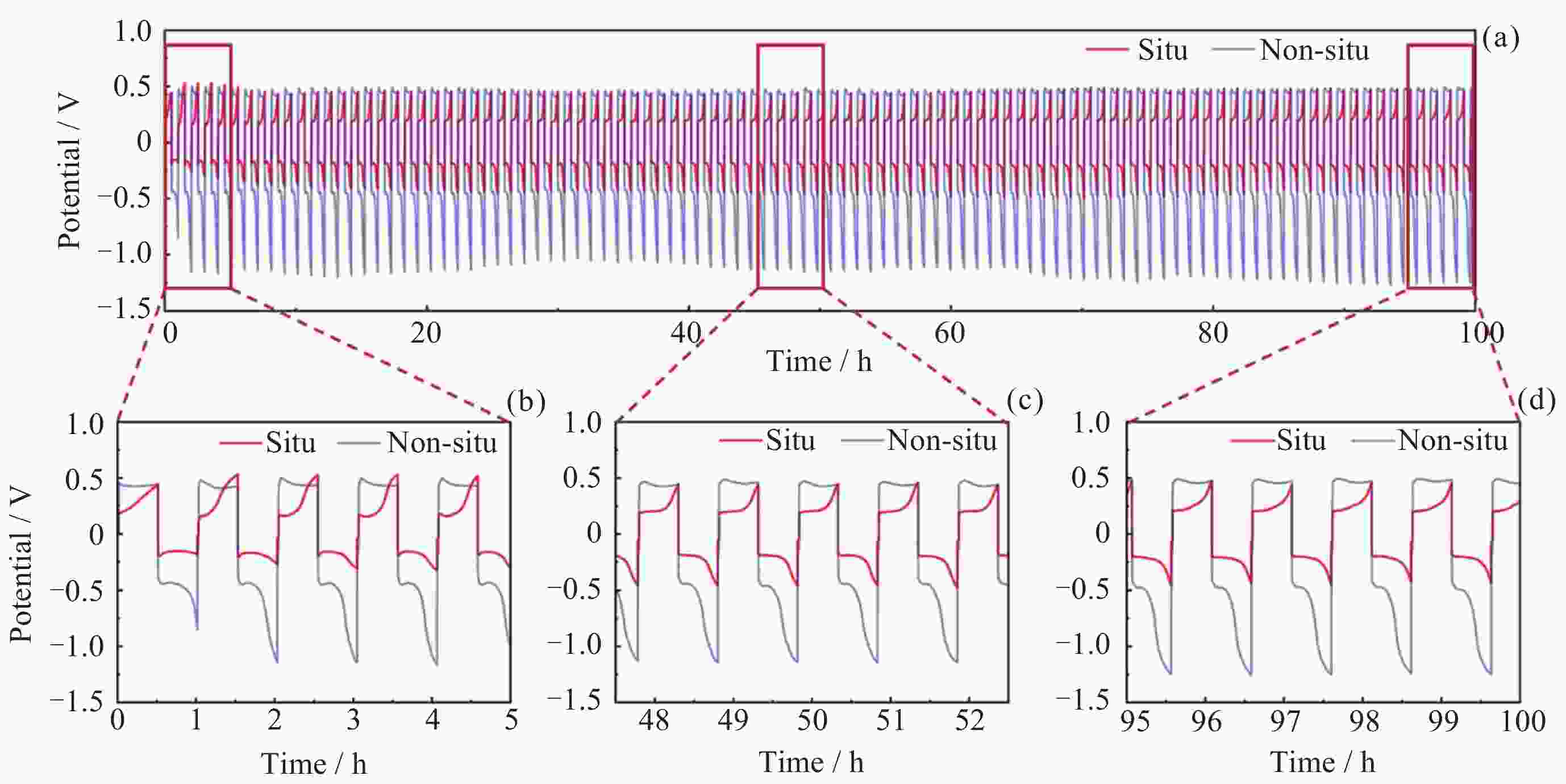
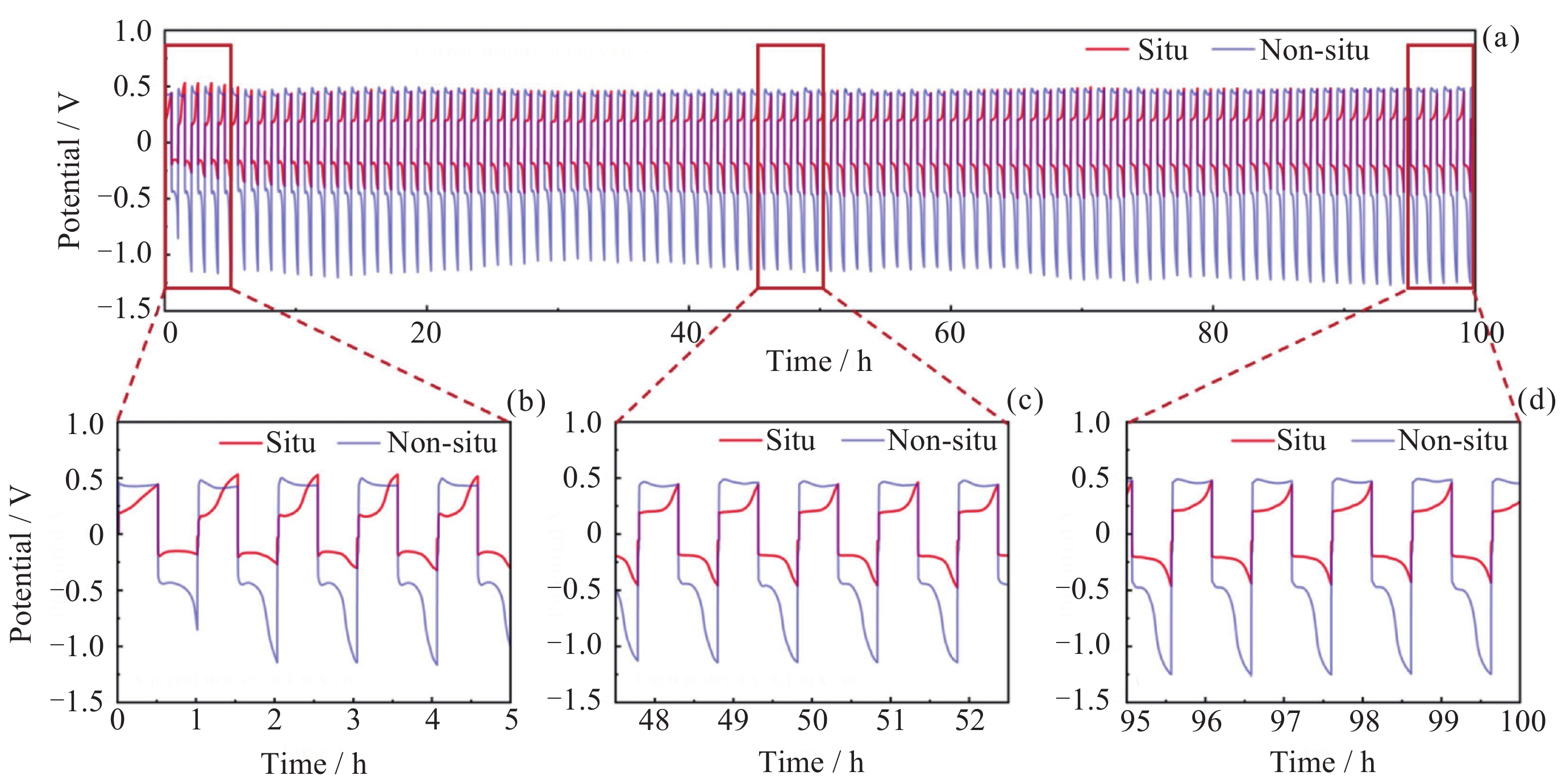
图 3 (a) 在0.1 mA·cm–2的电流密度下用 MSE 组装的钠对称电池的电压曲线. (b)~(d)为局部放大
Figure 3. (a) Potential profiles of Na-symmetric cells assembled with MSE at a current density of 0.1 mA·cm–2. (b)~(d) are magnified views
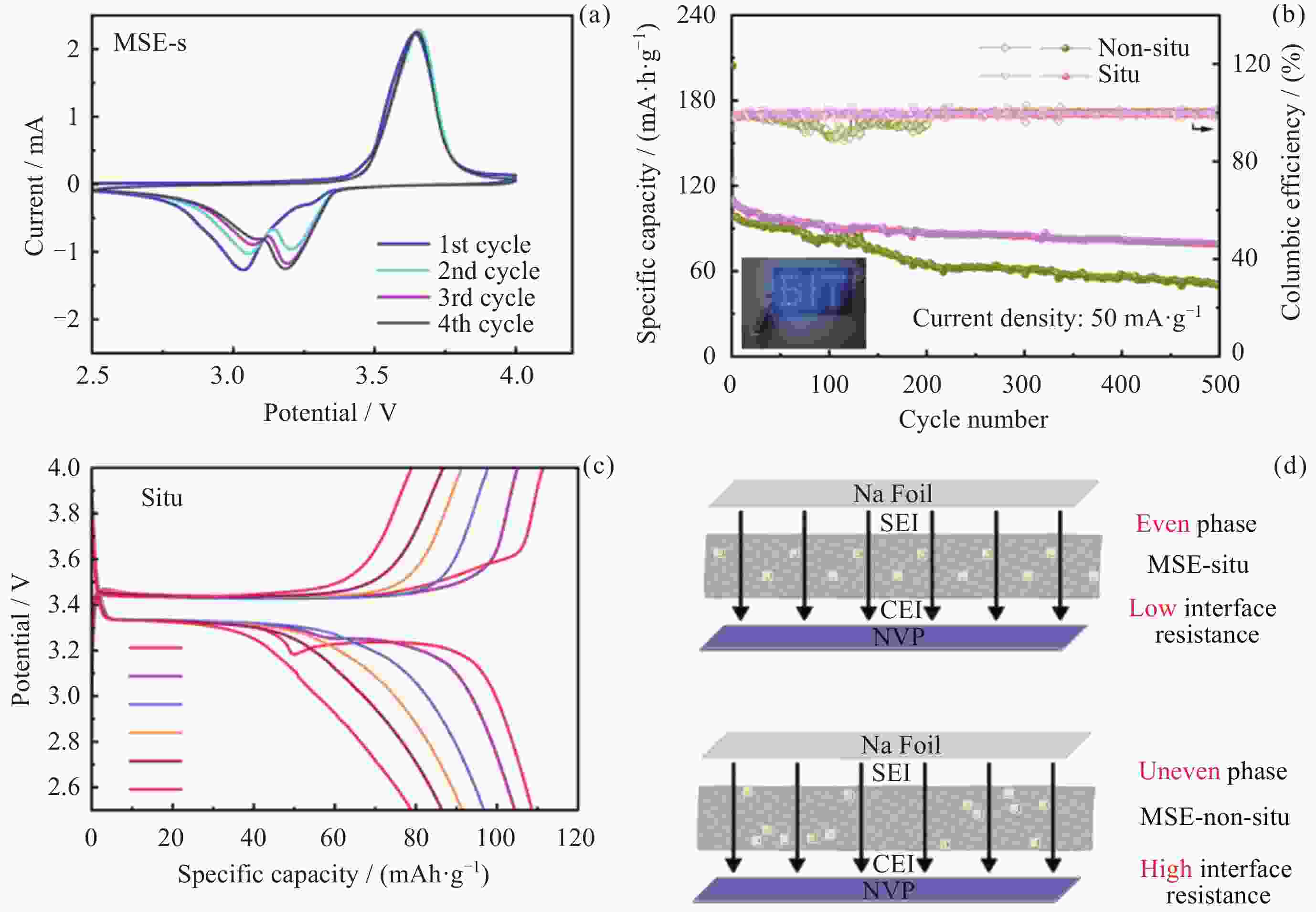
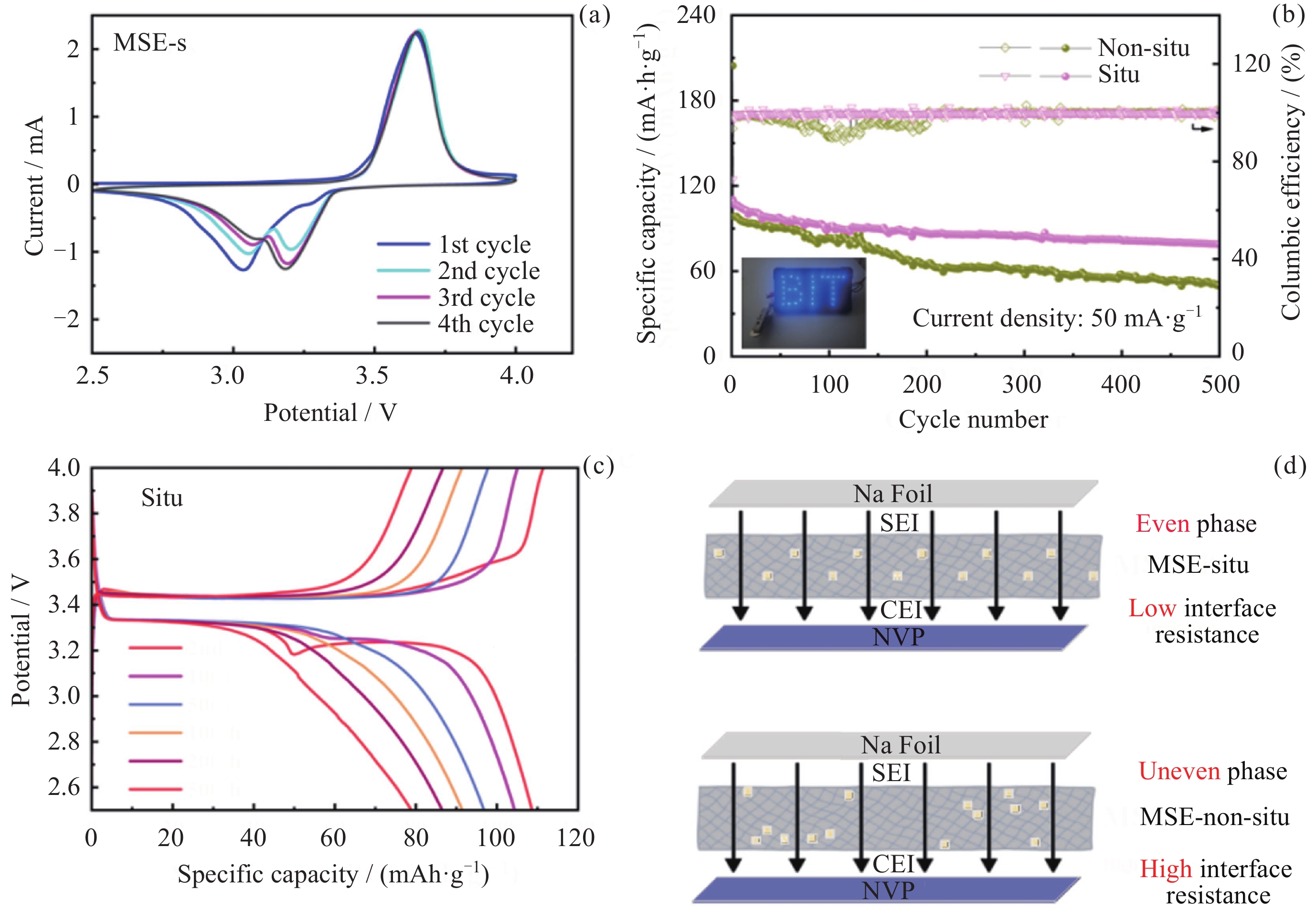
图 4 (a) NVP|MSE|Na在50 mA 的CV曲线, (b) 50 mA·g–1电流密度下的长循环曲线, (c)充放电曲线, (d) MSE-s与MSE-n形成的SEI, CEI
Figure 4. (a) CV curves of NVP|MSE|Na at 50 mA, (b) long cycle curves at 50 mA·g–1 current density, (c) charge-discharge curves, (d) schematic diagram of SEI and CEI formed by MSE-s and MSE-n
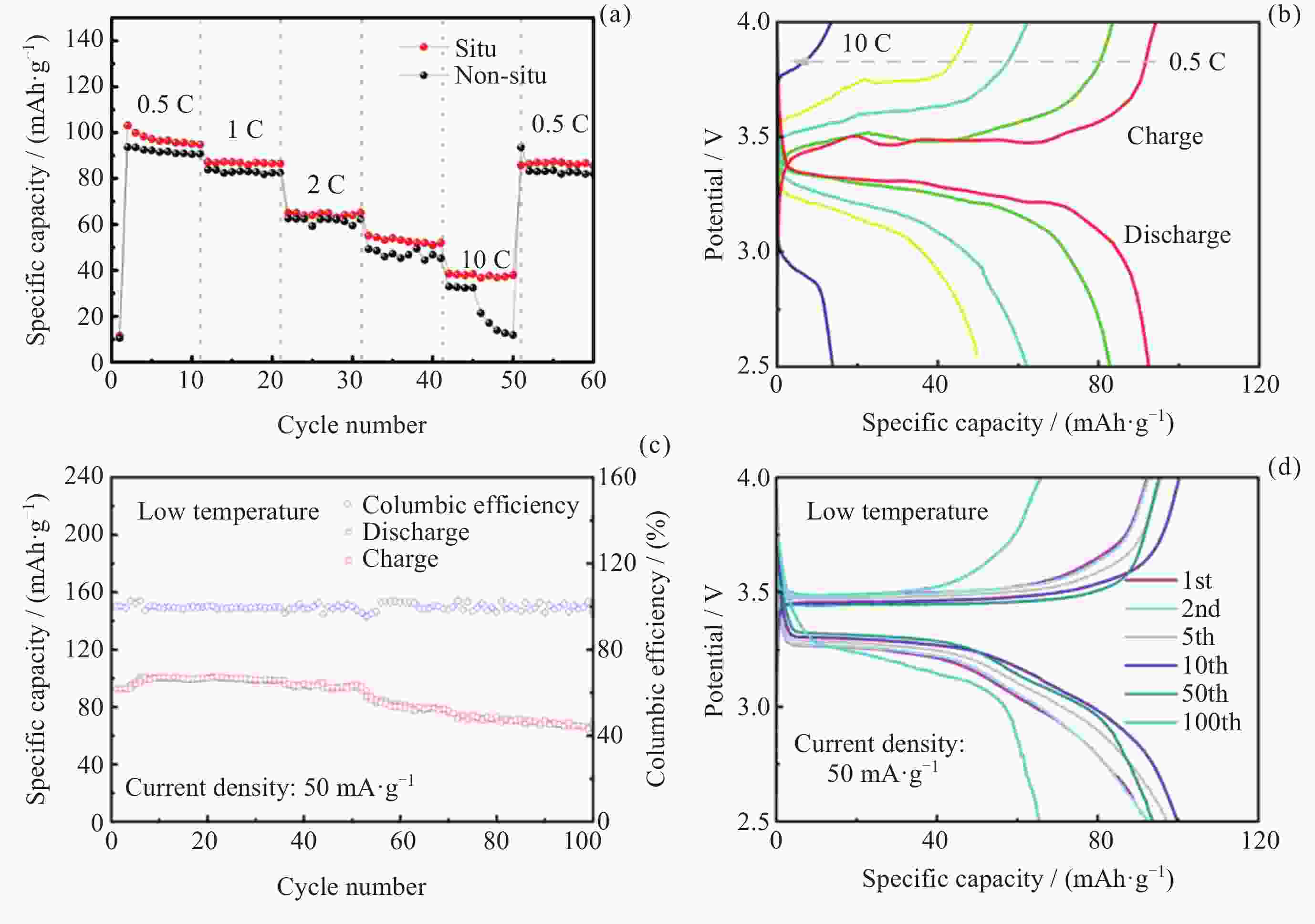
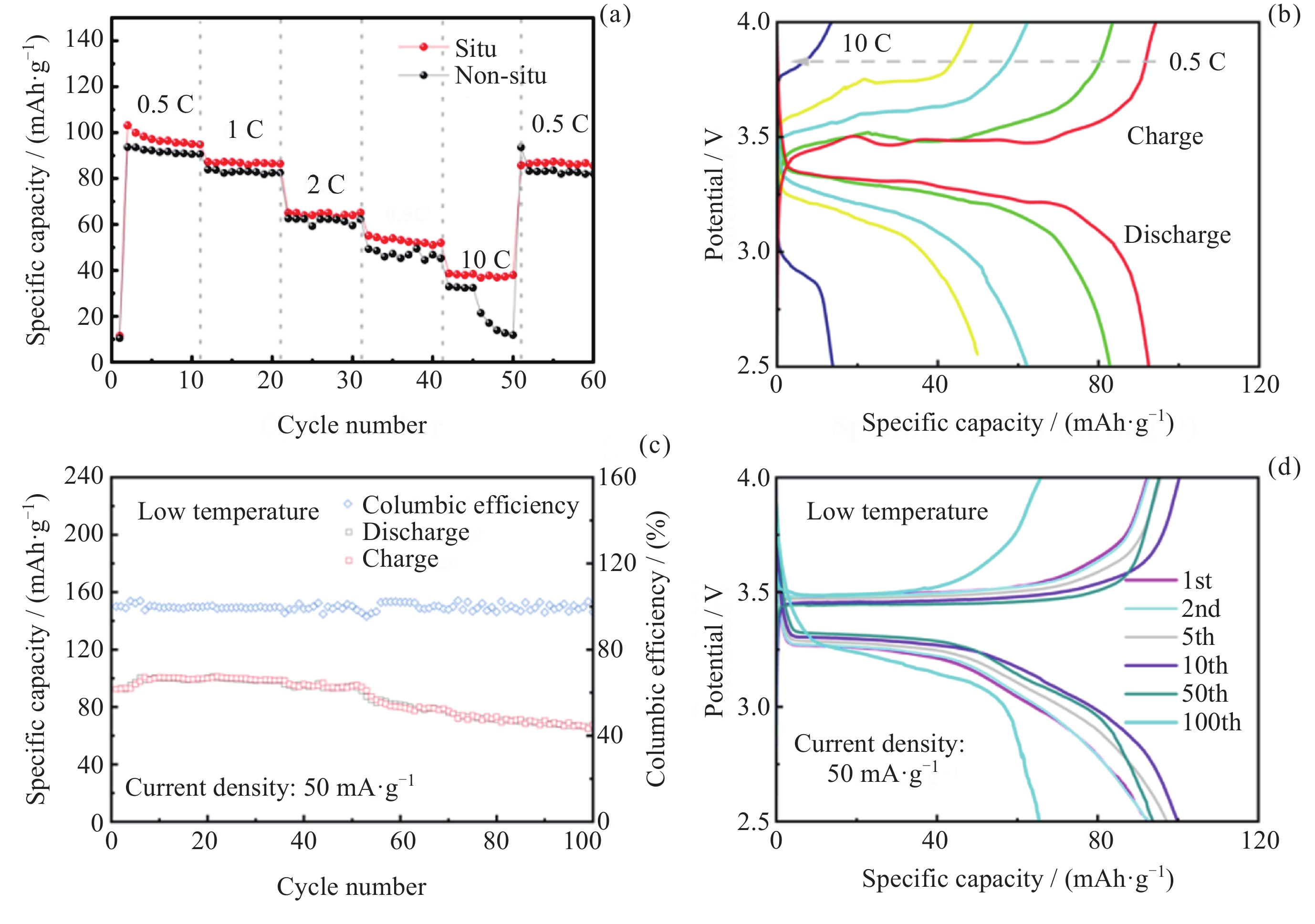
图 5 (a) 0.5~10 C电流密度下 NVP|MSE|Na的充放电曲线, (b) 0.5~10 C电流密度下NVP|MSE|Na的倍率性能, (c) –20℃低温环境下NVP|MSE-s|Na的长循环曲线, (d) –20℃低温环境下NVP|MSE-s|Na的充放电曲线
Figure 5. Charge-discharge curves (a) and rate performance (b) of NVP|MSE|Na at a current density of 0.5~10 C, long cycle curve (c) and charge-discharge curve (d) of NVP|MSE-s|Na in the low-temperature environment of –20℃
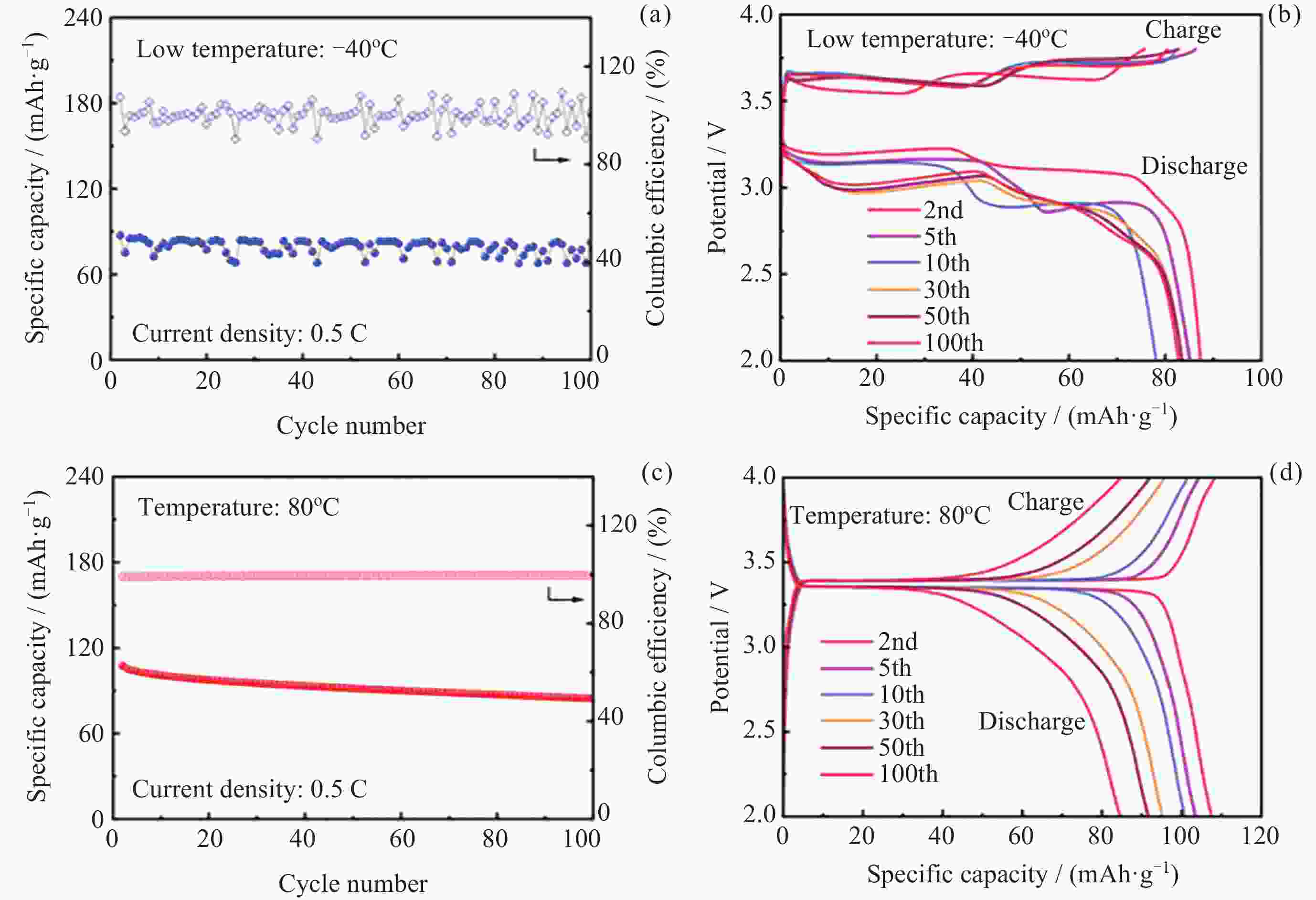
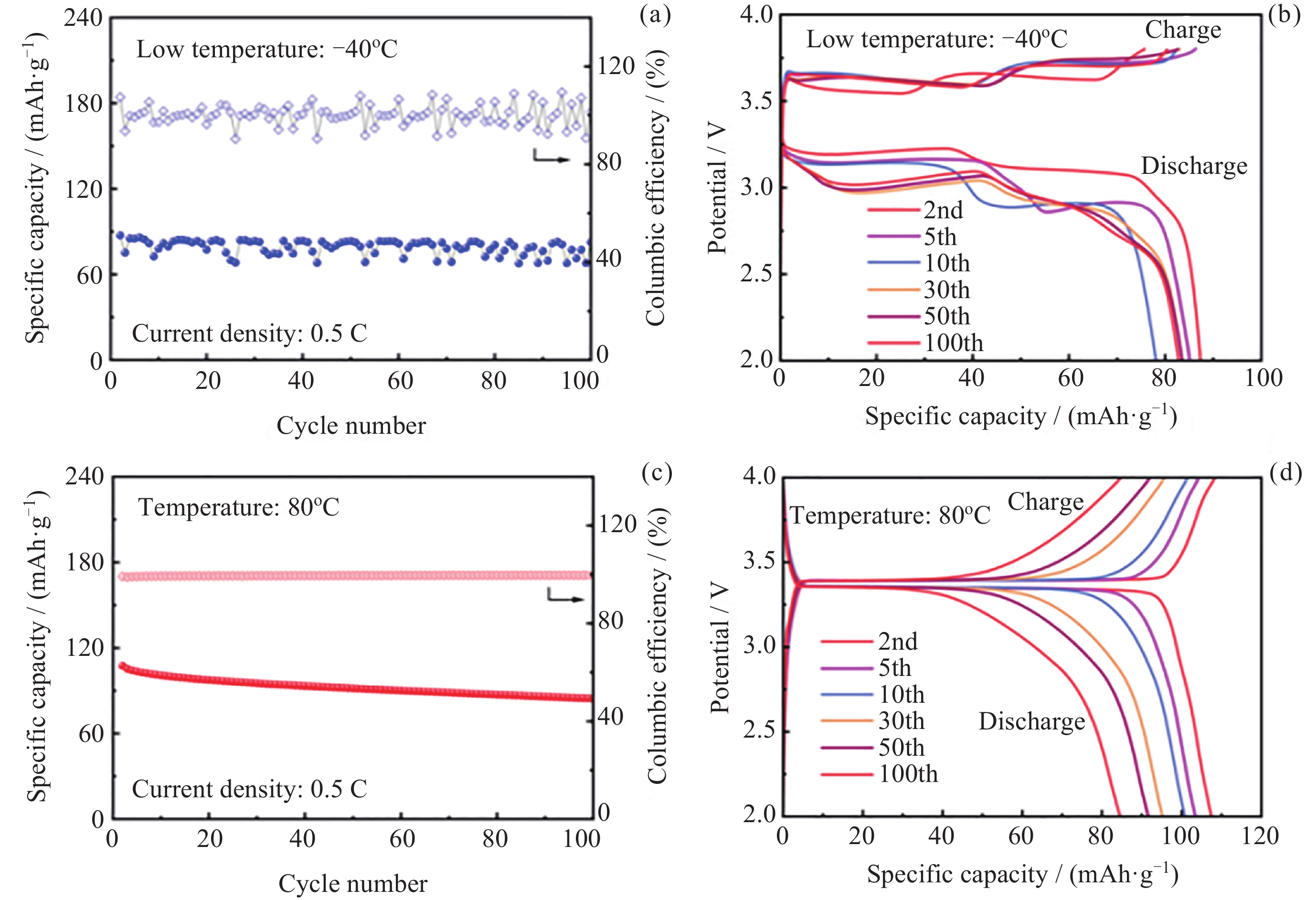
图 6 在0.5 C电流密度下, NVP|MSE-s|Na电池的极端温度性能测试. (a) –40℃条件下的长循环性能, (b) 对应的充放电曲线, (c) 80℃条件下的长循环性能, (d) 对应的充放电曲线
Figure 6. Extreme temperature performance tests of the NVP|MSE-s|Na cell at a current density of 0.5 C. Long-term cycling performance at –40℃ (a) and the corresponding charge-discharge curves (b), long-term cycling performance at 80℃ (c) and the corresponding charge-discharge curves (d)
-
[1] GAO Y J, YU Q Y, YANG H Z, et al. The enormous potential of sodium/potassium-ion batteries as the mainstream energy storage technology for large-scale commercial applications[J]. Advanced Materials, 2024, 36(39): 2405989 doi: 10.1002/adma.202405989 [2] HUANG H J, WU X W, Gao Y J, et al. Polyanionic cathode materials: a comparison between Na‐ion and K‐ion batteries[J]. Advanced Energy Materials, 2024, 14(14): 2304251 doi: 10.1002/aenm.202304251 [3] WANG T Q, YU Q Y, LI Z Y, et al. The potential of solid‐state potassium‐ion batteries with polymer‐based electrolytes[J]. Carbon Energy, 2025, 7(3): e670 doi: 10.1002/cey2.670 [4] DUSTIN J S, BORRELLI R A. Modeling of Am-241 as an alternative fuel source in a radioisotope thermoelectric generator[J]. Nuclear Engineering and Design, 2021, 385: 111495 doi: 10.1016/j.nucengdes.2021.111495 [5] HUANG H J, LI Z Y, GAO Y J, et al. High electrochemical performance of sodium-ion gel polymer electrolytes achieved through a sandwich design strategy combining soft polymers with a rigid MOF[J]. Energies, 2025, 18(5): 1160 doi: 10.3390/en18051160 [6] LI Z Y, GAO Y J, WANG W, et al. In-situ bridging soft polymer and robust metal-organic frameworks as electrolyte for long-cycling solid-state potassium-organic batteries[J]. Energy Storage Materials, 2024, 72: 103732 doi: 10.1016/j.ensm.2024.103732 [7] ZHOU J, WANG Y Y, WANG J W, et al. Low-temperature and high-rate sodium metal batteries enabled by electrolyte chemistry[J]. Energy Storage Materials, 2022, 50: 47-54 doi: 10.1016/j.ensm.2022.05.005 [8] WANG Y G, WANG Q F, LIU Z P, et al. Structural manipulation approaches towards enhanced sodium ionic conductivity in Na-rich antiperovskites[J]. Journal of Power Sources, 2015, 293: 735-740 doi: 10.1016/j.jpowsour.2015.06.002 [9] SONG S F, DUONG H M, KORSUNSKY A M, et al. A Na+ superionic conductor for room-temperature sodium batteries[J]. Scientific Reports, 2016, 6(1): 32330 doi: 10.1038/srep32330 [10] HU C J, QI J Z, ZHANG Y X, et al. Room-temperature all-solid-state sodium battery based on bulk interfacial superionic conductor[J]. Nano Letters, 2021, 21(24): 10354-10360 doi: 10.1021/acs.nanolett.1c03605 [11] BI X L, MU W N, MENG J J, et al. Toward high performance all-solid-state lithium or sodium metal batteries: potential application on Li/Na-rich antiperovskites (LiRAPs/NaRAPs) electrolyte for energy storage[J]. Energy Storage Materials, 2024, 73: 103807 doi: 10.1016/j.ensm.2024.103807 [12] AN T, JIA H H, PENG L F, et al. Material and interfacial modification toward a stable room-temperature solid-state Na–S battery[J]. ACS Applied Materials & Interfaces, 2020, 12(18): 20563-20569 doi: 10.1021/acsami.0c03899 [13] CHEN S L, CHE H Y, FENG F, et al. Poly (vinylene carbonate)-based composite polymer electrolyte with enhanced interfacial stability to realize high-performance room-temperature solid-state sodium batteries[J]. ACS Applied Materials & Interfaces, 2019, 11(46): 43056-43065 doi: 10.1021/acsami.9b11259 [14] HOU J Y, ZHU T K, WANG G, et al. Composite electrolytes and interface designs for progressive solid‐state sodium batteries[J]. Carbon Energy, 2024, 6(10): e628 doi: 10.1002/cey2.628 [15] HU J K, LEE Y J, WU C C, et al. Dual crystal-liquid thermal transport behavior in MAPbCl3[J]. Small, 2025, 21(4): 2408773 doi: 10.1002/smll.202408773 -
-

 下载:
下载:

计量
- 文章访问数: 1748
- HTML全文浏览量: 843
- PDF下载量: 110
-
被引次数:
0(来源:Crossref)
0(来源:其他)

