


风云气象卫星与商业卫星的掩星分布与协同观测
doi: 10.11728/cjss2026.03.2025-0123 cstr: 32142.14.cjss.2025-0123
-
 鲁文强 男, 1987年6月出生于山东省滨州市, 现为国家卫星气象中心高级工程师, 主要研究方向为GNSS仪器预处理、风云三号卫星仪器地理定位等. E-mail: luwq@cma.gov.cn
 -
 陈冉 女, 2003年出生于河南省安阳市, 现为中国科学院国家空间科学中心博士研究生, 主要研究方向为GNSS掩星数据处理与应用. E-mail: chenran26@mails.ucas.ac.cn
 -
 徐娜 女, 1982年出生于山东省烟台市, 现为国家卫星气象中心研究员, 博士生导师, 主要研究方向为卫星遥感器定标与定量反演. E-mail: xuna@cma.gov.cn
-
 孟祥广 男, 1982年出生于山东省临沂市, 现为中国科学院国家空间科学中心研究员, 博士生导师, 主要研究方向为基于GNSS的空间环境感知及LEO卫星精密定位定轨. E-mail: xgmeng@nssc.ac.cn
作者简介:
通讯作者:
Occultation Distribution and Collaborative Observations of Fengyun Meteorological Satellites and Commercial Satellites
-
摘要: GNSS无线电掩星技术是构建全球高精度大气与电离层探测体系的关键手段. 中国风云三号业务化掩星系统数据质量高、稳定性强、标准化程度高, 然而受其轨道构型限制, 在赤道和极区仍存在覆盖不足的问题. 近年来, 天目、云遥等商业掩星星座的快速发展, 为通过多源协同观测提升掩星数据时空密度提供了新的可能. 基于风云三号、天目星座和云遥星座的实测掩星数据, 系统评估三类星座的空间分布特征及其联合观测效益. 结果表明, 引入商业星座能够显著增加全球掩星事件数量, 增强对低、高纬度区域的覆盖能力, 并将地方时覆盖从分时段分布提升至近全天时连续分布. 尽管观测密度整体提升, 中纬度局部地区仍存在数据过度集中和高分辨率下的观测空白, 反映出轨道构型与星座协同规划尚需进一步优化. 研究为中国风云系列与商业掩星星座的协同发展提供了关键参考.Abstract: GNSS Radio Occultation (RO) serves as a key technique for constructing a global high-precision atmospheric and ionospheric sounding capability. China’s operational Fengyun-3 (FY-3) RO system produces data of exceptional quality, characterized by high accuracy, stability, and standardization, making it the current accuracy benchmark in RO sounding. However, due to its orbital configuration, the FY-3 system alone still exhibits coverage gaps in equatorial and polar regions. In recent years, the rapid development of commercial constellations such as Tianmu and Yunyao has enabled multi-source RO cooperative observations, offering a promising approach to enhance the spatiotemporal density of RO data. Based on RO measurements from the FY-3, Tianmu, and Yunyao constellations, this study systematically evaluates the spatial distribution characteristics and joint observation benefits of the three systems. Results demonstrate that integrating commercial constellations significantly increases the number of global RO events and improves coverage at low and high latitudes. Local time coverage is also enhanced from segmented intervals to nearly continuous throughout the day. Despite the considerable improvement in observational density, data overconcentration in certain mid-latitude areas and small-scale gaps under high-resolution analysis remain, indicating that orbital configurations and constellation coordination require further optimization. This study provides quantitative references for the future collaborative development of China’s FY-3 and commercial RO constellations.
-
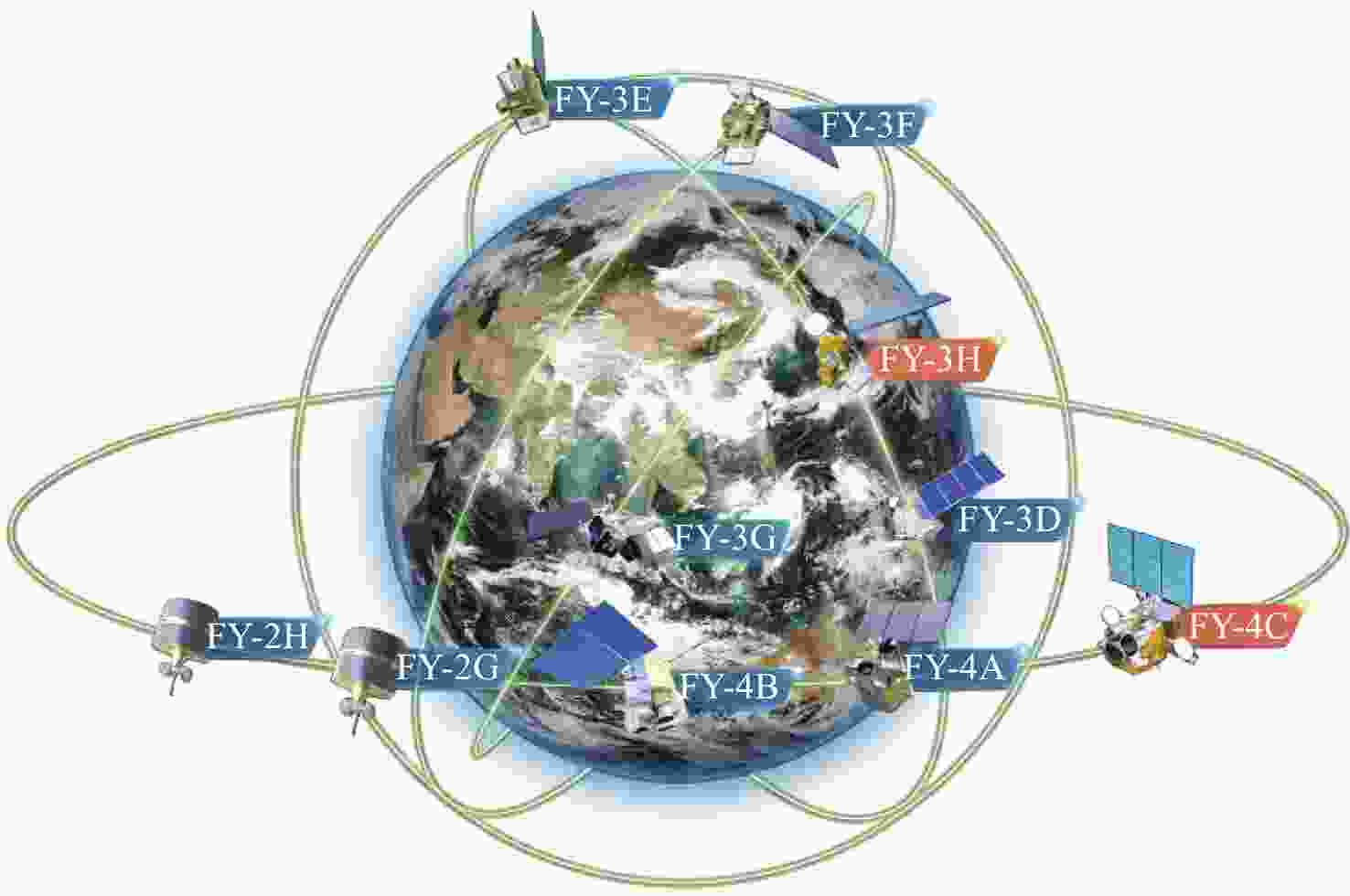
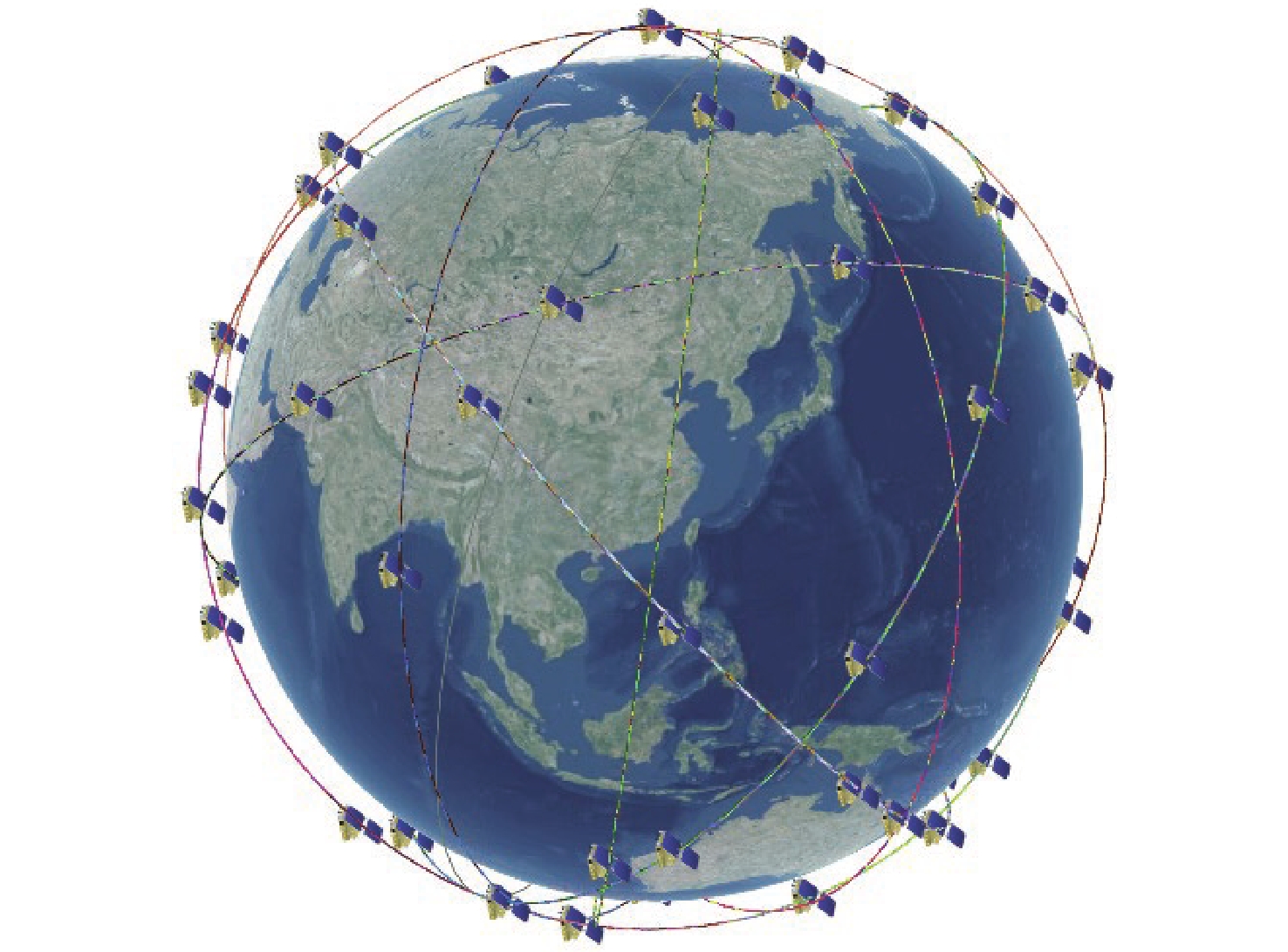
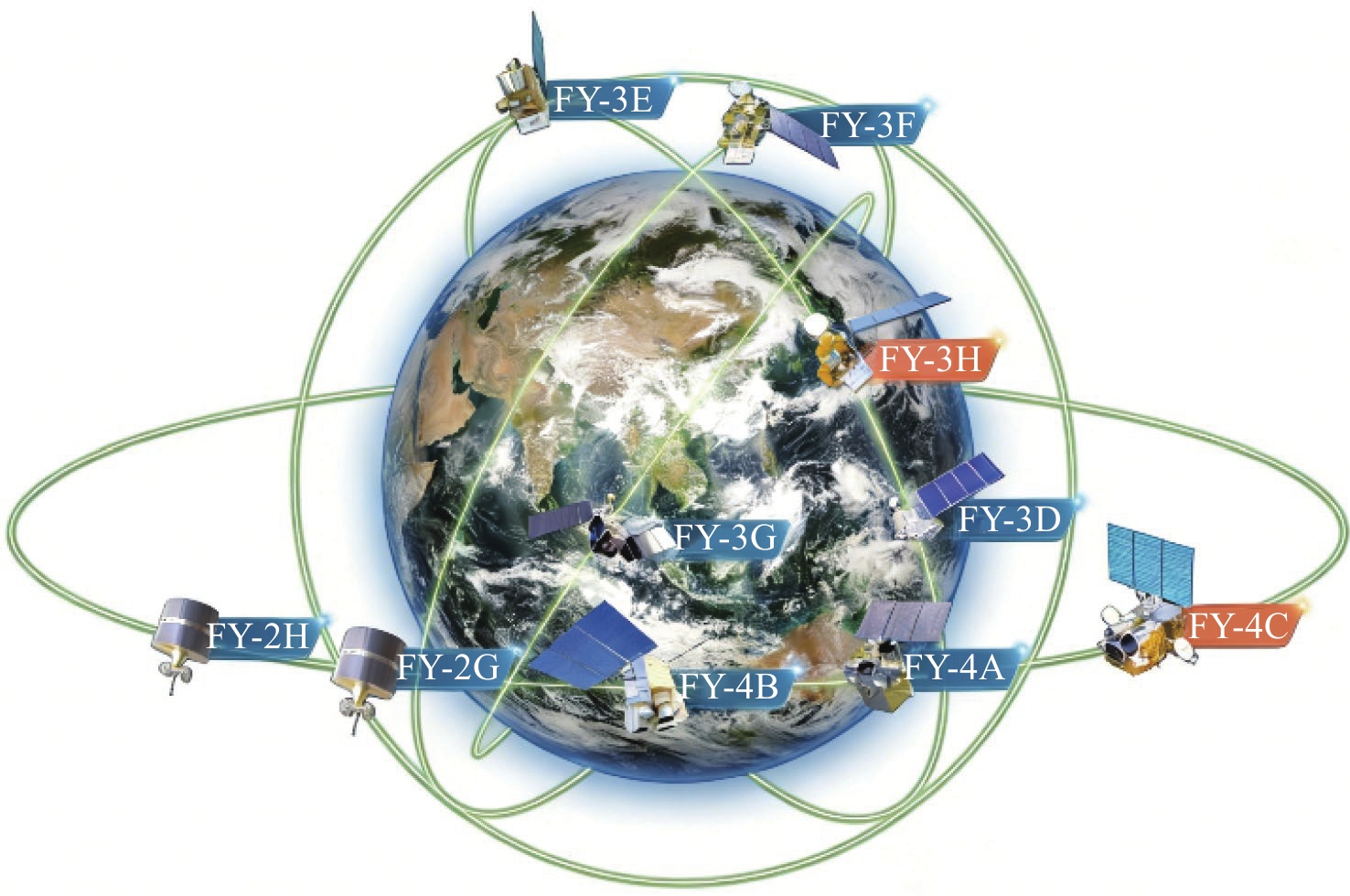
图 1 风云卫星在轨布局(截至2026年1月)
Figure 1. Deployment of Fengyun satellites in orbit by January 2026
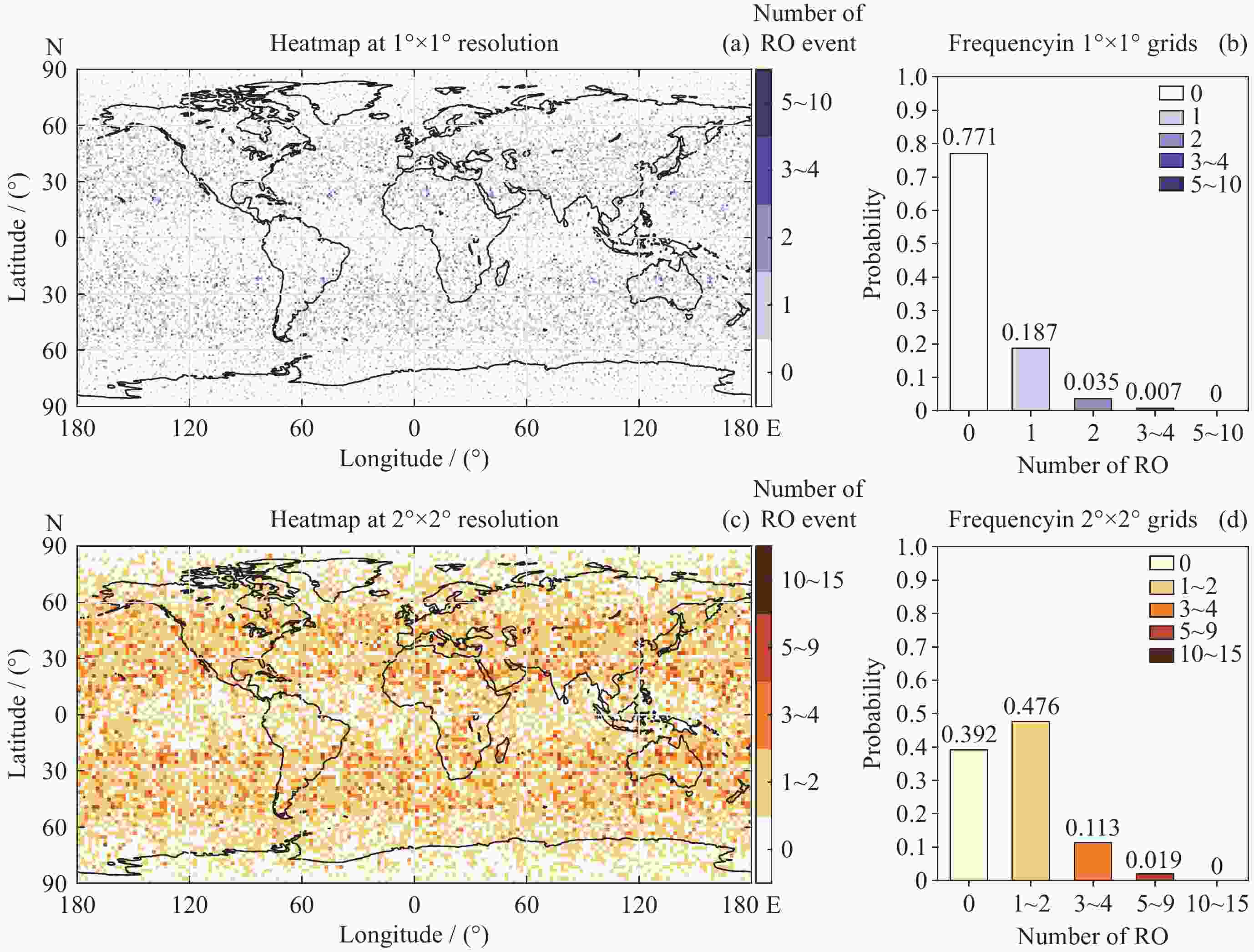
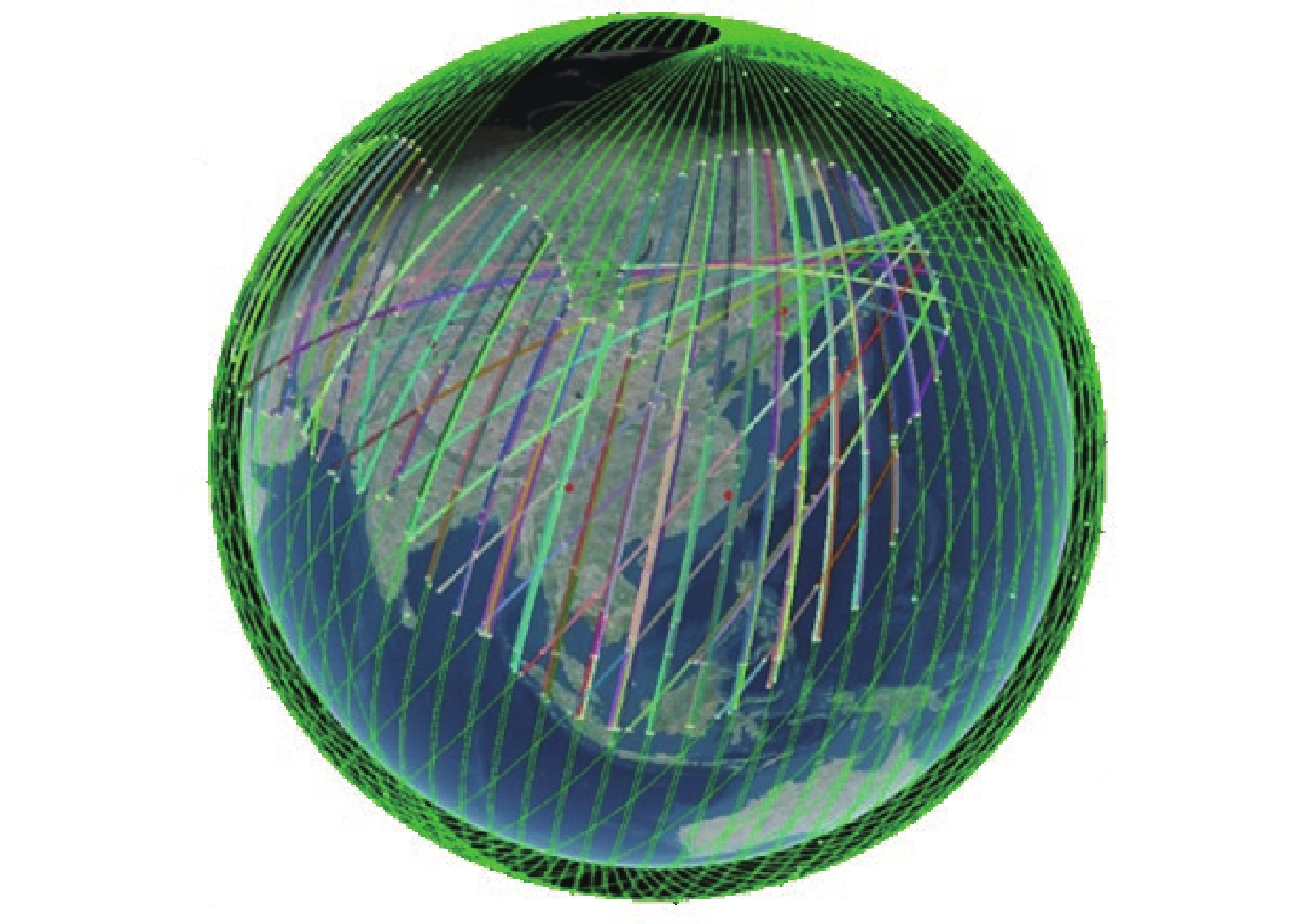
图 2 掩星事件空间分布及网格频次统计
Figure 2. Spatial distribution of occultation events and grid frequency statistics
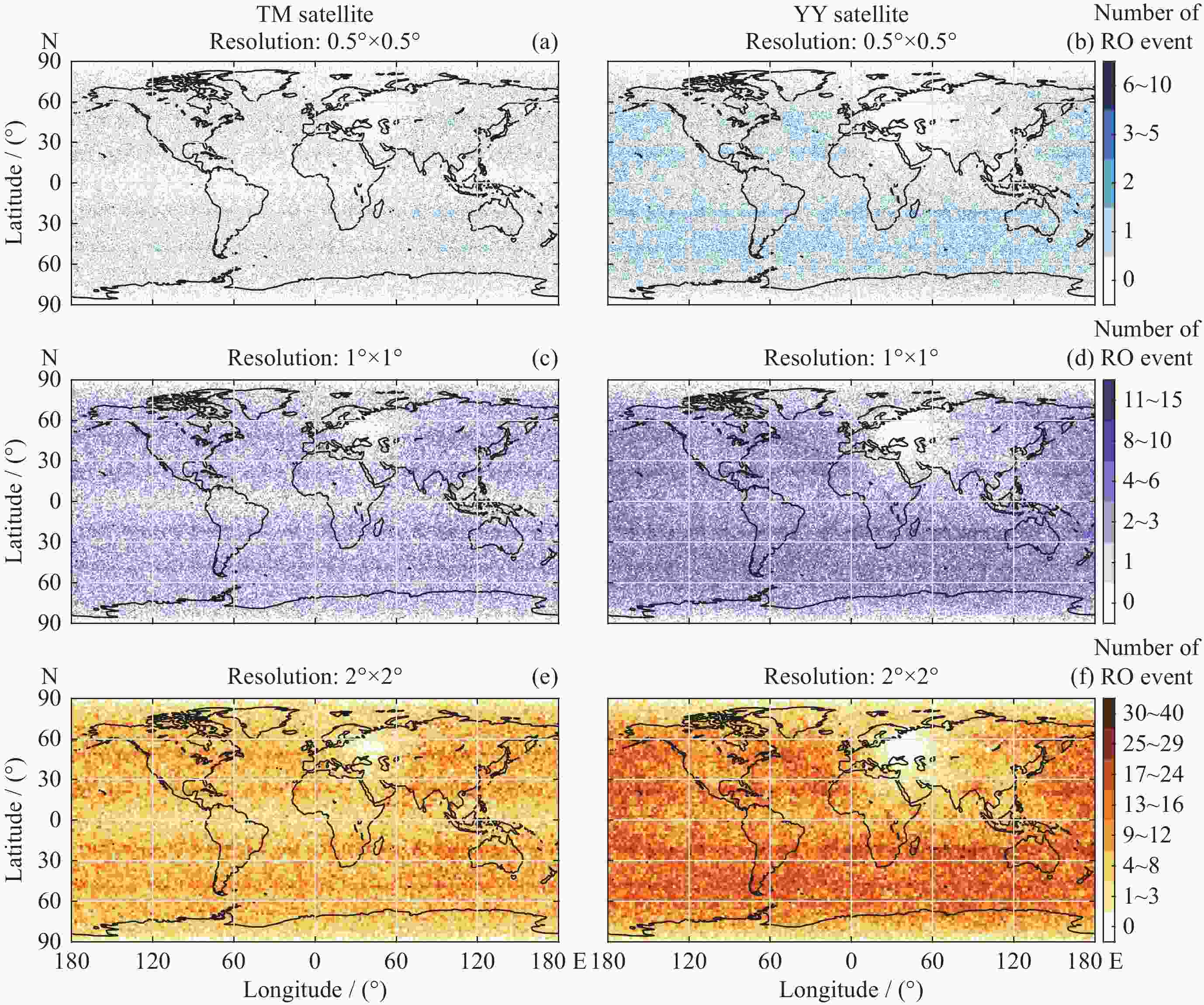
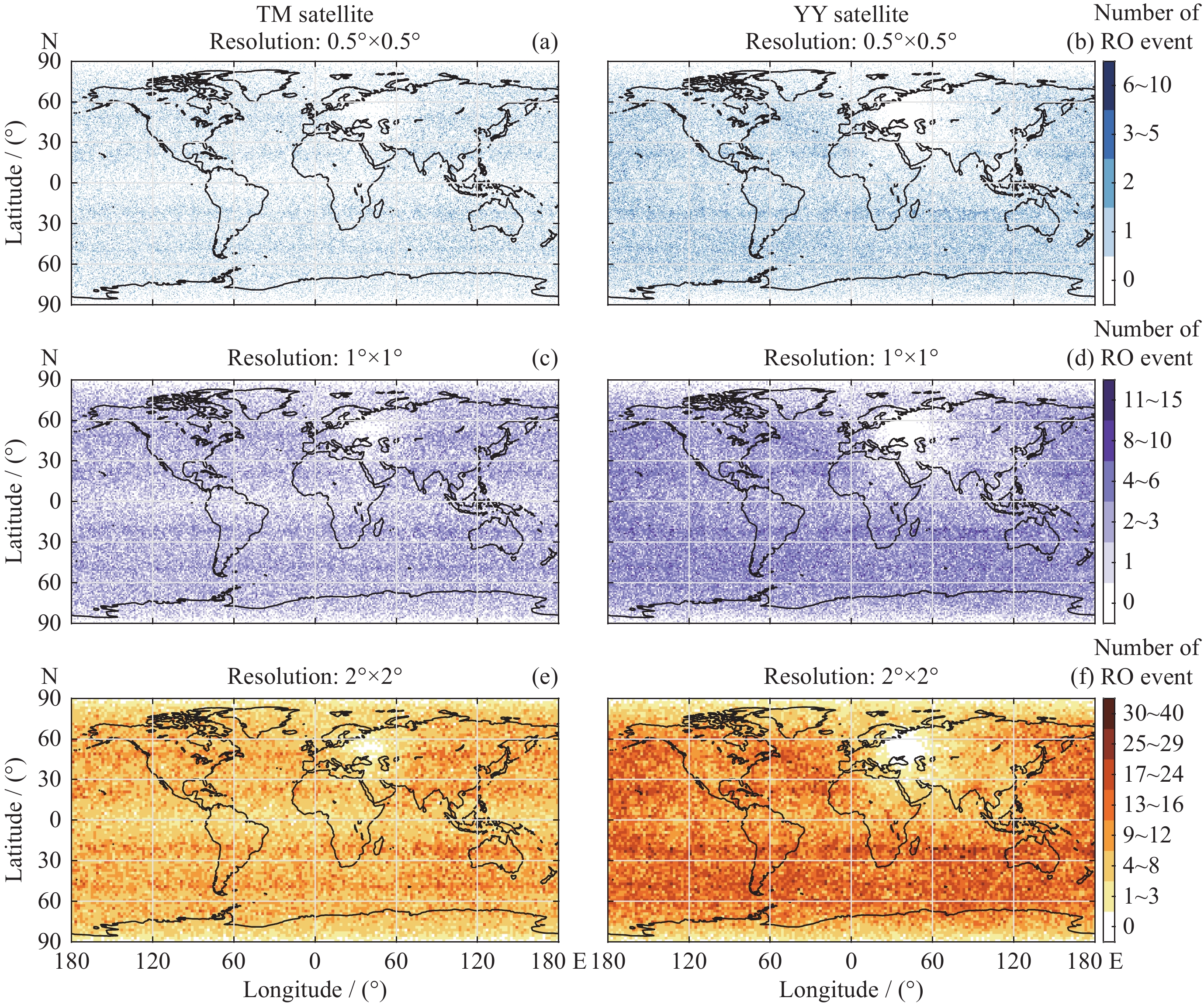
图 6 天目与云遥商业卫星在不同分辨率下掩星事件的空间分布热力图
Figure 6. Spatial distribution heatmaps of occultation events for TM and YY commercial satellites at different resolutions
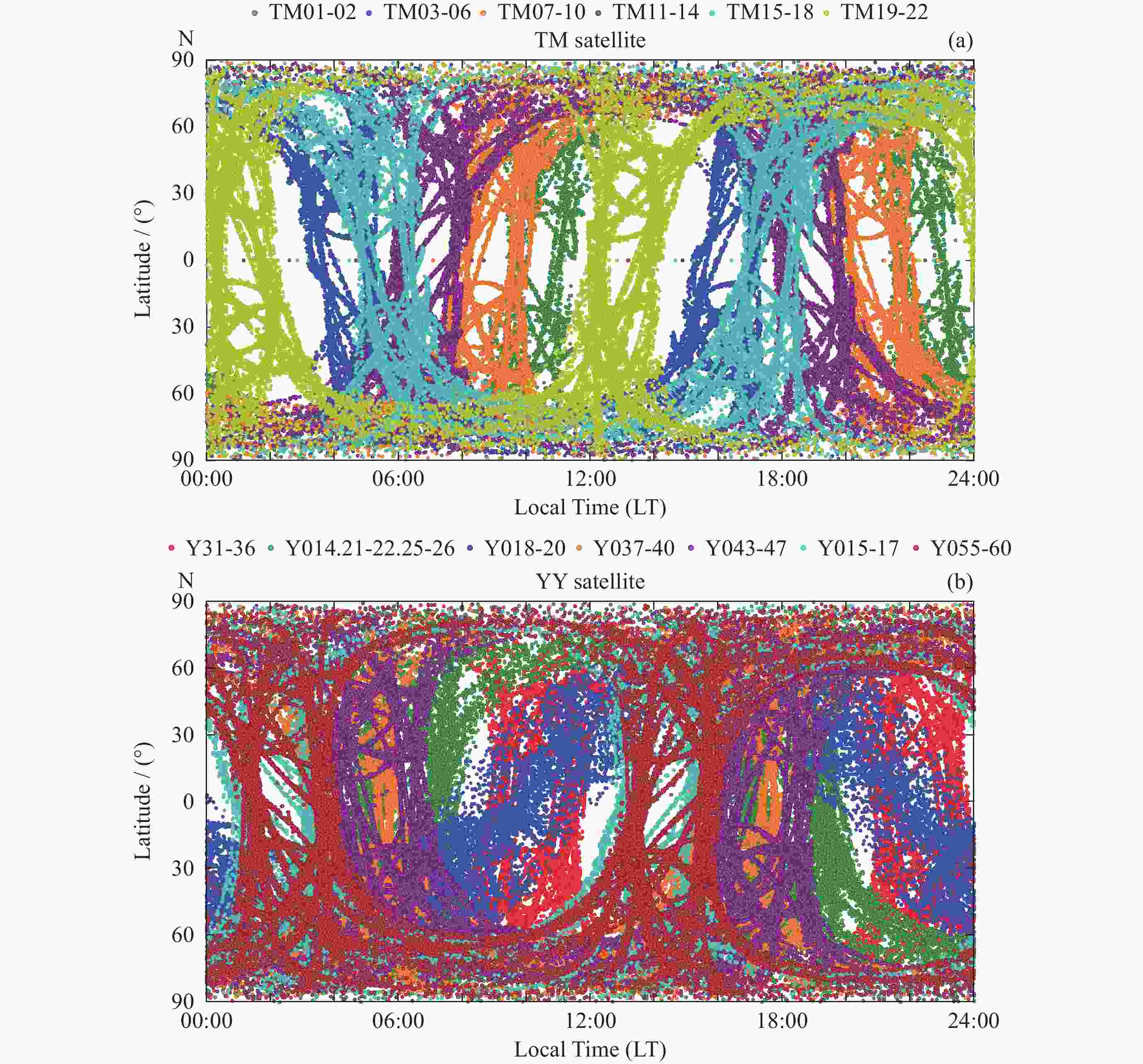
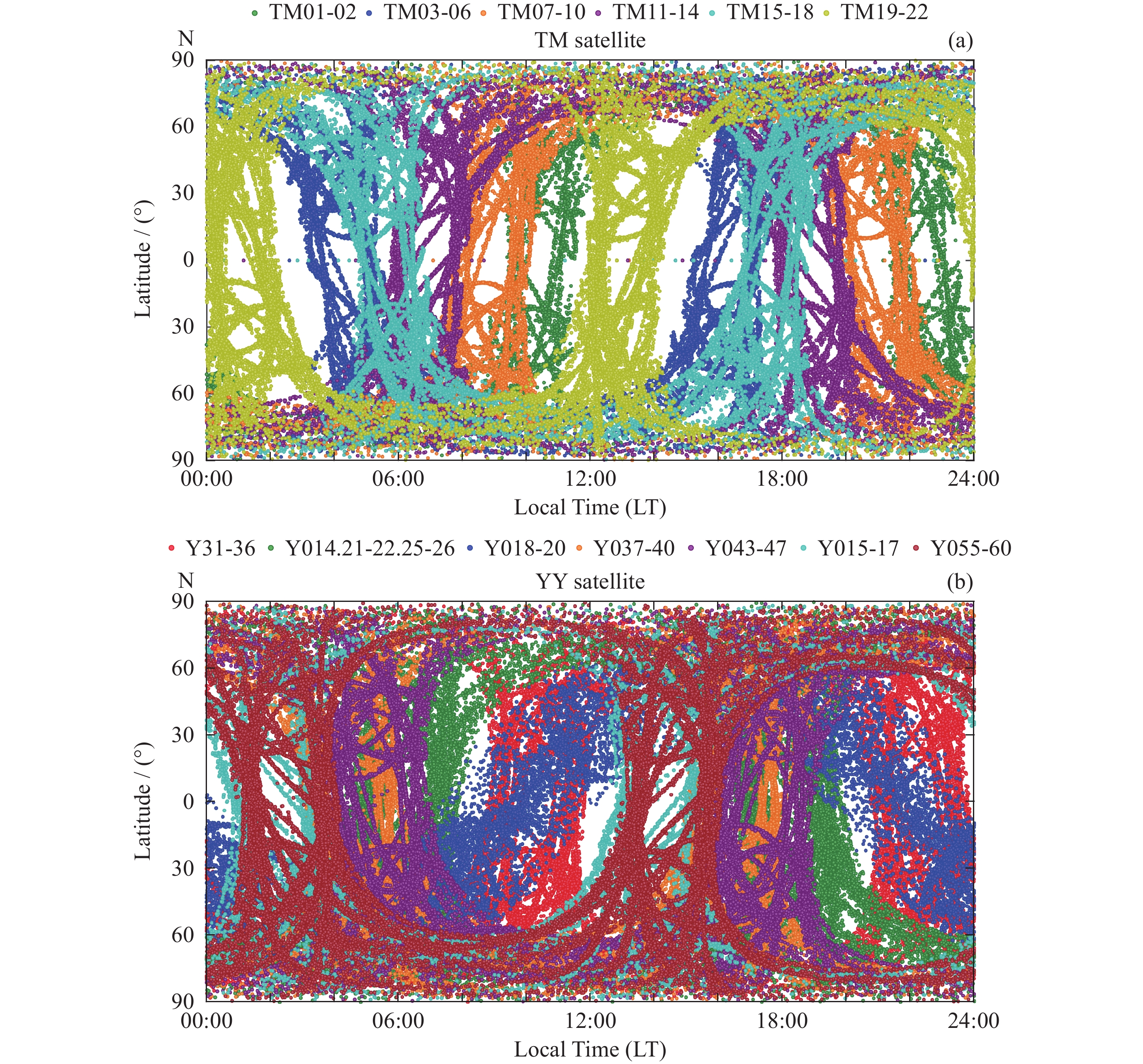
图 7 天目与云遥掩星事件的地方时分布
Figure 7. Local time distribution of occultation events for TM and YY satellite
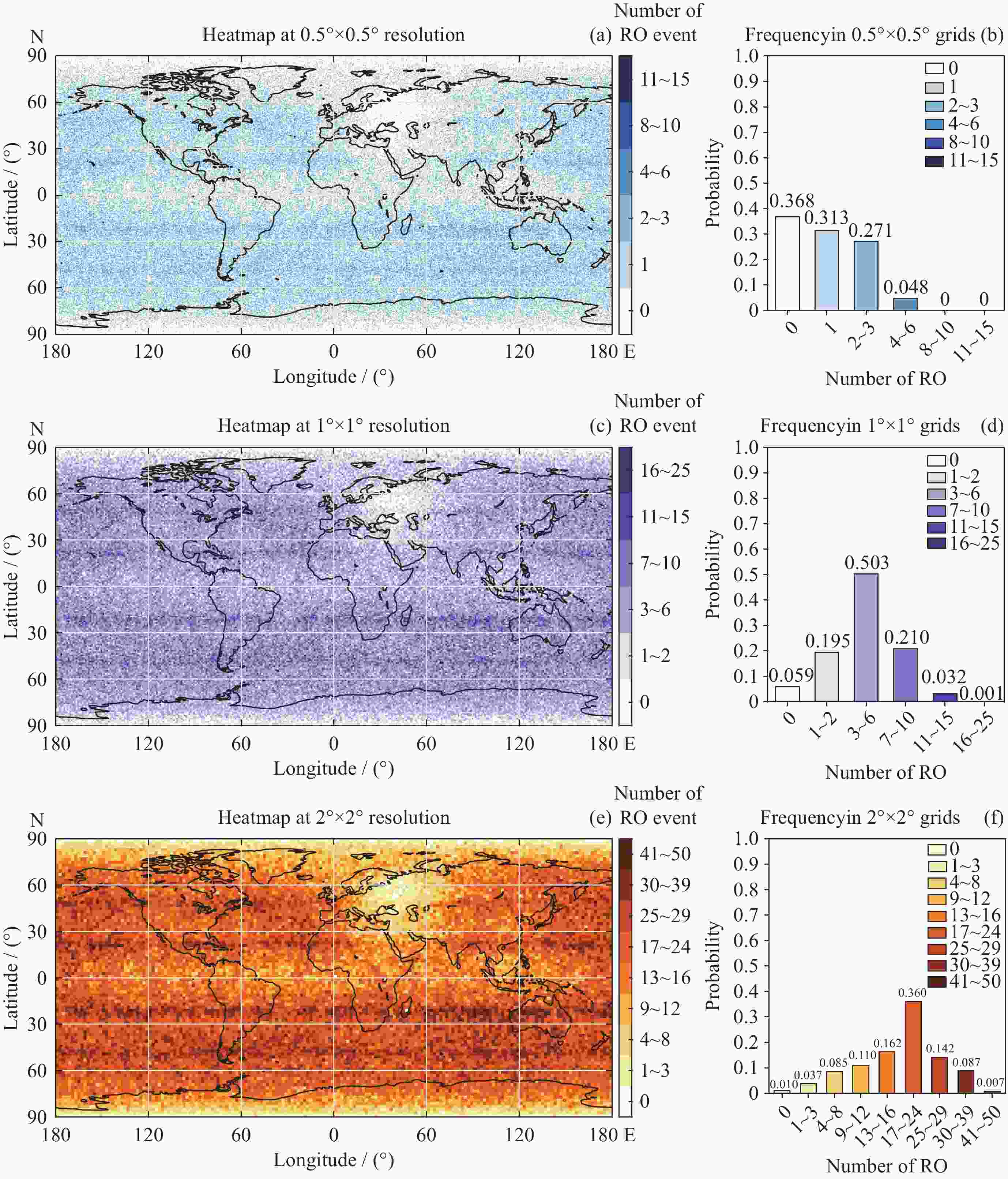
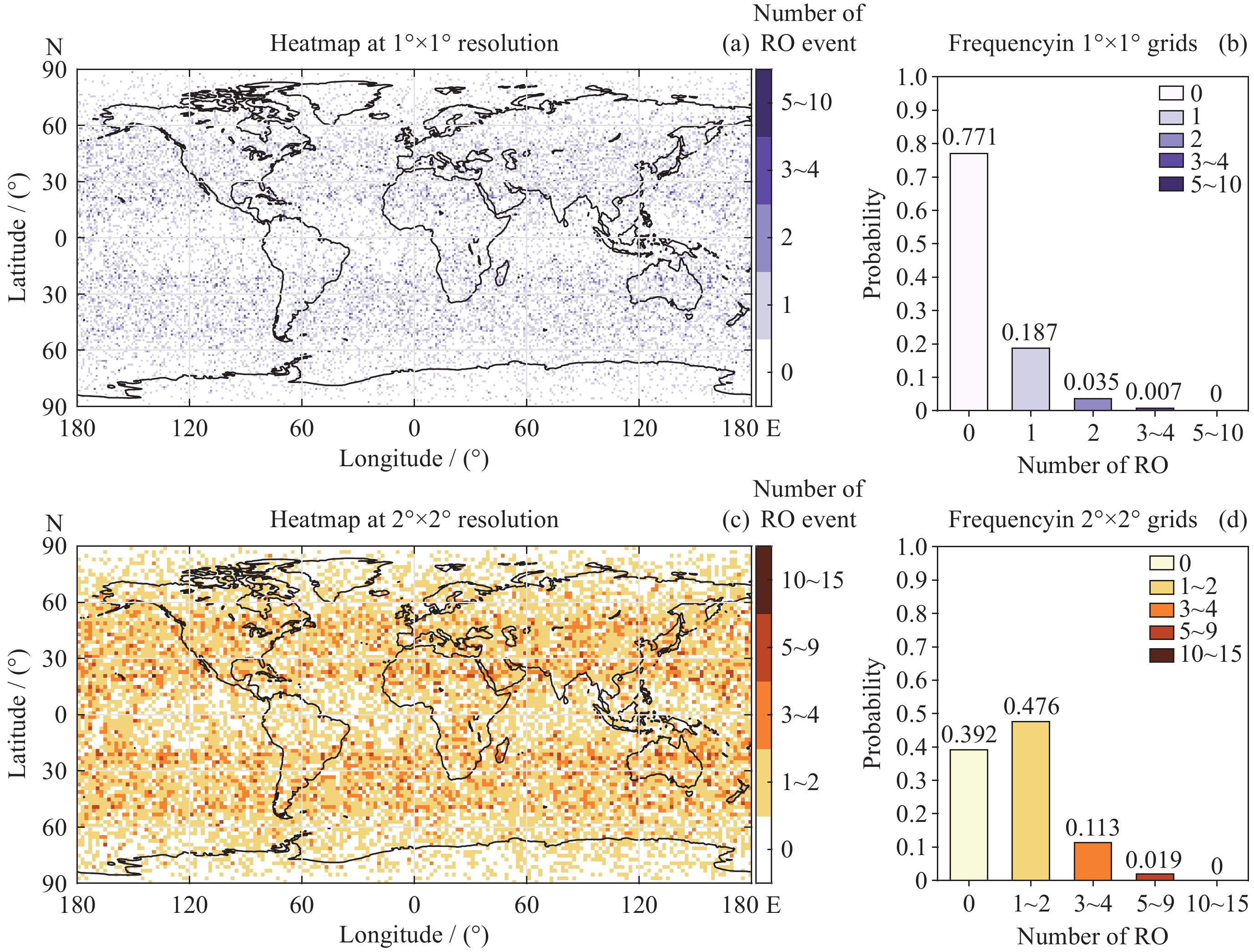
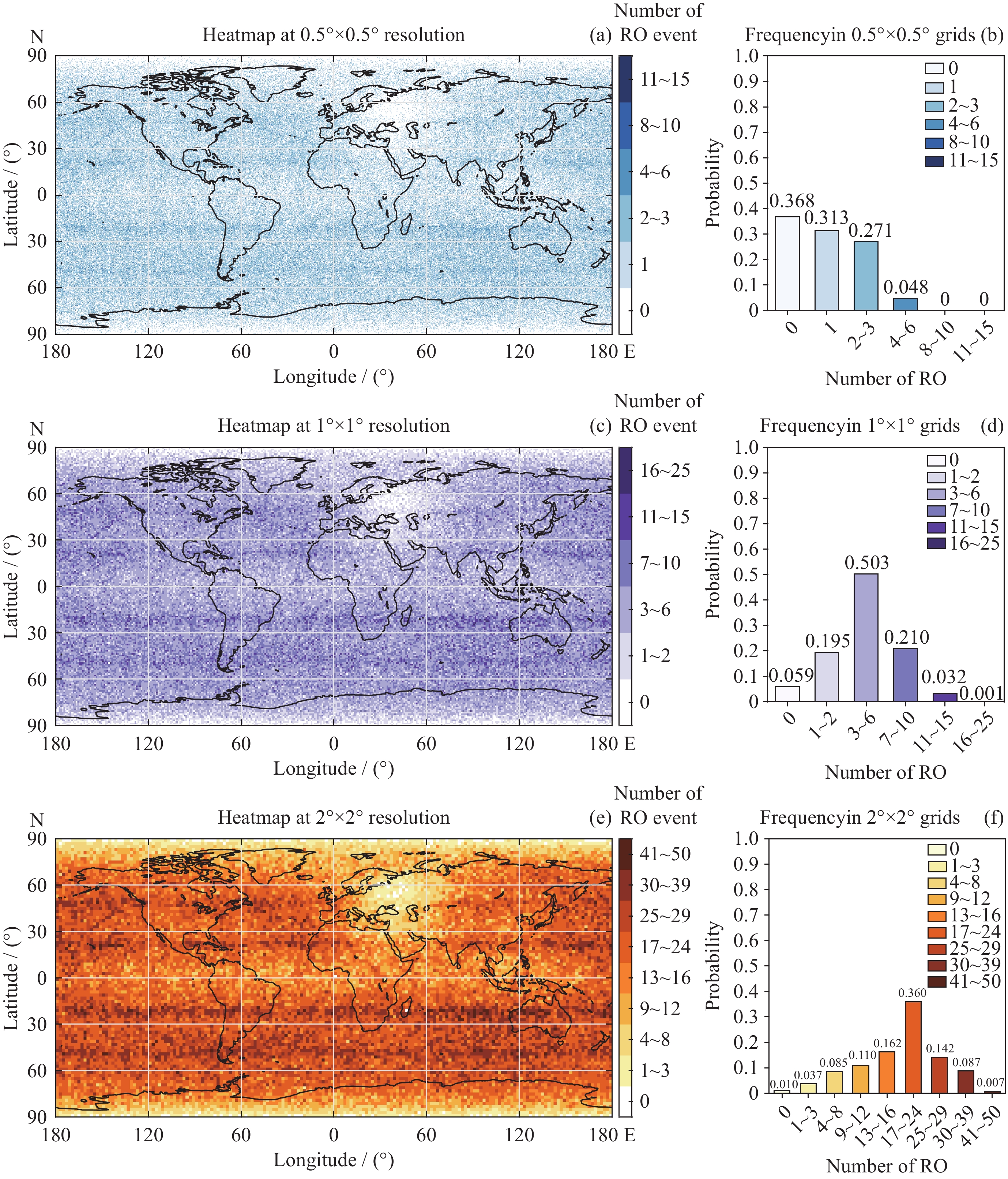
图 9 联合观测不同分辨率掩星事件的空间分布和频次统计
Figure 9. Spatial distribution and frequency statistics of occultation events from joint observation at different resolutions
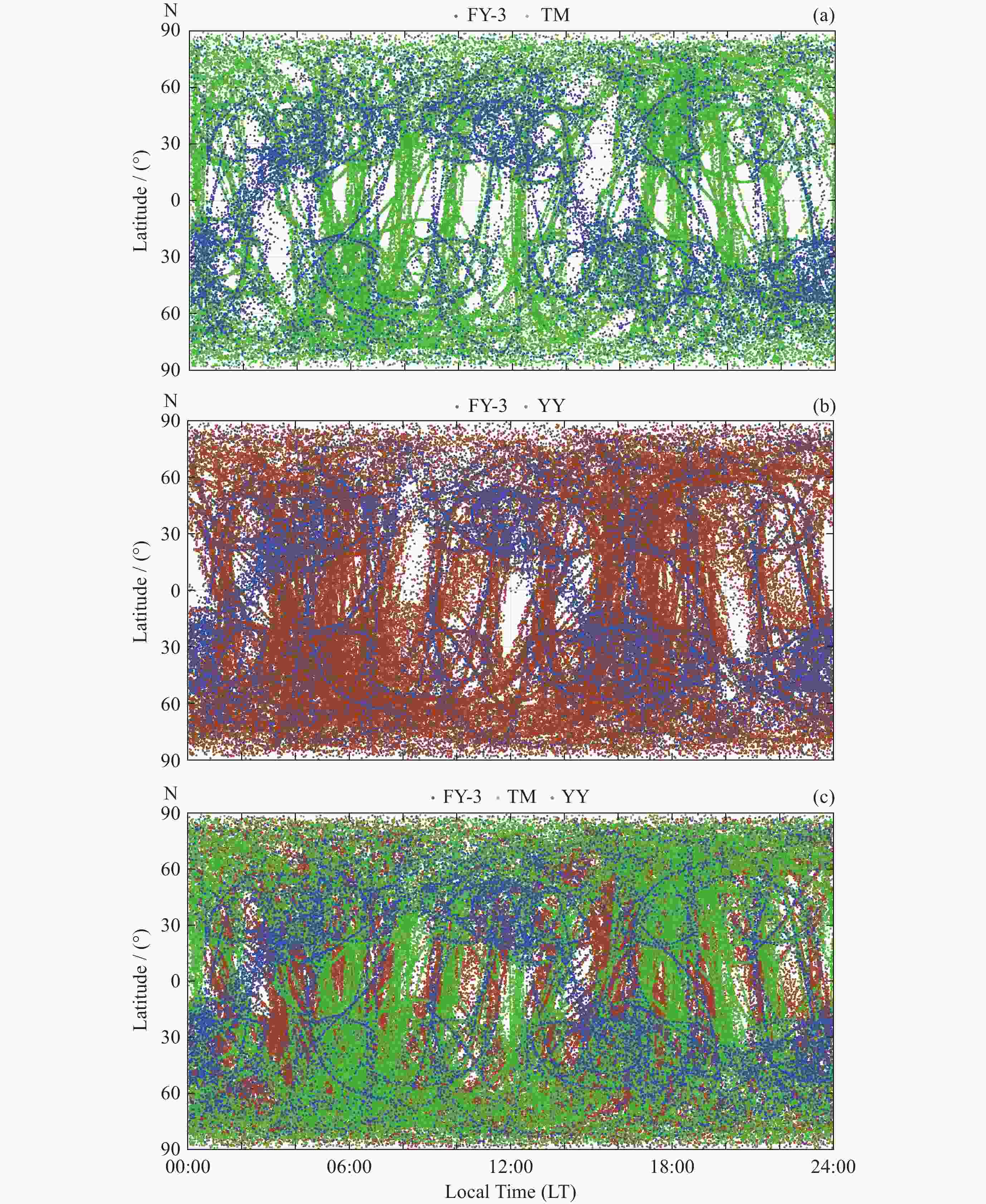
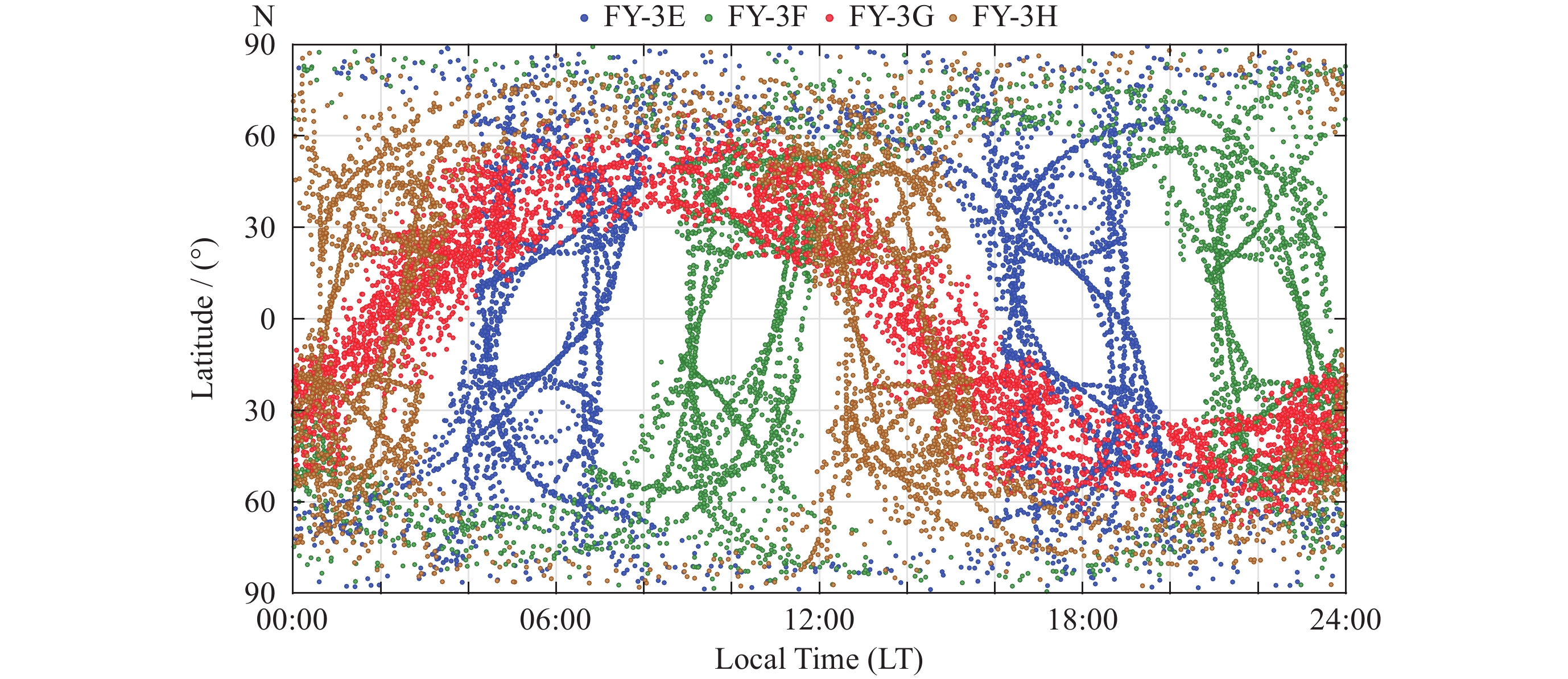
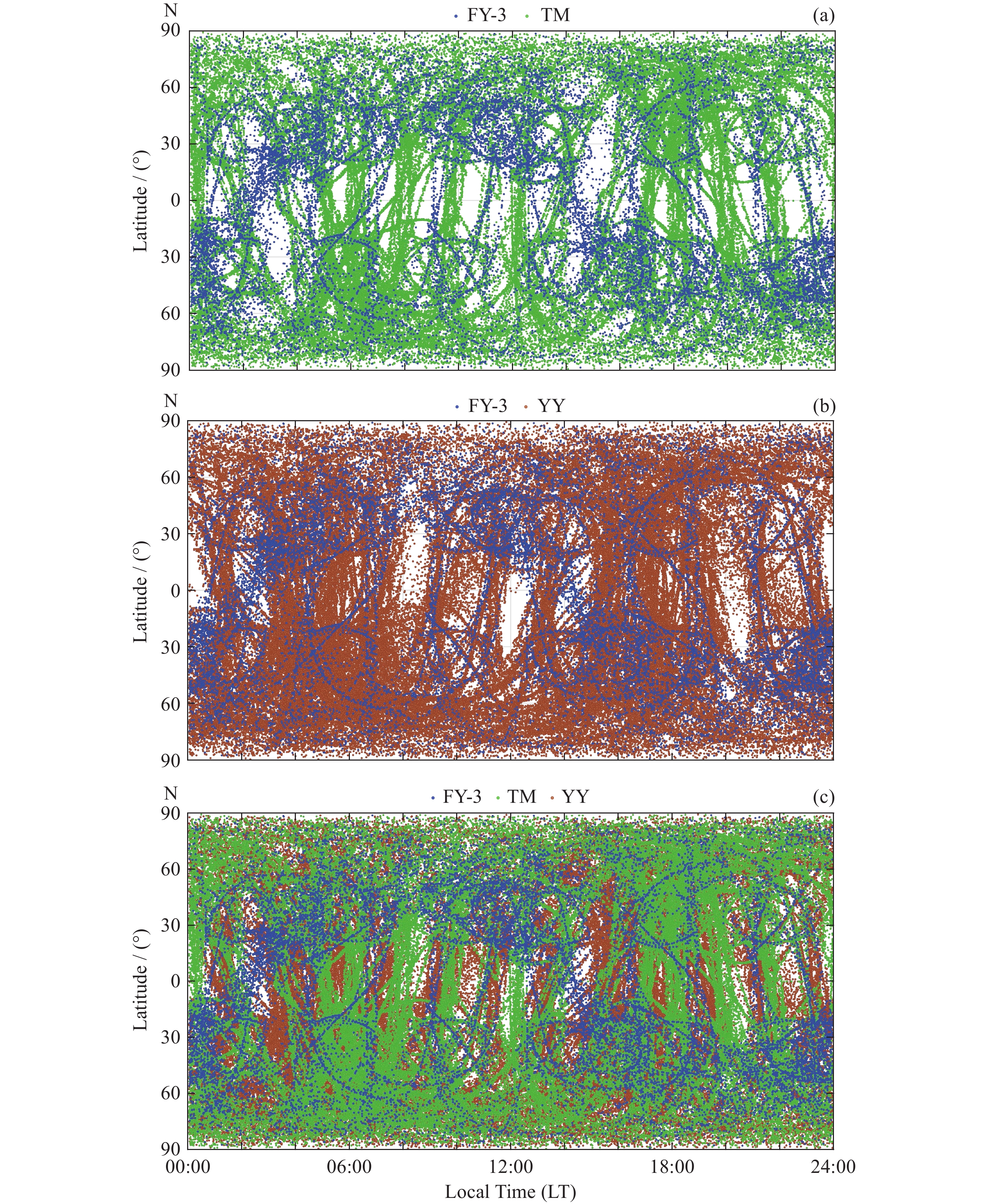
图 10 联合观测掩星事件的地方时分布
Figure 10. Local Time (LT) distribution of joint occultation events
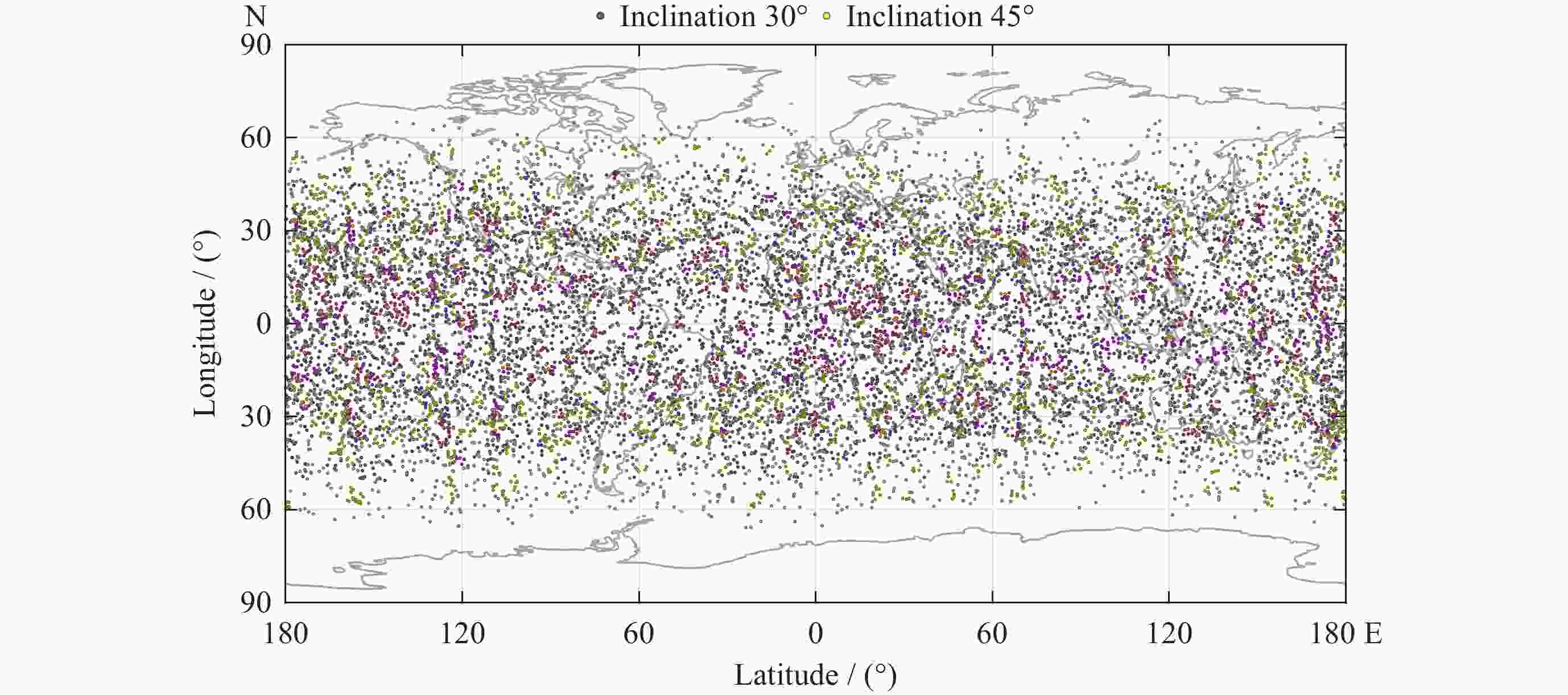
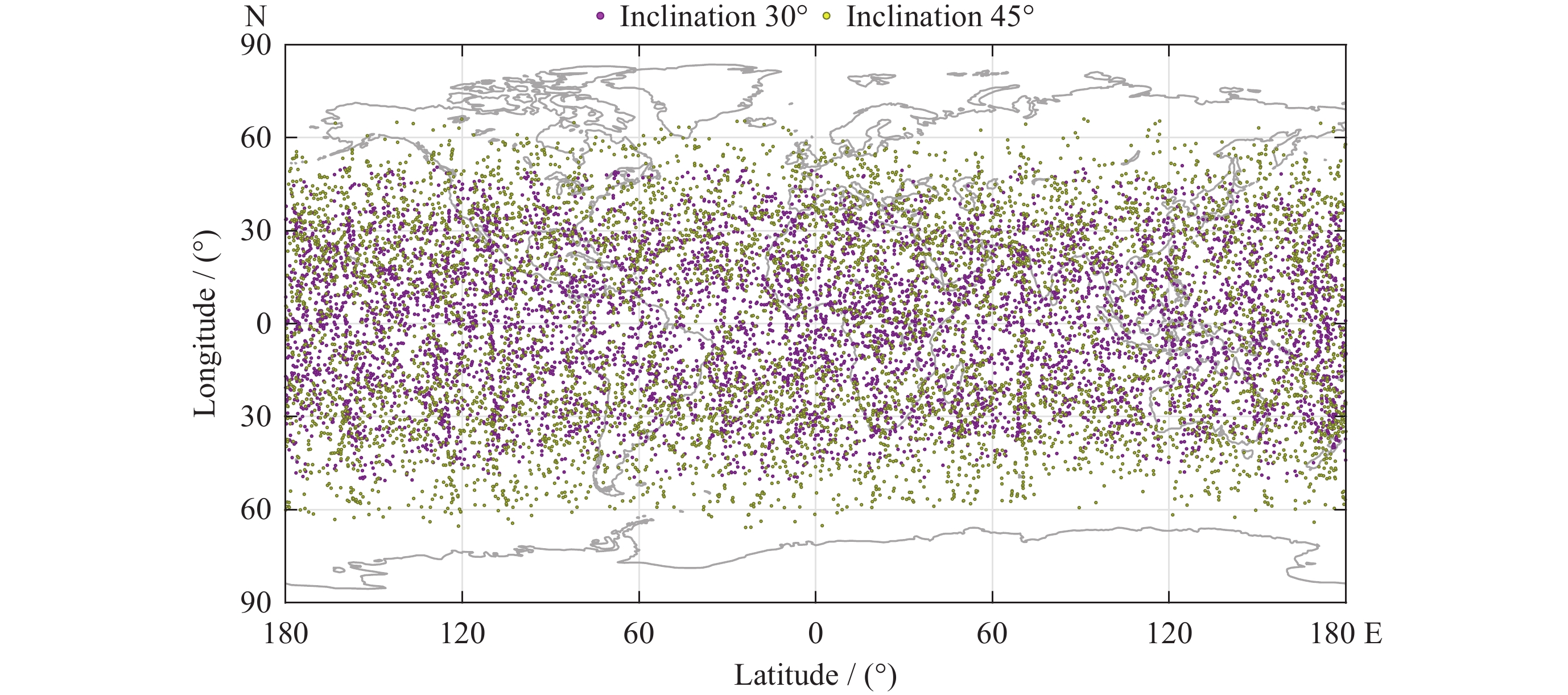
图 11 不同轨道倾角的仿真掩星事件全球分布
Figure 11. Global distribution map of occultation events with different orbital inclinations
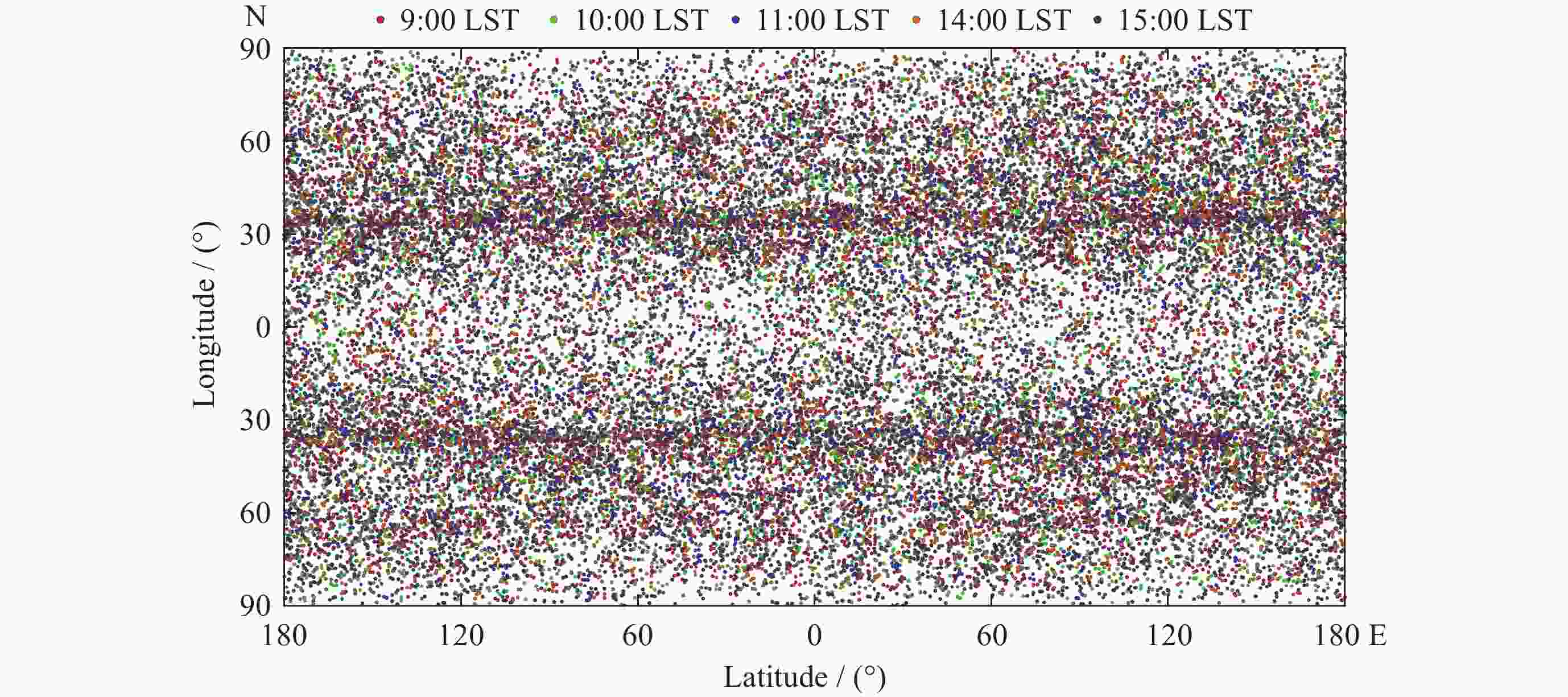
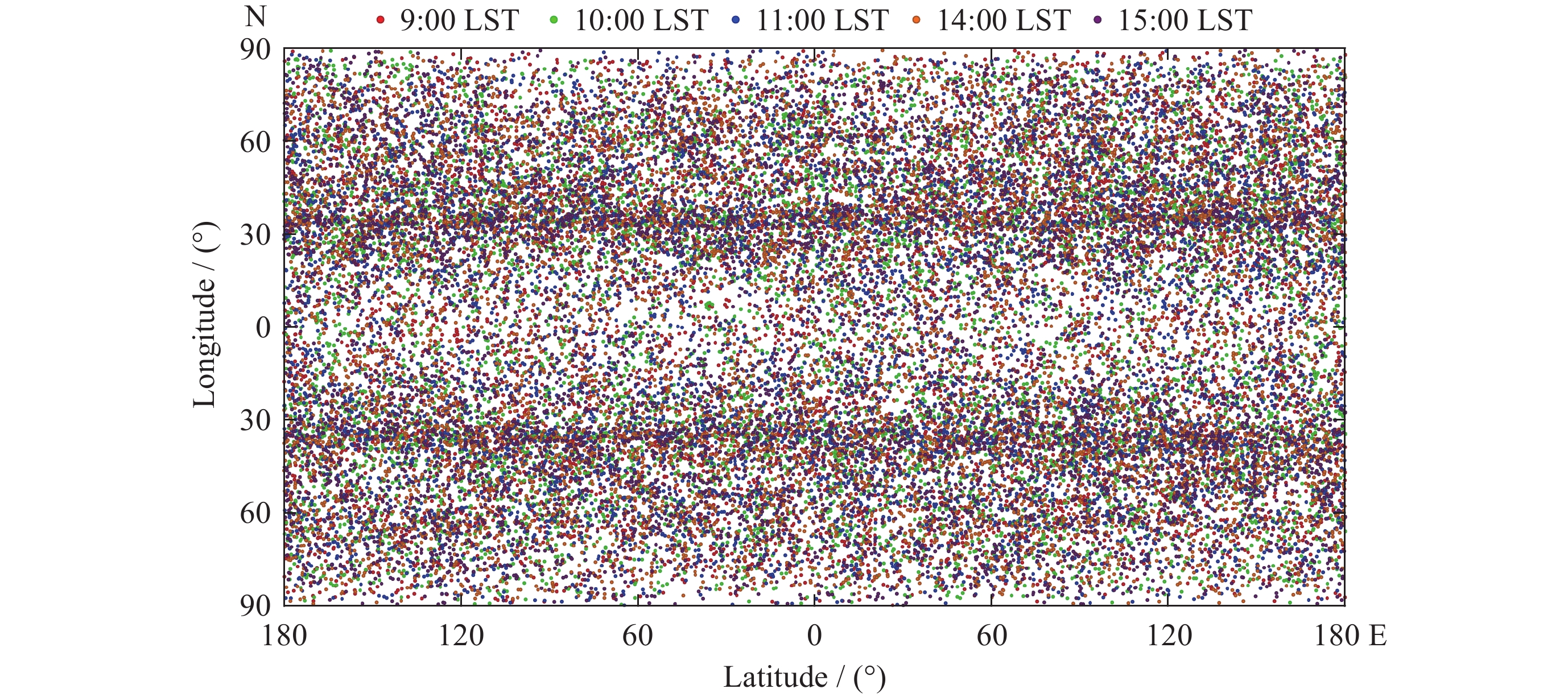
图 12 不同降交点地方时的太阳同步轨道掩星事件全球分布
Figure 12. Global distribution map of Sun-synchronous orbit occultation events at different Local Time (LT) of descending node
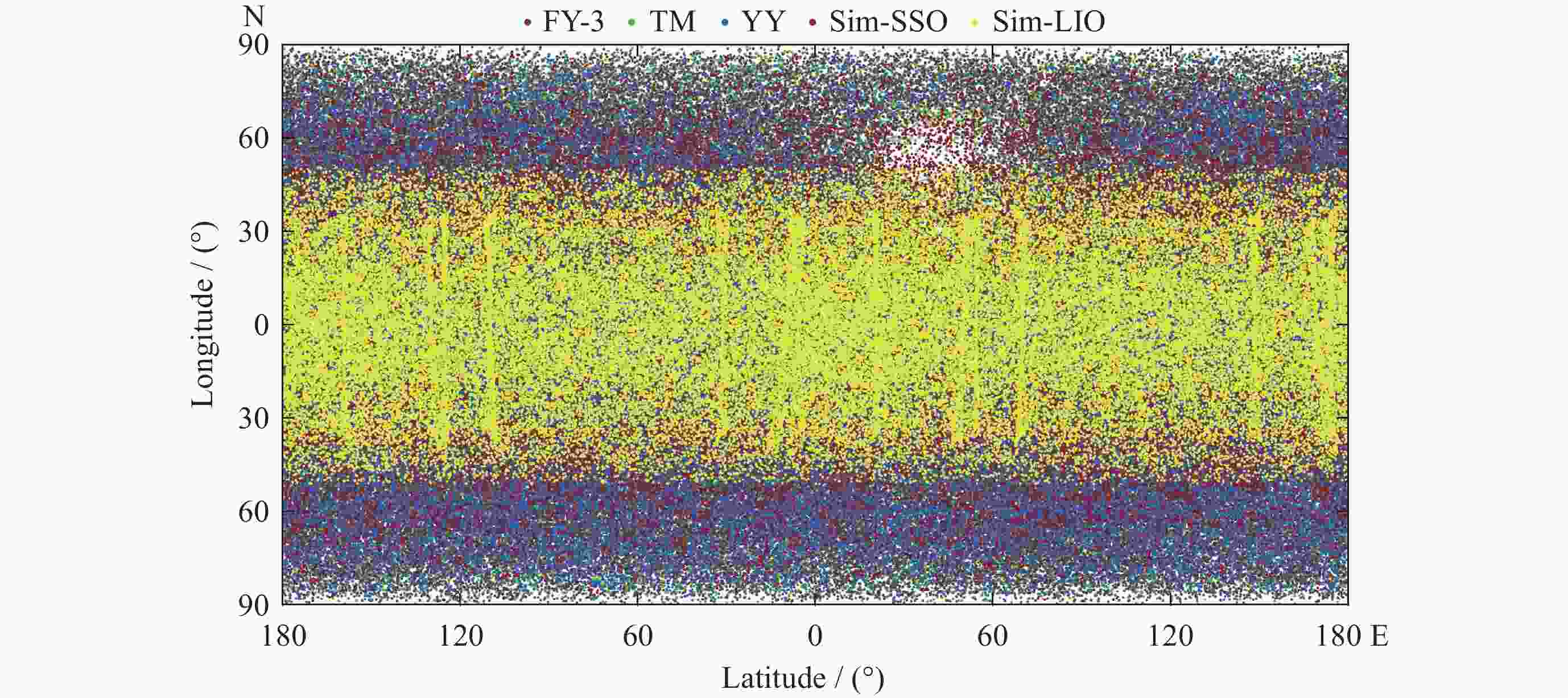
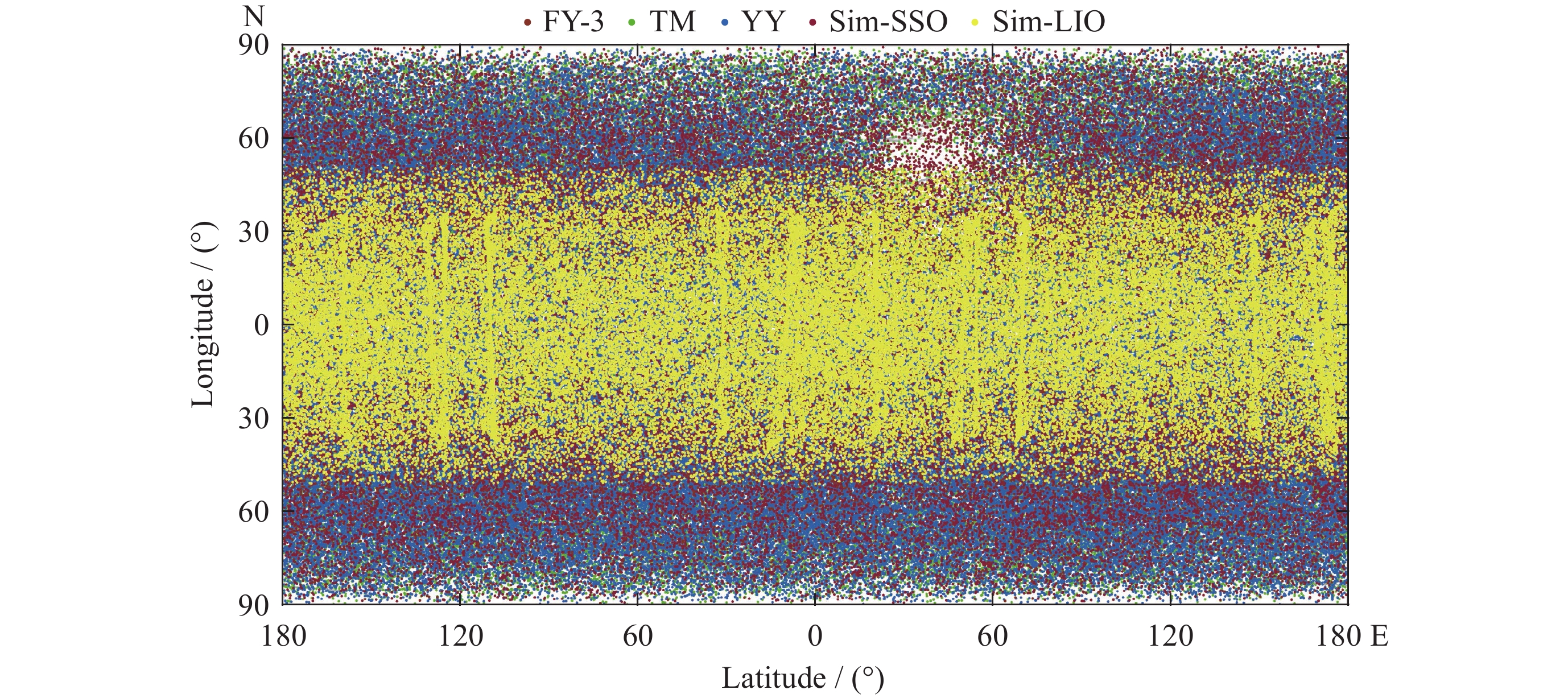
图 13 仿真与联合观测全球掩星事件分布
Figure 13. Simulation and joint observation distribution of occultation events
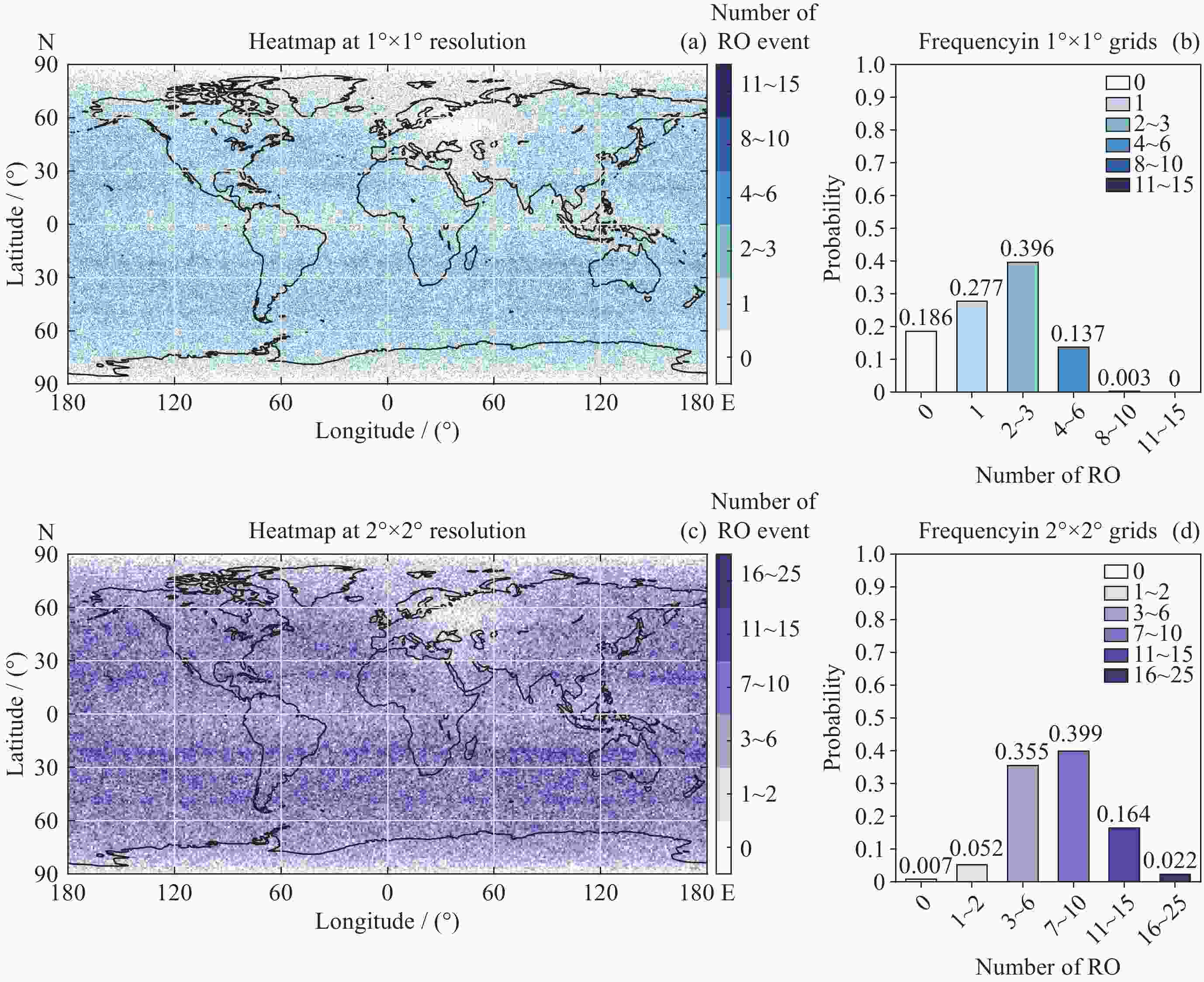
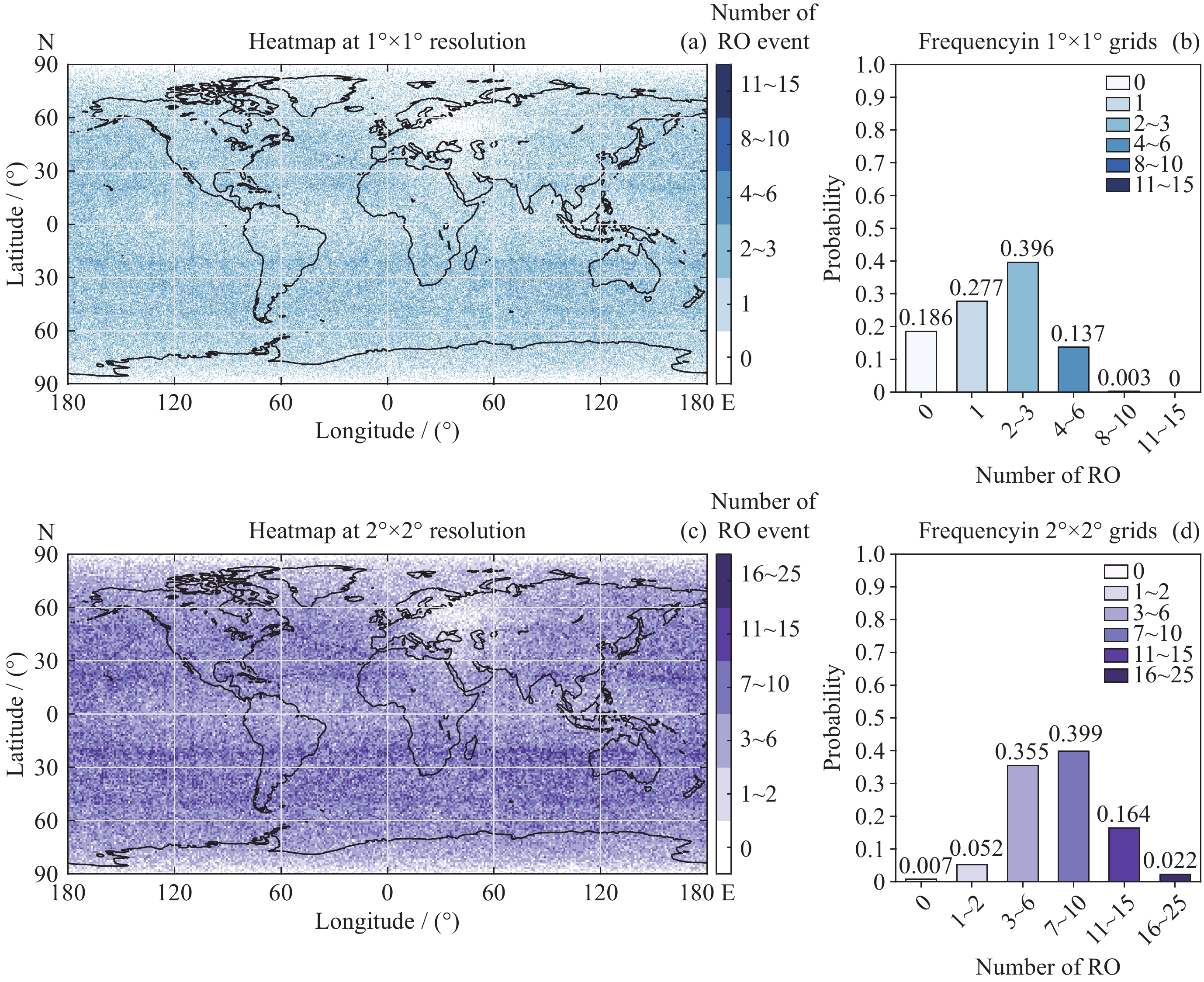
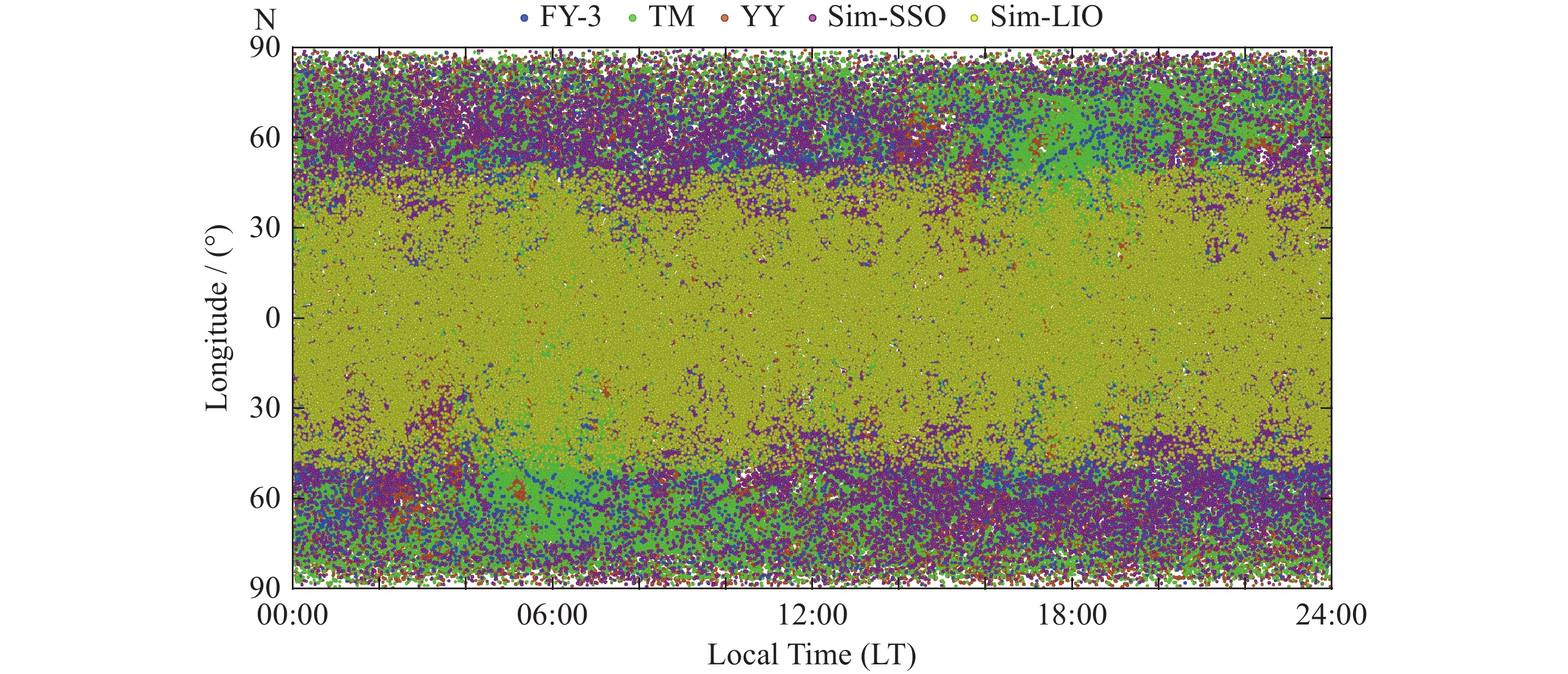
图 14 仿真与三系统联合观测不同分辨率的掩星事件空间分布及频次统计
Figure 14. Simulation and three-system joint observation of spatial distribution and frequency statistics for occultation events at different resolutions
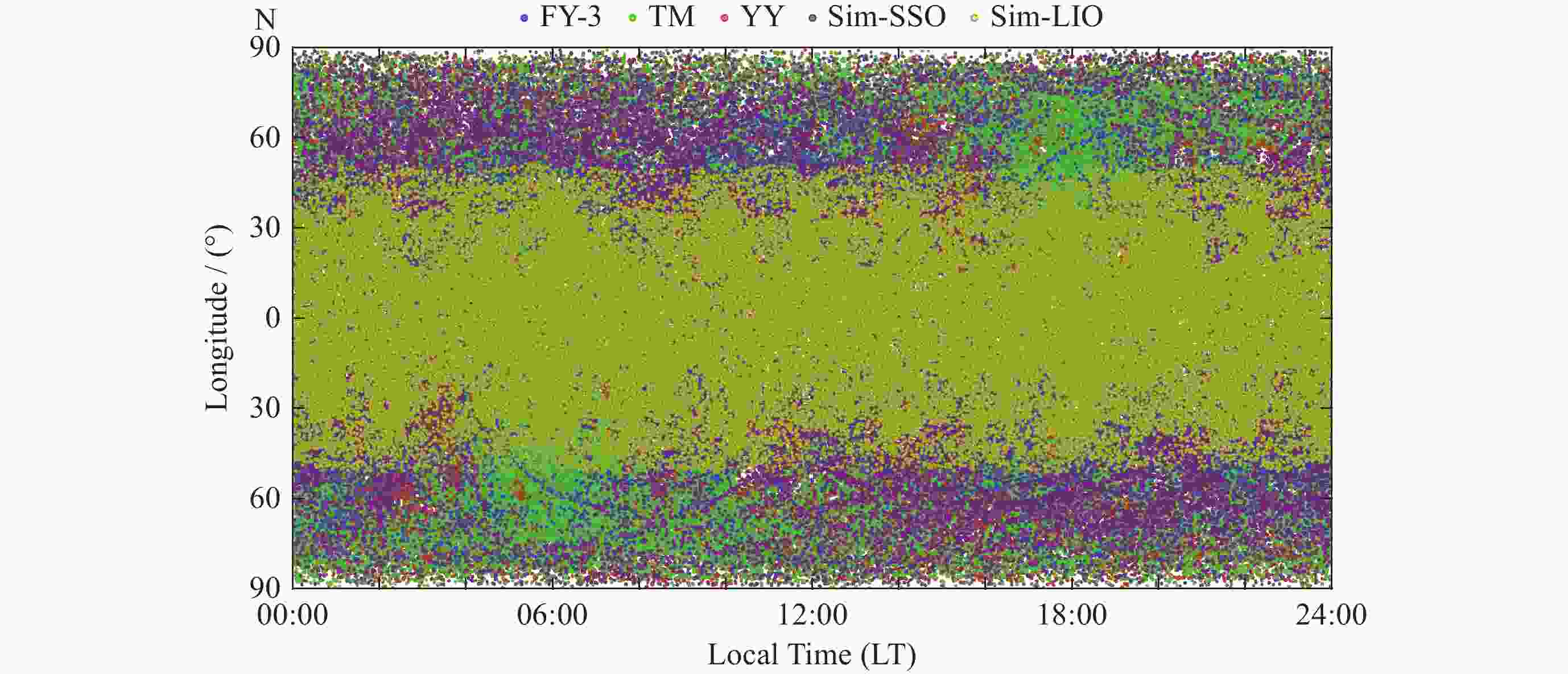
图 15 仿真与联合观测的地方时分布
Figure 15. Simulation and joint observation of Local Time (LT) distribution
表 1 不同纬度带的掩星数量和占比
Table 1. Numbers of RO in different latitude bands
纬度带 低纬度赤道(10°S-10°N) 中低纬度(10°-45°) 中高纬度(45°-80°) 高纬度极地地区(>80°) 掩星星座 数量 占比/(%) 数量 占比/(%) 数量 占比/(%) 数量 占比/(%) FY-3 1601 8.79 10021 55.01 6140 33.70 456 2.50 TM 9139 9.19 50583 45.33 46966 42.09 4893 4.39 YY 18135 10.07 78926 46.57 67144 39.62 5268 3.11 联合观测 28875 9.65 139530 46.62 120250 40.18 10617 3.55  下载: 导出CSV
表 2 各星各系统平均掩星数量
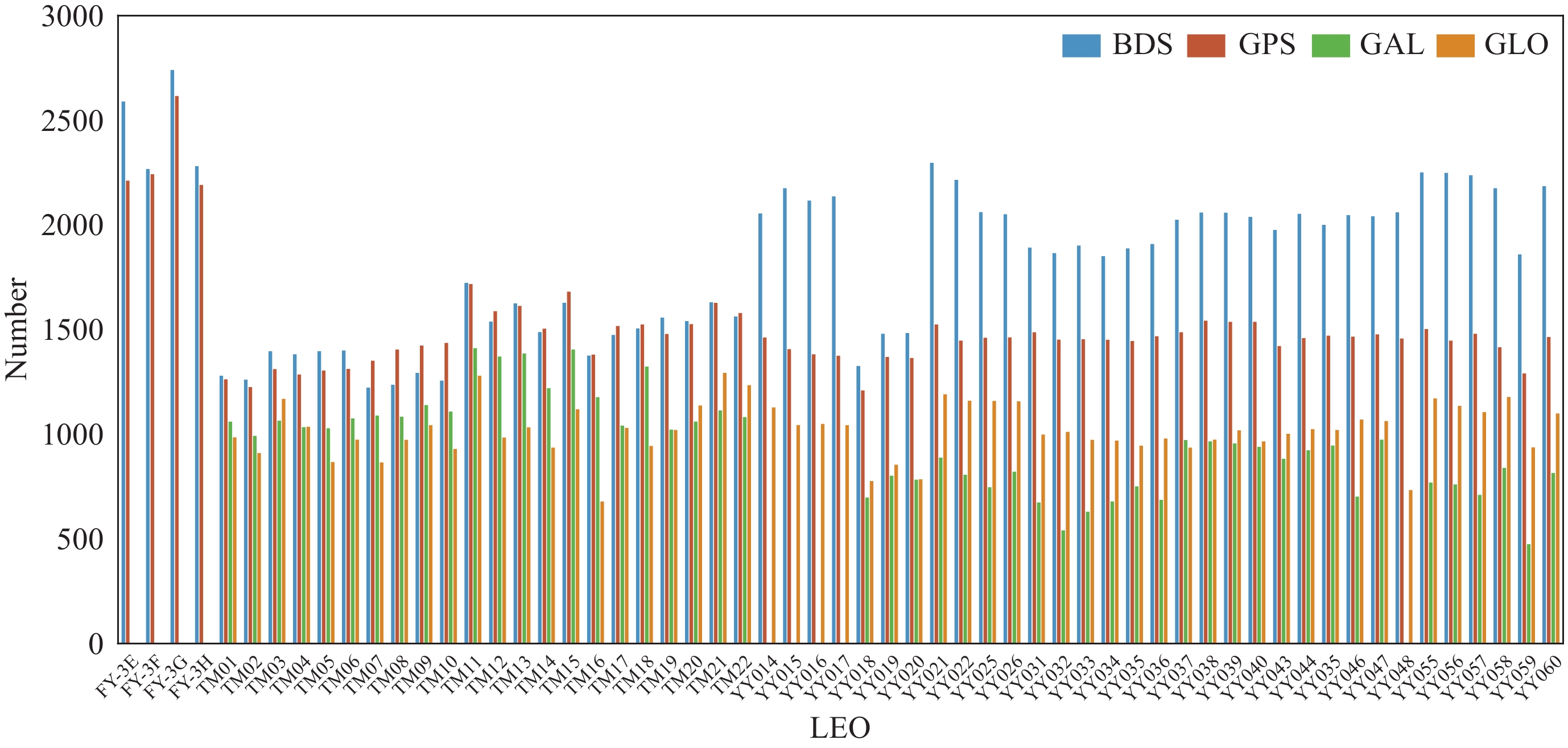
Table 2. Average number of occultations per satellite and system
掩星 BDS GPS GAL GLO FY-3 2469 2315 - - TM 1444 1456 1149 1019 YY 2000 1445 671 1020
下载: 导出CSV
表 3 仿真卫星参数
Table 3. Simulated satellite parameters
掩星 Inclination/(°) RAAN/(°) Local Time (LT) LIO 30 0 - 30 30 - 30 60 - 30 90 - 30 120 - 30 150 - 30 180 - 30 210 - 30 240 - 30 270 - 30 300 - 30 330 - SSO 98.5 135 09:00 98.5 150 10:00 98.5 165 11:00 98.5 210 14:00 98.5 225 15:00
下载: 导出CSV
-
[1] KURSINSKI E R, HAJJ G A, SCHOFIELD J T, et al. Observing Earth's atmosphere with radio occultation measurements using the Global Positioning System[J]. Journal of Geophysical Research: Atmospheres, 1997, 102(D19): 23429-23465 doi: 10.1029/97JD01569 [2] HO S P, HUNT D, STEINER A K, et al. Reproducibility of GPS radio occultation data for climate monitoring: profile-to-profile inter-comparison of CHAMP climate records 2002 to 2008 from six data centers[J]. Journal of Geophysical Research: Atmospheres, 2012, 117(D18): D18111 doi: 10.1029/2012jd017665 [3] HEALY S B, THÉPAUT J N. Assimilation experiments with CHAMP GPS radio occultation measurements[J]. Quarterly Journal of the Royal Meteorological Society, 2006, 132(615): 605-623 doi: 10.1256/qj.04.182 [4] FOELSCHE U, BORSCHE M, STEINER A K, et al. Observing upper troposphere–lower stratosphere climate with radio occultation data from the CHAMP satellite[J]. Climate Dynamics, 2008, 31: 49-65 doi: 10.1007/s00382-007-0337-7 [5] 尹萍, 张珊珊, 徐硕, 等. NeQuick G模型与COSMIC-2掩星数据在电离层层析算法中的使用[J]. 空间科学学报, 2025, 45(4): 975-986 doi: 10.11728/cjss2025.04.2024-0077YIN Ping, ZHANG Shanshan, XU Shuo, et al. Use of NeQuick G model and COSMIC-2 occultation data in ionospheric tomography algorithm[J]. Chinese Journal of Space Science, 2025, 45(4): 975-986 doi: 10.11728/cjss2025.04.2024-0077 [6] ROCKEN C, ANTHES R, EXNER M, et al. Analysis and validation of GPS/MET data in the neutral atmosphere[J]. Journal of Geophysical Research: Atmospheres, 1997, 102(D25): 29849-29866 doi: 10.1029/97JD02400 [7] WICKERT J, REIGBER C, BEYERLE G, et al. Atmosphere sounding by GPS radio occultation: first results from CHAMP[J]. Geophysical Research Letters, 2001, 28(17): 3263-3266 doi: 10.1029/2001GL013117 [8] BEYERLE G, SCHMIDT T, MICHALAK G, et al. GPS radio occultation with GRACE: atmospheric profiling utilizing the zero difference technique[J]. Geophysical Research Letters, 2005, 32(13): L13806 doi: 10.1029/2005gl023109 [9] ANTHES R A, BERNHARDT P A, CHEN Y, et al. The COSMIC/FORMOSAT-3 Mission: early results[J]. Bulletin of the American Meteorological Society, 2008, 89(3): 313-334 [10] Schreiner W, Weiss J, Anthes R, et al. COSMIC-2 radio occultation constellation: First results[J]. Geophysical Research Letters, 2019, 47: e2020SW002534 doi: 10.1002/essoar.10501509.1 [11] DONLON C J, CULLEN R, GIULICCHI L, et al. The Copernicus Sentinel-6 mission: Enhanced continuity of satellite sea level measurements from space[J]. Remote Sensing of Environment, 2021, 258: 112395 doi: 10.1016/j.rse.2021.112395 [12] KLAES K D, ACKERMANN J, ANDERSON C, et al. The EUMETSAT polar system: 13+ successful years of global observations for operational weather prediction and climate monitoring[J]. Bulletin of the American Meteorological Society, 2021, 102(6): E1224-E1238 doi: 10.1175/BAMS-D-20-0082.1 [13] BAI W H, SUN Y Q, DU Q F, et al. An introduction to the FY3 GNOS instrument and mountain-top tests[J]. Atmospheric Measurement Techniques, 2014, 7(6): 18171823. doi: 10.5194/amt-7-1817-2014 [14] DU Q F, SUN Y Q, BAI W H, et al. The on-orbit performance of FY-3D GNOS[C]//IGARSS 2019-2019 IEEE International Geoscience and Remote Sensing Symposium. Yokohama, Japan: IEEE, 2019 7669-7671 [15] MIAO S X, SUN K M, HU X Q, et al. On-orbit radiometric performance assessment of FY-3F MERSI-III: a cross-platform intercomparison approach based on global pseudo-invariant pixels[J]. IEEE Journal of Selected Topics in Applied Earth Observations and Remote Sensing, 2025, 18: 21514-21531 doi: 10.1109/JSTARS.2025.3597457 [16] ZHANG P, GU S Y, CHEN L, et al. FY-3G Satellite instruments and precipitation products: first report of China's Fengyun rainfall mission in-orbit[J]. Journal of Remote Sensing, 2023, 3: 0097 doi: 10.34133/remotesensing.0097 [17] 王劲松, 卢乃锰, 赵现纲, 等. 气象小卫星发展的回顾与展望[J]. 先进小卫星技术(中英文), 2024, 1(1): 23-29WANG Jinsong, LU Naimeng, ZHAO Xiangang, et al. Review and prospect on the meteorological small satellites[J]. Advanced Small Satellite Technology, 2024, 1(1): 23-29 [18] LI J F, LU C X, ZHENG Y X, et al. Quality assessment and assimilation of Tianmu-1 GNSS radio occultation refractivity observations: a preliminary study[J]. IEEE Transactions on Geoscience and Remote Sensing, 2025, 63: 5803217 doi: 10.1109/tgrs.2025.3615559 [19] Yue H, Fu N, Li F, et al. The Yunyao LEO Satellite Constellation: Occultation Results of the Neutral Atmosphere Using Multi-System Global Navigation Satellites. Remote Sensing[J]. 2025; 17(16): 2851 [20] 关敏, 张勇, 李云, 等. 我国风云气象卫星发展现状与未来展望[J]. 地球科学进展, 2025, 40(2): 138-154 doi: 10.11867/j.issn.1001-8166.2025.009GUAN Min, ZHANG Yong, LI Yun, et al. Current development and future trends of Fengyun meteorological satellites[J]. Advances in Earth Science, 2025, 40(2): 138-154 doi: 10.11867/j.issn.1001-8166.2025.009 [21] 刘艳, 孟祥广, 白伟华, 等. FY-3D卫星的北斗掩星分布特征与误差特性[J]. 空间科学学报, 2022, 42(3): 476-484 doi: 10.11728/cjss2022.03.210208019LIU Yan, MENG Xiangguang, BAI Weihua, et al. Analysis of Beidou radio occultation data from FY-3D satellite[J]. Chinese Journal of Space Science, 2022, 42(3): 476-484 doi: 10.11728/cjss2022.03.210208019 [22] 罗佳, 徐晓华. 利用FY3C与FY3D GPS掩星资料研究中低纬地区偶发E层形态的比较[J]. 武汉大学学报(信息科学版), 2022, 47(10): 1775-1784LUO Jia, XU Xiaohua. Comparison of the morphologies of sporadic e layers derived using GPS radio occultation data from FY3C and FY3D satellites[J]. Geomatics and Information Science of Wuhan University, 2022, 47(10): 1775-1784 [23] Huang F, Yin C, Liu Y, et al. Tianmu-1 constellation GNSS-R in-orbit performance: spatiotemporal characteristics, product applications and polarimetric features[J]. IEEE Transactions on Geoscience and Remote Sensing, 2025, 63: 1-20 [24] XU X Z, HAN W, WANG J C, et al. Quality assessment of YUNYAO radio occultation data in the neutral atmosphere[J]. Atmospheric Measurement Techniques, 2025, 18(6): 1339-1353 doi: 10.5194/amt-18-1339-2025 -
-

 下载:
下载:

计量
- 文章访问数: 545
- HTML全文浏览量: 207
- PDF下载量: 24
-
被引次数:
0(来源:Crossref)
0(来源:其他)

