


基于星载全极化SAR的极区电离层TEC 反演及极光活动的影响
doi: 10.11728/cjss2026.05.2025-0244 cstr: 32142.14.cjss.2025-0244
-
 李长浚 (第一作者) 男, 硕士研究生, 研究方向为基于SAR雷达的电离层扰动. E-mail: 202417818@mail.sdu.edu.cn
 -
 邢赞扬 男, 博士, 副教授, 研究方向为极区电离层–磁层耦合和极光物理. E-mail: xingzanyang@sdu.edu.cn
作者简介:
通讯作者:
Polar Ionospheric TEC Inversion Based on Spaceborne Fully Polarimetric SAR and Its Response to Aurora
-
摘要: 极光活动可引起极区电离层总电子含量(TEC)增强, 并对星载全极化合成孔径雷达(SAR)L波段电磁波传播产生显著影响, 进而导致附加相位误差和极化失真. 基于32景全极化SAR影像数据, 采用4种典型法拉第旋转角(FRA)反演算法获取极区电离层TEC, 并与同期当地地基GNSS-TEC观测结果进行对比评估; 同时选取2景重访影像, 定量分析极光活动对SAR信号质量的影响. 结果表明, 4种算法中, B&B算法反演的TEC结果与观测值一致性最好; 极光弧引起的TEC增强可导致FRA显著增大, 并使交叉圆极化积减小, 表明SAR信号信噪比降低. 研究结果表明, 基于B&B算法的全极化SAR可较有效反演极区TEC, 可为极区电离层扰动监测及其与极光活动关系研究提供新的技术手段.Abstract: Auroral activity can enhance ionospheric Total Electron Content (TEC) at high latitudes and thereby affect the propagation of L-band electromagnetic waves transmitted by spaceborne fully polarimetric Synthetic Aperture Radar (SAR) systems. These ionospheric disturbances introduce additional phase delay and polarization distortion, which may reduce SAR data quality and influence the reliability of quantitative interpretation. Because the Faraday Rotation Angle (FRA) derived from fully polarimetric SAR observations is sensitive to the ionospheric electron content along the propagation path, it can be used to retrieve TEC with relatively high spatial resolution. In this study, 32 fully polarimetric SAR scenes were used to examine the performance of four FRA-based inversion algorithms for polar TEC retrieval under auroral conditions. The retrieved TEC was compared with colocated ground-based GNSS-TEC observations in order to evaluate the applicability of different algorithms in the polar ionosphere. In addition, two revisit SAR cases were selected to investigate how TEC enhancements related to auroral activity are reflected in SAR signal characteristics. This analysis makes it possible to assess both the relative performance of the four inversion methods and the response of polarimetric SAR observables to auroral ionospheric disturbances. Results show clear differences among the four algorithms. Of the tested methods, the Bickel and Bates (B&B) algorithm gives TEC estimates that agree best with the ground-based GNSS-TEC measurements, suggesting that it is more suitable for polar TEC retrieval. The revisit cases further show that TEC enhancements associated with auroral arcs can produce distinct changes in SAR observations. In regions affected by enhanced ionization, FRA increases noticeably, whereas the cross-circular polarization product decreases. These changes indicate a deterioration in SAR signal quality, especially a reduction in signal-to-noise ratio. Overall, the results indicate that fully polarimetric SAR, combined with an appropriate FRA inversion method, can provide useful information on polar ionospheric TEC and its disturbance characteristics during auroral activity. This approach offers a practical way to support high-latitude ionospheric studies and to examine the relationship between auroral processes and TEC variability.
-
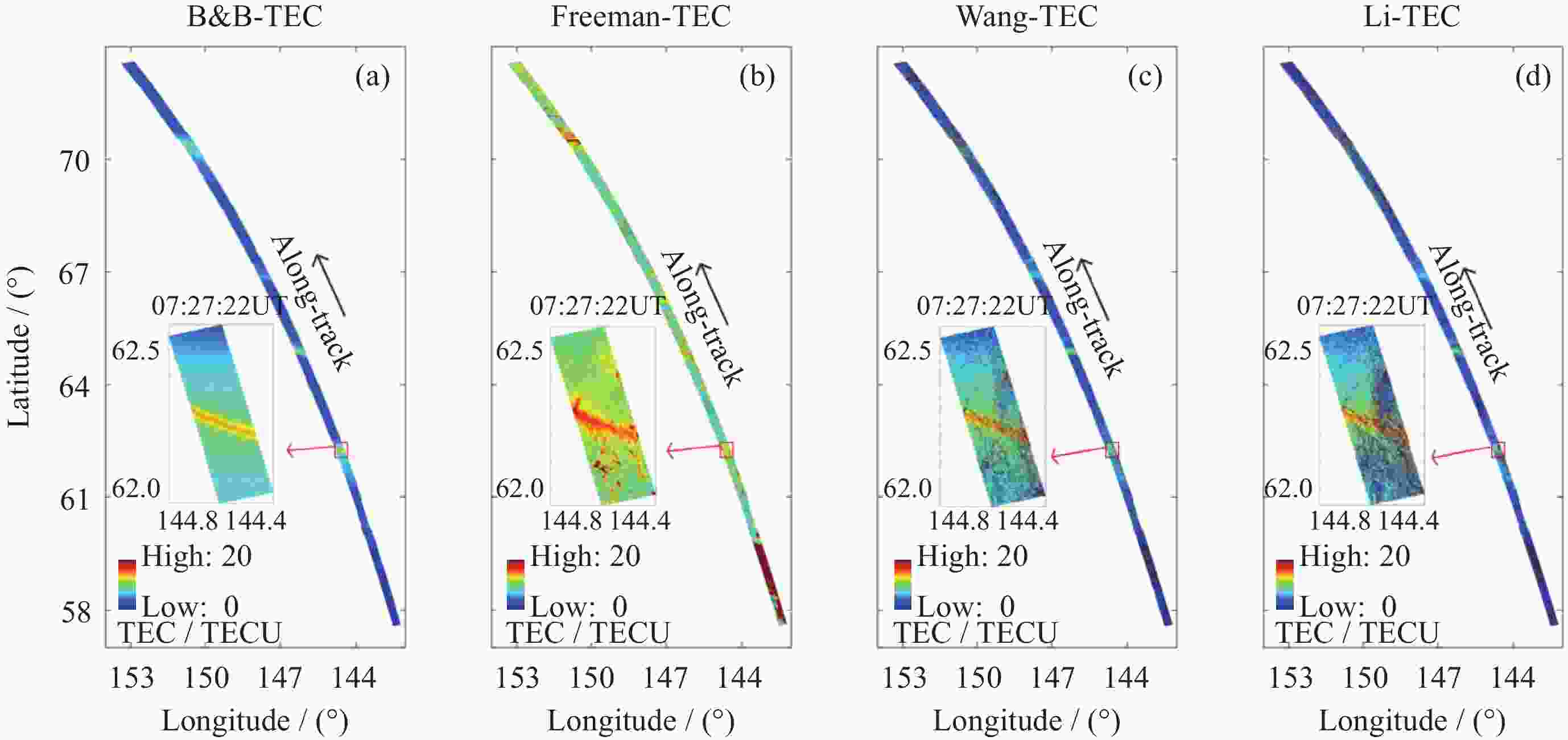
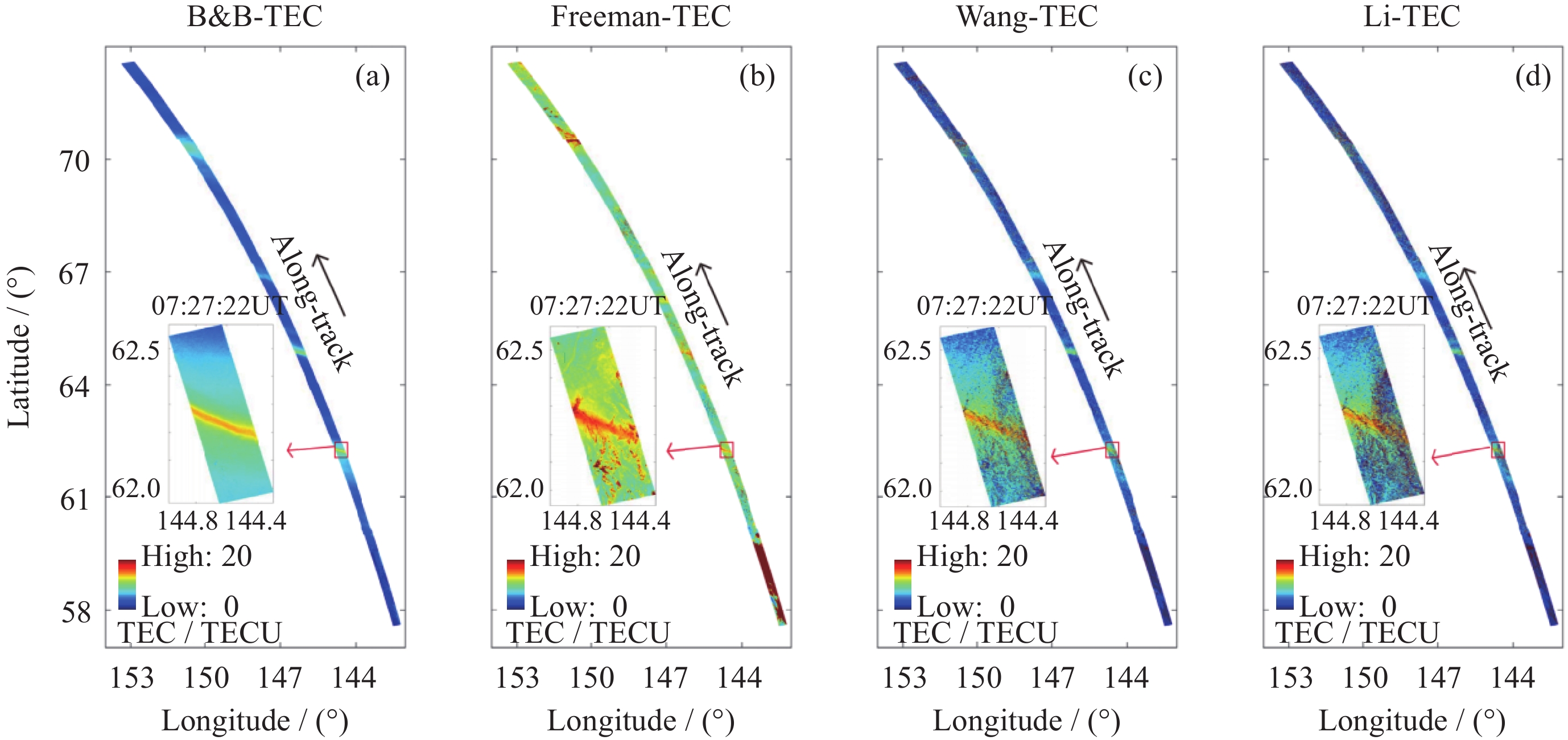
图 1 2007年4月1日基于4种FRA反演算法的TEC结果
Figure 1. TEC map based on four FRA inversion methods on 1 April 2007
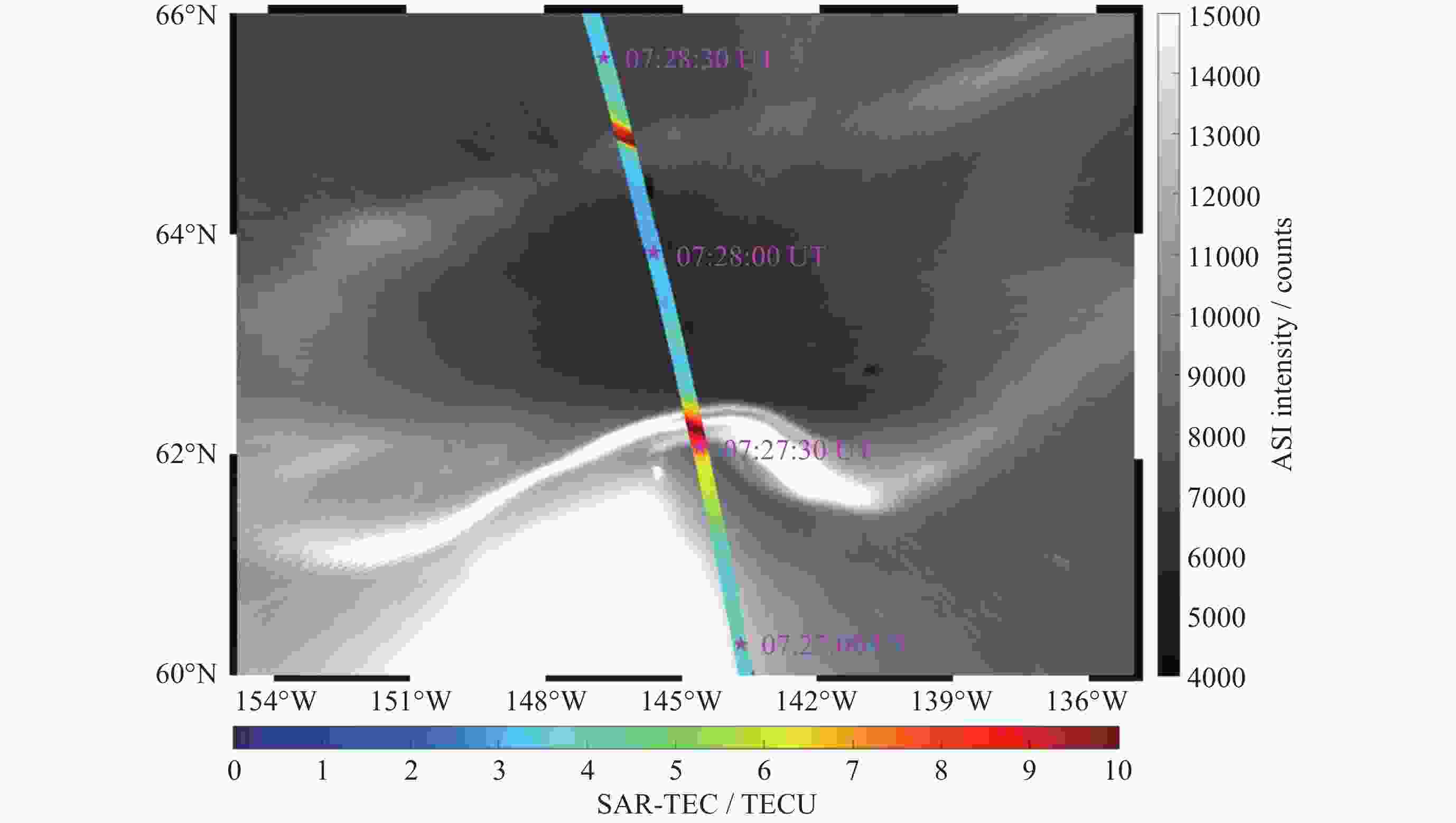
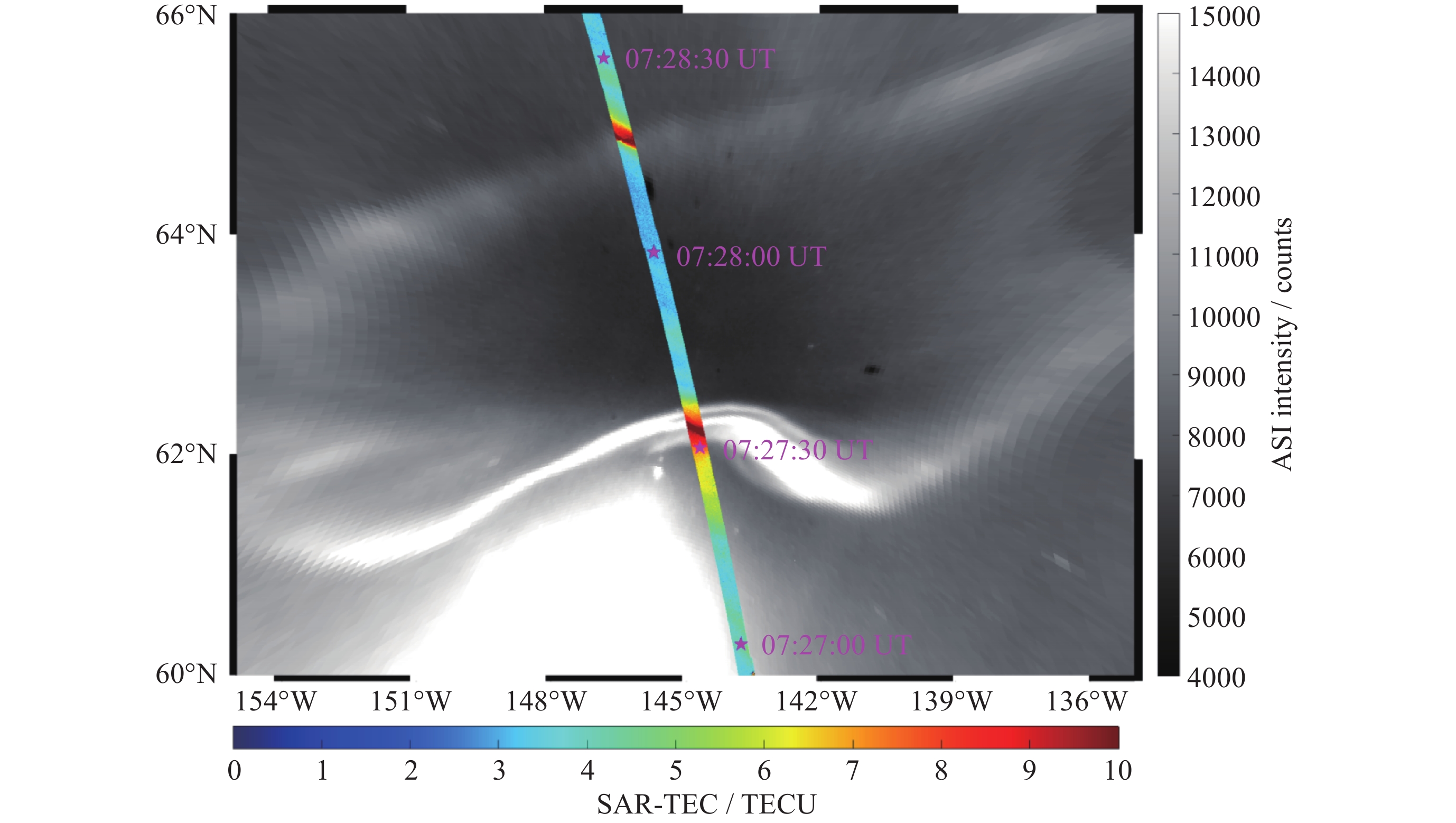
图 2 2007年4月1日 THEMIS Gako台站ASI观测与SAR反演TEC的对比
Figure 2. Comparison between ASI observation and SAR inversion TEC at THEMIS Gako station on 1 April 2007
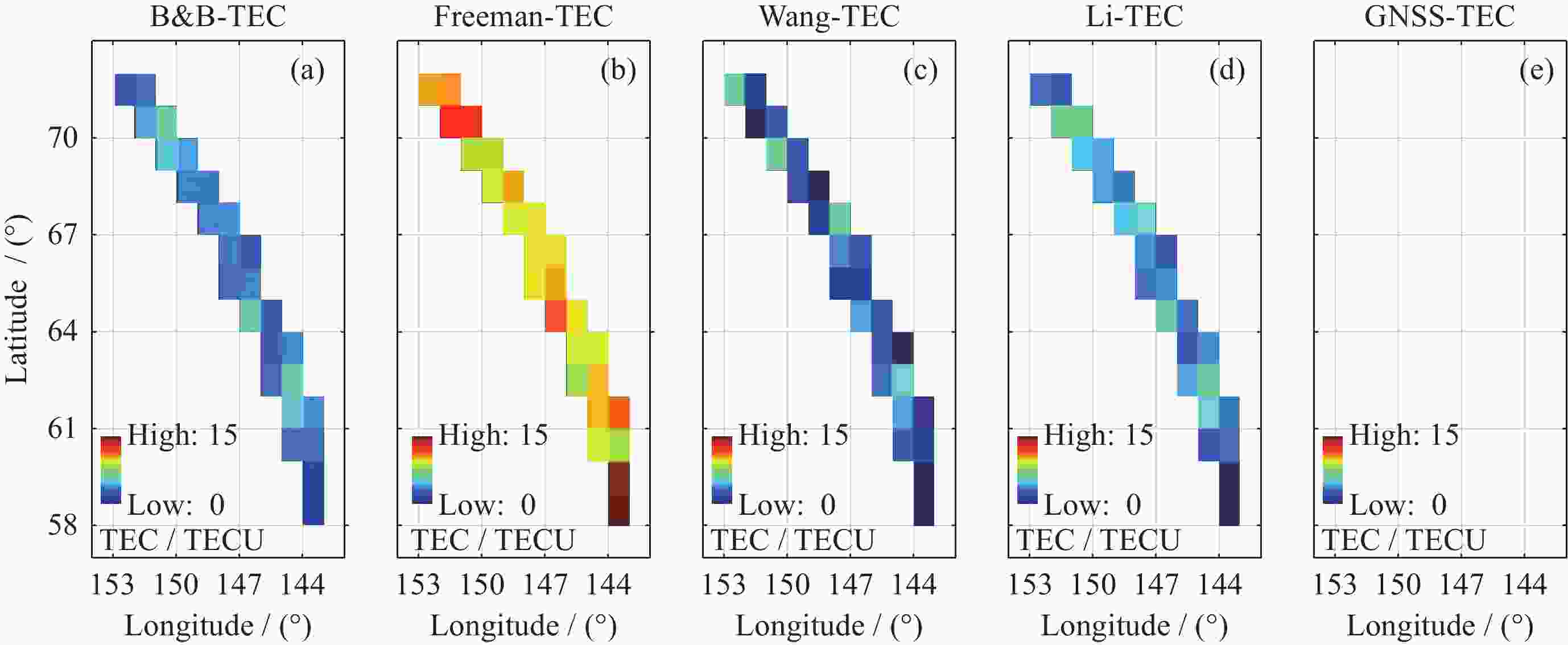
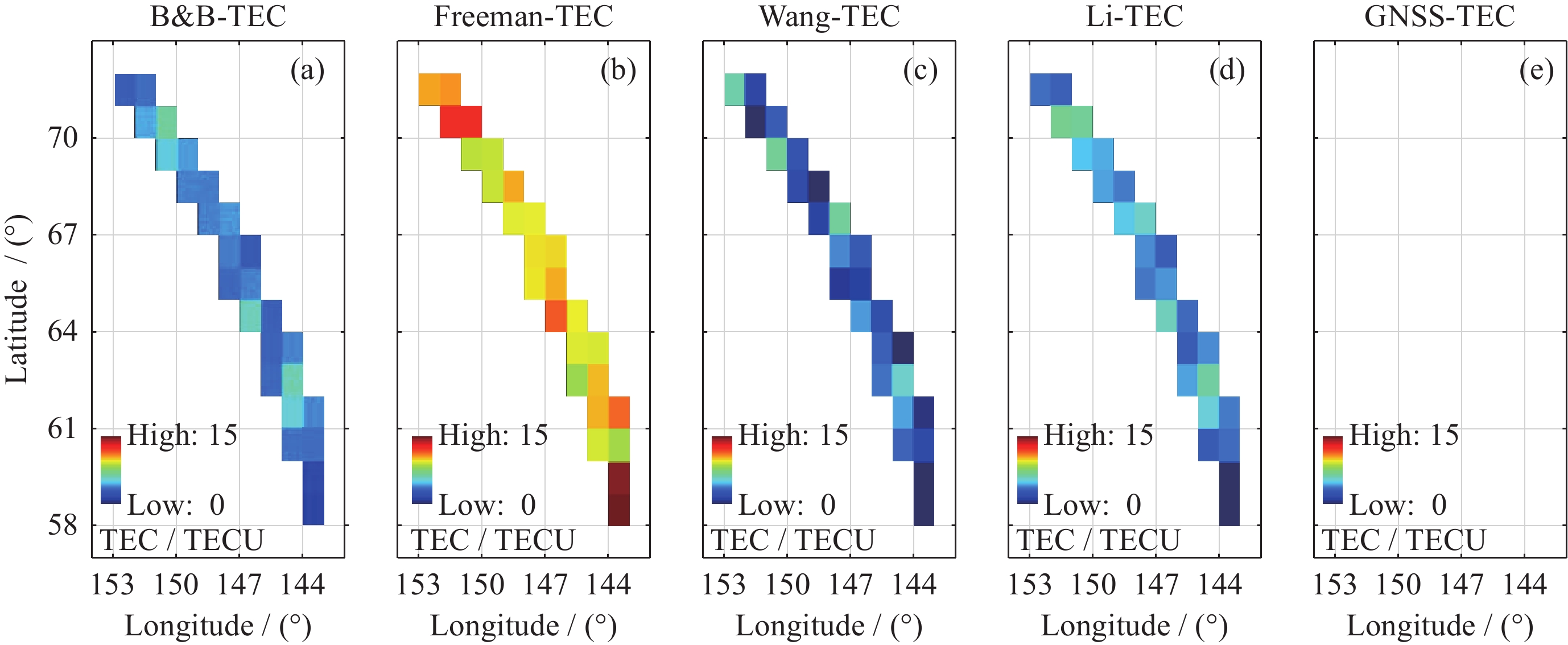
图 3 2007年4月1日基于4种FRA反演算法的TEC (a)~(d)与GNSS-TEC (e)对比
Figure 3. Comparison of TEC maps based on four FRA inversion methods (a)~(d) with GNSS-TEC (e) on 1 April 2007
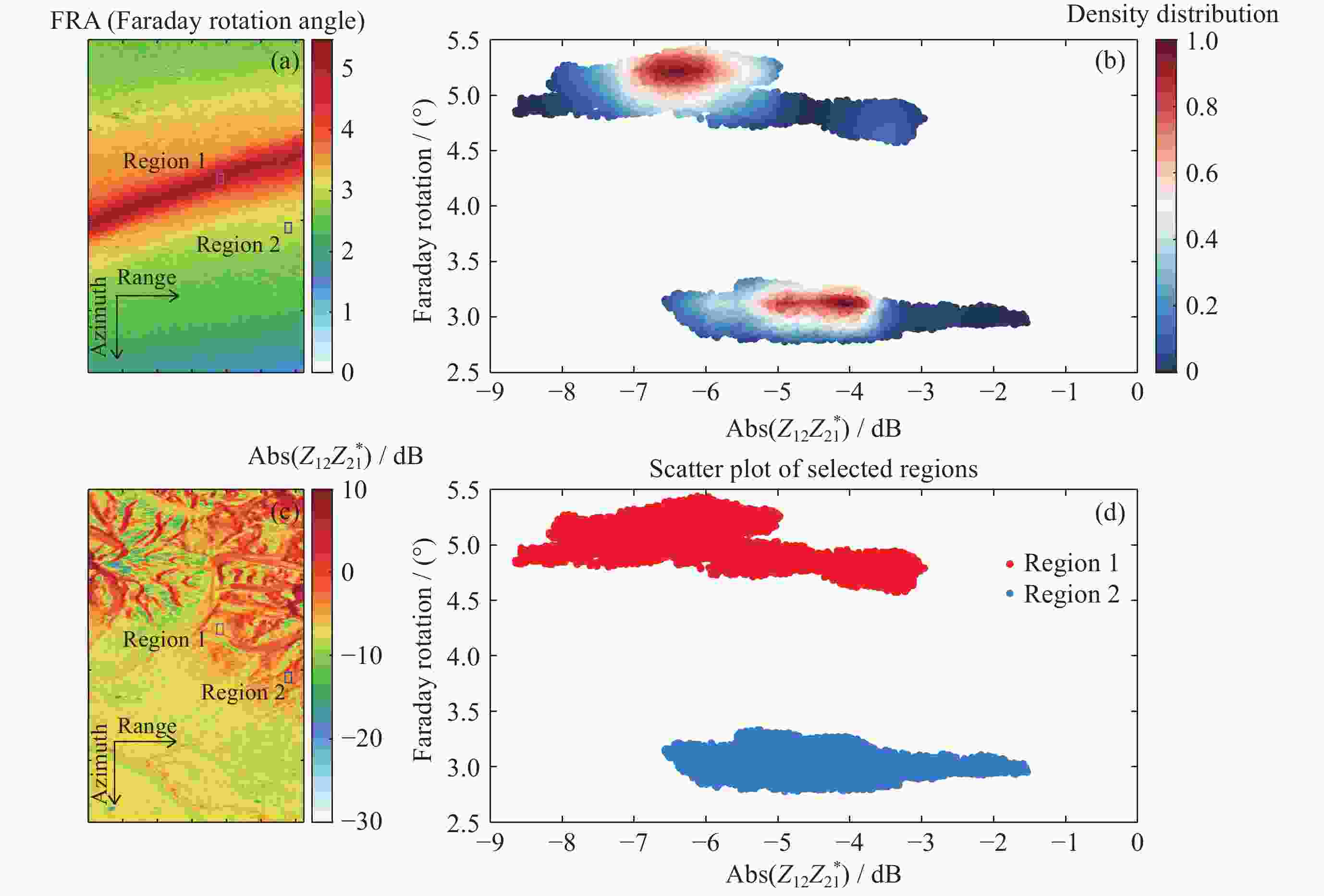
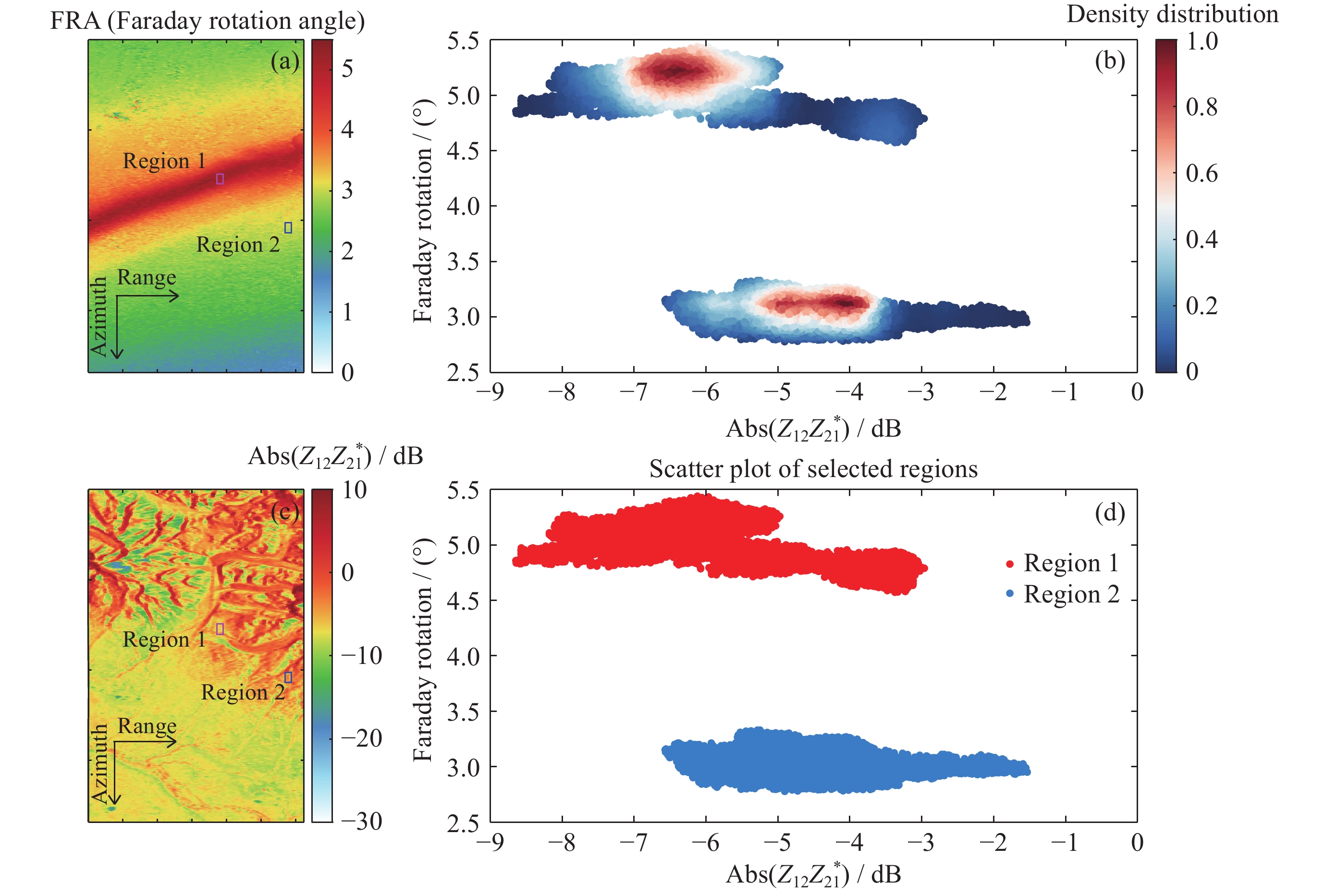
图 4 极光活动时FRA与abs($ {\boldsymbol{Z}}_{12}\boldsymbol{Z}_{21}^{*} $)分布及其相关分析
Figure 4. Distribution and correlation analysis of FRA and abs($ {\boldsymbol{Z}}_{12}\boldsymbol{Z}_{21}^{*} $)during aurora activity
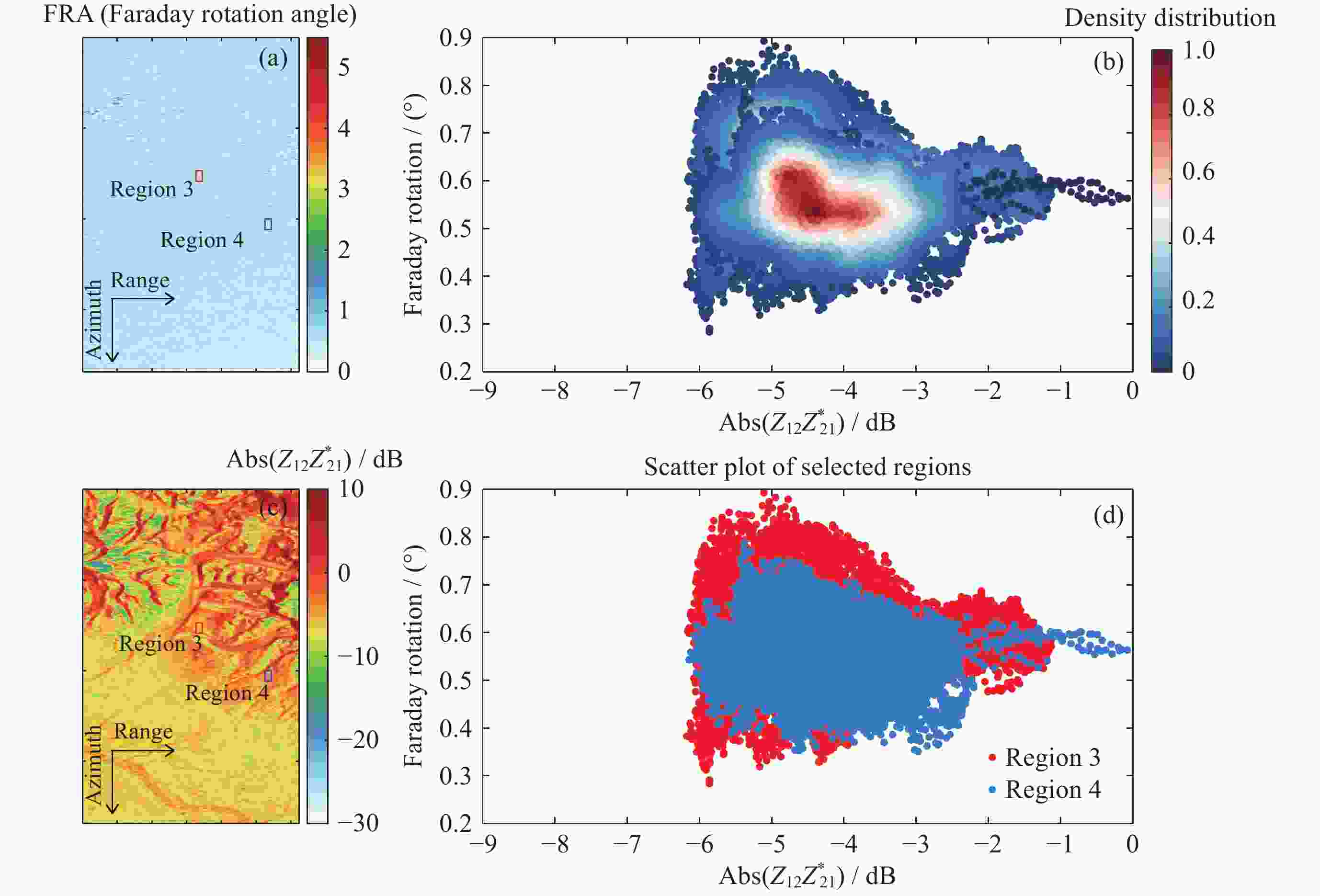
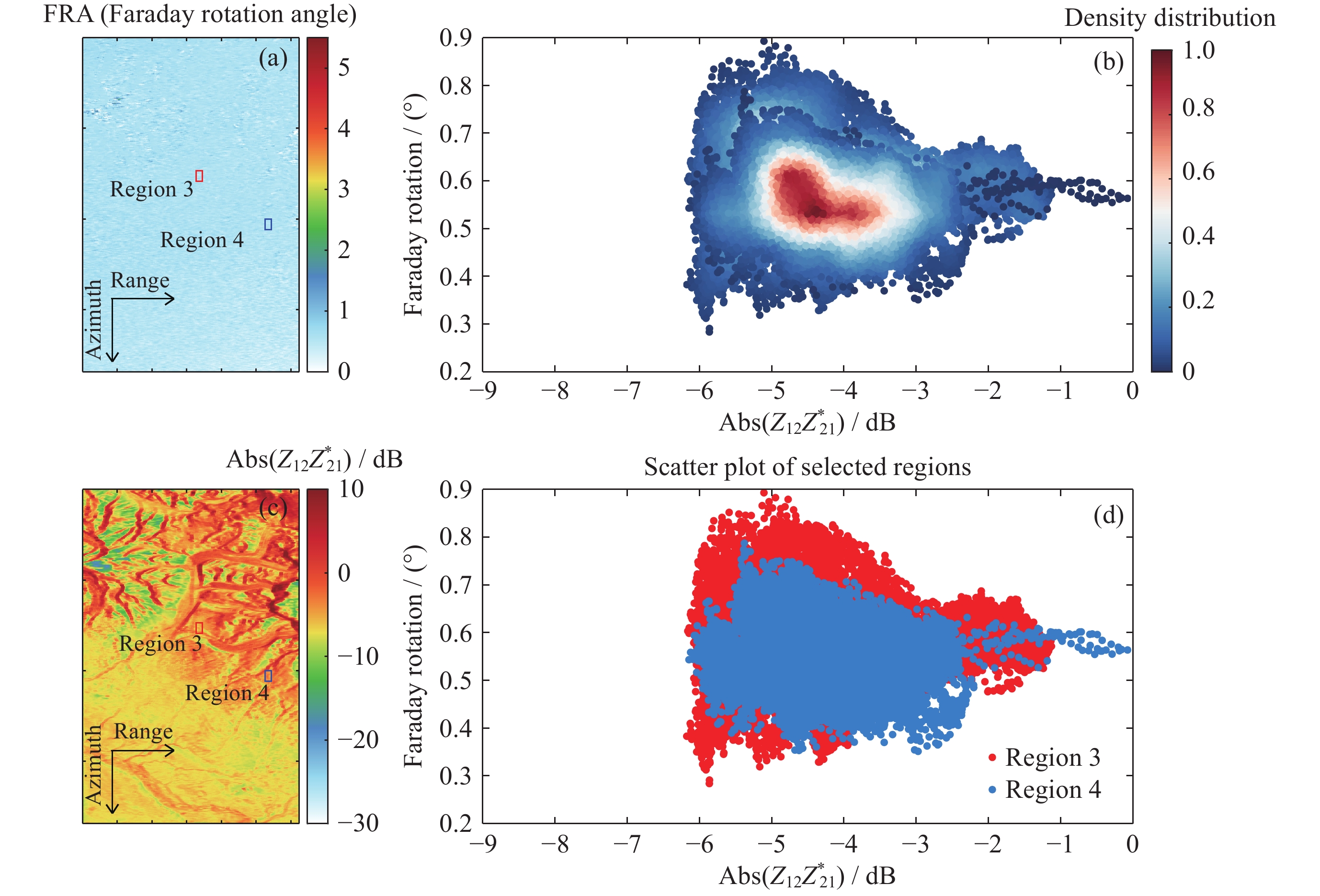
图 5 无极光活动时FRA与abs($ {\mathbf{Z}}_{\mathbf{12}}\mathbf{Z}_{\mathbf{21}}^{\mathbf{*}} $)分布及其相关性分析
Figure 5. Distribution and correlation analysis of FRA and abs($ {\mathbf{Z}}_{\mathbf{12}}\mathbf{Z}_{\mathbf{21}}^{\mathbf{*}} $) without aurora activity
表 1 2007年4月1日事件4种FRA反演算法计算的TEC与GNSS-TEC的统计结果
Table 1. Statistics of TEC calculated by four FRA inversion methods and GNSS-TEC for the event on 1 April 2007
Method B&B Freeman Wang Li GNSS Max 6.97 42.33 6.50 8.00 8.65 Min 2.17 8.10 0.33 1.92 3.70 Mean 4.22 12.83 4.01 4.11 5.31 RMSE/TECU 2.40 9.80 5.60 4.86 -  下载: 导出CSV
表 2 有无极光活动下各区域FRA与交叉圆极化积的统计特征对比
Table 2. Comparison of statistical characteristics of FRA and Cross-Polarization product in different regions with and without aurora activity
Item abs($ {Z}_{12}Z_{21}^{*} $)/ dB FRA/(°) Region 1 Region 2 Region 3 Region 4 Region 1 Region 2 Region 3 Region 4 Min –8.642 –6.570 –6.173 –6.143 4.574 2.780 0.284 0.352 Max –2.970 –1.541 –1.123 –0.082 5.439 3.332 0.893 0.787 Mean –6.141 –4.443 –4.179 –4.209 5.068 3.014 0.585 0.556 STD 1.566 0.822 0.799 0.764 0.127 0.057 0.065 0.060
下载: 导出CSV
-
[1] WANG X Y, ZHANG Q H, WANG C, et al. Unusual shrinkage and reshaping of Earth’s magnetosphere under a strong northward interplanetary magnetic field[J]. Communications Earth & Environment, 2023, 4(1): 31 doi: 10.1038/s43247-023-00700-0 [2] ZHAO B L, ZHANG J J, ZHANG Q H, et al. Simultaneous observation of duskside and dawnside subauroral polarization streams during an intense magnetic storm[J]. Geophysical Research Letters, 2025, 52(17): e2024GL114160 doi: 10.1029/2024GL114160 [3] LU S, XING Z Y, ZHANG Q H, et al. Ionospheric scintillation and geomagnetic disturbance caused by space hurricanes[J]. Space Weather, 2025, 23(7): e2025SW004435 doi: 10.1029/2025SW004435 [4] 王成. 电离层对星载SAR成像质量影响和校正方法研究[D]. 西安: 西安电子科技大学, 2015WANG Cheng. Study of Ionospheric Effects and Correction Methods on Space-Borne SAR Imaging[D]. Xi’an: Xidian University, 2015 [5] JI Y F, DONG Z, ZHANG Y S, et al. Equatorial ionospheric scintillation measurement in advanced land observing satellite phased array-type L-band synthetic aperture radar observations[J]. Engineering, 2025, 47: 70-85 doi: 10.1016/j.eng.2024.01.027 [6] HALLBERG B, SMITH G, OLOFSSON A, et al. Performance simulation of spaceborne P-band SAR for global biomass retrieval[C]//Proceedings of 2004 IEEE International Geoscience and Remote Sensing Symposium. Anchorage: IEEE, 2004: 503-506 [7] ABE T, OHKI M, TADONO T. Observation of huge iceberg detachment from Larsen-C ice shelf in Antarctic peninsula by ALOS-2/PALSAR-2[C]//Proceedings of 2018 IEEE International Geoscience and Remote Sensing Symposium. Valencia: IEEE, 2018: 5172-5175 [8] JI Y F, DONG Z, ZHANG Y S, et al. Transionospheric Synthetic Aperture Radar Observation: a comprehensive review[J]. IEEE Geoscience and Remote Sensing Magazine, 2025, 13(2): 273-313 doi: 10.1109/MGRS.2024.3454635 [9] PI X Q, FREEMAN A, CHAPMAN B, et al. Imaging ionospheric inhomogeneities using spaceborne synthetic aperture radar[J]. Journal of Geophysical Research: Space Physics, 2011, 116(A4): A04303 doi: 10.1029/2010ja016267 [10] WRIGHT P A, QUEGAN S, WHEADON N S, et al. Faraday rotation effects on L-band spaceborne SAR data[J]. IEEE Transactions on Geoscience and Remote Sensing, 2003, 41(12): 2735-2744 doi: 10.1109/TGRS.2003.815399 [11] PI X Q. Ionospheric effects on spaceborne synthetic aperture radar and a new capability of imaging the ionosphere from space[J]. Space Weather, 2015, 13(11): 737-741 doi: 10.1002/2015SW001281 [12] BICKEL S H, BATES R H T. Effects of magneto-ionic propagation on the polarization scattering matrix[J]. Proceedings of the IEEE, 1965, 53(8): 1089-1091 doi: 10.1109/PROC.1965.4097 [13] FREEMAN A. Calibration of linearly polarized polarimetric SAR data subject to Faraday rotation[J]. IEEE Transactions on Geoscience and Remote Sensing, 2004, 42(8): 1617-1624 doi: 10.1109/TGRS.2004.830161 [14] LI L, ZHANG Y S, YANG L, et al. Faraday rotation angle estimation from polarimetric covariance matrix[C]//Proceedings of the IET International Radar Conference 2013. Xi’an: IET, 2013: 174 [15] WANG C, LIU L, CHEN L, et al. Improved TEC retrieval based on spaceborne PolSAR data[J]. Radio Science, 2017, 52(3): 288-304 doi: 10.1002/2016RS006116 [16] 朱艺洵, 熊超, 王丰珏. 基于全极化SAR观测的TEC反演算法分析[J]. 地球物理学报, 2024, 67(11): 4015-4029 doi: 10.6038/cjg2024S0071ZHU Yixun, XIONG Chao, WANG Fengjue. The analysis of TEC inversion algorithms based on full-polarization SAR observations[J]. Chinese Journal of Geophysics, 2024, 67(11): 4015-4029 doi: 10.6038/cjg2024S0071 [17] WANG C, GUO W L, ZHANG Q H, et al. 3-D computerized ionospheric tomography with GPS, SAR, and ionosonde[J]. IEEE Transactions on Geoscience and Remote Sensing, 2023, 61: 5210109 [18] WANG C, WANG L M, ZHAO H S, et al. Ionospheric electron density reconstruction based on space-borne SAR in Alaska regions[J]. IEEE Geoscience and Remote Sensing Letters, 2024, 21: 4011805 doi: 10.1109/lgrs.2024.3412799 [19] WANG C, ZHAO H S, WANG L M, et al. GPS-based ionospheric tomography from the combination of PolSAR and E-CHAIM[J]. IEEE Transactions on Geoscience and Remote Sensing, 2024, 62: 5205714 doi: 10.1109/tgrs.2024.3367420 [20] SATO H, KIM J S, OTSUKA Y, et al. L-band synthetic aperture radar observation of ionospheric density irregularities at equatorial plasma depletion region[J]. Geophysical Research Letters, 2021, 48(16): e2021GL093541 doi: 10.1029/2021GL093541 [21] MOHANTY S, SINGH G, CARRANO C S, et al. Ionospheric scintillation observation using space‐borne synthetic aperture radar data[J]. Radio Science, 2018, 53(10): 1187-1202 doi: 10.1029/2017RS006424 [22] WANG X, ZHANG Y H, LI D. Estimation of ionospheric Faraday rotation over ocean areas using L-band spaceborne PolSAR data[J]. International Journal of Remote Sensing, 2024, 45(9): 3054-3074 doi: 10.1080/01431161.2024.2339206 [23] IWATA T, ISHIDA H, OSAWA Y, et al. Advanced Land Observing Satellite (ALOS): development and on-orbit status[J]. The Journal of Space Technology and Science, 2007, 23(1): 1_1-1_13 [24] RIDEOUT W, COSTER A. Automated GPS processing for global total electron content data[J]. GPS Solutions, 2006, 10(3): 219-228 doi: 10.1007/s10291-006-0029-5 [25] APPLETON E V, BEYNON W J G. The application of ionospheric data to radio-communication problems: part I[J]. Proceedings of the Physical Society, 1940, 52(4): 518-533 doi: 10.1088/0959-5309/52/4/311 [26] GUO W, CHEN J, YANG W, et al. Impact of vertical electron density distribution on ionospheric total electron content measurements based on spaceborne low-frequency SAR[C]//Proceedings of 2017 IEEE International Geoscience and Remote Sensing Symposium. Fort Worth: IEEE, 2017: 4421-4424 [27] QUEGAN S. A unified algorithm for phase and cross-talk calibration of polarimetric data-theory and observations[J]. IEEE Transactions on Geoscience and Remote Sensing, 1994, 32(1): 89-99 doi: 10.1109/36.285192 [28] MEYER F J, NICOLL J B. Prediction, detection, and correction of faraday rotation in full-polarimetric L-band SAR data[J]. IEEE Transactions on Geoscience and Remote Sensing, 2008, 46(10): 3076-3086 doi: 10.1109/TGRS.2008.2003002 [29] JI Y F, ZHANG Y S, ZHANG Q L, et al. Retrieval of ionospheric faraday rotation angle in low-frequency polarimetric SAR data[J]. IEEE Access, 2019, 7: 3181-3193 doi: 10.1109/ACCESS.2018.2888928 [30] ZHU Y X, XIONG C, JI Y F, et al. Influence of monoenergetic and broadband aurora on SAR imaging: a case study[J]. Advances in Space Research, 2025, 76(7): 3815-3829 doi: 10.1016/j.asr.2025.03.054 -
-

 下载:
下载:

计量
- 文章访问数: 992
- HTML全文浏览量: 109
- PDF下载量: 179
-
被引次数:
0(来源:Crossref)
0(来源:其他)

