


Simulation and Experimental Validation of a Combined Ion Line and Plasma Line Inversion Method for Incoherent Scatter Radar
doi: 10.11728/cjss2026.05.2026-0006 cstr: 32142.14.cjss.2026-0006
-
Abstract: In the ionospheric monitoring, one of the key techniques is the Incoherent Scatter Radar (ISR), which usually uses the so called ion line spectra resulted from the ion acoustic wave to derive multiple plasma parameters including electron density, electron and ion temperature, and ion velocity and composition. In addition to the ion line, ISR could also measure the so called plasma line spectra due to the existence of Langmuir wave, the dispersion relation of which is associated with the electron density and temperature. In the conventional ion line inversions, the Temperature-Ion Composition Ambiguity (TICA) and the systematic bias hinder the accuracy of retrieved parameters. To address these issues, here we propose an improved method by incorporating the information of plasma line into the ion line fitting process. We expect that the retrieval accuracy could be enhanced with the independent constraint on electron density and electron temperature obtained from the plasma line. Simulations based on the International Reference Ionosphere demonstrate that the combined ion line-plasma line method significantly reduces deviations in electron density and temperature, and it can improve the impact of the TICA effect to a certain extent. The comparison of the experimental results of Sanya Incoherent Scatter Radar with the ionosonde data on 6 June 2022 shows that this method has a certain effect on improving the electron density. This study establishes the feasibility of combined inversion for ISR data analysis, enabling more accurate and calibration-free ionospheric parameter retrievals in the future.
-
Key words:
- Incoherent Scatter Radar (ISR) /
- Plasma line /
- Combined inversion /
- Ion line inversion
-
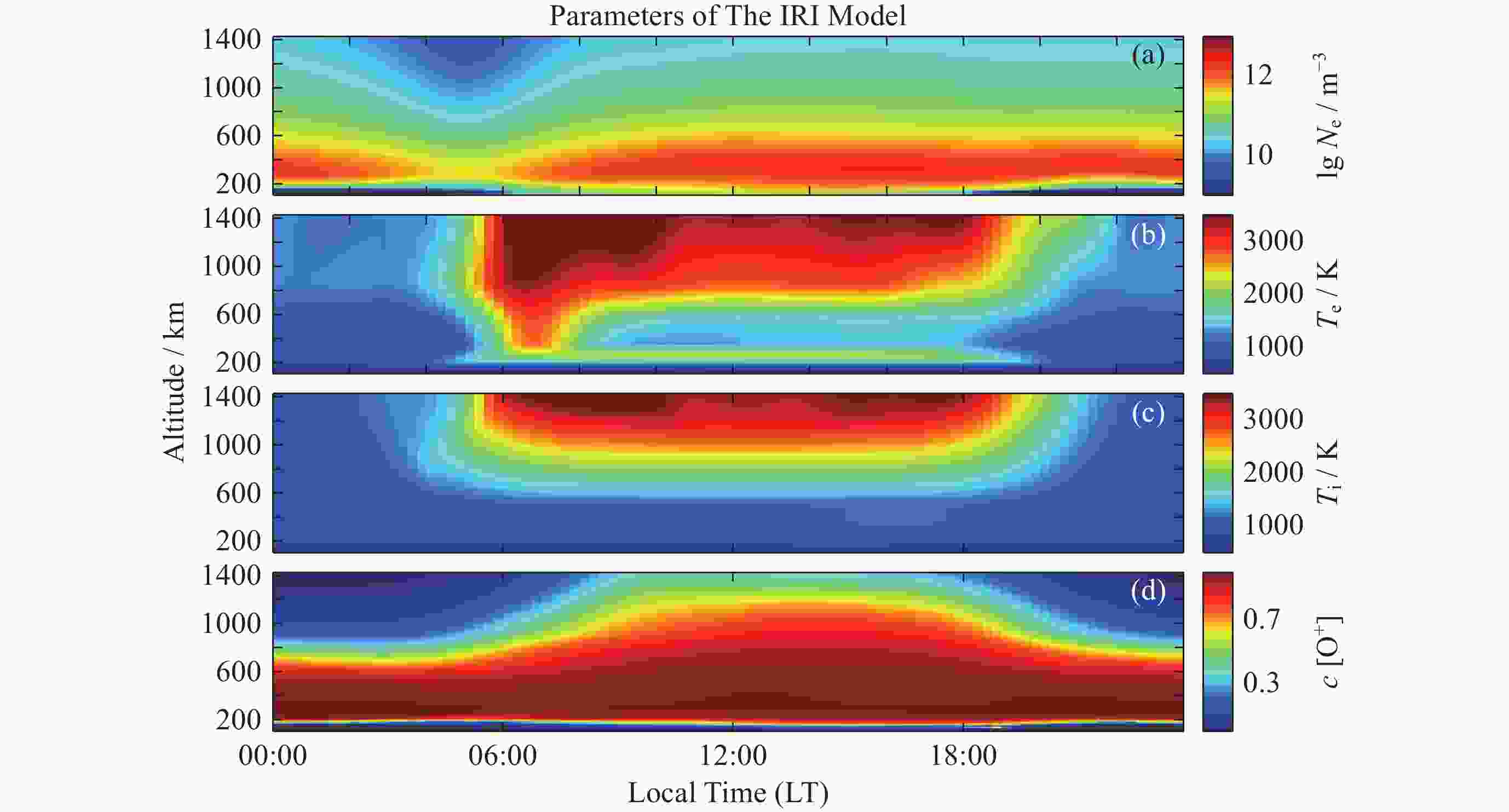
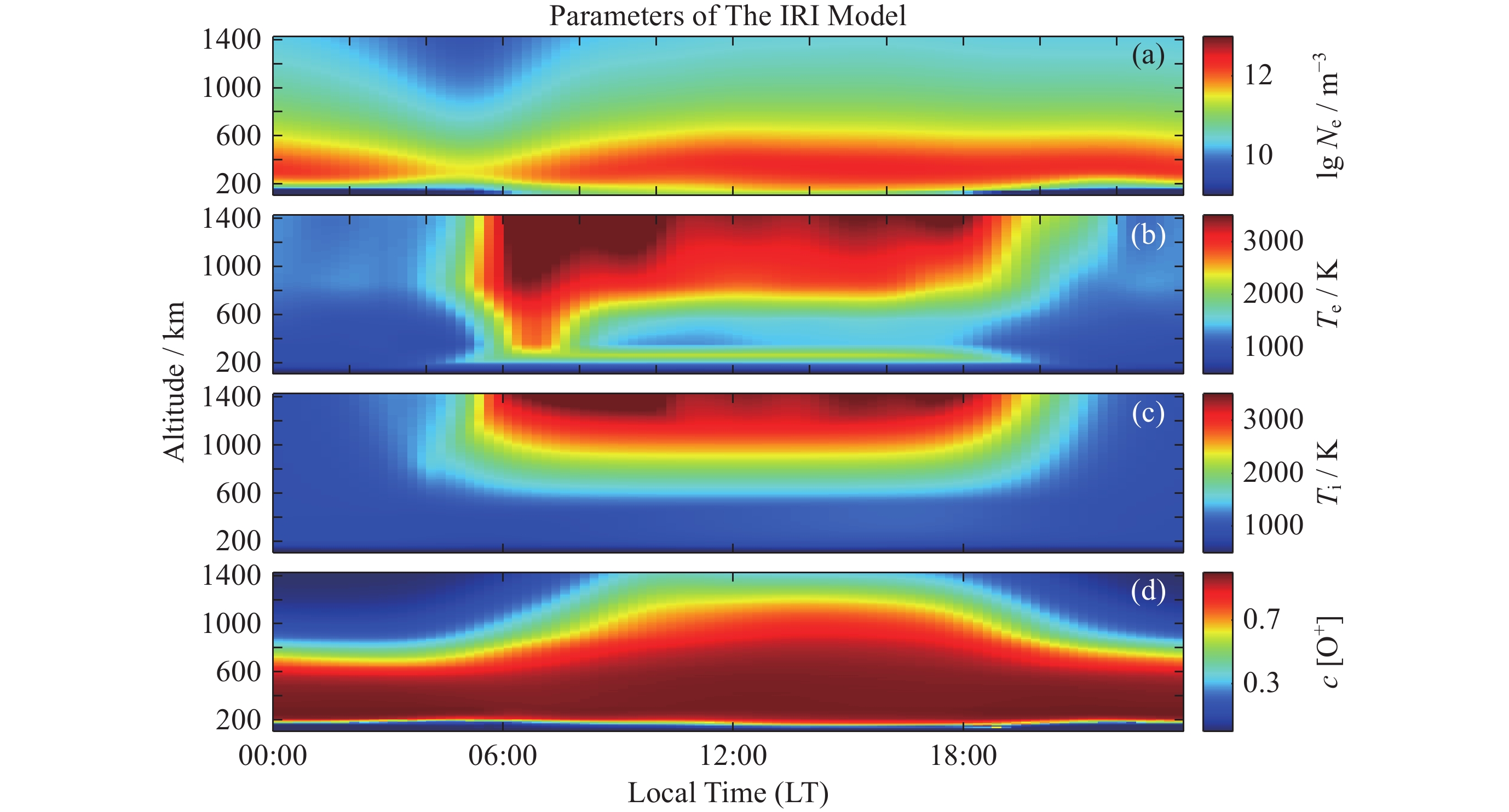
Figure 1. Local Time (LT) and altitude variations of electron density (a), electron temperature (b), ion temperature (c) and oxygen ion ratio (d) used in the simulation calculated by the IRI model
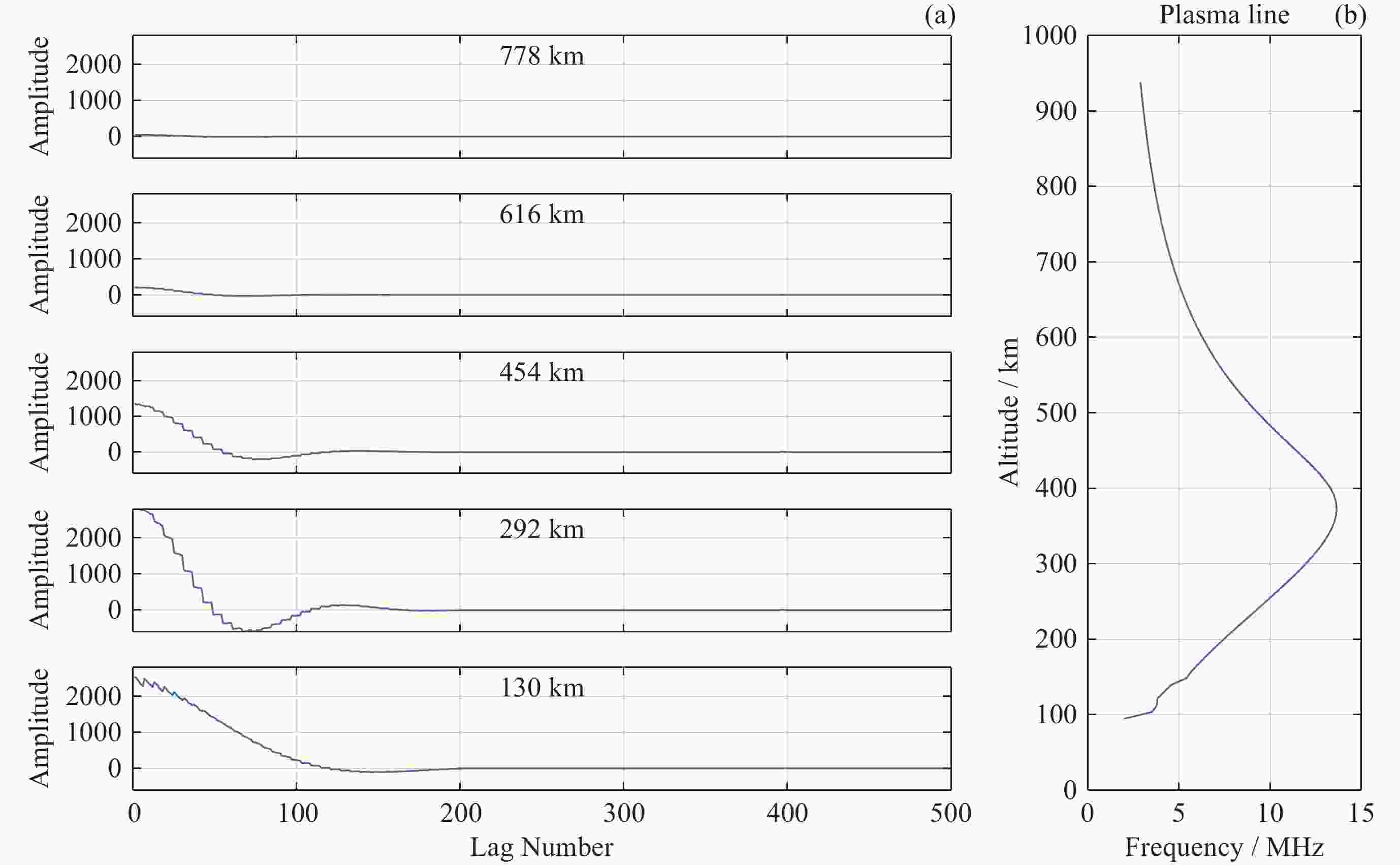
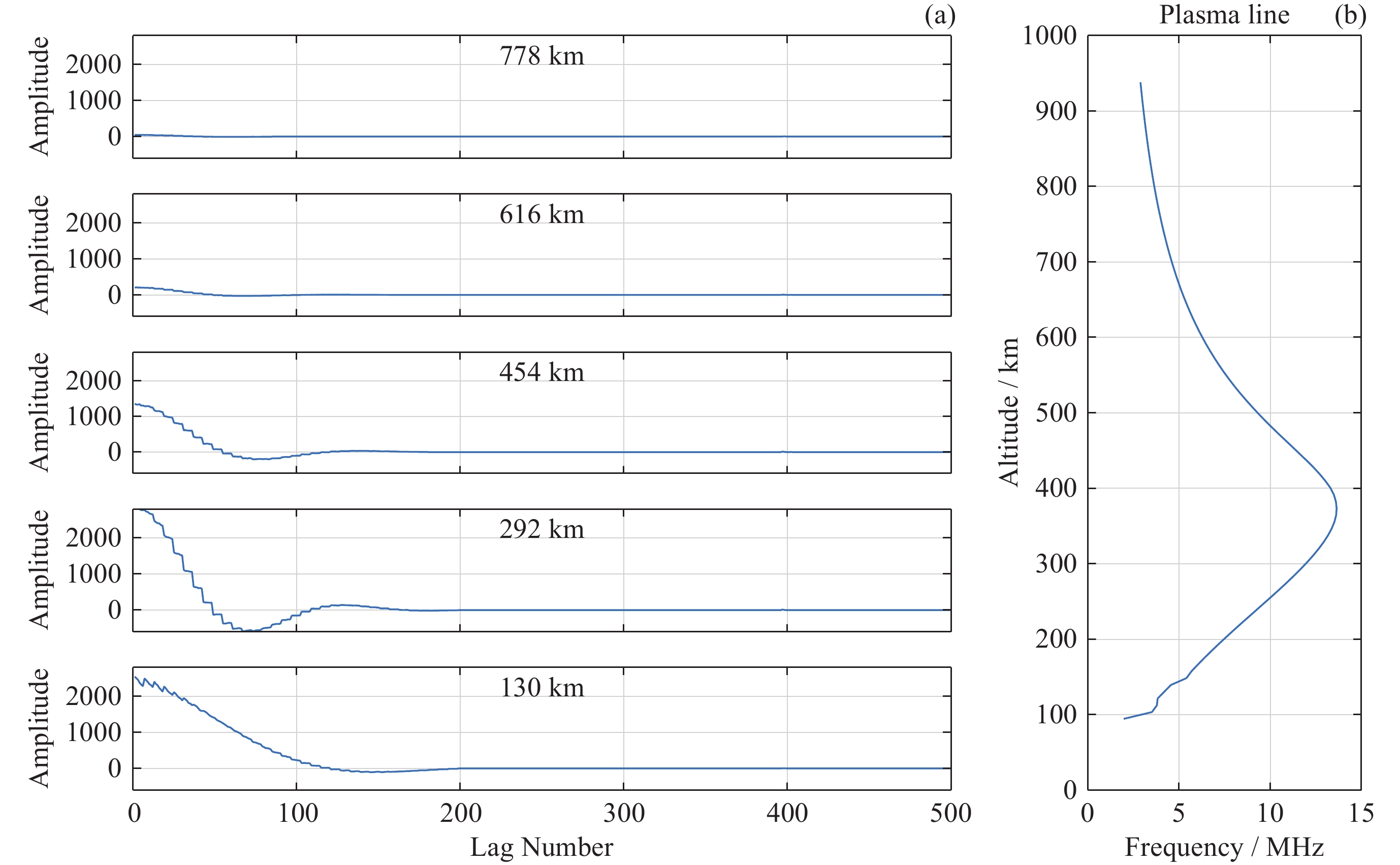
Figure 2. Simulated ACF amplitude versus lag number for five selected altitudes(a) and plasma line frequency offset for the whole profile in the simulation (b) at 11:45 LT
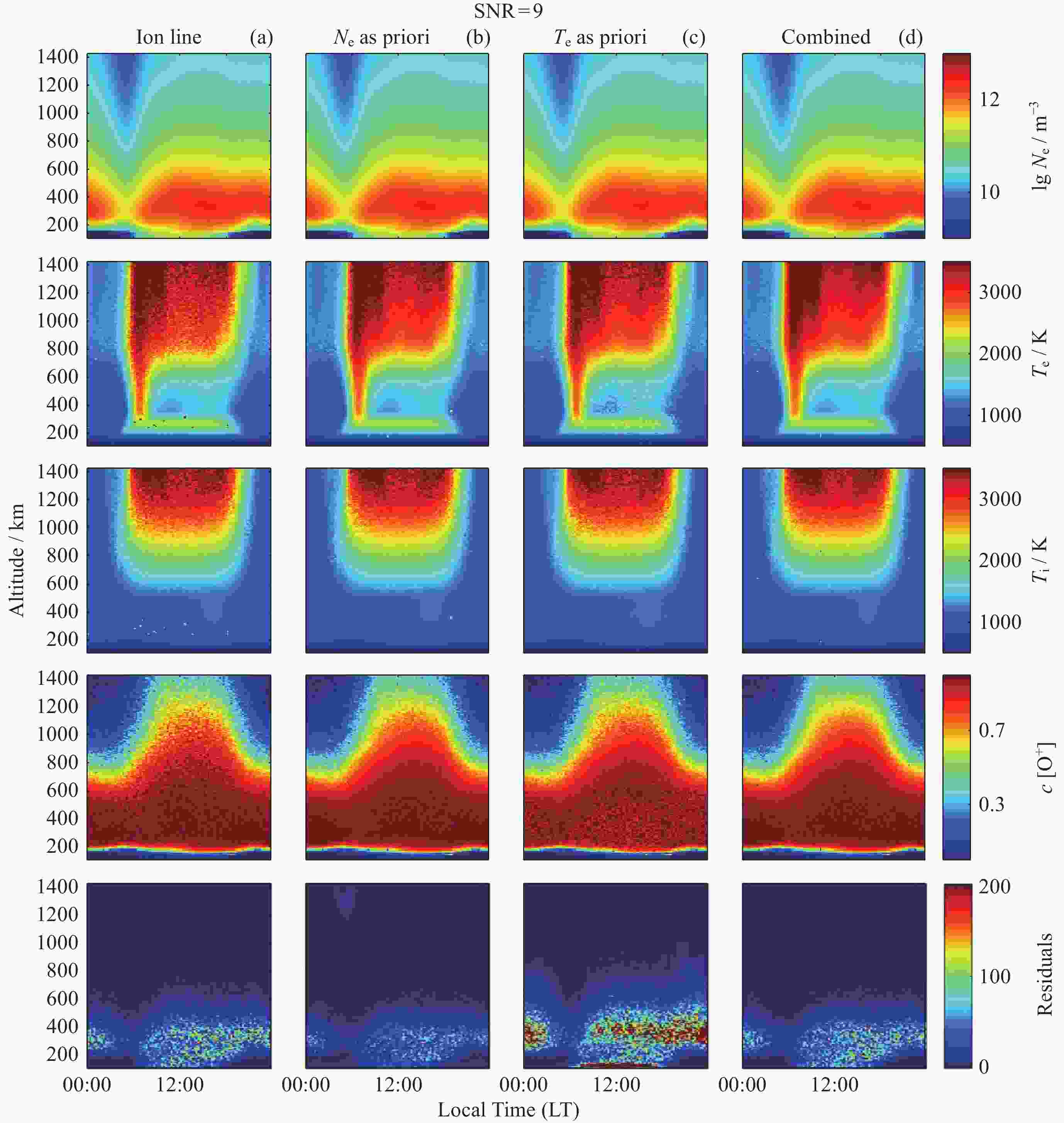
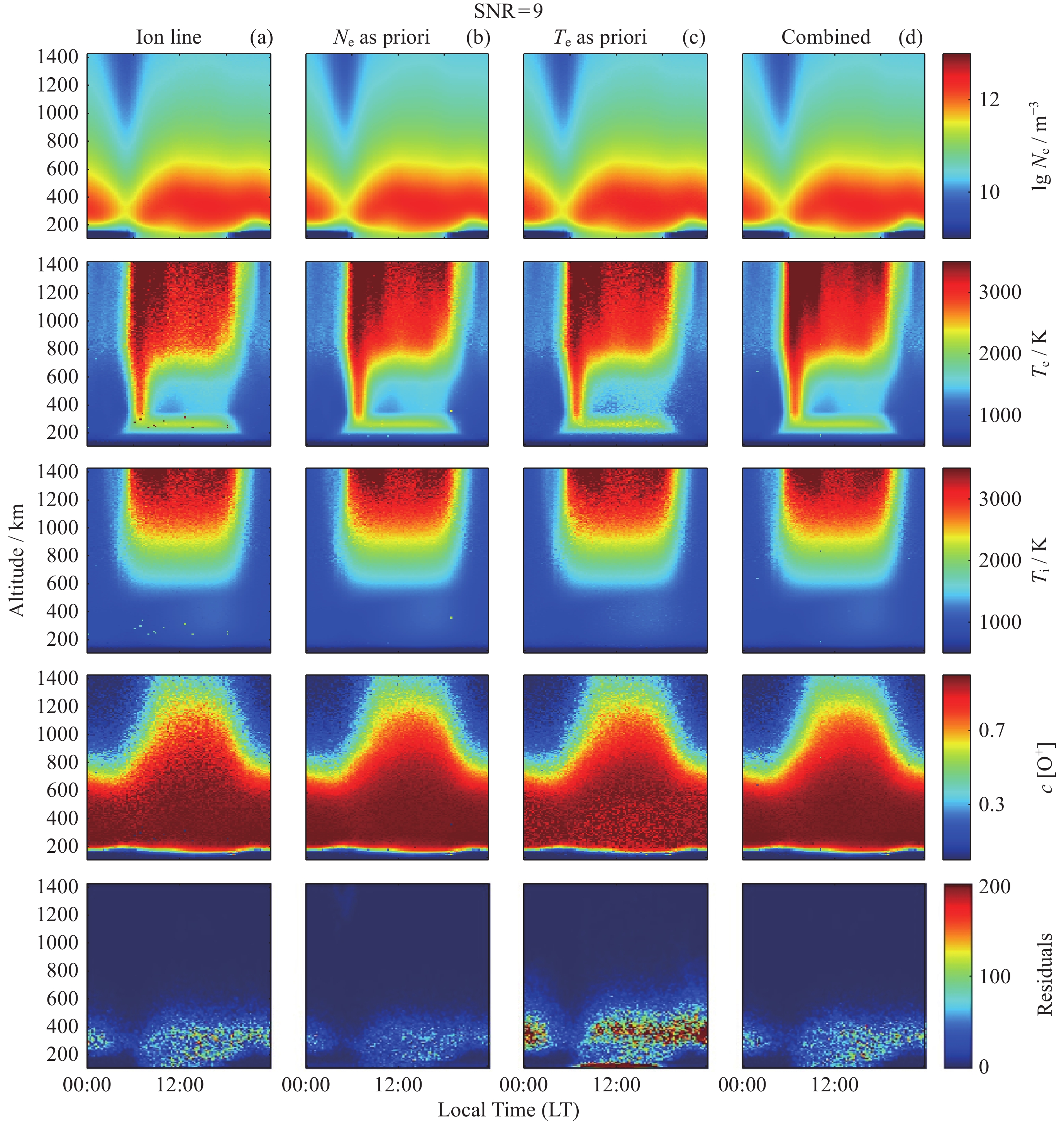
Figure 3. Retrieved results in the simulation. From the left to the right are for four cases listed in Table 1 and from the top to the bottom are results of electron density, electron temperature, ion temperature, oxygen ion ratio and residuals
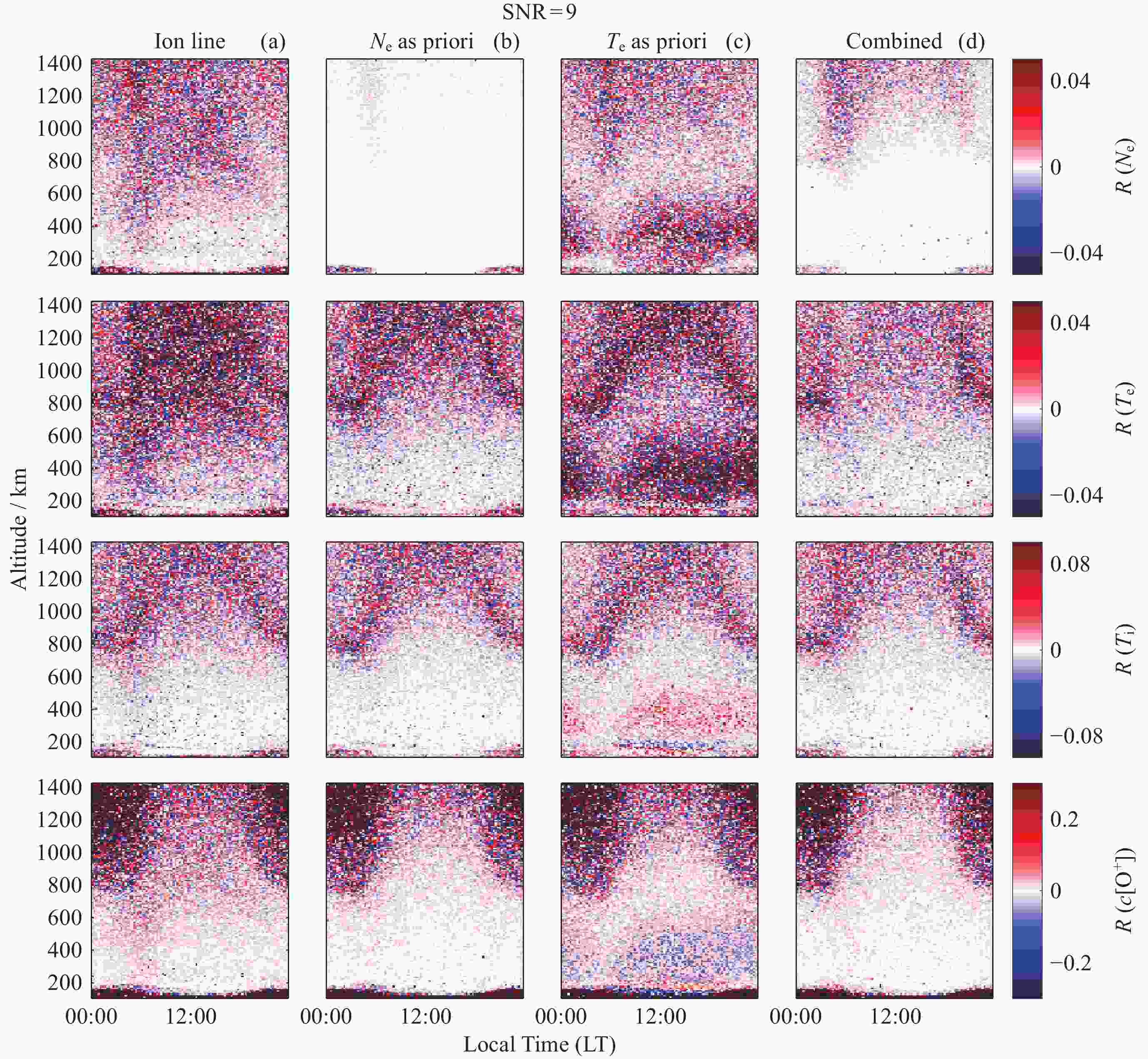
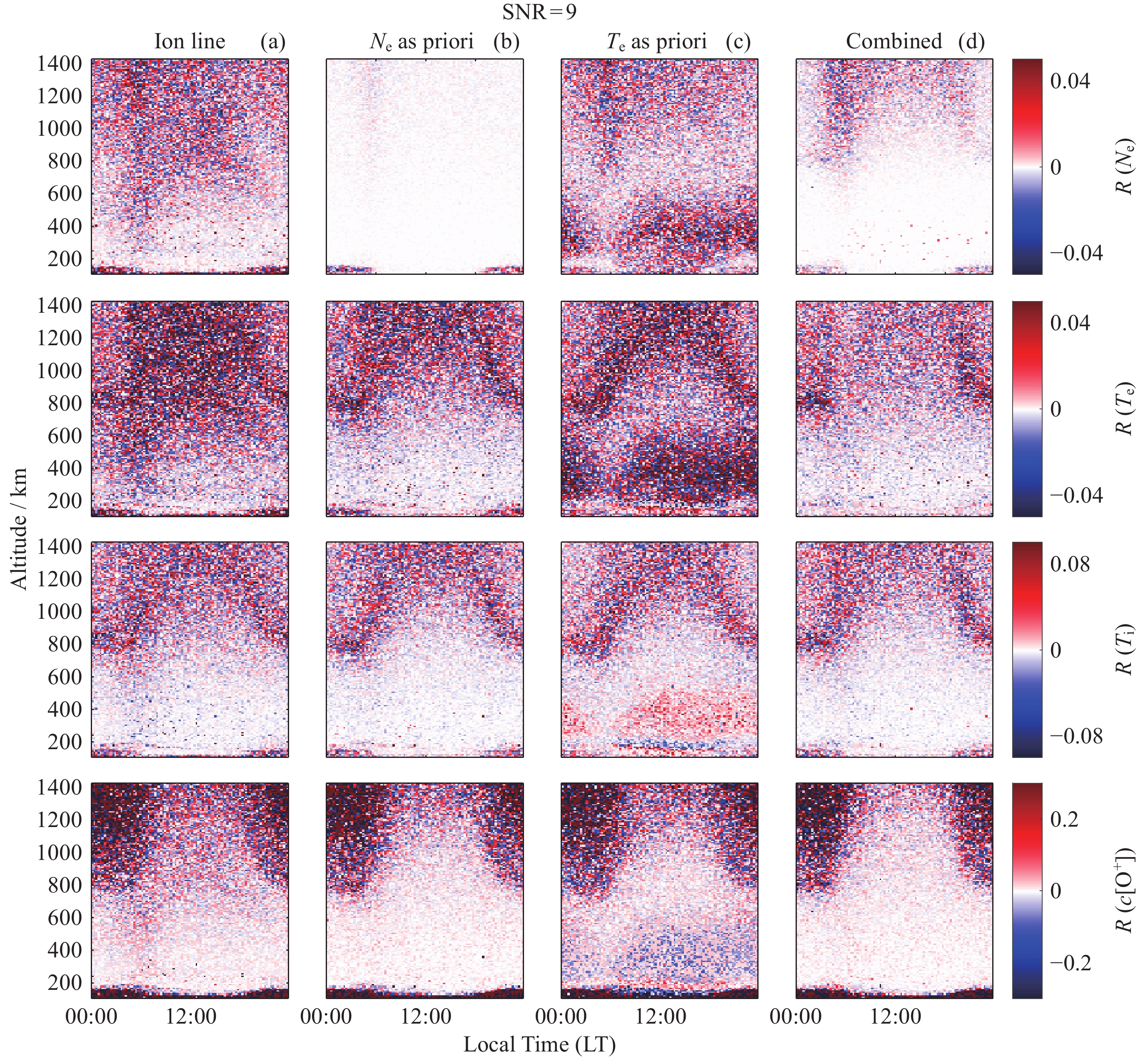
Figure 4. Relative deviations of the retrieved results from that of the simulated truth (Explanation same as Figure 3)
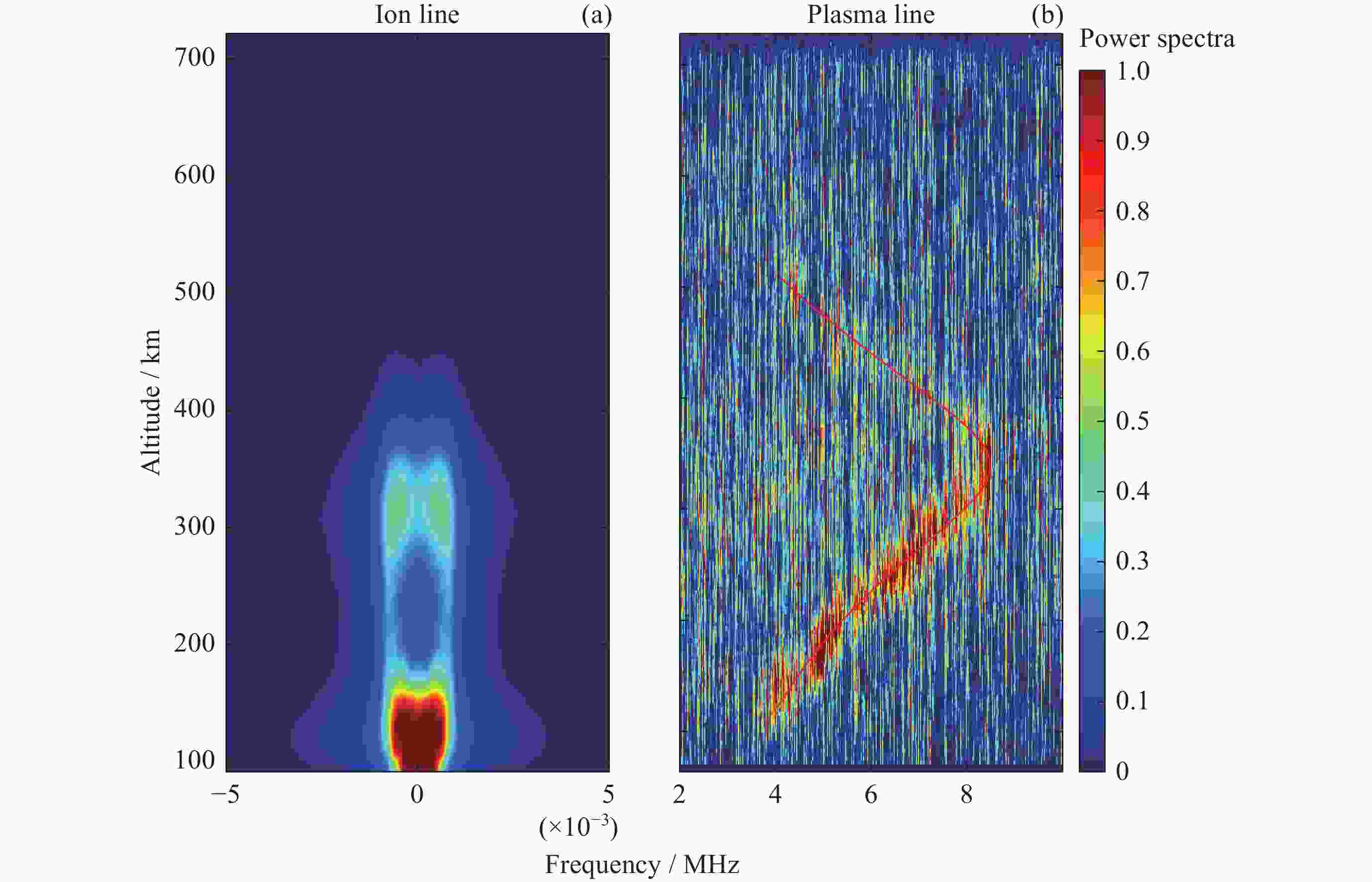
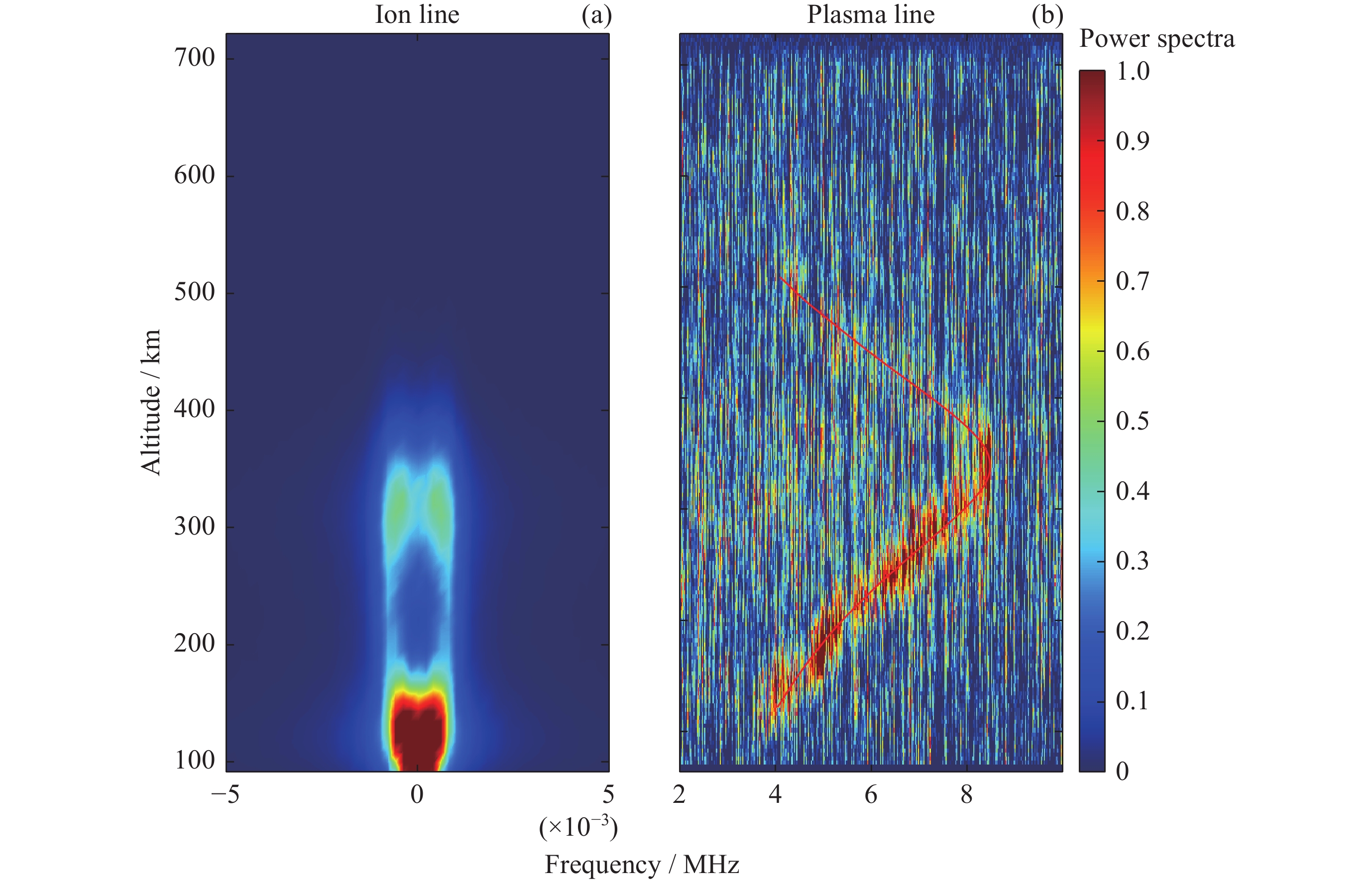
Figure 5. (a) Altitude variation of measured ion line power spectra by SYISR on 6 June 2022 morning at 09:30 LT. (b) The simultaneous plasma line frequency offset spectrum corresponding to (a), the zero frequency of the spectrum corresponds to the radar transmitting frequency (440 MHz), and the red line is the plasma line extracted after Gaussian fitting
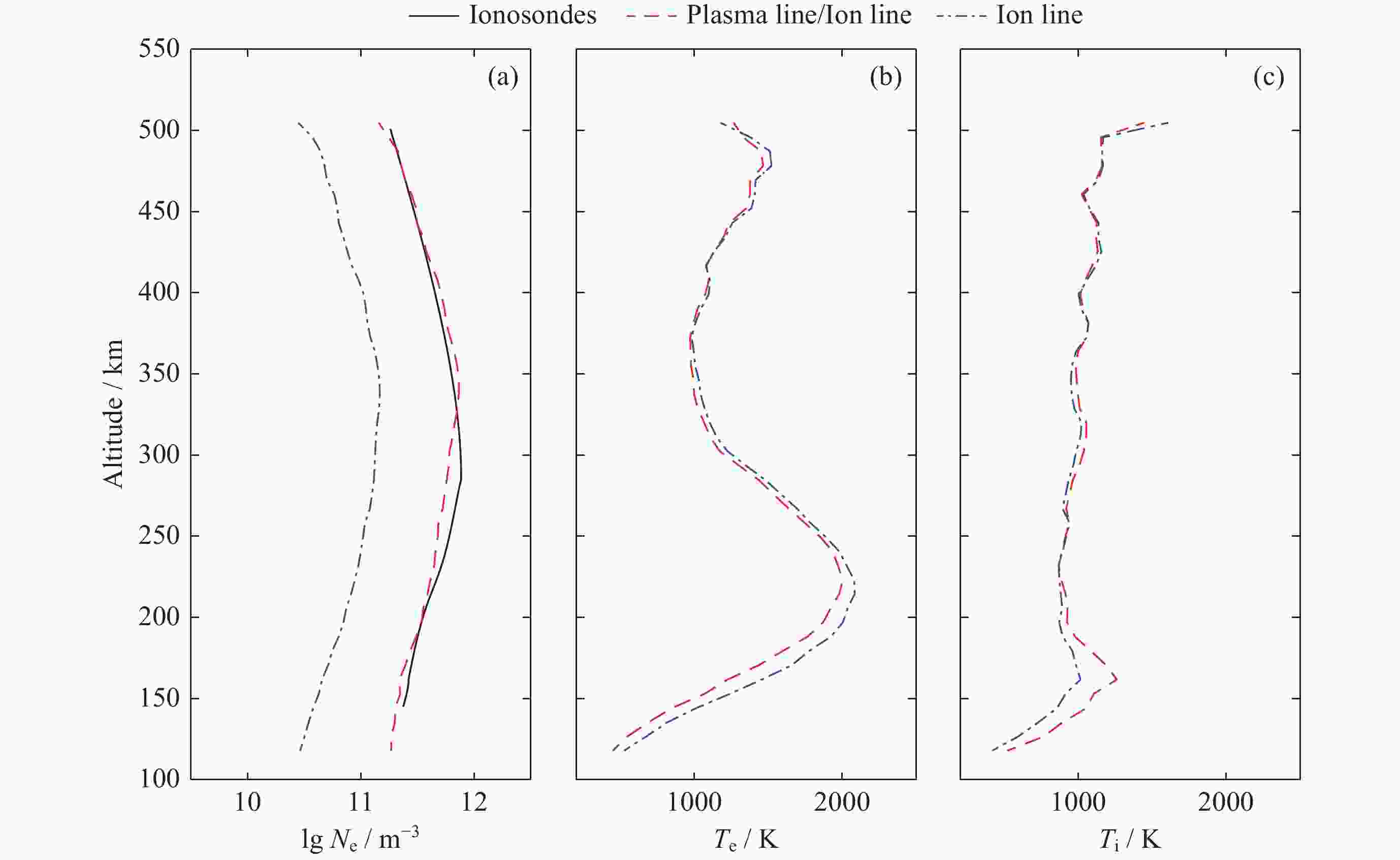
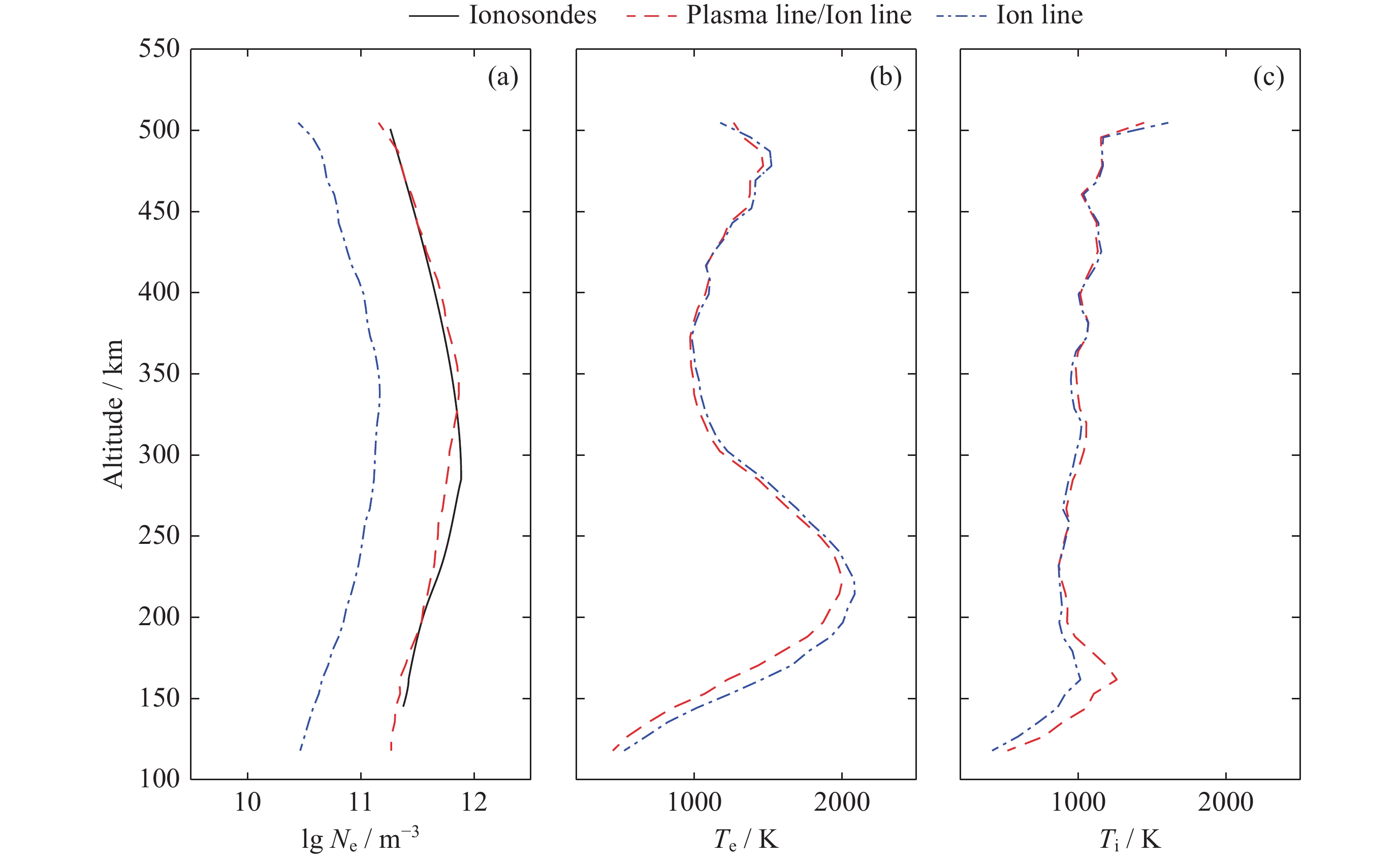
Figure 6. Comparison between the traditional ion line inversion (blue dotted line) and combined plasma/ion line inversion (red dotted line) for electron density (a), electron temperature (b), and ion temperature (c) for realistic SYISR measurements at 09:30 LT on 6 June 2022. Also embedded in (a) is the electron density profile measured by a co-located ionosonde
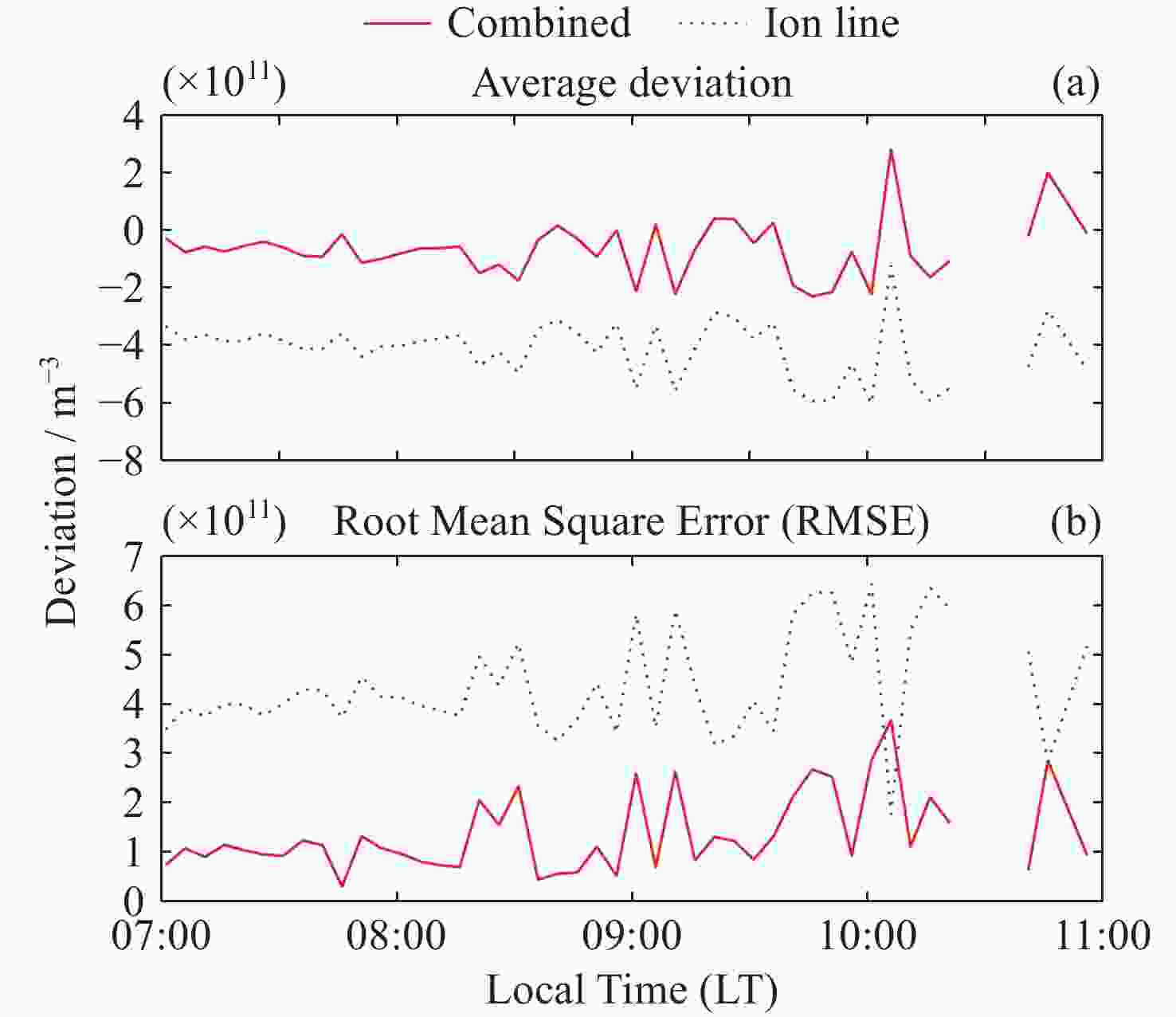
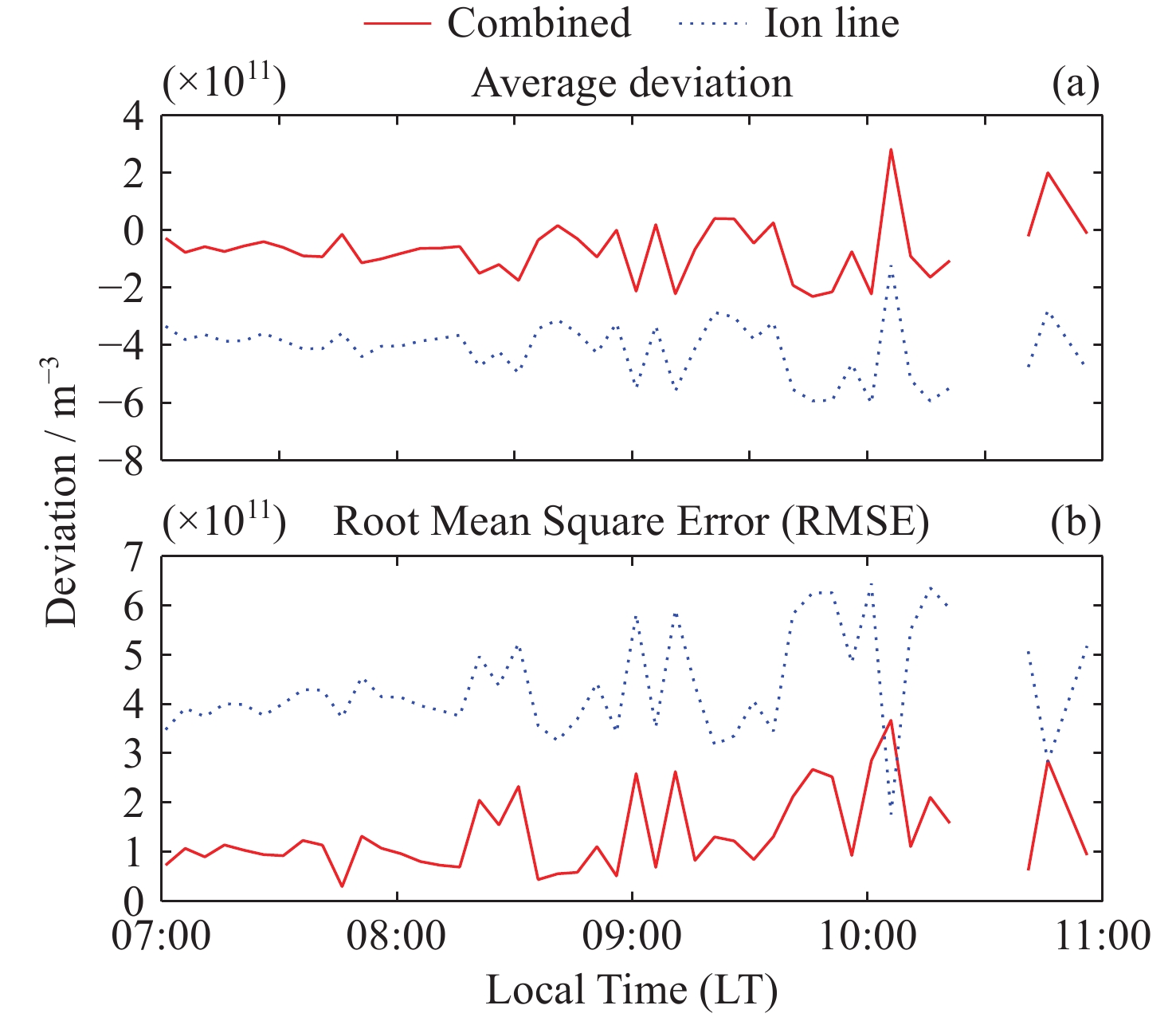
Figure 7. Deviation of electron density measured by different inversion methods from 07:00 LT to 11:00 LT to ionosonde
Table 1. Parameter configuration of the simulation experiments
Fitting setup Initial guessed deviation/(%) SNR of ion line /dB SNR of plasma line /dB Case 1 Ion line fitting 10 13 ― Case 2 $ {N}_{\text{e}} $ used as priori 10 13 9 Case 3 $ {T}_{\text{e}} $ used as priori 10 13 9 Case 4 Combined ion line/plasma line 10 13 9  下载: 导出CSV
-
[1] GORDON W E. Incoherent scattering of radio waves by free electrons with applications to space exploration by radar[J]. Proceedings of the IRE, 1958, 46(11): 1824-1829 doi: 10.1109/JRPROC.1958.286852 [2] SALPETER E E. Electron density fluctuations in a plasma[J]. Physical Review, 1960, 120(5): 1528-1535 doi: 10.1103/PhysRev.120.1528 [3] GORDON W E. F region and magnetosphere, backscatter results[J]. Reviews of Geophysics, 1967, 5(2): 191-205 doi: 10.1029/RG005i002p00191 [4] ZHANG N, YUE X A, WANG J Y, et al. Calculation and evaluation of neutral winds in the lower thermosphere based on SYISR observations[J]. Journal of Geophysical Research: Space Physics, 2024, 129(11): e2024JA032994 doi: 10.1029/2024JA032994 [5] YNGVESSON K O, PERKINS F W. Radar Thomson scatter studies of photoelectrons in the ionosphere and Landau damping[J]. Journal of Geophysical Research, 1968, 73(1): 97-110 doi: 10.1029/JA073i001p00097 [6] HAGFORS T. Incoherent scatter radar observations of the plasma line with a chirped pulse system[J]. Radio Science, 1982, 17(3): 727-734 doi: 10.1029/RS017i003p00727 [7] PERKINS F W, SALPETER E E, YNGVESSON K O. Incoherent scatter from plasma oscillations in the ionosphere[J]. Physical Review Letters, 1965, 14(15): 579-581 doi: 10.1103/PhysRevLett.14.579 [8] YUE X A, WAN W X, NING B Q, et al. Development of the Sanya incoherent scatter radar and preliminary results[J]. Journal of Geophysical Research: Space Physics, 2022, 127(8): e2022JA030451 doi: 10.1029/2022JA030451 [9] YUE X A, NING B Q, JIN L, et al. A tristatic phased array radar system in China[J]. Nature Astronomy, 2024, 8(5): 673 doi: 10.1038/s41550-024-02274-z [10] YUE X A, LIU F Y, WANG J Y, et al. On the ion line calibration by plasma line in ISR measurements[J]. Remote Sensing, 2023, 15(6): 1553 doi: 10.3390/rs15061553 [11] WU L L, ZHOU Q H, CHEN T J, et al. Application of particle swarm optimization method to incoherent scatter radar measurement of ionosphere parameters[J]. Journal of Geophysical Research: Space Physics, 2015, 120(9): 8096-8110 doi: 10.1002/2014JA020970 [12] BLELLY P L, ALCAYDÉ D, VAN EYKEN A P. A new analysis method for determining polar ionosphere and upper atmosphere characteristics from ESR data: illustration with IPY period[J]. Journal of Geophysical Research: Space Physics, 2010, 115(A9): A09322 doi: 10.1029/2009ja014876 [13] VALLINKOSKI M. Statistics of incoherent scatter multiparameter fits[J]. Journal of Atmospheric and Terrestrial Physics, 1988, 50(9): 839-851 doi: 10.1016/0021-9169(88)90106-7 [14] WALDTEUFEL P. Combined incoherent-scatter F1-region observations[J]. Journal of Geophysical Research, 1971, 76(28): 6995-6999 doi: 10.1029/JA076i028p06995 [15] ZETTERGREN M, SEMETER J, HEINSELMAN C, et al. Incoherent scatter radar estimation of F region ionospheric composition during frictional heating events[J]. Journal of Geophysical Research: Space Physics, 2011, 116(A1): A01318 doi: 10.1029/2010ja016035 [16] LATHUILLÈRE C, KOFMAN W. A short review on the F1-region ion composition in the auroral and polar ionosphere[J]. Advances in Space Research, 2006, 37(5): 913-918 doi: 10.1016/j.asr.2005.12.014 [17] APONTE N, SULZER M P, NICOLLS M J, et al. Molecular ion composition measurements in the F1 region at Arecibo[J]. Journal of Geophysical Research: Space Physics, 2007, 112(A6): A06322 doi: 10.1029/2006ja012028 [18] LEHTINEN M S. Statistical theory of incoherent scatter radar measurements[D]. Helsinki: University of Helsinki, 1986 [19] KIRKWOOD S, COLLIS P N, SCHMIDT W. Calibration of electron densities for the EISCAT UHF radar[J]. Journal of Atmospheric and Terrestrial Physics, 1986, 48(9/10): 773-775 doi: 10.1016/0021-9169(86)90051-6 [20] BJØRNÅ N, KIRKWOOD S. Derivation of ion composition from a combined ion line/plasma line incoherent scatter experiment[J]. Journal of Geophysical Research: Space Physics, 1988, 93(A6): 5787-5793 doi: 10.1029/JA093iA06p05787 [21] BJØRNÅ N. Derivation of ion-neutral collision frequencies from a combined ion line/plasma line incoherent scatter experiment[J]. Journal of Geophysical Research: Space Physics, 1989, 94(A4): 3799-3804 doi: 10.1029/JA094iA04p03799 [22] VICKREY J F, SWARTZ W E, FARLEY D T. Incoherent scatter measurements of ion counterstreaming[J]. Geophysical Research Letters, 1976, 3(4): 217-220 doi: 10.1029/GL003i004p00217 [23] SWARTZ W E, FARLEY D T. A theory of incoherent scattering of radio waves by a plasma, 5. The use of the Nyquist Theorem in general quasi-equilibrium situations[J]. Journal of Geophysical Research: Space Physics, 1979, 84(A5): 1930-1932 doi: 10.1029/JA084iA05p01930 [24] PERKINS F, SALPETER E E. Enhancement of plasma density fluctuations by nonthermal electrons[J]. Physical Review, 1965, 139(1A): A55-A62 doi: 10.1103/PhysRev.139.A55 [25] LEHTINEN M S, HUUSKONEN A. General incoherent scatter analysis and GUISDAP[J]. Journal of Atmospheric and Terrestrial Physics, 1996, 58(1/2/3/4): 435-452 doi: 10.1016/0021-9169(95)00047-x [26] BILITZA D, ALTADILL D, TRUHLIK V, et al. International Reference ionosphere 2016: from ionospheric climate to real-time weather predictions[J]. Space Weather, 2017, 15(2): 418-429 doi: 10.1002/2016SW001593 -
-

 下载:
下载:

计量
- 文章访问数: 284
- HTML全文浏览量: 48
- PDF下载量: 19
-
被引次数:
0(来源:Crossref)
0(来源:其他)

