


基于白谱法指数群驱动的全球电离层TEC深度学习预报研究
doi: 10.11728/cjss2026.05.2026-0022 cstr: 32142.14.cjss.2026-0022
-
 孙嘉豪 男, 2001年出生于江西省九江市, 现为南昌大学信息工程学院人工智能专业硕士研究生, 主要研究方向为基于深度学习的全球电离层预报、白谱法指数在空间天气中的应用等. E-mail: sunjiahao@email.ncu.edu.cn
 -
 陈洲 男, 1986年出生于湖北省黄冈市, 现为南昌大学教授、博士生导师, 国家高层次青年人才, 主要研究方向为从太阳风到电离层的全链路过程与人工智能建模, 现以执行首席科学家参与研发全球首个全链条空间天气AI模型“风宇”. E-mail: chenzhou760@foxmail.com
作者简介:
通讯作者:
Research on Global Ionospheric TEC Deep Learning Forecasting Based on Spectral Whitening Method Index Group
-
摘要: 全球电离层总电子含量(TEC)的时空变化直接影响全球导航卫星系统(GNSS)的定位精度和通信系统可靠性. 针对传统太阳活动与地磁指数时间分辨率低、更新不及时, 限制极端空间天气条件下数据驱动预报性能的问题, 提出基于白谱法(SWM)的物理驱动指数群, 引入高纬扰动指数表征日地能量耦合过程, 并结合深度神经网络与3D Swin Transformer构建三维电子密度重构和时空预报两阶段框架. 结果表明, SWM指数与传统指数保持高度相关, 其高频物理特征可加快模型收敛、提高稳定性; SWM驱动模型显著优于IRI-2020经验模型, 并能抑制长时效预报的误差累积. 该指数群具有较强的实时更新和扰动捕捉能力, 可为高性能、业务化全球空间天气预报提供新的技术路径.
-
关键词:
- 全球电离层 /
- 总电子含量(TEC) /
- 白谱法(SWM) /
- 深度学习
Abstract: The spatiotemporal evolution of global ionospheric Total Electron Content (TEC) directly affects the positioning accuracy of Global Navigation Satellite Systems (GNSS) and the reliability of communication systems. Accurate TEC prediction is therefore essential for space weather research and operations. Most existing ionospheric forecasting models use conventional solar activity and geomagnetic indices, such as F10.7, Kp, and Dst, as external drivers. Their relatively low temporal resolution and infrequent updates make it difficult to represent rapid energy transfer and disturbance processes, which can constrain data-driven forecasts during extreme space weather events. To overcome this limitation, this study develops a physically driven index group using the Spectral Whitening Method (SWM). The SWM procedure suppresses periodic background components and emphasizes non-stationary disturbances. A high-latitude disturbance index is further incorporated so that the index group can characterize the chain of solar-terrestrial energy coupling from solar energy input to geomagnetic and ionospheric responses. The index group is evaluated within a two-stage deep learning forecasting framework. In the first stage, a deep neural network reconstructs three-dimensional electron density; in the second stage, a 3D Swin Transformer learns the spatiotemporal evolution and produces global TEC forecasts. The SWM-driven model is compared with the same framework driven by conventional indices and with the IRI-2020 empirical model. Results show that the SWM indices retain high statistical correlations with conventional indices while providing higher-frequency physical information. These properties accelerate model convergence and improve training stability. The SWM-driven model achieves better forecasting performance than IRI-2020 and exhibits stronger error-control capability under disturbed conditions. It also reduces the accumulation of errors in longer lead-time forecasts, indicating that the SWM index group supplies useful real-time physical constraints for deep learning. The findings demonstrate that jointly representing solar, geomagnetic, and high-latitude disturbance information can improve the responsiveness and robustness of global ionospheric forecasting. With its rapid updating capability and sensitivity to transient disturbances, the proposed index group provides a practical technical pathway toward high-performance and operational global space weather prediction. -
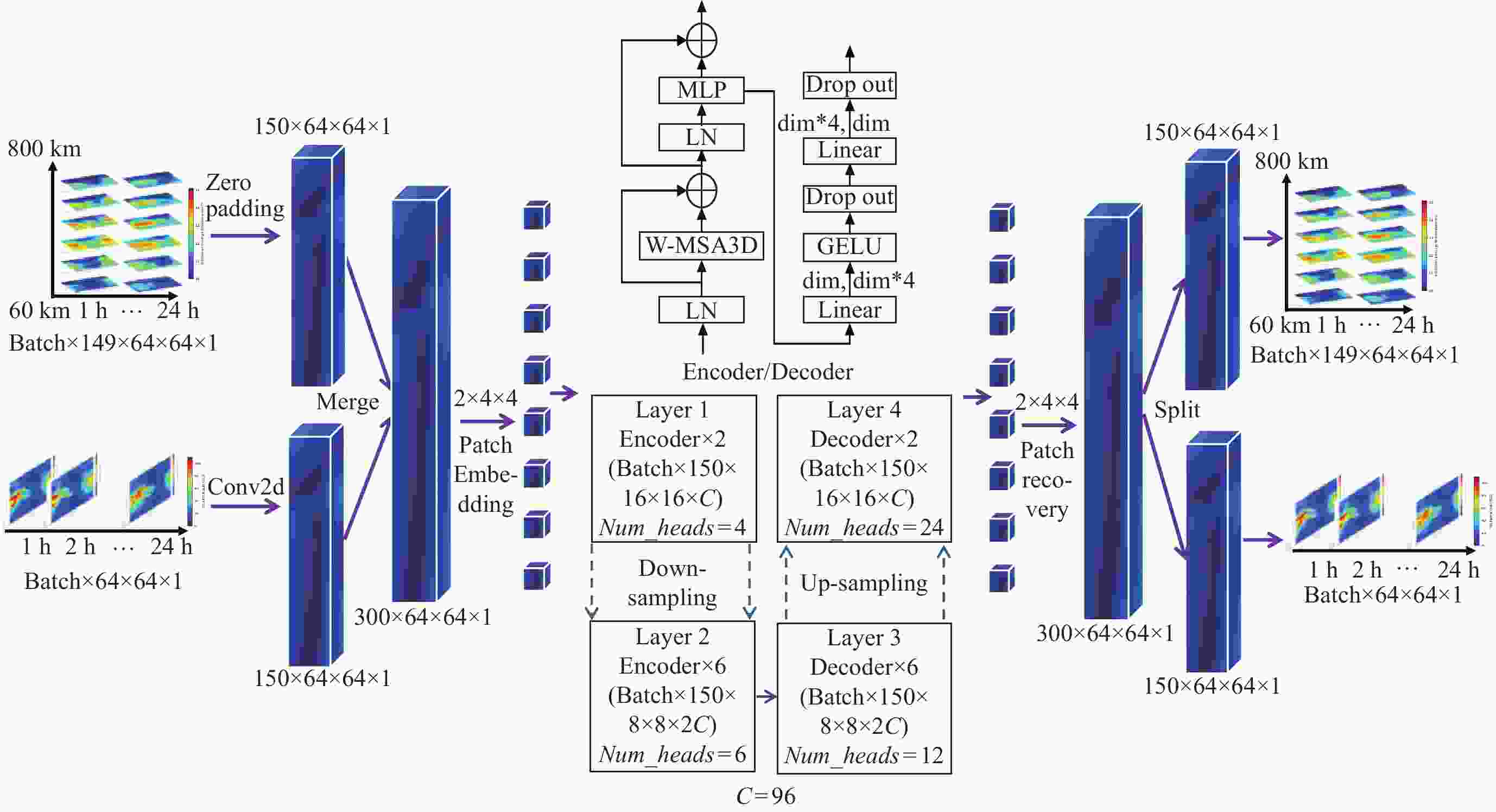
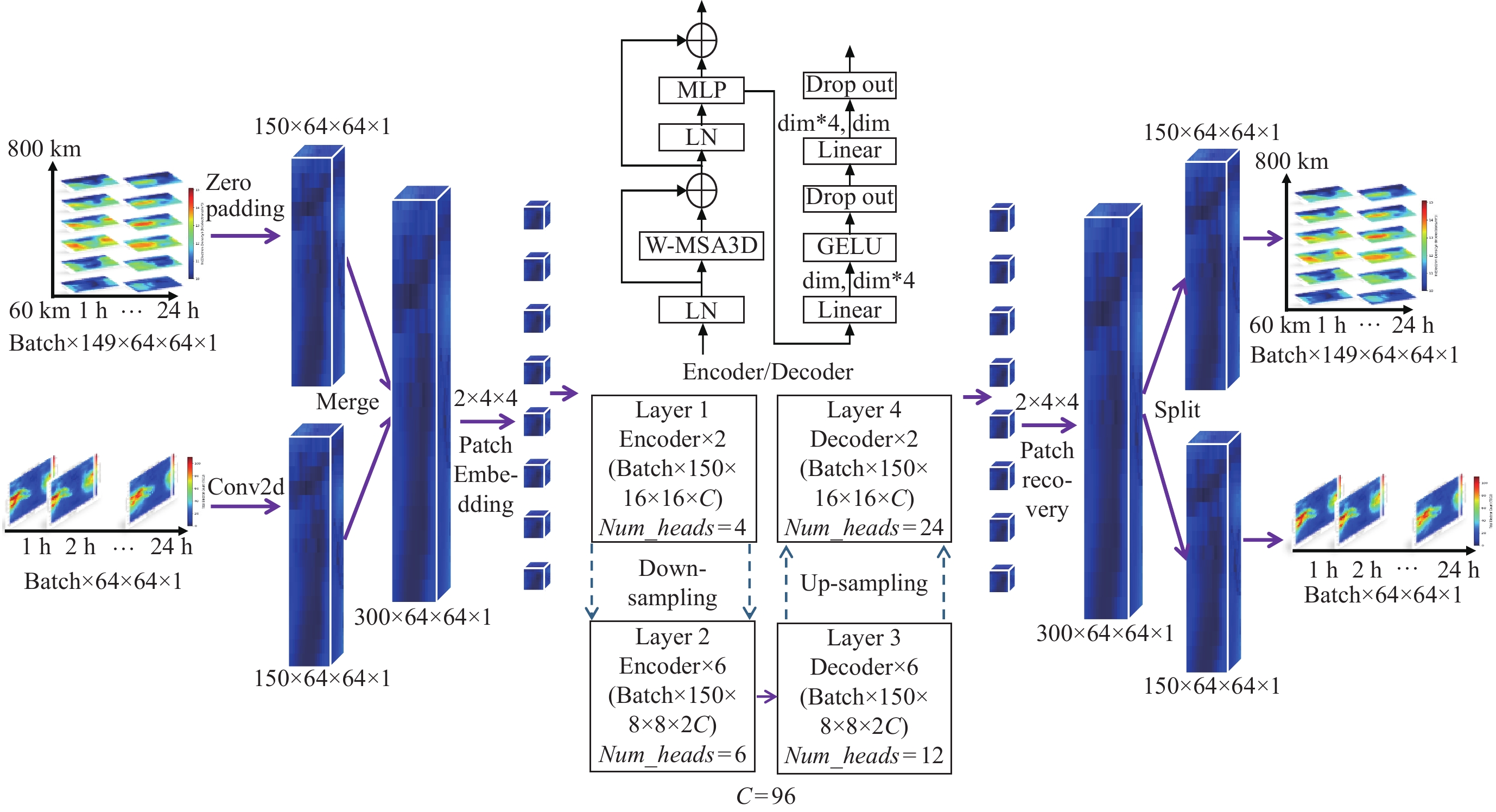
图 2 基于3D Swin Transformer的时空序列预报模型架构
Figure 2. Architecture of the spatiotemporal sequence forecasting model based on 3D Swin Transformer
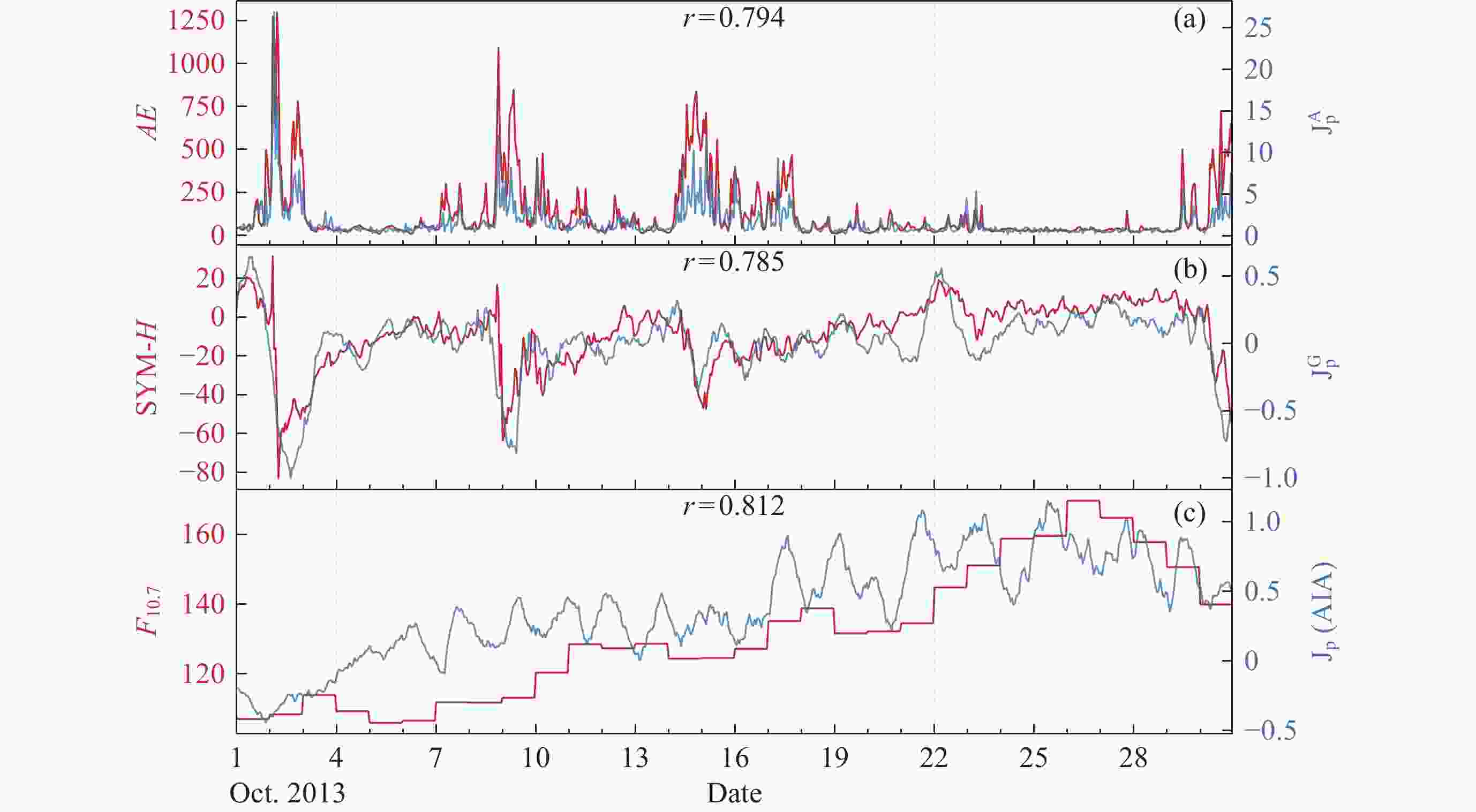
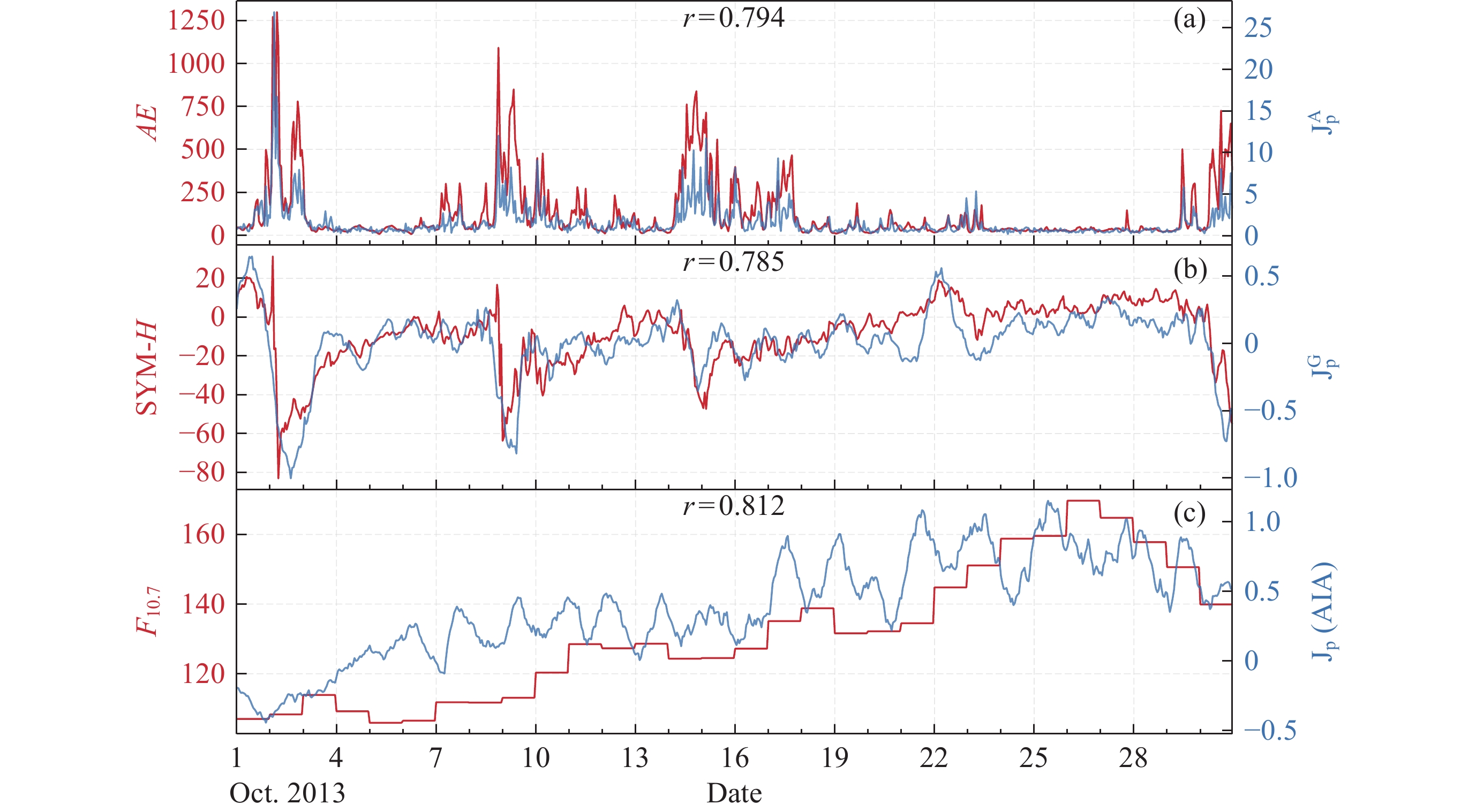
图 3 2013年10月SWM驱动指数与传统驱动指数对比
Figure 3. Comparison between SWM-based physical driver indices and traditional driver indices in October 2013
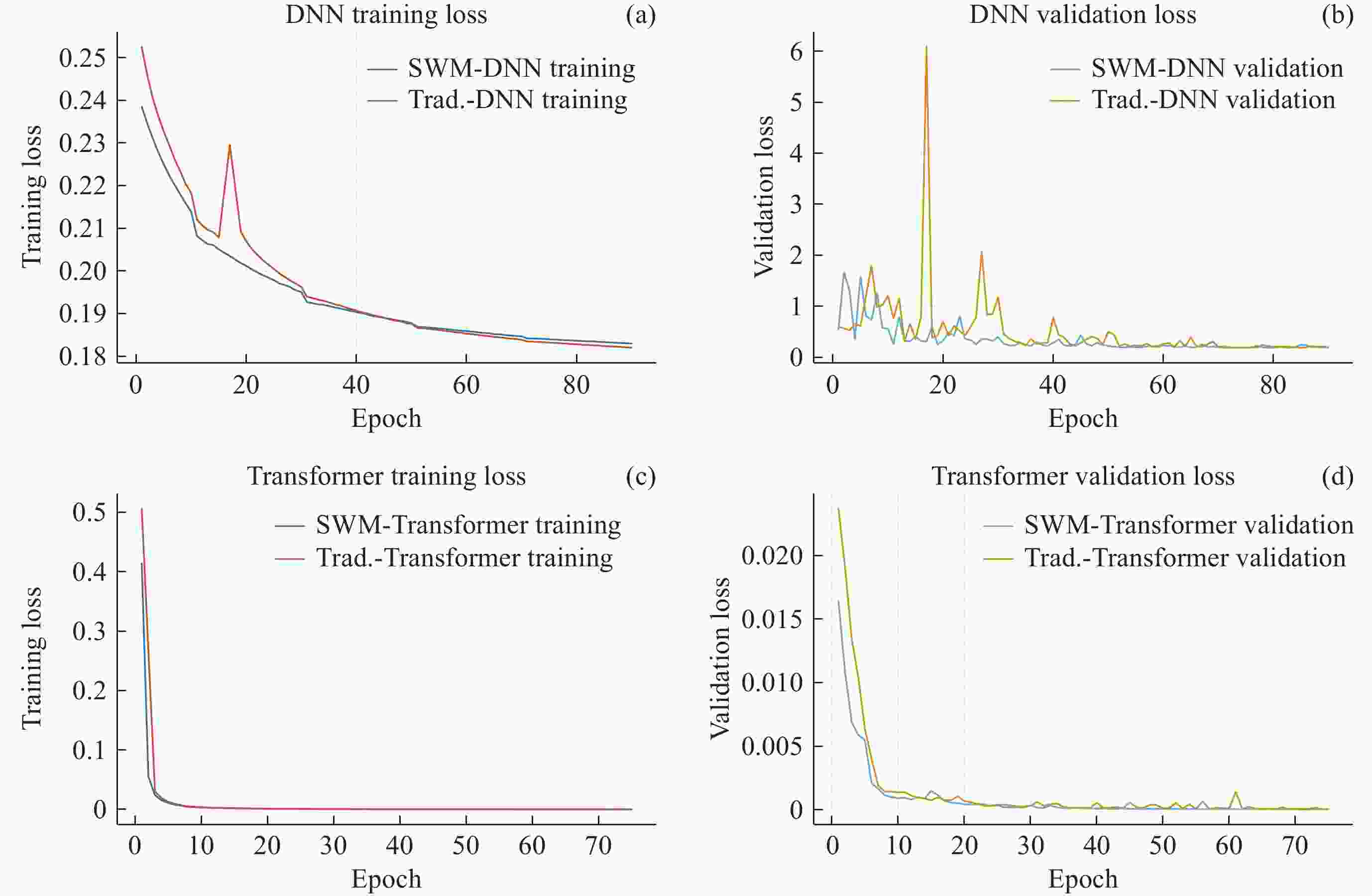
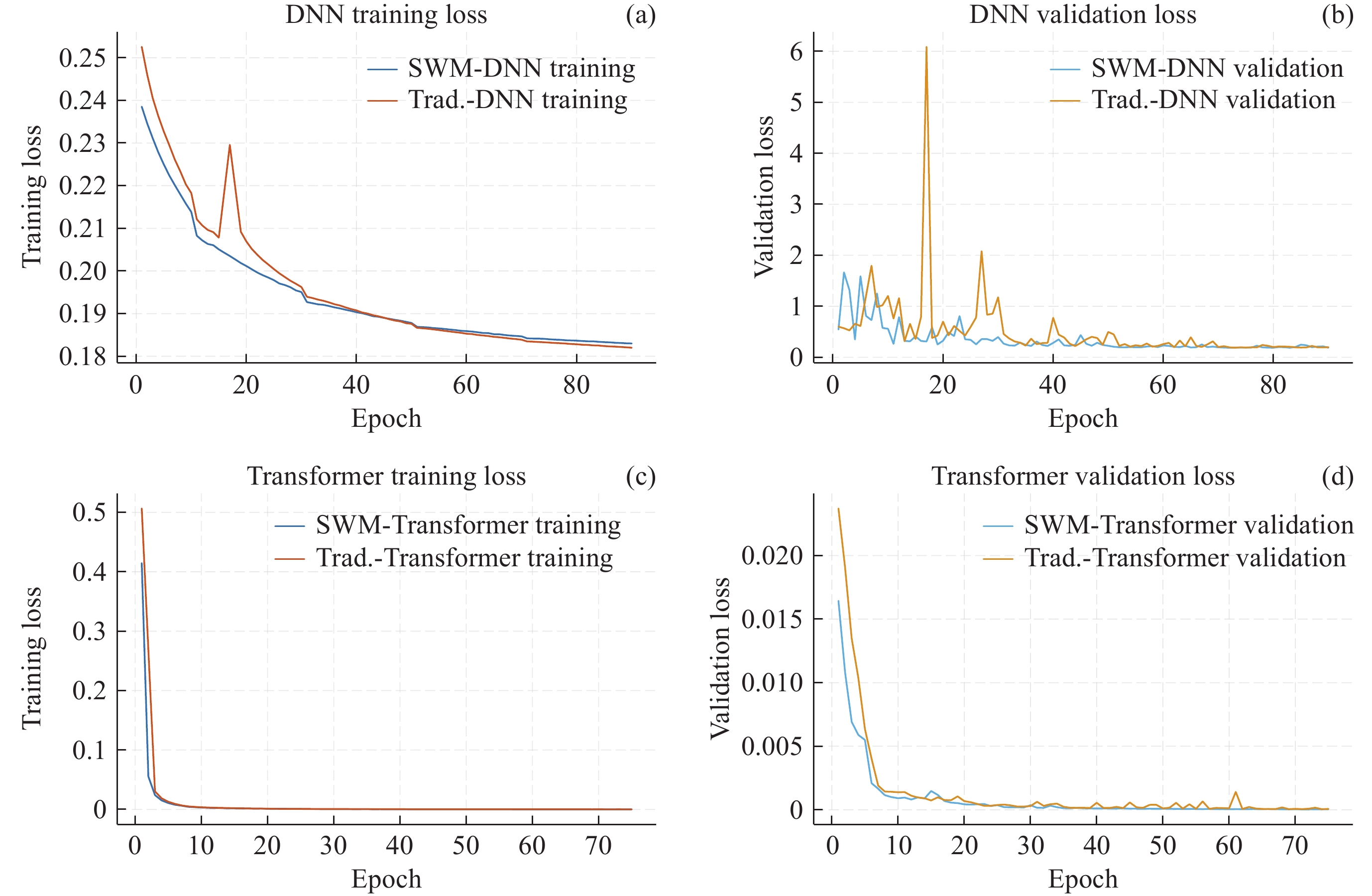
图 4 SWM驱动模型与传统驱动模型在训练与验证阶段的损失曲线对比
Figure 4. Comparison of loss function evolution during training and validation phases for SWM-driven and traditional-driven models
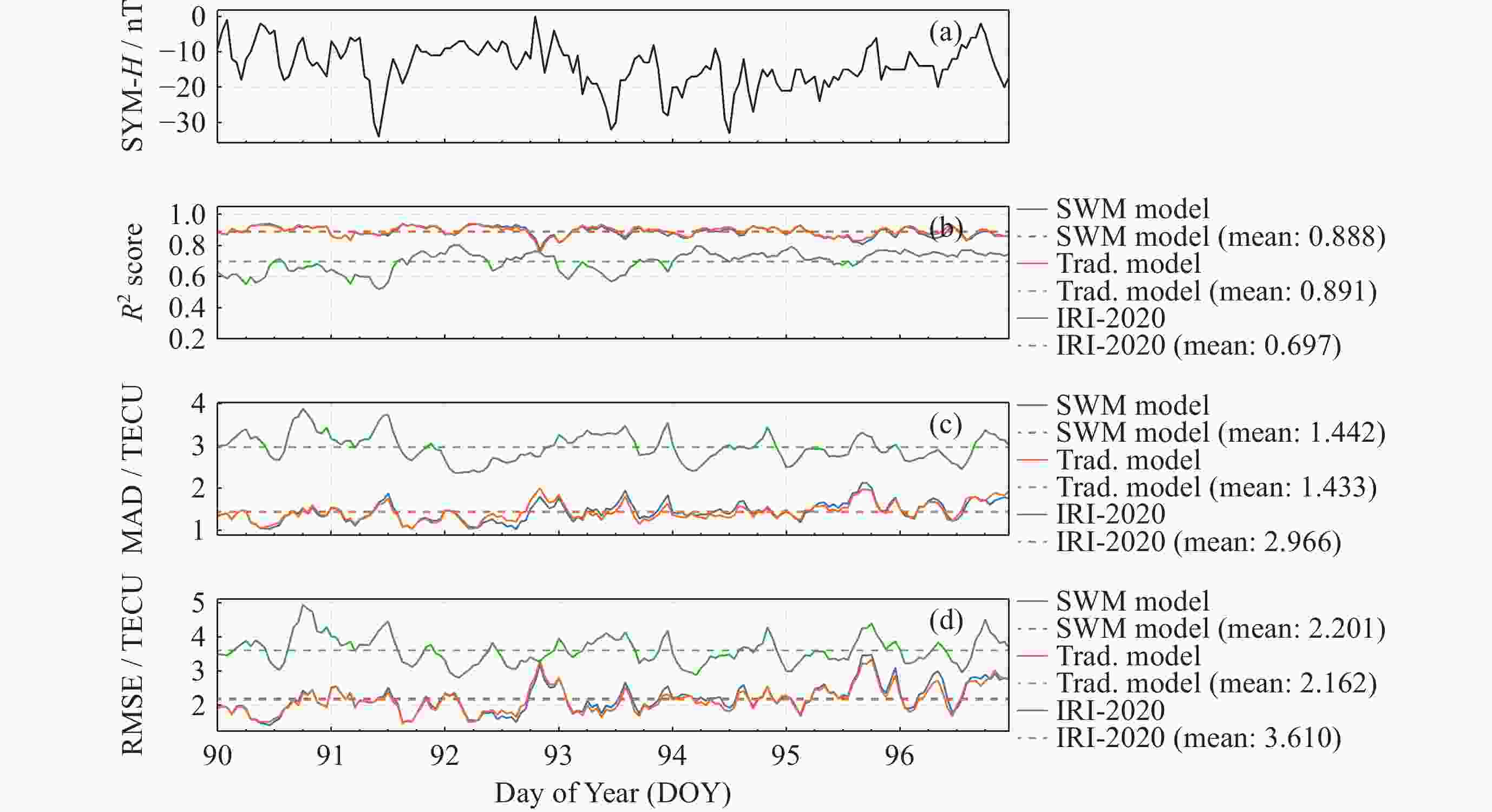
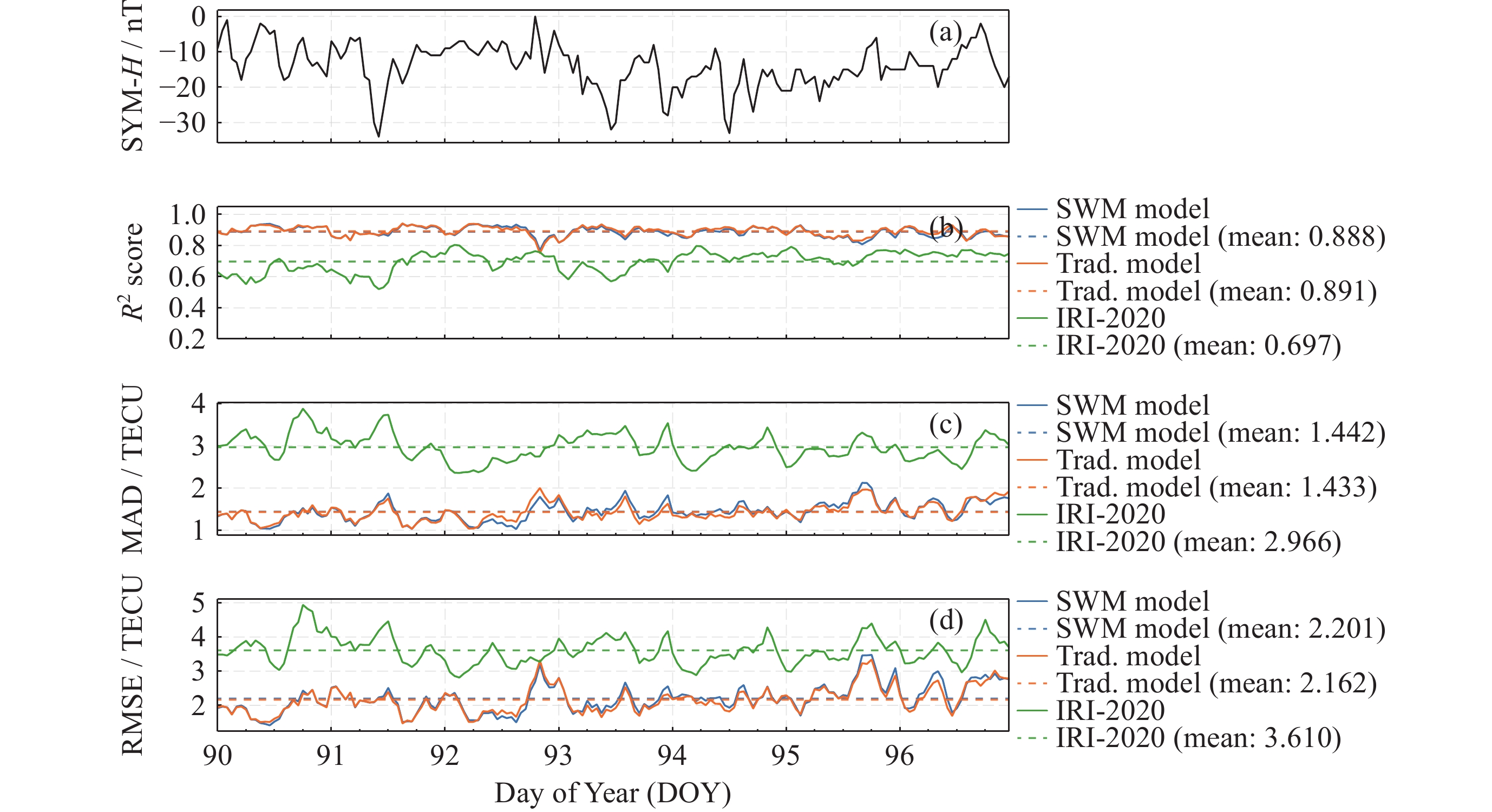
图 5 2019年DOY 90~96地磁平静期间各预报模型的统计性能指标演化对比
Figure 5. Temporal evolution of forecast performance metrics among different models during the geomagnetic quiet period of DOY 90-96, 2019
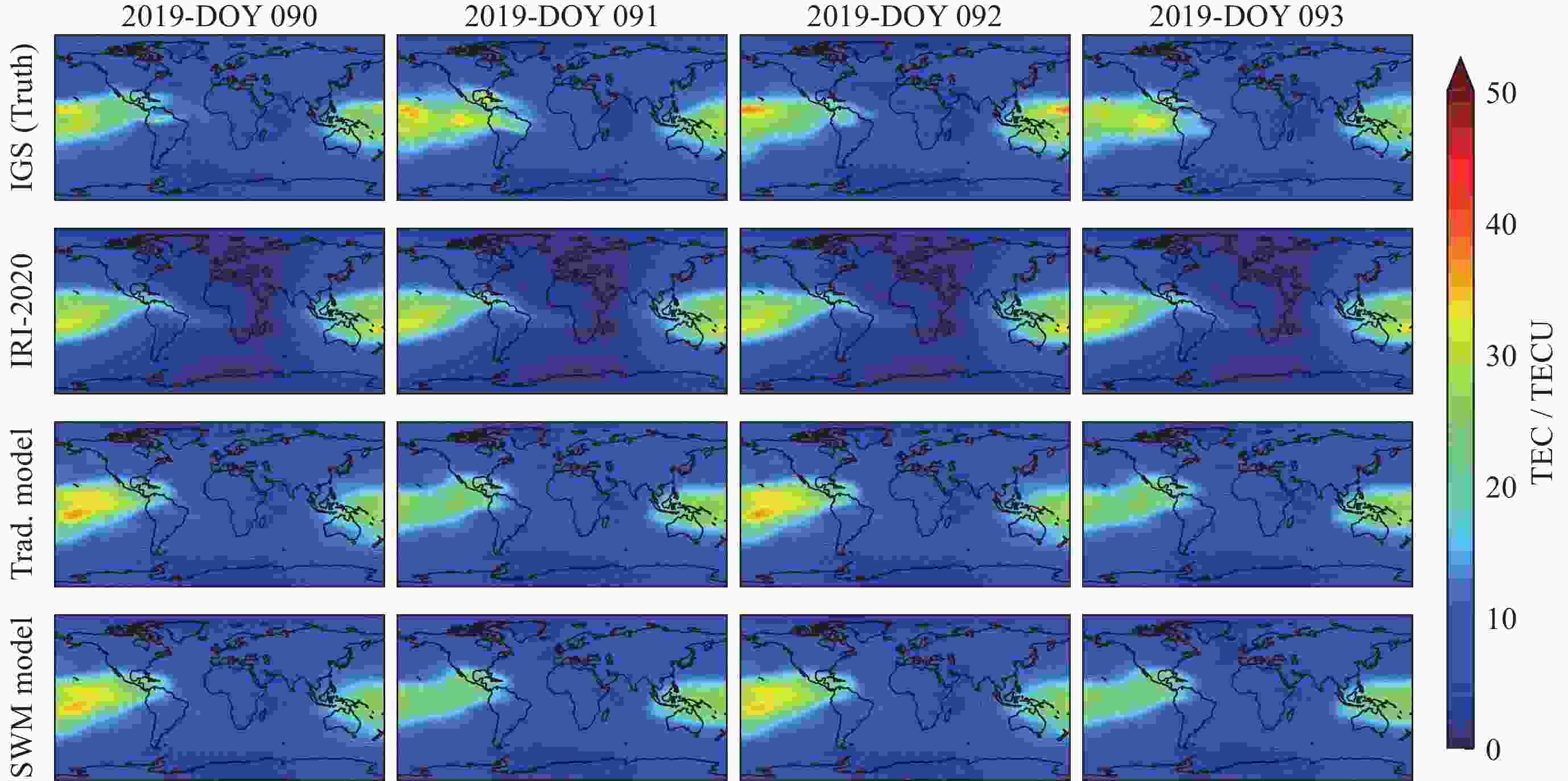
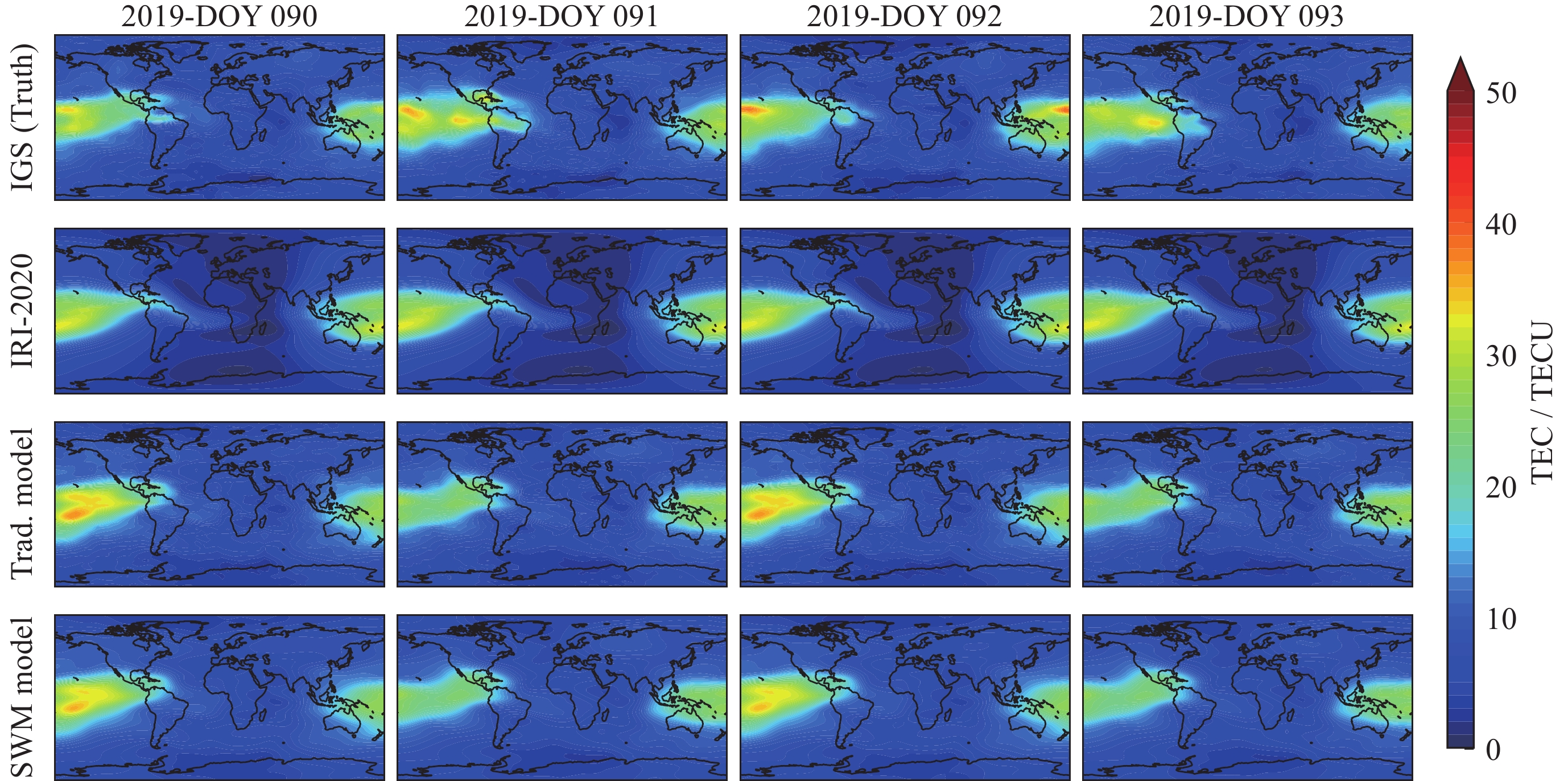
图 6 2019年DOY 90~93地磁平静期间全球TEC空间分布预报结果对比
Figure 6. Comparison of global TEC spatial distribution forecast results during the geomagnetic quiet period of DOY 90-93, 2019
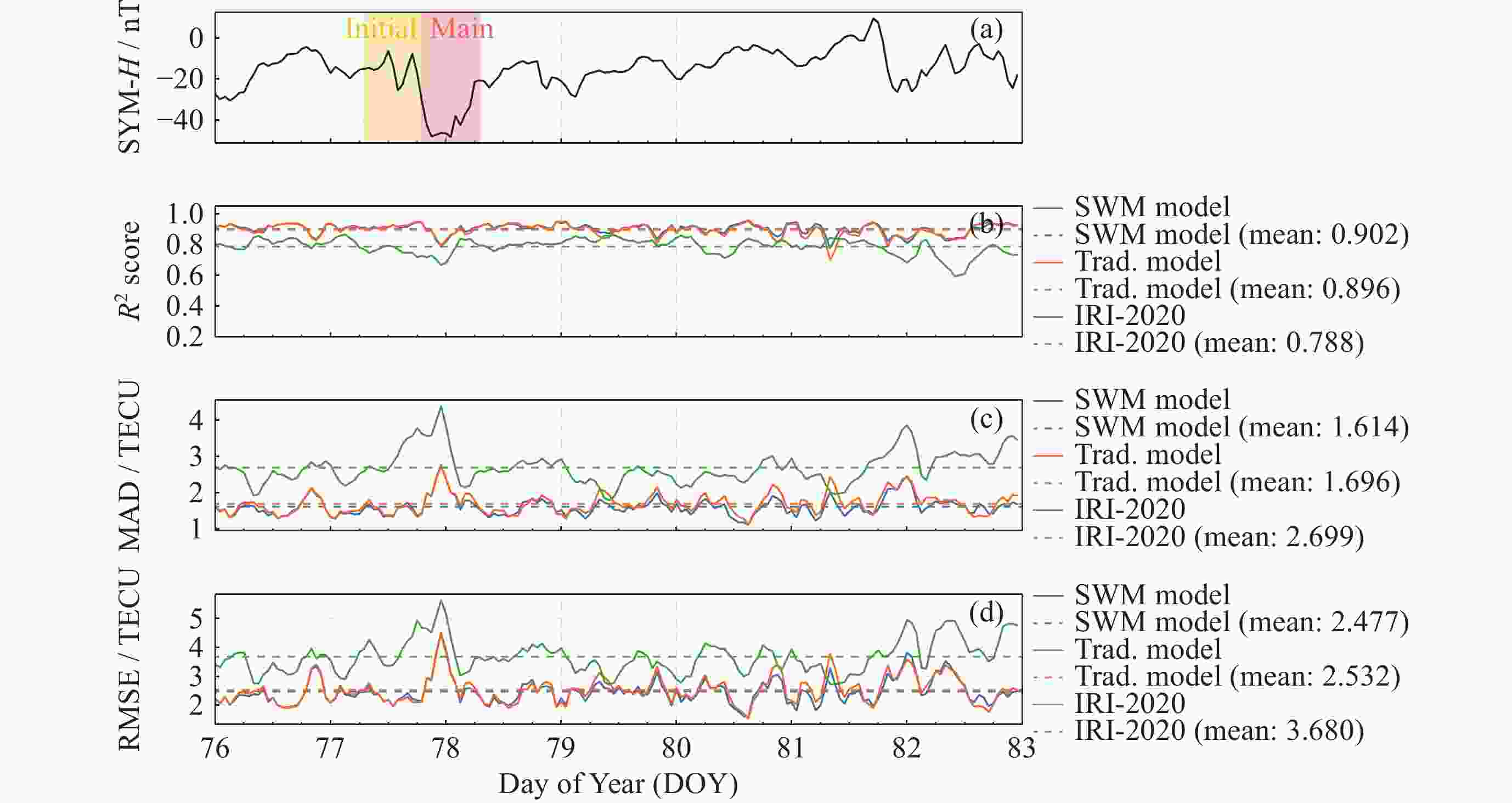
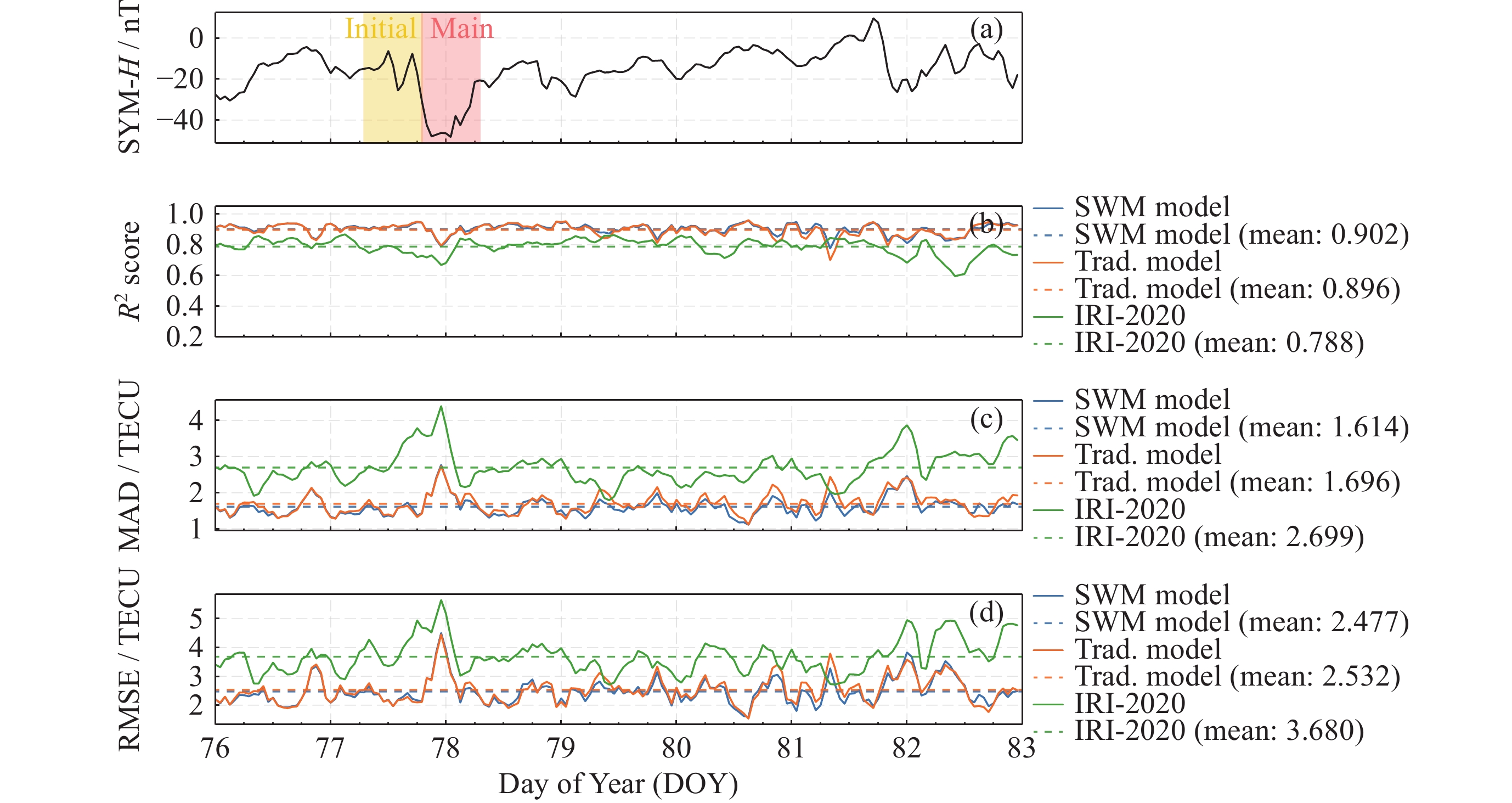
图 7 2018年3月磁暴期间(DOY 76~83)各预报模型的统计性能指标演化对比
Figure 7. Temporal evolution of statistical performance metrics among forecasting models during the March 2018 geomagnetic storm (DOY 76-83)
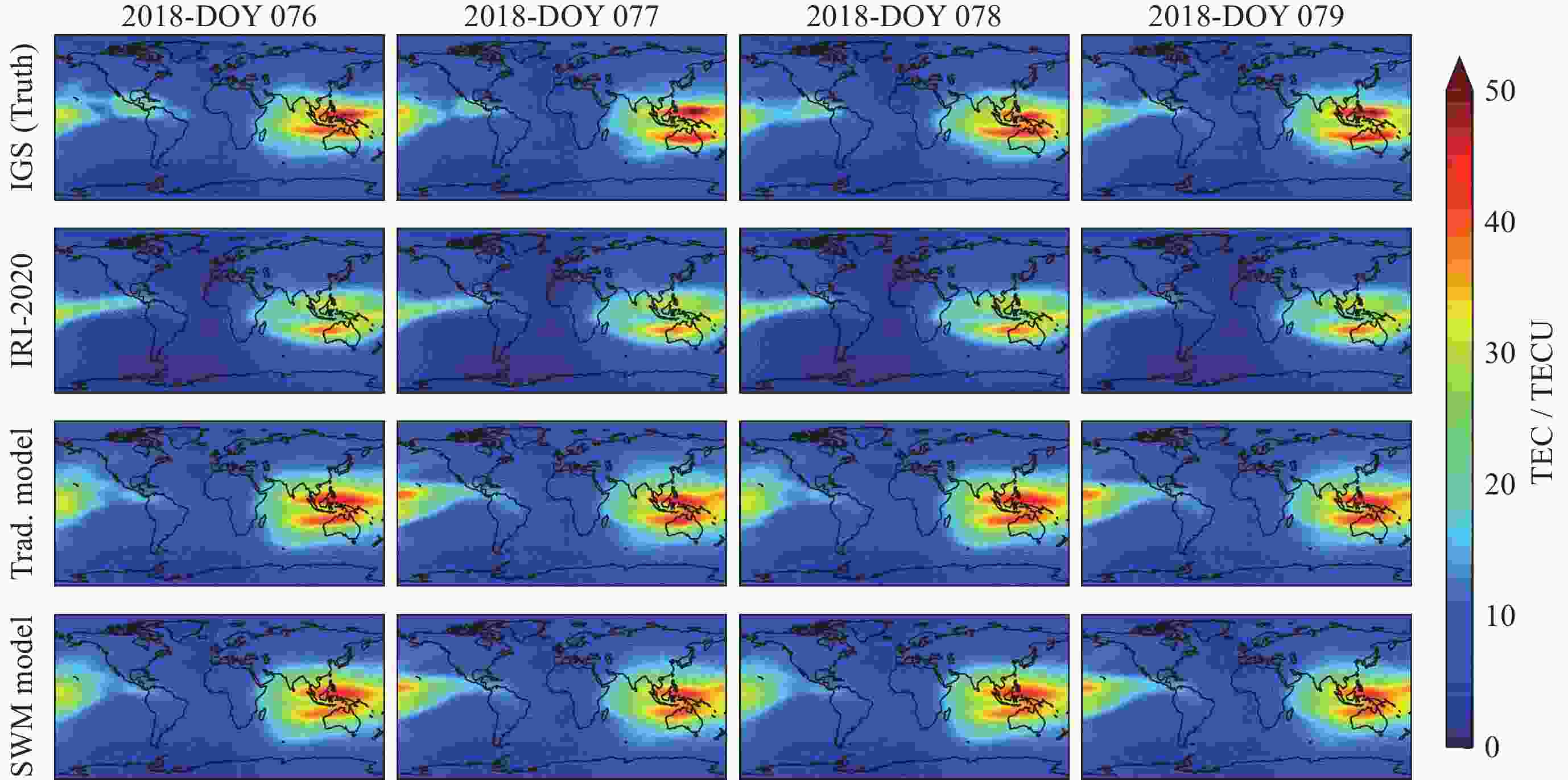
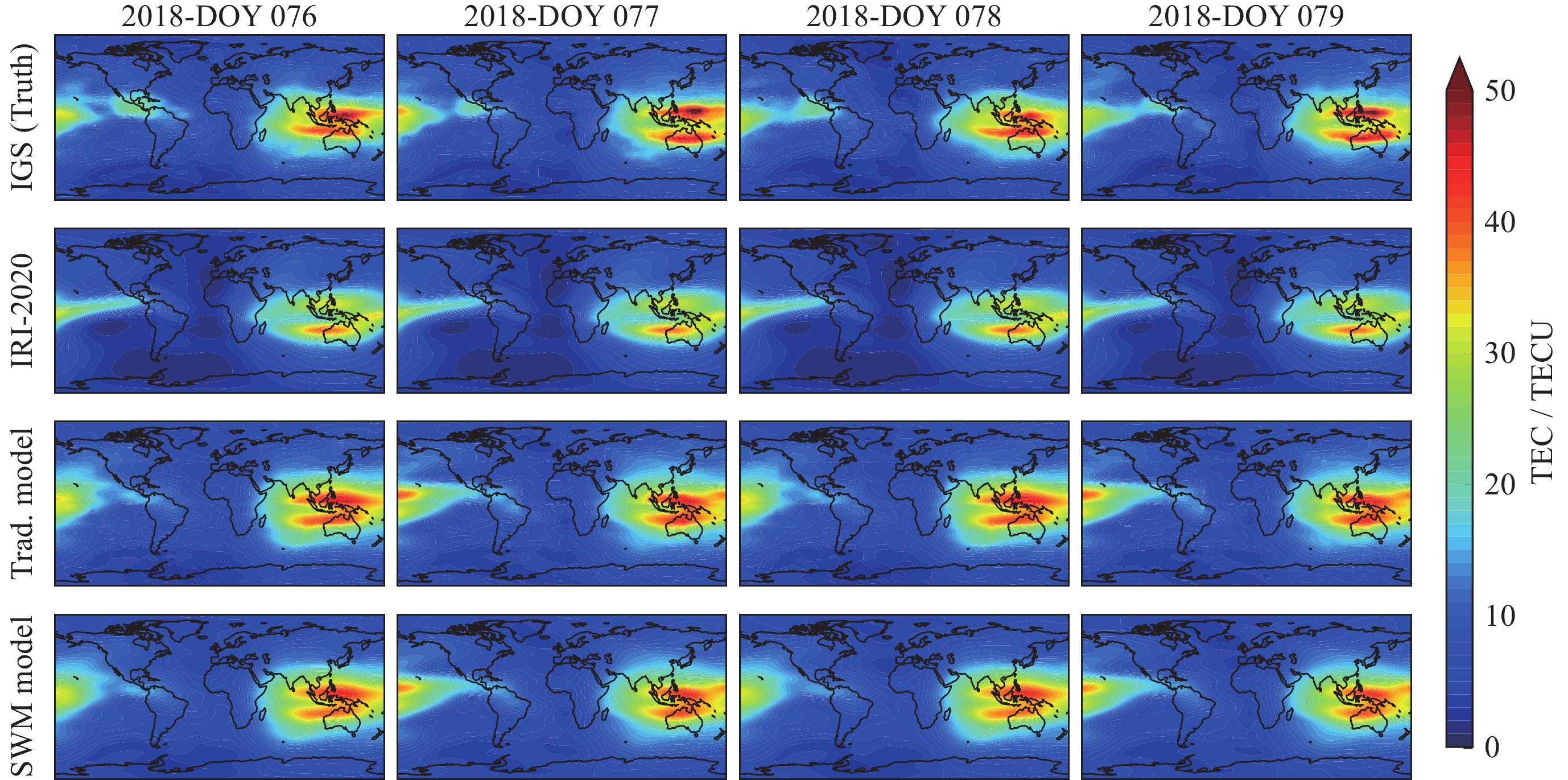
图 8 2018年3月磁暴主相期间(DOY 76~79)全球TEC空间分布预报结果快照对比
Figure 8. Snapshot comparison of global TEC spatial distribution forecast results during the main phase of the March 2018 geomagnetic storm (DOY 76-79)
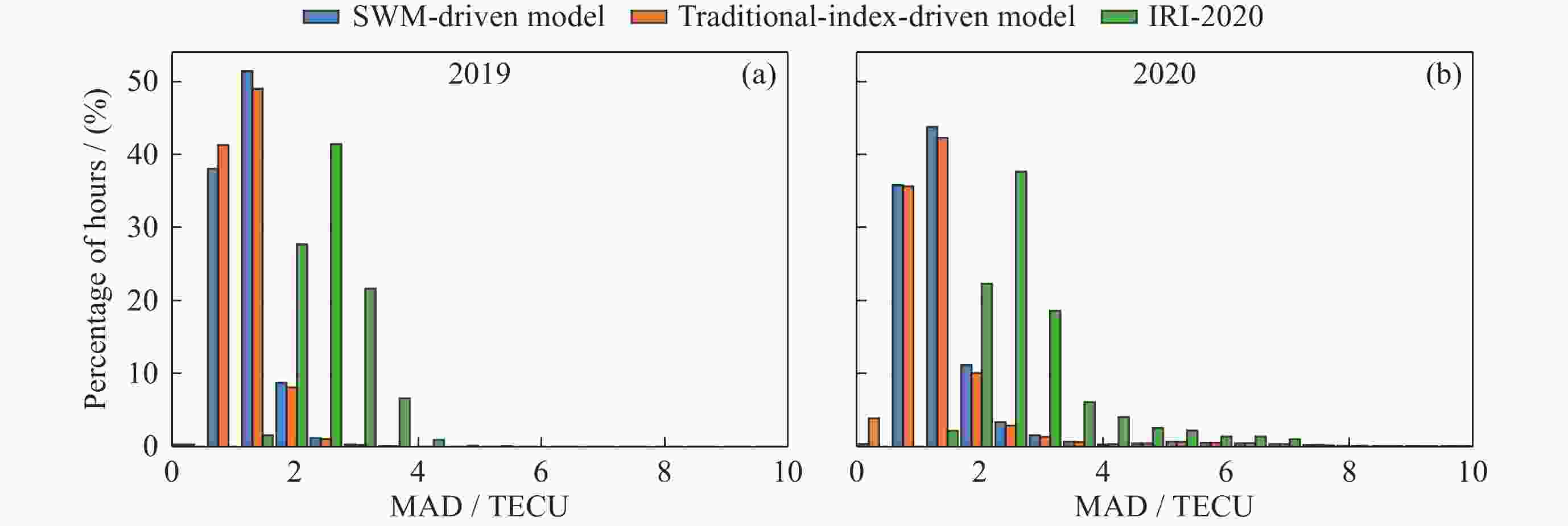
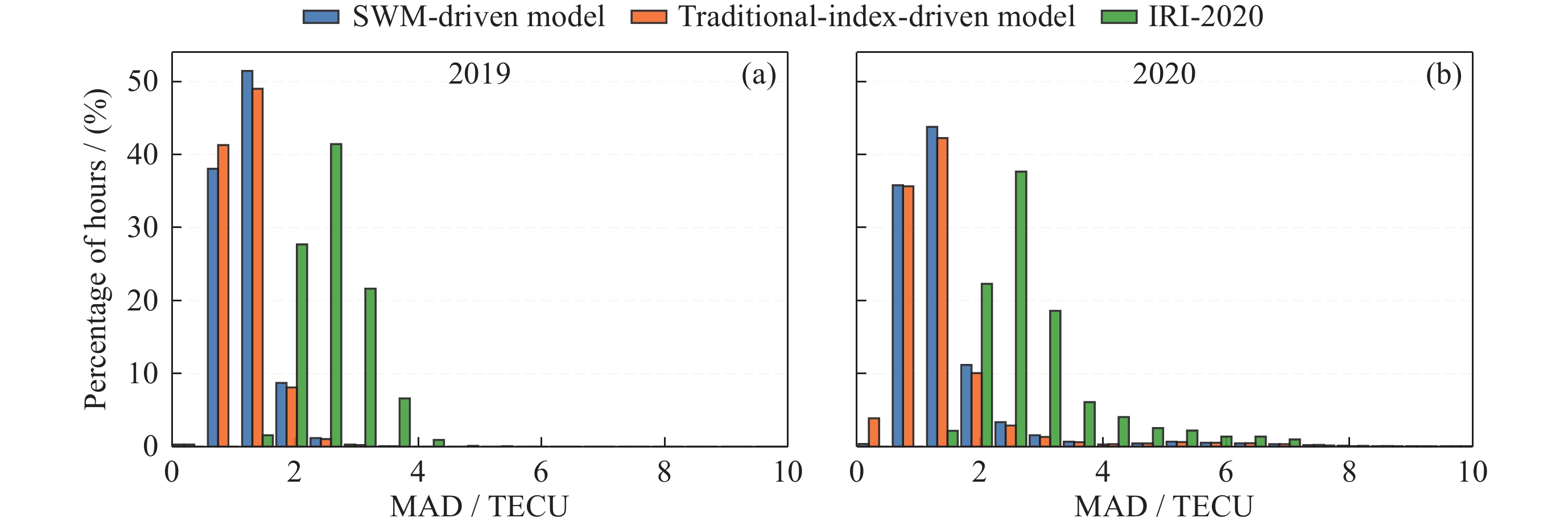
图 9 2019-2020年不同模型24 h预报逐小时全球平均绝对误差(MAD)占比分布直方图
Figure 9. Percentage distribution of hourly global mean absolute deviation (MAD) for 24 h forecasts by different models during 2019-2020
表 1 第一阶段DNN的超参数设置
Table 1. Hyperparameter configuration for the first-stage DNN
参数名称 参数值 Input dimension 12 Hidden layer dimensions [512, 256, 128, 64, 16] Output dimension 1 Batch size 32768
××
16Optimizer Adam Loss function RSE loss Learning rate $ 1\times {10}^{-2} $ Epochs 100  下载: 导出CSV
表 2 第二阶段时空演化模块(3D Swin Transformer)的超参数设置
Table 2. Hyperparameter configuration for the second-stage spatiotemporal evolution module (3D Swin Transformer)
参数名称 参数值 Embedding dimension 96 Number of attention heads [4, 6, 12, 24] Block size 168 Batch size 4 Optimizer AdamW Loss function RSE loss Learning rate $ 1\times {10}^{-4} $ Epochs 100
下载: 导出CSV
表 3 2019年DOY 90~96地磁平静期间不同模型的平均预报性能对比
Table 3. Comparison of mean forecast performance among different models during the geomagnetic quiet period of DOY 90-96, 2019
指数驱动模型 R2 MAD/TECU RMSE/TECU SWM指数群驱动 0.888 1.442 2.201 传统指数群驱动 0.891 1.433 2.162 IRI-2020 0.697 2.966 3.61
下载: 导出CSV
表 4 2018年3月磁暴期间不同模型的平均预报性能对比
Table 4. Comparison of mean forecast performance among different models during the March 2018 geomagnetic storm
指数驱动模型 R2 MAD/TECU RMSE/TECU SWM指数群驱动 0.902 1.614 2.477 传统指数群驱动 0.896 1.696 2.532 IRI-2020 0.788 2.699 3.680
下载: 导出CSV
-
[1] HOFMANN-WELLENHOF B, LICHTENEGGER H, WASLE E. GNSS–Global Navigation Satellite Systems: GPS, GLONASS, Galileo, and More[M]. Vienna: Springer, 2008. DOI: 10.1007/978-3-211-73017-1 [2] MENDILLO M. Storms in the ionosphere: patterns and processes for total electron content[J]. Reviews of Geophysics, 2006, 44(4): RG4001 doi: 10.1029/2005RG000193 [3] CHEN Z, AN B K, LIAO W T, et al. Ionospheric electron density model by electron density grid deep neural network (EDG-DNN)[J]. Atmosphere, 2023, 14(5): 810 doi: 10.3390/atmos14050810 [4] BILITZA D, ALTADILL D, TRUHLIK V, et al. International Reference Ionosphere 2016: from ionospheric climate to real-time weather predictions[J]. Space Weather, 2017, 15(2): 418-429 doi: 10.1002/2016SW001593 [5] BILITZA D. IRI the international standard for the ionosphere[J]. Advances in Radio Science, 2018, 16: 1-11 doi: 10.5194/ars-16-1-2018 [6] ROBLE R G, RIDLEY E C, RICHMOND A D, et al. A coupled thermosphere/ionosphere general circulation model[J]. Geophysical Research Letters, 1988, 15(12): 1325-1328 doi: 10.1029/GL015i012p01325 [7] MASSON A, FUNG S F, CAMPOREALE E, et al. Heliophysics and space weather information architecture and innovative solutions: current status and ways forward[J]. Advances in Space Research, 2024. DOI: 10.1016/j.asr.2024.05.052 [8] CHEN Z, LIAO W T, LI H M, et al. Prediction of global ionospheric TEC based on deep learning[J]. Space Weather, 2022, 20(4): e2021SW002854 doi: 10.1029/2021SW002854 [9] CHEN Z, JIN M W, DENG Y, et al. Improvement of a deep learning algorithm for total electron content maps: image completion[J]. Journal of Geophysical Research: Space Physics, 2019, 124(1): 790-800 doi: 10.1029/2018JA026167 [10] LIU L, ZOU S S, YAO Y B, et al. Forecasting global ionospheric TEC using deep learning approach[J]. Space Weather, 2020, 18(11): e2020SW002501 doi: 10.1029/2020SW002501 [11] LEE S, JI E Y, MOON Y J, et al. One-day forecasting of global TEC using a novel deep learning model[J]. Space Weather, 2021, 19(1): 2020SW002600 doi: 10.1029/2020SW002600 [12] PAN Y, JIN M W, ZHANG S R, et al. TEC map completion using DCGAN and Poisson blending[J]. Space Weather, 2020, 18(5): e2019SW002390 doi: 10.1029/2019SW002390 [13] WANG Z H, ZOU S S, SUN H, et al. Forecast global ionospheric TEC: apply modified U-Net on VISTA TEC data set[J]. Space Weather, 2023, 21(8): e2023SW003494 doi: 10.1029/2023SW003494 [14] CAMPOREALE E. The challenge of machine learning in space weather: nowcasting and forecasting[J]. Space Weather, 2019, 17(8): 1166-1207 doi: 10.1029/2018SW002061 [15] CHEN Z, WANG J S, DENG Y, et al. Extraction of the geomagnetic activity effect from TEC data: a comparison between the spectral whitening method and 28 day running median[J]. Journal of Geophysical Research: Space Physics, 2017, 122(3): 3632-3639 doi: 10.1002/2016JA023412 [16] REN X D, YANG P X, MEI D K, et al. Global ionospheric TEC forecasting for geomagnetic storm time using a deep learning-based multi-model ensemble method[J]. Space Weather, 2023, 21(3): e2022SW003231 doi: 10.1029/2022SW003231 [17] TENFJORD P, ØSTGAARD N. Energy transfer and flow in the solar wind-magnetosphere-ionosphere system: a new coupling function[J]. Journal of Geophysical Research: Space Physics, 2013, 118(9): 5659-5672 doi: 10.1002/jgra.50545 [18] WANG J S, CHEN Z, HUANG C M. A method to identify aperiodic disturbances in the ionosphere[J]. Annales Geophysicae, 2014, 32(5): 563-569 doi: 10.5194/angeo-32-563-2014 [19] CHEN Z, WANG J S, HUANG C M, et al. A new pair of indices to describe the relationship between ionospheric disturbances and geomagnetic activity[J]. Journal of Geophysical Research: Space Physics, 2014, 119(12): 10156-10163 doi: 10.1002/2014JA020438 [20] 赵瑜馨, 毛田, 陈洲, 等. 一种基于白谱法的电离层天气扰动指数[J]. 空间科学学报, 2017, 37(3): 270-276 doi: 10.11728/cjss2017.03.270ZHAO Yuxin, MAO Tian, CHEN Zhou, et al. Ionospheric weather disturbance indices based on spectral whitening[J]. Chinese Journal of Space Science, 2017, 37(3): 270-276 doi: 10.11728/cjss2017.03.270 [21] ZHAO M X, WANG J S, ZHAO X W. A new index to describe the response of geomagnetic disturbance to the energy injection from the solar wind[J]. Universe, 2022, 8(10): 506 doi: 10.3390/universe8100506 [22] CHEN Z, ZHOU K C, WANG J S, et al. A new index to describe the relationship between solar extreme ultraviolet variation and solar activity[J]. The Astrophysical Journal, 2023, 958(1): 69 doi: 10.3847/1538-4357/acf9f7 [23] BI K F, XIE L X, ZHANG H H, et al. Accurate medium-range global weather forecasting with 3D neural networks[J]. Nature, 2023, 619(7970): 533-538 doi: 10.1038/s41586-023-06185-3 -
-

 下载:
下载:

计量
- 文章访问数: 429
- HTML全文浏览量: 73
- PDF下载量: 24
-
被引次数:
0(来源:Crossref)
0(来源:其他)

