Volume 43 Issue 3
Jul.  2023
Turn off MathJax
Article Contents
FENG Shuichun, WANG Zhipeng, YANG Jianjun, ZHOU Hai, BIAN Chunjiang, MENG Xin. An FPGA-implemented Method for Real-time Multi-dimensional Feature Extraction of Sequence Image Targets (in Chinese). Chinese Journal of Space Science, 2023, 43(3): 576-585 doi: 10.11728/cjss2023.03.2022-0014
Citation: FENG Shuichun, WANG Zhipeng, YANG Jianjun, ZHOU Hai, BIAN Chunjiang, MENG Xin. An FPGA-implemented Method for Real-time Multi-dimensional Feature Extraction of Sequence Image Targets (in Chinese). Chinese Journal of Space Science, 2023, 43(3): 576-585 doi: 10.11728/cjss2023.03.2022-0014

An FPGA-implemented Method for Real-time Multi-dimensional Feature Extraction of Sequence Image Targets

doi: 10.11728/cjss2023.03.2022-0014 cstr: 32142.14.cjss2023.03.2022-0014
  • Received Date: 2022-04-29
  • Rev Recd Date: 2022-12-16
  • Available Online: 2022-12-16
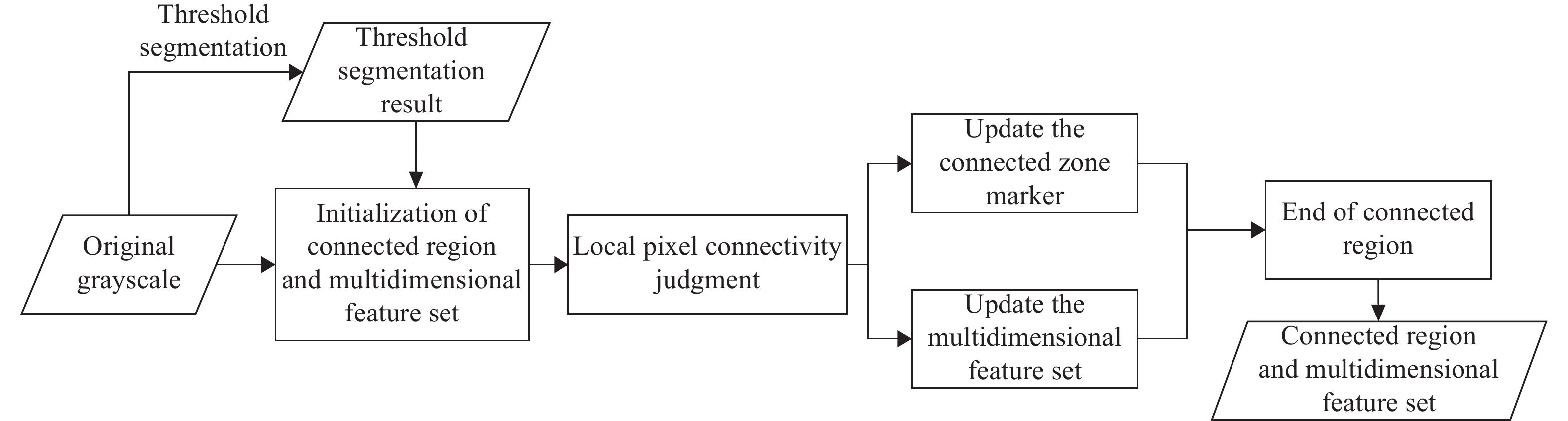
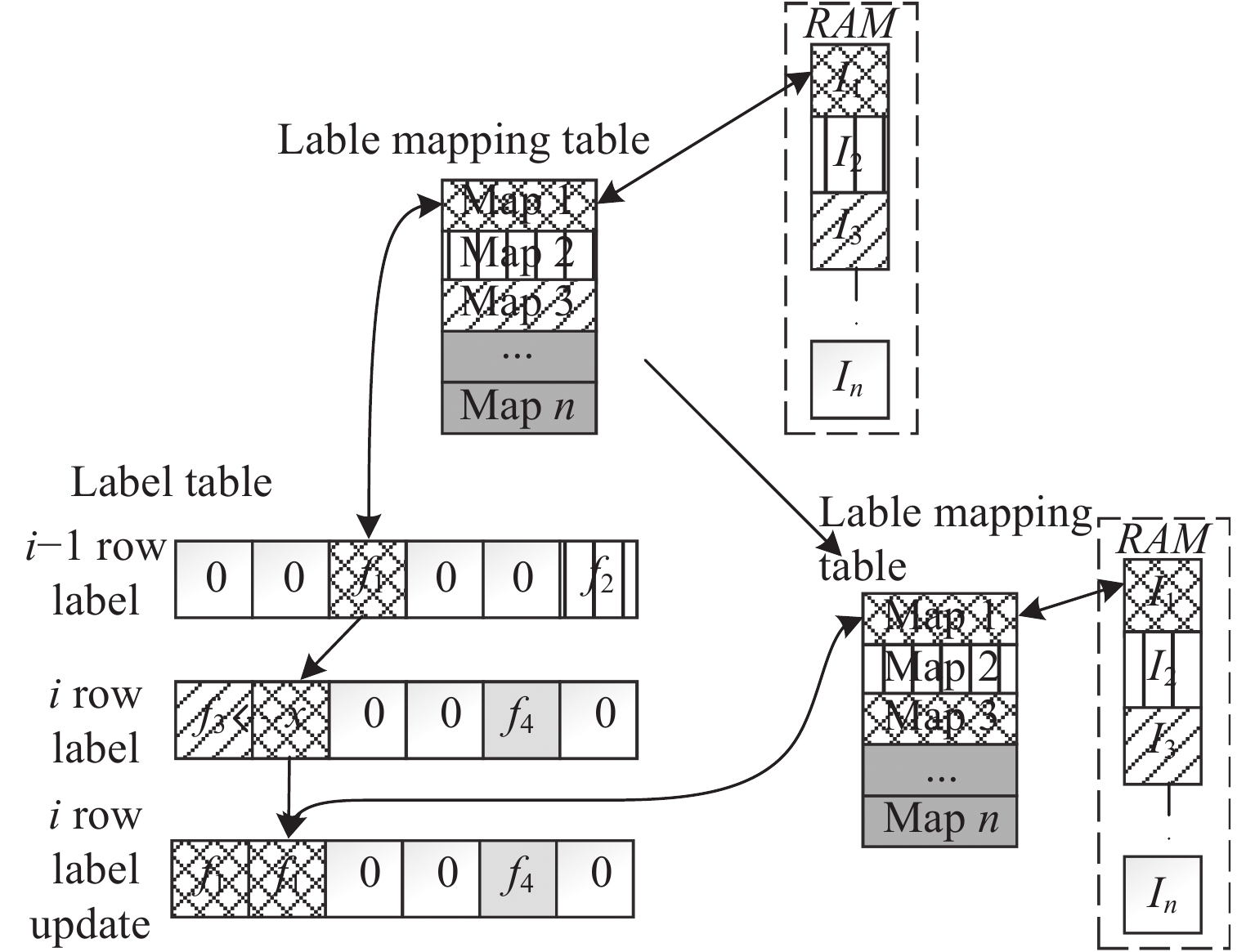
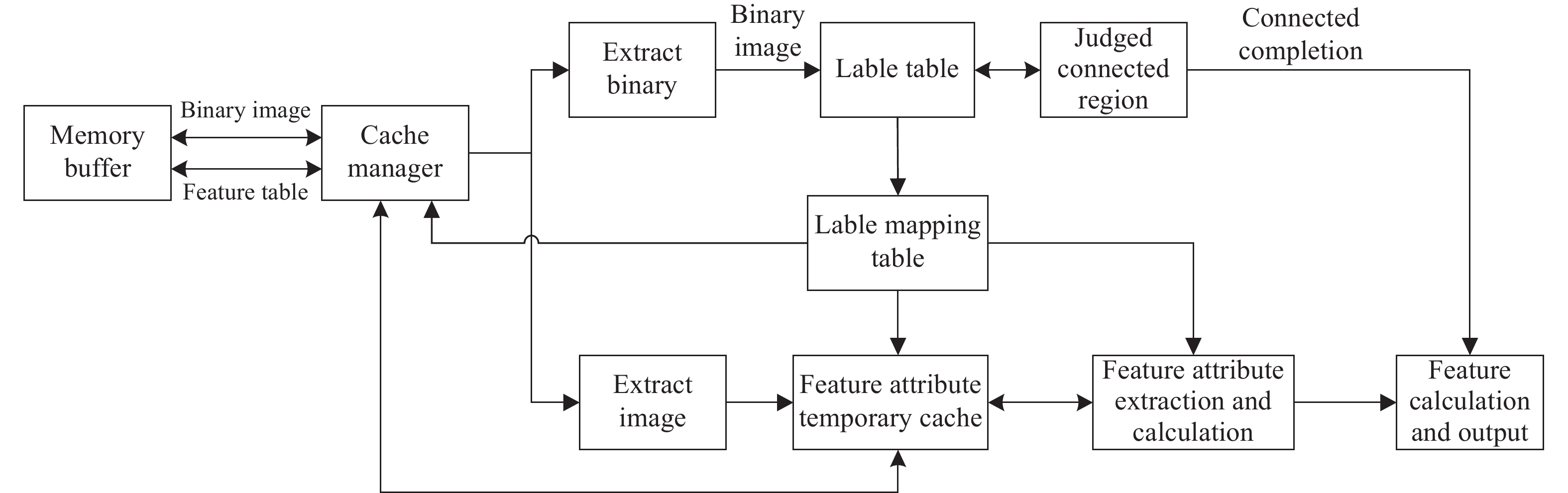
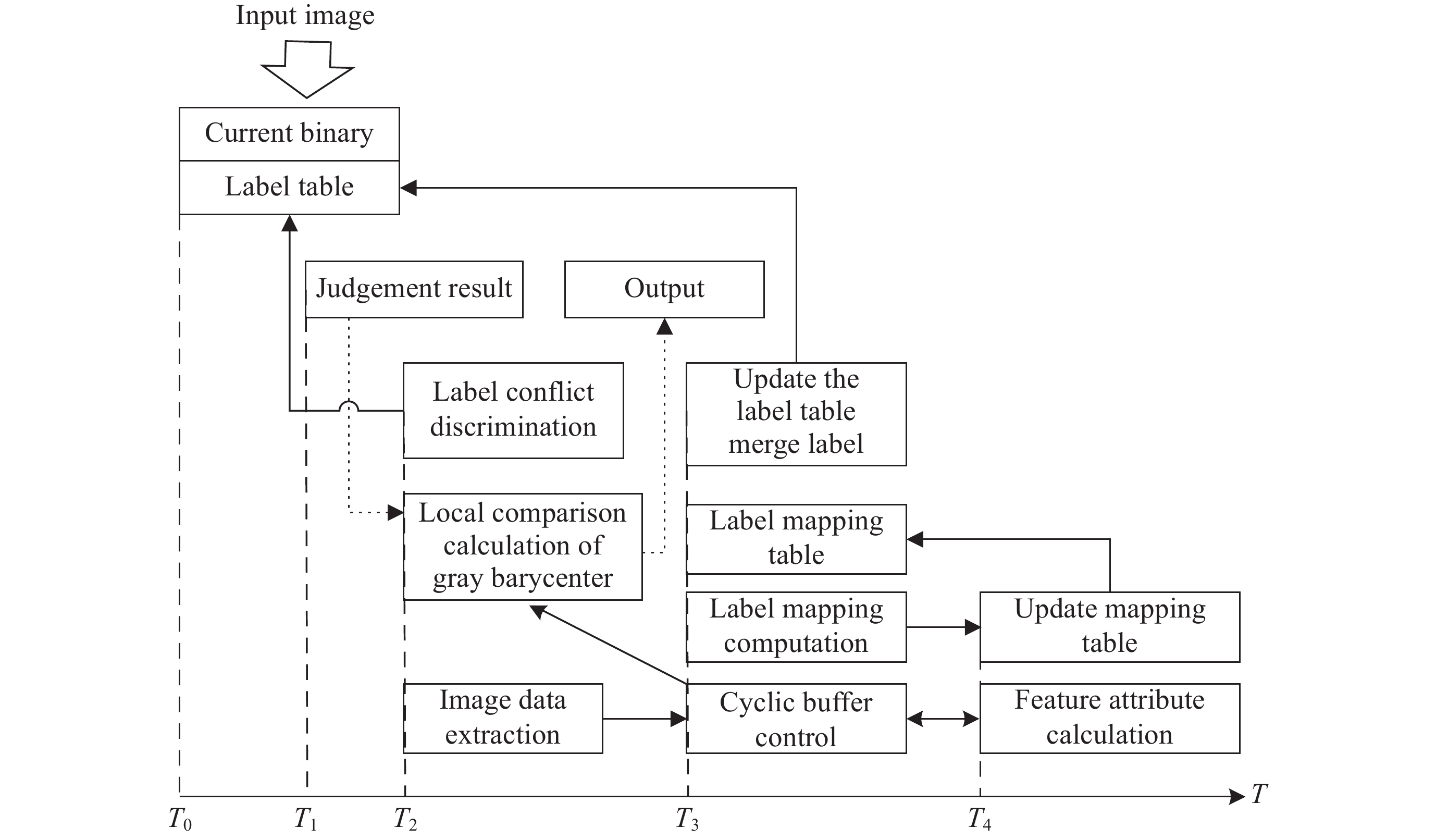
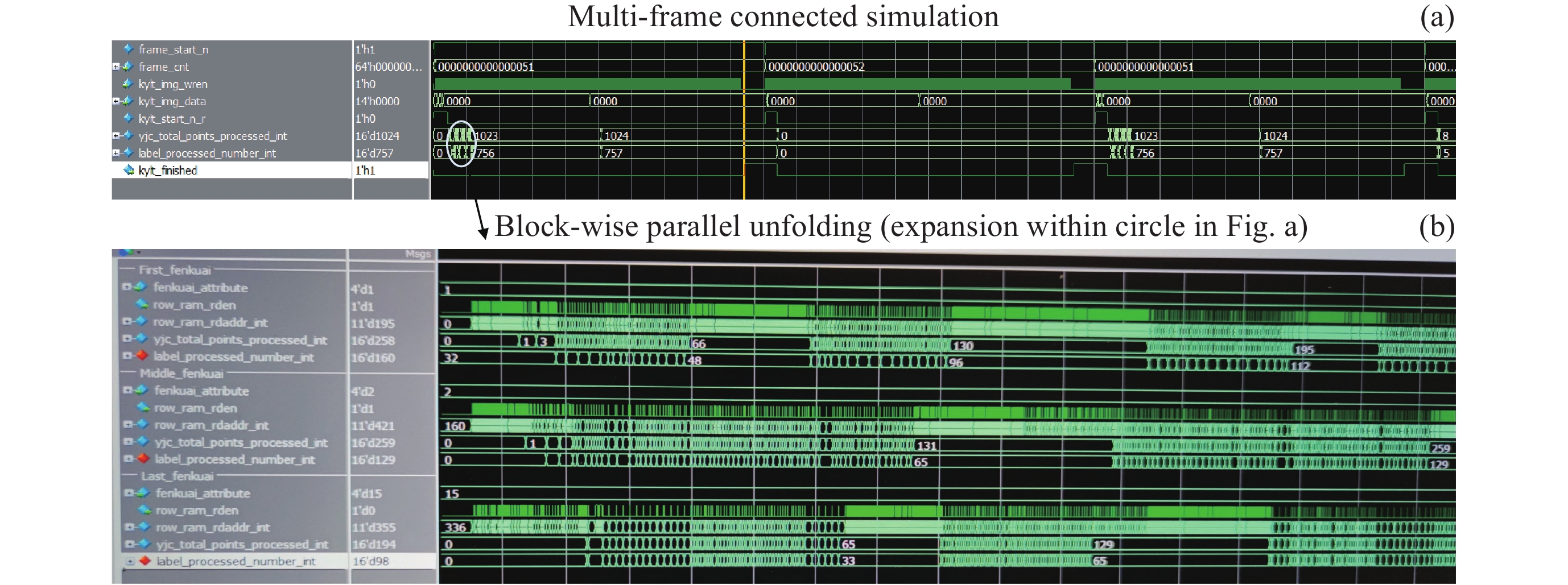
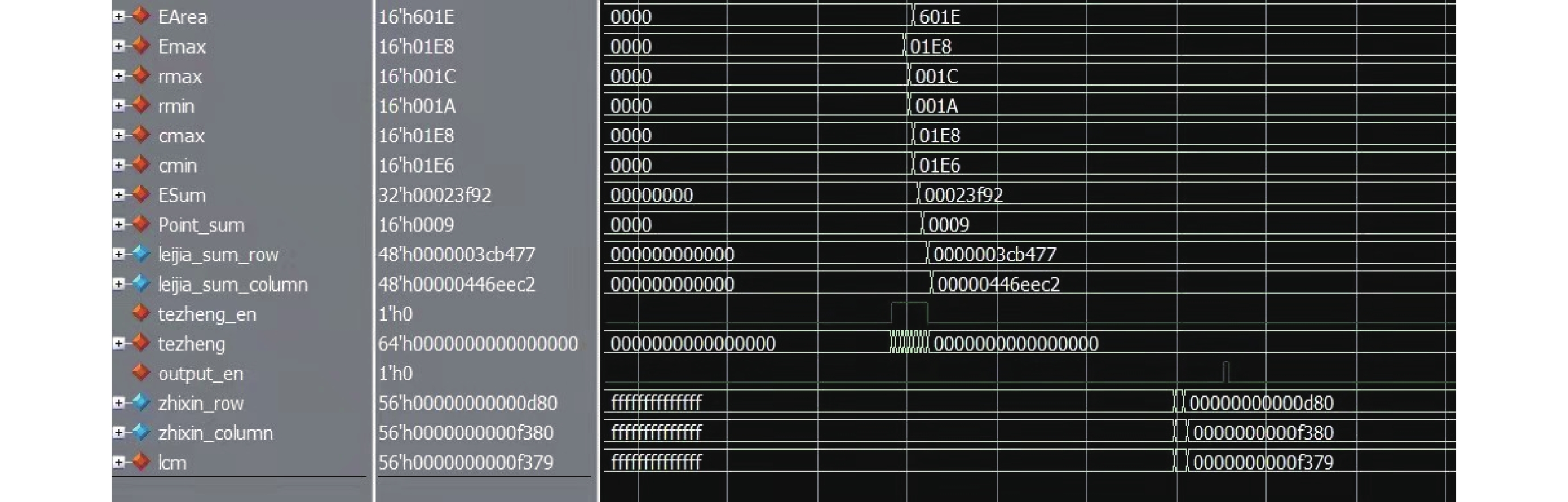
  • The prerequisite of target detection and tracking is to model and represent the target based on multi-dimensional features extracted from the target region. The traditional target feature extraction needs to connect the target region first and then must calculate the target feature, which has still room for improvement in real-time performance. An advantage of the new method based on the synchronous calculation of pixel-connected domain markers and target features is that the target features can be output when the target region is connected. This article proposes a method highlighting pixel-based marking of connection domains and synchronous computation of target features, which can output target features immediately after target areas are connected. By setting up a feature transfer mechanism, this method establishes a marker table, a marker mapping table and a feature attributes table while scanning images, and links the marker mapping table and the feature attributes table with the help of the marker table. When different areas are adjacent to one another, markers are consolidated while the features’ attributes are synchronously transferred and computed, ensuring real-time extraction of the target features. Regarding real-time and multiple-dimensional extraction of the features of multiple targets in high-resolution distant sensing images, the article proposes an implementation plan based on FPGA hardware design. According to the results of a number of simulation tests, the method featuring high-speed marking of connection domains over one iteration of split pixels and real-time computing of target features boasts the following outstanding characteristics: The time consumed by marking connection domains is only (L × W + 2n/m) × Tclk, close to the theoretical minimum (L × W) × Tclk; saving images in cyclical buffers only takes up few resources; parallel pipeline processing of marking and computation improves the detection and tracking efficiency; the test results of multiple target features are accurate and consequently can effectively support subsequent target tracing detections; and the method also has both theoretical and practical values.


  • loading
  • [1]
    ROSENFELD A, PFALTZ J L. Sequential operations in digital picture processing[J]. Journal of the ACM, 1966, 13(4): 471-494 doi: 10.1145/321356.321357
    [2]
    WANG Fan, ZHOU Guoqing, ZHANG Rongting, et al. FPGA-oriented fast connected component labeling method[J]. Computer Engineering and Applications, 2020, 56(22): 230-235 doi: 10.3778/j.issn.1002-8331.1909-0222
    [3]
    LING Luxiang. Target Localization Method Based on Embedded Vision with FPGAs and Its Application[D]. Guangzhou: South China University of Technology, 2017
    [4]
    ZHANG Guohe, XU Kuai, DUAN Guodong, et al. A fast labeling algorithm of connected components applicable for hardware implementation[J]. Journal of Xi’an Jiaotong University, 2018, 52(8): 95-101 doi: 10.7652/xjtuxb201808015
    [5]
    DAI Huadong, HU Moufa, LU Huanzhang, et al. Design and implementation of target detection algorithm based on connected-domain labeling[J]. Modern Electronics Technique, 2015, 38(20): 71-74 doi: 10.3969/j.issn.1004-373X.2015.20.019
    [6]
    ZHAO Xiao. Speed-up of Connected Component Labeling Algorithm and Its Application in Paper Defect Detection[D]. Xi’an: Shaanxi University of Science and Technology, 2019
    [7]
    YU Xiaoyu. Research on the Technologies of High Speed Vision Measurement System[D]. Harbin: Harbin Institute of Technology, 2014
    [8]
    FENG Haiwen, NIU Lianqiang, LIU Xiaoming. Efficient one-scan algorithm for labeling connected component[J]. Computer Engineering and Applications, 2014, 50(23): 31-35
    [9]
    PANDEY J G, KARMAKAR A, MISHRA A K, et al. Implementation of an improved connected component labeling algorithm using FPGA-based platform[C]//Proceedings of 2014 International Conference on Signal Processing and Communications. Bangalore: IEEE, 2014: 1-6
    [10]
    TAN Xubin, XIE Yizhuang, CHEN He, et al. Design and implementation of the connected component labeling based on FPGA[J]. Signal Processing, 2011, 27(11): 1729-1733 doi: 10.3969/j.issn.1003-0530.2011.11.018
    [11]
    FAN Qiaoyun, ZHANG Guangjun. Spot centroiding algorithm for discrete noise image and its hardware implementation[J]. Optics and Precision Engineering, 2011, 19(12): 2992-2998 doi: 10.3788/OPE.20111912.2992
  • 加载中

Catalog

    通讯作者: 陈斌, bchen63@163.com
    • 1. 

      沈阳化工大学材料科学与工程学院 沈阳 110142

    1. 本站搜索
    2. 百度学术搜索
    3. 万方数据库搜索
    4. CNKI搜索

    Figures(13)  / Tables(5)

    Article Metrics

    Article Views(597) PDF Downloads(121) Cited by()
    Proportional views
    Related

    /

    DownLoad:  Full-Size Img  PowerPoint
    Return
    Return