| Citation: | WAN Liming, TANG Hong, LI Xiongyao, LIU Jianzhong. Analysis of the Key Elements of Martian Habitable Environment and Its Implication for Tianwen-3 Site Selection (in Chinese). Chinese Journal of Space Science, 2025, 45(5): 1285-1306 doi: 10.11728/cjss2025.05.2024-0131

|

| [1] |
ARVIDSON R E, GUINNESS E A, MOORE H J, et al. Three Mars years: Viking Lander 1 imaging observations[J]. Science, 1983, 222(4623): 463-468 doi: 10.1126/science.222.4623.463
|
| [2] |
ARVIDSON R E, GOODING J L, MOORE H J. The Martian surface as imaged, sampled, and analyzed by the Viking landers[J]. Reviews of Geophysics, 1989, 27(1): 39-60 doi: 10.1029/RG027i001p00039
|
| [3] |
FOUCHET T, LELLOUCH E, IGNATIEV N I, et al. Martian water vapor: Mars Express PFS/LW observations[J]. Icarus, 2007, 190(1): 32-49 doi: 10.1016/j.icarus.2007.03.003
|
| [4] |
LEVIN G V. Odyssey gives evidence for liquid water on Mars[C]//Optical Science and Technology, SPIE’s 48th Annual Meeting. San Diego: SPIE, 2004: 128
|
| [5] |
ALBEE A L, ARVIDSON R E, PALLUCONI F, et al. Overview of the Mars Global Surveyor mission[J]. Journal of Geophysical Research: Planets, 2001, 106(E10): 23291-23316 doi: 10.1029/2000JE001306
|
| [6] |
NAZARI-SHARABIAN M, AGHABABAEI M, KARAKOUZIAN M, et al. Water on Mars—a literature review[J]. Galaxies, 2020, 8(2): 40 doi: 10.3390/galaxies8020040
|
| [7] |
VASAVADA A R. Mission overview and scientific contributions from the Mars Science Laboratory Curiosity rover after eight years of surface operations[J]. Space Science Reviews, 2022, 218(3): 14 doi: 10.1007/s11214-022-00882-7
|
| [8] |
MELLON M T, SIZEMORE H G, HELDMANN J L, et al. The habitability conditions of possible Mars landing sites for life exploration[J]. Icarus, 2024, 408: 115836 doi: 10.1016/j.icarus.2023.115836
|
| [9] |
HOEHLER T M, WESTALL F. Mars exploration program analysis group goal one: determine if life ever arose on Mars[J]. Astrobiology, 2010, 10(9): 859-867 doi: 10.1089/ast.2010.0527
|
| [10] |
PHILLIPS-LANDER C M, AGHA-MOHAMAMDI A, WYNNE J J, et al. Mars Astrobiological Cave and Internal habitability Explorer (MACIE): a new frontiers mission concept[J]. Bulletin of the AAS, 2021, 53(4)
|
| [11] |
FARLEY K A, WILLIFORD K H, STACK K M, et al. Mars 2020 mission overview[J]. Space Science Reviews, 2020, 216(8): 142 doi: 10.1007/s11214-020-00762-y
|
| [12] |
ZHAO Y Y S, YU J, WEI G F, et al. In situ analysis of surface composition and meteorology at the Zhurong landing site on Mars[J]. National Science Review, 2023, 10(6): nwad056
|
| [13] |
LI C L, ZHANG R Q, YU D Y, et al. China’s Mars exploration mission and science investigation[J]. Space Science Reviews, 2021, 217(4): 57 doi: 10.1007/s11214-021-00832-9
|
| [14] |
LI C, ZHENG Y K, WANG X, et al. Layered subsurface in Utopia Basin of Mars revealed by Zhurong rover radar[J]. Nature, 2022, 610(7931): 308-312 doi: 10.1038/s41586-022-05147-5
|
| [15] |
XIAO L. Evolution of the geological environment and exploration for life on Mars[J]. Journal of Earth Science, 2023, 34(5): 1626-1628 doi: 10.1007/s12583-023-1929-7
|
| [16] |
XU L, LI H, PEI Z Y, et al. A brief introduction to the international lunar research station program and the interstellar express mission[J]. Chinese Journal of Space Science, 2022, 42(4): 511-513 doi: 10.11728/cjss2022.04.yg28
|
| [17] |
BEATY D W, ALLWOOD A C, VAGO J L, et al. Sedimentology, stratigraphy and astrobiology on Mars in 2018, potentially using two rovers[C]//The First International Conference on Mars Sedimentology and Stratigraphy. El Paso, Texas: Universities Space Research Association, 2010
|
| [18] |
SCHUUR E A G. Nitrogen from the deep[J]. Nature, 2011, 477(7362): 39-40 doi: 10.1038/477039a
|
| [19] |
ATREYA S K, WITASSE O, CHEVRIER V F, et al. Methane on Mars: current observations, interpretation, and future plans[J]. Planetary and Space Science, 2011, 59(2/3): 133-136
|
| [20] |
SUTTER B, MCADAM A C, MAHAFFY P R, et al. Evolved gas analyses of sedimentary rocks and eolian sediment in Gale Crater, Mars: results of the Curiosity rover’s sample analysis at Mars instrument from Yellowknife Bay to the Namib Dune[J]. Journal of Geophysical Research: Planets, 2017, 122(12): 2574-2609 doi: 10.1002/2016JE005225
|
| [21] |
CHASSEFIÈRE E, LEBLANC F. Methane release and the carbon cycle on Mars[J]. Planetary and Space Science, 2011, 59(2/3): 207-217
|
| [22] |
MUMMA M J, VILLANUEVA G L, NOVAK R E, et al. Strong release of methane on Mars in northern summer 2003[J]. Science, 2009, 323(5917): 1041-1045 doi: 10.1126/science.1165243
|
| [23] |
BOXE C S, FRANCISCO J S, SHIA R L, et al. New insights into martian atmospheric chemistry[J]. Icarus, 2014, 242: 97-104 doi: 10.1016/j.icarus.2014.07.023
|
| [24] |
MCELROY M B, HUNTEN D M. Photochemistry of CO2 in the atmosphere of Mars[J]. Journal of Geophysical Research, 1970, 75(7): 1188-1201 doi: 10.1029/JA075i007p01188
|
| [25] |
ATREYA S K, GU Z G. Photochemistry and stability of the atmosphere of Mars[J]. Advances in Space Research, 1995, 16(6): 57-68 doi: 10.1016/0273-1177(95)00250-I
|
| [26] |
KORABLEV O, VANDAELE A C, MONTMESSIN F, et al. No detection of methane on Mars from early ExoMars Trace Gas Orbiter observations[J]. Nature, 2019, 568(7753): 517-520 doi: 10.1038/s41586-019-1096-4
|
| [27] |
FORMISANO V, ATREYA S, ENCRENAZ T, et al. Detection of methane in the atmosphere of Mars[J]. Science, 2004, 306(5702): 1758-1761 doi: 10.1126/science.1101732
|
| [28] |
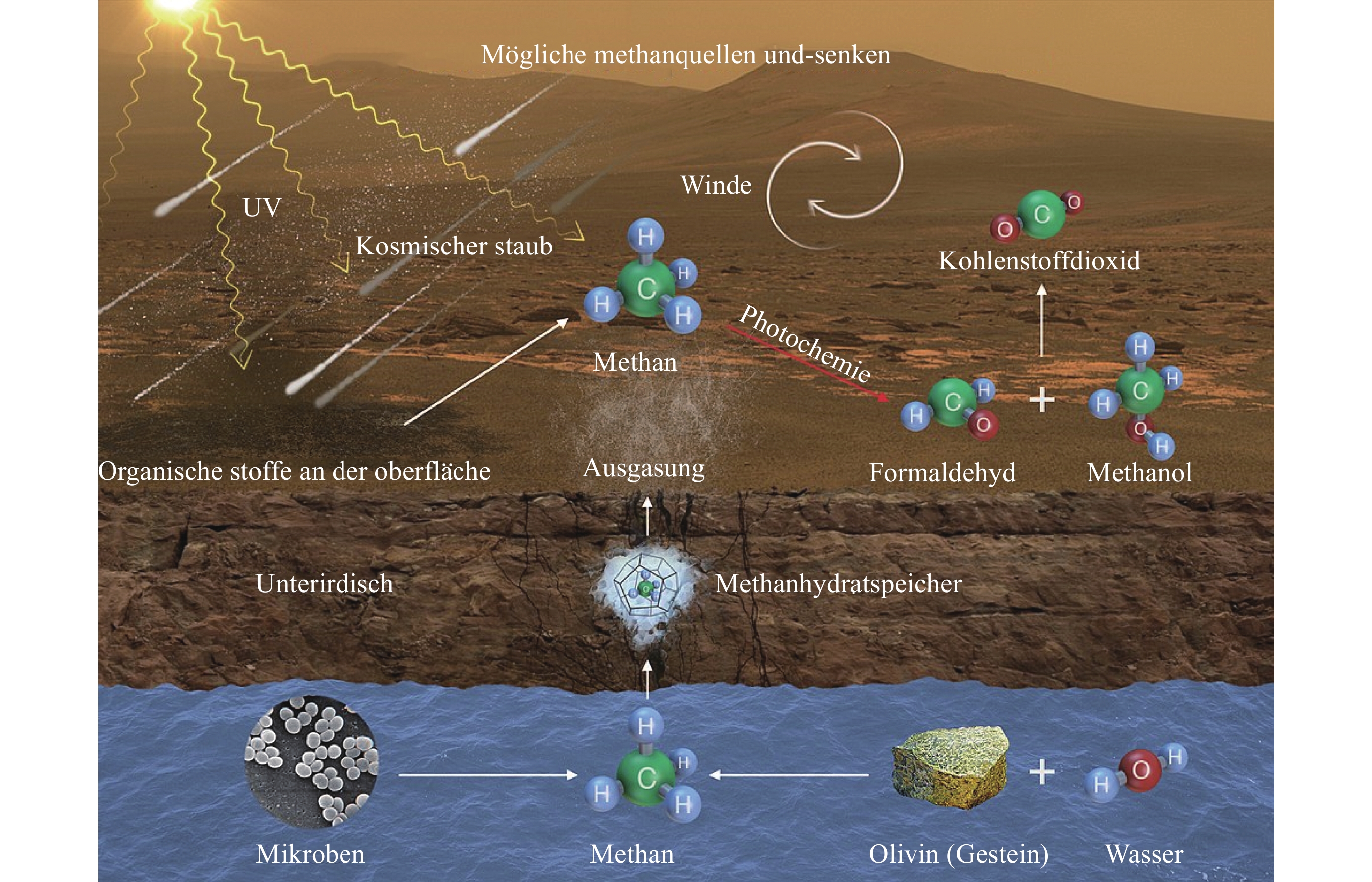
NASA/JPL-Caltech. Possible Methane Sources and Sinks [OL]. https://mars.nasa.gov/resources/6891/possible-methane-sources-and-sinks/ (file), Wikipedia: Grafikwerkstatt#Methanhydrat and Own work, CC BY-SA 3.0, https://commons.wikimedia.org/w/index.php?curid=100873248
|
| [29] |
WEBSTER C R, MAHAFFY P R, ATREYA S K, et al. Background levels of methane in Mars’ atmosphere show strong seasonal variations[J]. Science, 2018, 360(6393): 1093-1096 doi: 10.1126/science.aaq0131
|
| [30] |
ATREYA S K, MAHAFFY P R, WONG A S. Methane and related trace species on Mars: origin, loss, implications for life, and habitability[J]. Planetary and Space Science, 2007, 55(3): 358-369 doi: 10.1016/j.pss.2006.02.005
|
| [31] |
OZE C, SHARMA M. Have olivine, will gas: serpentinization and the abiogenic production of methane on Mars[J]. Geophysical Research Letters, 2005, 32(10): L10203
|
| [32] |
SCHUERGER A C, MOORES J E, CLAUSEN C A, et al. Methane from UV‐irradiated carbonaceous chondrites under simulated Martian conditions[J]. Journal of Geophysical Research: Planets, 2012, 117(E8): E08007
|
| [33] |
KEPPLER F, VIGANO I, MCLEOD A, et al. Ultraviolet-radiation-induced methane emissions from meteorites and the Martian atmosphere[J]. Nature, 2012, 486(7401): 93-96 doi: 10.1038/nature11203
|
| [34] |
KRASNOPOLSKY V A. Some problems related to the origin of methane on Mars[J]. Icarus, 2006, 180(2): 359-367 doi: 10.1016/j.icarus.2005.10.015
|
| [35] |
CHASSEFIÈRE E. Metastable methane clathrate particles as a source of methane to the Martian atmosphere[J]. Icarus, 2009, 204(1): 137-144 doi: 10.1016/j.icarus.2009.06.016
|
| [36] |
GOUGH R V, TOLBERT M A, MCKAY C P, et al. Methane adsorption on a Martian soil analog: an abiogenic explanation for methane variability in the Martian atmosphere[J]. Icarus, 2010, 207(1): 165-174 doi: 10.1016/j.icarus.2009.11.030
|
| [37] |
MESLIN P Y, GOUGH R, LEFÈVRE F, et al. Little variability of methane on Mars induced by adsorption in the regolith[J]. Planetary and Space Science, 2011, 59(2/3): 247-258
|
| [38] |
MCMAHON S, PARNELL J, BLAMEY N J F. Sampling methane in basalt on Earth and Mars[J]. International Journal of Astrobiology, 2013, 12(2): 113-122 doi: 10.1017/S1473550412000481
|
| [39] |
ETIOPE G, OEHLER D Z, ALLEN C C. Methane emissions from Earth’s degassing: implications for Mars[J]. Planetary and Space Science, 2011, 59(2/3): 182-195
|
| [40] |
BRIDGES J C, HICKS L J, TREIMAN A H. Carbonates on Mars[M]//FILIBERTO J, SCHWENZER S P. Volatiles in the Martian Crust. Amsterdam: Elsevier, 2019: 89-118
|
| [41] |
HAUSRATH E M, OLSEN A A. Using the chemical composition of carbonate rocks on Mars as a record of secondary interaction with liquid water[J]. American Mineralogist, 2013, 98(5/6): 897-906
|
| [42] |
SUTTER B E, HEIL E B, RAMPE R V, et al. Iron-rich carbonates as the potential source of evolved CO2 detected by the Sample Analysis at Mars (SAM) instrument in Gale Crater[C]//AGU Fall Meeting. Washington D C: AGU, 2015: P31F-07
|
| [43] |
BOYNTON W V, MING D W, KOUNAVES S P, et al. Evidence for calcium carbonate at the Mars Phoenix landing site[J]. Science, 2009, 325(5936): 61-64 doi: 10.1126/science.1172768
|
| [44] |
HORGAN B H N, ANDERSON R B, D Geological mapping of Mawrth ROMART G, et al. The mineral diversity of Jezero crater: evidence for possible lacustrine carbonates on Mars[J]. Icarus, 2020, 339: 113526 doi: 10.1016/j.icarus.2019.113526
|
| [45] |
SCHELLER E L, SWINDLE C, GROTZINGER J, et al. Formation of magnesium carbonates on earth and implications for Mars[J]. Journal of Geophysical Research: Planets, 2021, 126(7): e2021JE006828 doi: 10.1029/2021JE006828
|
| [46] |
EHLMANN B L, MUSTARD J F, MURCHIE S L, et al. Orbital identification of carbonate-bearing rocks on Mars[J]. Science, 2008, 322(5909): 1828-1832 doi: 10.1126/science.1164759
|
| [47] |
AMADOR E S, BANDFIELD J L, THOMAS N H. A search for minerals associated with serpentinization across Mars using CRISM spectral data[J]. Icarus, 2018, 311: 113-134 doi: 10.1016/j.icarus.2018.03.021
|
| [48] |
JAIN N, CHAUHAN P. Study of phyllosilicates and carbonates from the Capri Chasma region of Valles Marineris on Mars based on Mars Reconnaissance Orbiter-Compact Reconnaissance Imaging Spectrometer for Mars (MRO-CRISM) observations[J]. Icarus, 2015, 250: 7-17 doi: 10.1016/j.icarus.2014.11.018
|
| [49] |
BORG L E, CONNELLY J N, NYQUIST L E, et al. The age of the carbonates in martian meteorite ALH84001[J]. Science, 1999, 286(5437): 90-94 doi: 10.1126/science.286.5437.90
|
| [50] |
MORRIS R V, RUFF S W, GELLERT R, et al. Identification of carbonate-rich outcrops on Mars by the Spirit Rover[J]. Science, 2010, 329(5990): 421-424 doi: 10.1126/science.1189667
|
| [51] |
SCHELLER E L, HOLLIS J R, CARDARELLI E L, et al. Aqueous alteration processes in Jezero crater, Mars—implications for organic geochemistry[J]. Science, 2022, 378(6624): 1105-1110 doi: 10.1126/science.abo5204
|
| [52] |
ANSARI A H. Detection of organic matter on Mars, results from various Mars missions, challenges, and future strategy: a review[J]. Frontiers in Astronomy and Space Sciences, 2023, 10: 1075052 doi: 10.3389/fspas.2023.1075052
|
| [53] |
FREISSINET C, GLAVIN D P, MAHAFFY P R, et al. Organic molecules in the Sheepbed Mudstone, Gale Crater, Mars[J]. Journal of Geophysical Research: Planets, 2015, 120(3): 495-514 doi: 10.1002/2014JE004737
|
| [54] |
KATE I L T. Organic molecules on Mars[J]. Science, 2018, 360(6393): 1068-1069 doi: 10.1126/science.aat2662
|
| [55] |
MCKAY D S, GIBSON E K, THOMAS-KEPRTA K L, et al. Search for past life on Mars: possible relic biogenic activity in Martian meteorite ALH84001[J]. Science, 1996, 273(5277): 924-930 doi: 10.1126/science.273.5277.924
|
| [56] |
GIBSON E K, MCKAY D S, THOMAS-KEPRTA K L, et al. Life on Mars: evaluation of the evidence within Martian meteorites ALH84001, Nakhla, and Shergotty[J]. Precambrian Research, 2001, 106(1/2): 15-34
|
| [57] |
SEPHTON M A, WRIGHT I P, GILMOUR I, et al. High molecular weight organic matter in Martian meteorites[J]. Planetary and Space Science, 2002, 50(7/8): 711-716
|
| [58] |
BRIDGES J C, GRADY M M. Evaporite mineral assemblages in the Nakhlite (Martian) meteorites[J]. Earth and Planetary Science Letters, 2000, 176(3/4): 267-279
|
| [59] |
CHANGELA H G, BRIDGES J C. Alteration assemblages in the Nakhlites: variation with depth on Mars[J]. Meteoritics :Times New Roman;">& Planetary Science, 2010, 45(12): 1847-1867
|
| [60] |
LIN Y T, EL GORESY A, HU S, et al. NanoSIMS analysis of organic carbon from the Tissint Martian meteorite: evidence for the past existence of subsurface organic‐bearing fluids on Mars[J]. Meteoritics :Times New Roman;">& Planetary Science, 2014, 49(12): 2201-2218
|
| [61] |
MANCINELLI R L, BANIN A. Where is the nitrogen on Mars?[J]. International Journal of Astrobiology, 2003, 2(3): 217-225 doi: 10.1017/S1473550403001599
|
| [62] |
NIER A O, MCELROY M B. Composition and structure of Mars’ upper atmosphere: results from the neutral mass spectrometers on Viking 1 and 2[J]. Journal of Geophysical Research, 1977, 82(28): 4341-4349 doi: 10.1029/JS082i028p04341
|
| [63] |
MAHAFFY P R, WEBSTER C R, ATREYA S K, et al. Abundance and isotopic composition of gases in the Martian atmosphere from the curiosity rover[J]. Science, 2013, 341(6143): 263-266 doi: 10.1126/science.1237966
|
| [64] |
EVANS J S, STEVENS M H, LUMPE J D, et al. Retrieval of CO2 and N2 in the Martian thermosphere using dayglow observations by IUVS on MAVEN[J]. Geophysical Research Letters, 2015, 42(21): 9040-9049 doi: 10.1002/2015GL065489
|
| [65] |
LEBLANC F, CHAUFRAY J Y, BERTAUX J L. On Martian nitrogen dayglow emission observed by SPICAM UV spectrograph/Mars Express[J]. Geophysical Research Letters, 2007, 34(2): L02206
|
| [66] |
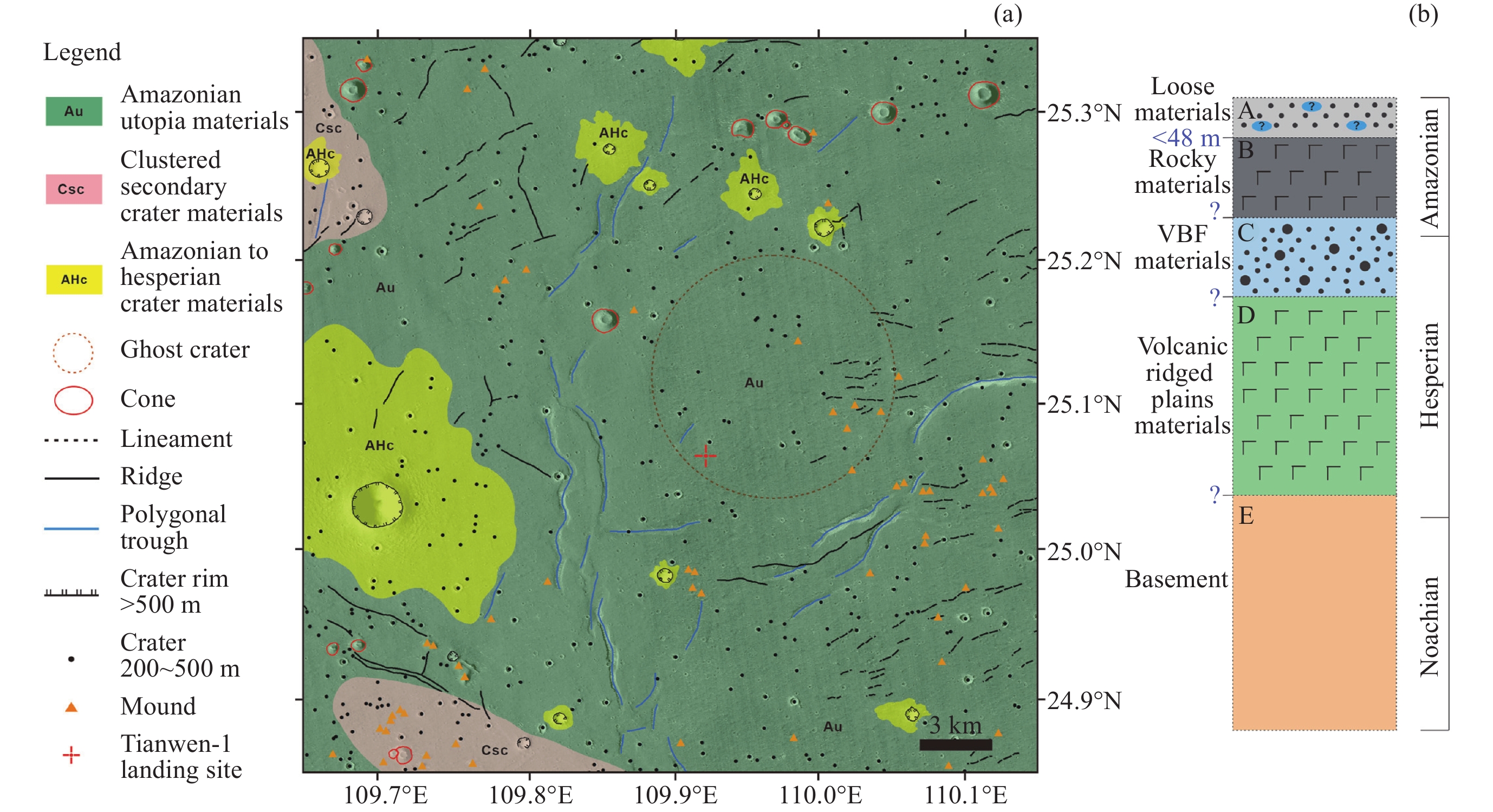
BOUGHER S W, PAWLOWSKI D, BELL J M, et al. Mars global ionosphere‐thermosphere model: solar cycle, seasonal, and diurnal variations of the Mars upper atmosphere[J]. Journal of Geophysical Research: Planets, 2015, 120(2): 311-342 doi: 10.1002/2014JE004715
|
| [67] |
JAKOSKY B M, GREBOWSKY J M, LUHMANN J G, et al. Initial results from the MAVEN mission to Mars[J]. Geophysical Research Letters, 2015, 42(21): 8791-8802 doi: 10.1002/2015GL065271
|
| [68] |
MARTI K, KIM J S, THAKUR A N, et al. Signatures of the Martian atmosphere in glass of the Zagami meteorite[J]. Science, 1995, 267(5206): 1981-1984 doi: 10.1126/science.7701319
|
| [69] |
KOIKE M, NAKADA R, KAJITANI I, et al. In-situ preservation of nitrogen-bearing organics in Noachian Martian carbonates[J]. Nature Communications, 2020, 11(1): 1988 doi: 10.1038/s41467-020-15931-4
|
| [70] |
MATHEW K J, KIM J S, MARTI K. Martian atmospheric and indigenous components of xenon and nitrogen in the Shergotty, Nakhla, and Chassigny group meteorites[J]. Meteoritics :Times New Roman;">& Planetary Science, 1998, 33(4): 655-664
|
| [71] |
BECKER R H, PEPIN R O. The case for a Martian origin of the shergottites: nitrogen and noble gases in EETA 79001[J]. Earth and Planetary Science Letters, 1984, 69(2): 225-242 doi: 10.1016/0012-821X(84)90183-3
|
| [72] |
BECKER R H, PEPIN R O. Nitrogen and light noble gases in Shergotty[J]. Geochimica et Cosmochimica Acta, 1986, 50(6): 993-1000 doi: 10.1016/0016-7037(86)90380-7
|
| [73] |
MIURA Y N, SUGIURA N. Martian atmosphere-like nitrogen in the orthopyroxenite ALH84001[J]. Geochimica et Cosmochimica Acta, 2000, 64(3): 559-572 doi: 10.1016/S0016-7037(99)00297-5
|
| [74] |
WRAY J, ARCHER Jr P D, BRINCKERHOFF W B, et al. The search for ammonia in Martian soils with curiosity’s SAM instrument. James[C]//44th Lunar and Planetary Science Conference. The Woodlands: Lunar and Planetary Institute, 2013
|
| [75] |
STERN J C, SUTTER B, FREISSINET C, et al. Evidence for indigenous nitrogen in sedimentary and aeolian deposits from the Curiosity rover investigations at Gale crater, Mars[J]. Proceedings of the National Academy of Sciences of the United States of America, 2015, 112(14): 4245-4250
|
| [76] |
MANNING C V, MCKAY C P, ZAHNLE K J. The nitrogen cycle on Mars: impact decomposition of near-surface nitrates as a source for a nitrogen steady state[J]. Icarus, 2008, 197(1): 60-64 doi: 10.1016/j.icarus.2008.04.015
|
| [77] |
GRADY M M, WRIGHT I P, PILLINGER C T. A search for nitrates in Martian meteorites[J]. Journal of Geophysical Research: Planets, 1995, 100(E3): 5449-5455 doi: 10.1029/94JE02803
|
| [78] |
BADA J L, GLAVIN D P, MCDONALD G D, et al. A search for endogenous amino acids in Martian meteorite ALH84001[J]. Science, 1998, 279(5349): 362-365 doi: 10.1126/science.279.5349.362
|
| [79] |
MCADAM A C, FRANZ H B, SUTTER B, et al. Sulfur-bearing phases detected by evolved gas analysis of the Rocknest aeolian deposit, Gale Crater, Mars[J]. Journal of Geophysical Research: Planets, 2014, 119(2): 373-393 doi: 10.1002/2013JE004518
|
| [80] |
MCLENNAN S M, BOYNTON W V, KARUNATILLAKE S, et al. Distribution of sulfur on the surface of Mars determined by the 2001 Mars Odyssey gamma ray spectrometer[C]//41st Lunar and Planetary Science Conference. The Woodlands: Lunar and Planetary Institute, 2010: 2174
|
| [81] |
KING P L, MCLENNAN S M. Sulfur on Mars[J]. Elements, 2010, 6(2): 107-112 doi: 10.2113/gselements.6.2.107
|
| [82] |
GENDRIN A, MANGOLD N, BIBRING J P, et al. Sulfates in Martian layered terrains: the OMEGA/Mars express view[J]. Science, 2005, 307(5715): 1587-1591 doi: 10.1126/science.1109087
|
| [83] |
MURCHIE S L, MUSTARD J F, EHLMANN B L, et al. A synthesis of Martian aqueous mineralogy after 1 Mars year of observations from the Mars Reconnaissance Orbiter[J]. Journal of Geophysical Research: Planets, 2009, 114(E2): E00D06
|
| [84] |
MCLENNAN S M, BELL III J F, CALVIN W M, et al. Provenance and diagenesis of the evaporite-bearing Burns formation, Meridiani Planum, Mars[J]. Earth and Planetary Science Letters, 2005, 240(1): 95-121 doi: 10.1016/j.jpgl.2005.09.041
|
| [85] |
RIEDER R, ECONOMOU T, WÄNKE H, et al. The chemical composition of Martian soil and rocks returned by the mobile alpha proton X-ray spectrometer: preliminary results from the X-ray mode[J]. Science, 1997, 278(5344): 1771-1774 doi: 10.1126/science.278.5344.1771
|
| [86] |
CLARK B C. Geochemical components in Martian soil[J]. Geochimica et Cosmochimica Acta, 1993, 57(19): 4575-4581 doi: 10.1016/0016-7037(93)90183-W
|
| [87] |
CLARK III B C, BAIRD A K, ROSE JR H J, et al. The Viking X ray fluorescence experiment: analytical methods and early results[J]. Journal of Geophysical Research, 1977, 82(28): 4577-4594 doi: 10.1029/JS082i028p04577
|
| [88] |
CHRISTENSEN P R, WYATT M B, GLOTCH T D, et al. Mineralogy at Meridiani Planum from the Mini-TES experiment on the opportunity rover[J]. Science, 2004, 306(5702): 1733-1739 doi: 10.1126/science.1104909
|
| [89] |
KLINGELHÖFER G, MORRIS R V, BERNHARDT B, et al. Jarosite and hematite at Meridiani Planum from Opportunity’s Mössbauer spectrometer[J]. Science, 2004, 306(5702): 1740-1745 doi: 10.1126/science.1104653
|
| [90] |
SQUYRES S W, KNOLL A H. Sedimentary rocks at Meridiani Planum: origin, diagenesis, and implications for life on Mars[J]. Earth and Planetary Science Letters, 2005, 240(1): 1-10 doi: 10.1016/j.jpgl.2005.09.038
|
| [91] |
SQUYRES S W, ARVIDSON R E, BELL J F, et al. Ancient impact and aqueous processes at Endeavour Crater, Mars[J]. Science, 2012, 336(6081): 570-576 doi: 10.1126/science.1220476
|
| [92] |
LANGEVIN Y, POULET F, BIBRING J P, et al. Sulfates in the north polar region of Mars detected by OMEGA/Mars express[J]. Science, 2005, 307(5715): 1584-1586 doi: 10.1126/science.1109091
|
| [93] |
FRANZ H B, KING P L, GAILLARD F. Sulfur on Mars from the atmosphere to the core[M]//FILIBERTO J, SCHWENZER S P. Volatiles in the Martian Crust. Amsterdam: Elsevier, 2019: 119-183
|
| [94] |
NACHON M, CLEGG S M, MANGOLD N, et al. Calcium sulfate veins characterized by ChemCam/Curiosity at Gale crater, Mars[J]. Journal of Geophysical Research: Planets, 2014, 119(9): 1991-2016 doi: 10.1002/2013JE004588
|
| [95] |
RAO M N, NYQUIST L E, WENTWORTH S J, et al. The nature of Martian fluids based on mobile element studies in salt‐assemblages from Martian meteorites[J]. Journal of Geophysical Research: Planets, 2008, 113(E6): 2007JE002958 doi: 10.1029/2007JE002958
|
| [96] |
FARQUHAR J, KIM S T, MASTERSON A. Implications from sulfur isotopes of the Nakhla meteorite for the origin of sulfate on Mars[J]. Earth and Planetary Science Letters, 2007, 264(1/2): 1-8
|
| [97] |
ZHAO Yufen, LIU Yan, HUANG Biling, et al. A potential biomarker phosphate for life exploration on Mars[J]. Chinese Journal of Space Science, 2021, 41(1): 129-132 (赵玉芬, 刘艳, 黄碧玲, 等. 火星生命探测中一种潜在的生物标志物磷酸盐[J]. 空间科学学报, 2021, 41(1): 129-132 doi: 10.11728/cjss2021.01.129
ZHAO Yufen, LIU Yan, HUANG Biling, et al. A potential biomarker phosphate for life exploration on Mars[J]. Chinese Journal of Space Science, 2021, 41(1): 129-132 doi: 10.11728/cjss2021.01.129
|
| [98] |
HAUSRATH E M, ADCOCK C T, BERGER J A, et al. Phosphates on Mars and their importance as igneous, aqueous, and astrobiological indicators[J]. Minerals, 2024, 14(6): 591 doi: 10.3390/min14060591
|
| [99] |
ECONOMOU T. Chemical analyses of Martian soil and rocks obtained by the Pathfinder Alpha Proton X-ray spectrometer[J]. Radiation Physics and Chemistry, 2001, 61(3/4/5/6): 191-197
|
| [100] |
USUI T, MCSWEEN Jr H Y, CLARK III B C. Petrogenesis of high‐phosphorous Wishstone Class rocks in Gusev Crater, Mars[J]. Journal of Geophysical Research: Planets, 2008, 113(E12): E12S44
|
| [101] |
ADCOCK C T, HAUSRATH E M. Weathering profiles in phosphorus-rich rocks at Gusev Crater, Mars, suggest dissolution of phosphate minerals into potentially habitable near-neutral waters[J]. Astrobiology, 2015, 15(12): 1060-1075 doi: 10.1089/ast.2015.1291
|
| [102] |
ARVIDSON R E, SQUYRES S W, MORRIS R V, et al. High concentrations of manganese and sulfur in deposits on Murray Ridge, Endeavour Crater, Mars[J]. American Mineralogist, 2016, 101(6): 1389-1405 doi: 10.2138/am-2016-5599
|
| [103] |
CHAÏRAT C, SCHOTT J, OELKERS E H, et al. Kinetics and mechanism of natural fluorapatite dissolution at 25°C and pH from 3 to 12[J]. Geochimica et Cosmochimica Acta, 2007, 71(24): 5901-5912 doi: 10.1016/j.gca.2007.08.031
|
| [104] |
BEYSSAC O, FORNI O, COUSIN A, et al. Petrological traverse of the olivine cumulate Séítah formation at Jezero crater, Mars: a perspective from SuperCam onboard perseverance[J]. Journal of Geophysical Research: Planets, 2023, 128(7): e2022JE007638 doi: 10.1029/2022JE007638
|
| [105] |
MCCUBBIN F M, ELARDO S M, SHEARER C K, et al. A petrogenetic model for the comagmatic origin of chassignites and nakhlites: inferences from chlorine‐rich minerals, petrology, and geochemistry[J]. Meteoritics :Times New Roman;">& Planetary Science, 2013, 48(5): 819-853
|
| [106] |
SHEARER C K, BURGER P V, PAPIKE J J, et al. Crystal chemistry of merrillite from Martian meteorites: Mineralogical recorders of magmatic processes and planetary differentiation[J]. Meteoritics :Times New Roman;">& Planetary Science, 2015, 50(4): 649-673
|
| [107] |
LIU Y, MA C, BECKETT J R, et al. Rare-earth-element minerals in Martian breccia meteorites NWA 7034 and 7533: implications for fluid–rock interaction in the Martian crust[J]. Earth and Planetary Science Letters, 2016, 451: 251-262 doi: 10.1016/j.jpgl.2016.06.041
|
| [108] |
BAZIOTIS I P, LIU Y, DECARLI P S, et al. The Tissint Martian meteorite as evidence for the largest impact excavation[J]. Nature Communications, 2013, 4(1): 1404 doi: 10.1038/ncomms2414
|
| [109] |
GU L X, HU S, ANAND M, et al. Occurrence of tuite and ahrensite in Zagami and their significance for shock-histories recorded in Martian meteorites[J]. American Mineralogist, 2022, 107(6): 1018-1029 doi: 10.2138/am-2022-8020
|
| [110] |
WORDSWORTH R D. The climate of early Mars[J]. Annual Review of Earth and Planetary Sciences, 2016, 44(1): 381-408 doi: 10.1146/annurev-earth-060115-012355
|
| [111] |
MASURSKY H. An overview of geological results from Mariner 9[J]. Journal of Geophysical Research, 1973, 78(20): 4009-4030 doi: 10.1029/JB078i020p04009
|
| [112] |
ZHAO Jiannan, SHI Yutong, ZHANG Mingjie, et al. Advances in Martian water-related landforms[J]. Acta Geologica Sinica, 2021, 95(9): 2755-2768 (赵健楠, 史语桐, 张明杰, 等. 火星水成地貌研究进展[J]. 地质学报, 2021, 95(9): 2755-2768 doi: 10.3969/j.issn.0001-5717.2021.09.009
ZHAO Jiannan, SHI Yutong, ZHANG Mingjie, et al. Advances in Martian water-related landforms[J]. Acta Geologica Sinica, 2021, 95(9): 2755-2768 doi: 10.3969/j.issn.0001-5717.2021.09.009
|
| [113] |
HYNEK B M, BEACH M, HOKE M R T. Updated global map of Martian valley networks and implications for climate and hydrologic processes[J]. Journal of Geophysical Research: Planets, 2010, 115(E9): E09008
|
| [114] |
LIU Yang, LIU Zhenghao, WU Xing, et al. Evolution of water environment on Mars[J]. Acta Geologica Sinica, 2021, 95(9): 2725-2741 (刘洋, 刘正豪, 吴兴, 等. 火星的水环境演化[J]. 地质学报, 2021, 95(9): 2725-2741 doi: 10.3969/j.issn.0001-5717.2021.09.007
LIU Yang, LIU Zhenghao, WU Xing, et al. Evolution of water environment on Mars[J]. Acta Geologica Sinica, 2021, 95(9): 2725-2741 doi: 10.3969/j.issn.0001-5717.2021.09.007
|
| [115] |
LIU Yang, WU Xing, LIU Zhenghao, et al. Geological evolution and habitable environment of Mars: progress and prospects[J]. Reviews of Geophysics and Planetary Physics, 2021, 52(4): 416-436 (刘洋, 吴兴, 刘正豪, 等. 火星的地质演化和宜居环境研究进展[J]. 地球与行星物理论评, 2021, 52(4): 416-436
LIU Yang, WU Xing, LIU Zhenghao, et al. Geological evolution and habitable environment of Mars: progress and prospects[J]. Reviews of Geophysics and Planetary Physics, 2021, 52(4): 416-436
|
| [116] |
VIJAYAN S, SINHA R K. Amazonian fluvial outflow channels in Jovis Tholus region, Mars[J]. Journal of Geophysical Research: Planets, 2017, 122(5): 927-949 doi: 10.1002/2016JE005237
|
| [117] |
GALLAGHER C J, BAHIA R. Outflow channels on Mars[M]//SOARE R J, CONWAY S J, WILLIAMS J P, et al. Mars Geological Enigmas. Amsterdam: Elsevier, 2021: 13-40
|
| [118] |
LEONE G. Mangala Valles, Mars: a reassessment of formation processes based on a new geomorphological and stratigraphic analysis of the geological units[J]. Journal of Volcanology and Geothermal Research, 2017, 337: 62-80 doi: 10.1016/j.jvolgeores.2017.03.011
|
| [119] |
HARRISON K P, GRIMM R E. Multiple flooding events in Martian outflow channels[J]. Journal of Geophysical Research: Planets, 2008, 113(E2): E02002
|
| [120] |
HOVIUS N, LEA-COX A, TUROWSKI J M. Recent volcano–ice interaction and outburst flooding in a Mars polar cap re-entrant[J]. Icarus, 2008, 197(1): 24-38 doi: 10.1016/j.icarus.2008.04.020
|
| [121] |
CABROL N A, GRIN E A. Distribution, classification, and ages of Martian impact crater lakes[J]. Icarus, 1999, 142(1): 160-172 doi: 10.1006/icar.1999.6191
|
| [122] |
WANG L, HUANG J. Hypothesis of an ancient northern ocean on Mars and insights from the Zhurong rover[J]. Nature Astronomy, 2024, 8(10): 1220-1229 doi: 10.1038/s41550-024-02343-3
|
| [123] |
FASSETT C I, HEAD III J W. Fluvial sedimentary deposits on Mars: ancient deltas in a crater lake in the Nili Fossae region[J]. Geophysical Research Letters, 2005, 32(14): L14201
|
| [124] |
WILSON S A, MORGAN A M, HOWARD A D, et al. The global distribution of craters with alluvial fans and deltas on Mars[J]. Geophysical Research Letters, 2021, 48(4): e2020GL091653 doi: 10.1029/2020GL091653
|
| [125] |
PASQUON K, GARGANI J, MASSÉ M, et al. Present-day formation and seasonal evolution of linear dune gullies on Mars[J]. Icarus, 2016, 274: 195-210 doi: 10.1016/j.icarus.2016.03.024
|
| [126] |
DUNDAS C M, DINIEGA S, MCEWEN A S. Long-term monitoring of Martian gully formation and evolution with MRO/HiRISE[J]. Icarus, 2015, 251: 244-263 doi: 10.1016/j.icarus.2014.05.013
|
| [127] |
DUNDAS C M, MCEWEN A S, DINIEGA S, et al. New and recent gully activity on Mars as seen by HiRISE[J]. Geophysical Research Letters, 2010, 37(7): L07202
|
| [128] |
HEAD J W, MARCHANT D R, KRESLAVSKY M A. Formation of gullies on Mars: link to recent climate history and insolation microenvironments implicate surface water flow origin[J]. Proceedings of the National Academy of Sciences of the United States of America, 2008, 105(36): 13258-13263
|
| [129] |
HARRISON T N, OSINSKI G R, TORNABENE L L, et al. Global documentation of gullies with the Mars Reconnaissance Orbiter Context Camera and implications for their formation[J]. Icarus, 2015, 252: 236-254 doi: 10.1016/j.icarus.2015.01.022
|
| [130] |
PARKER T J, SAUNDERS R S, SCHNEEBERGER D M. Transitional morphology in West Deuteronilus Mensae, Mars: implications for modification of the lowland/upland boundary[J]. Icarus, 1989, 82(1): 111-145 doi: 10.1016/0019-1035(89)90027-4
|
| [131] |
PARKER T J, GORSLINE D S, SAUNDERS R S, et al. Coastal geomorphology of the Martian northern plains[J]. Journal of Geophysical Research: Planets, 1993, 98(E6): 11061-11078 doi: 10.1029/93JE00618
|
| [132] |
RODRIGUEZ J A P, FAIRÉN A G, TANAKA K L, et al. Tsunami waves extensively resurfaced the shorelines of an early Martian ocean[J]. Scientific Reports, 2016, 6(1): 25106 doi: 10.1038/srep25106
|
| [133] |
COSTARD F, SÉJOURNÉ A, KELFOUN K, et al. Modeling tsunami propagation and the emplacement of thumbprint terrain in an early Mars ocean[J]. Journal of Geophysical Research: Planets, 2017, 122(3): 633-649 doi: 10.1002/2016JE005230
|
| [134] |
DI ACHILLE G, HYNEK B M. Ancient ocean on Mars supported by global distribution of deltas and valleys[J]. Nature Geoscience, 2010, 3(7): 459-463 doi: 10.1038/ngeo891
|
| [135] |
DURAN S, COULTHARD T J, BAYNES E R C. Knickpoints in Martian channels indicate past ocean levels[J]. Scientific Reports, 2019, 9(1): 15153 doi: 10.1038/s41598-019-51574-2
|
| [136] |
CARR M H, HEAD III J W. Oceans on Mars: an assessment of the observational evidence and possible fate[J]. Journal of Geophysical Research: Planets, 2003, 108(E5): 5042
|
| [137] |
XIAO L, HUANG J, KUSKY T, et al. Evidence for marine sedimentary rocks in Utopia Planitia: Zhurong rover observations[J]. National Science Review, 2023, 10(9): nwad137 doi: 10.1093/nsr/nwad137
|
| [138] |
TUNG H H, PAUL E L, MIDLER M, et al. Crystallization of Organic Compounds[M]. Hoboken: John Wiley & Sons, Inc. , 2009
|
| [139] |
RENNÓ N O, BOS B J, CATLING D, et al. Possible physical and thermodynamical evidence for liquid water at the Phoenix landing site[J]. Journal of Geophysical Research: Planets, 2009, 114(E1): E00E03
|
| [140] |
JONES E G. Shallow transient liquid water environments on present-day mars, and their implications for life[J]. Acta Astronautica, 2018, 146: 144-150 doi: 10.1016/j.actaastro.2018.02.027
|
| [141] |
MARTÍN-TORRES F J, ZORZANO M P, VALENTÍN-SERRANO P, et al. Transient liquid water and water activity at Gale crater on Mars[J]. Nature Geoscience, 2015, 8(5): 357-361 doi: 10.1038/ngeo2412
|
| [142] |
GLAVIN D P, FREISSINET C, MILLER K E, et al. Evidence for perchlorates and the origin of chlorinated hydrocarbons detected by SAM at the Rocknest aeolian deposit in Gale Crater[J]. Journal of Geophysical Research: Planets, 2013, 118(10): 1955-1973 doi: 10.1002/jgre.20144
|
| [143] |
MARTÍNEZ G M, FISCHER E, RENNÓ N O, et al. Likely frost events at Gale crater: analysis from MSL/REMS measurements[J]. Icarus, 2016, 280: 93-102 doi: 10.1016/j.icarus.2015.12.004
|
| [144] |
LAURO S E, PETTINELLI E, CAPRARELLI G, et al. Multiple subglacial water bodies below the south pole of Mars unveiled by new MARSIS data[J]. Nature Astronomy, 2021, 5(1): 63-70
|
| [145] |
OROSEI R, LAURO S E, PETTINELLI E, et al. Radar evidence of subglacial liquid water on Mars[J]. Science, 2018, 361(6401): 490-493 doi: 10.1126/science.aar7268
|
| [146] |
SCHMIDT F, WAY M J, COSTARD F, et al. Circumpolar ocean stability on Mars 3 Gy ago[J]. Proceedings of the National Academy of Sciences of the United States of America, 2022, 119(4): e2112930118
|
| [147] |
NIXON S L, COUSINS C R, COCKELL C S. Plausible microbial metabolisms on Mars[J]. Astronomy :Times New Roman;">& Geophysics, 2013, 54(1): 1.13-1.16
|
| [148] |
STRAUB K L, BENZ M, SCHINK B, et al. Anaerobic, nitrate-dependent microbial oxidation of ferrous iron[J]. Applied and Environmental Microbiology, 1996, 62(4): 1458-1460 doi: 10.1128/aem.62.4.1458-1460.1996
|
| [149] |
LOVLEY D R, GIOVANNONI S J, WHITE D C, et al. Geobacter metallireducens gen. nov. sp. nov. , a microorganism capable of coupling the complete oxidation of organic compounds to the reduction of iron and other metals[J]. Archives of Microbiology, 1993, 159(4): 336-344
|
| [150] |
COLEMAN M L, HEDRICK D B, LOVLEY D R, et al. Reduction of Fe (III) in sediments by sulphate-reducing bacteria[J]. Nature, 1993, 361(6411): 436-438 doi: 10.1038/361436a0
|
| [151] |
WEBER K A, ACHENBACH L A, COATES J D. Microorganisms pumping iron: anaerobic microbial iron oxidation and reduction[J]. Nature Reviews Microbiology, 2006, 4(10): 752-764 doi: 10.1038/nrmicro1490
|
| [152] |
CLARK B C. Solar-driven chemical energy source for a Martian biota[J]. Origins of Life, 1979, 9(3): 241-249 doi: 10.1007/BF00932498
|
| [153] |
INMAN R E, INGERSOLL R B, LEVY E A. Soil: a natural sink for carbon monoxide[J]. Science, 1971, 172(3989): 1229-1231 doi: 10.1126/science.172.3989.1229
|
| [154] |
DANIELS L, FUCHS G, THAUER R K, et al. Carbon monoxide oxidation by methanogenic bacteria[J]. Journal of Bacteriology, 1977, 132(1): 118-126 doi: 10.1128/jb.132.1.118-126.1977
|
| [155] |
RAMKISSOON N K, TURNER S M R, MACEY M C, et al. Exploring the environments of Martian impact‐generated hydrothermal systems and their potential to support life[J]. Meteoritics :Times New Roman;">& Planetary Science, 2021, 56(7): 1350-1368
|
| [156] |
OJHA L, KARUNATILLAKE S, KARIMI S, et al. Amagmatic hydrothermal systems on Mars from radiogenic heat[J]. Nature Communications, 2021, 12(1): 1754 doi: 10.1038/s41467-021-21762-8
|
| [157] |
DUHAMEL S, HAMILTON C W, PÁLSSON S, et al. Microbial response to increased temperatures within a lava-induced hydrothermal system in Iceland: an analogue for the habitability of volcanic terrains on Mars[J]. Astrobiology, 2022, 22(10): 1176-1198 doi: 10.1089/ast.2021.0124
|
| [158] |
ABRAMOV O, KRING D A. Impact-induced hydrothermal activity on early Mars[J]. Journal of Geophysical Research: Planets, 2005, 110(E12): E12S09
|
| [159] |
COSTELLO L J, FILIBERTO J, CRANDALL J R, et al. Habitability of hydrothermal systems at Jezero and Gusev Craters as constrained by hydrothermal alteration of a terrestrial mafic dike[J]. Geochemistry, 2020, 80(2): 125613 doi: 10.1016/j.chemer.2020.125613
|
| [160] |
EHLMANN B L, MUSTARD J F, CLARK R N, et al. Evidence for low-grade metamorphism, hydrothermal alteration, and diagenesis on Mars from phyllosilicate mineral assemblages[J]. Clays and Clay Minerals, 2011, 59(4): 359-377 doi: 10.1346/CCMN.2011.0590402
|
| [161] |
RAMIREZ R M, CRADDOCK R A. The geological and climatological case for a warmer and wetter early Mars[J]. Nature Geoscience, 2018, 11(4): 230-237 doi: 10.1038/s41561-018-0093-9
|
| [162] |
CHEVRIER V, POULET F, BIBRING J P. Early geochemical environment of Mars as determined from thermodynamics of phyllosilicates[J]. Nature, 2007, 448(7149): 60-63 doi: 10.1038/nature05961
|
| [163] |
PALUMBO A M, HEAD J W, WILSON L. Rainfall on Noachian Mars: nature, timing, and influence on geologic processes and climate history[J]. Icarus, 2020, 347: 113782 doi: 10.1016/j.icarus.2020.113782
|
| [164] |
RAMIREZ R M, KOPPARAPU R, ZUGGER M E, et al. Warming early Mars with CO2 and H2[J]. Nature Geoscience, 2014, 7(1): 59-63 doi: 10.1038/ngeo2000
|
| [165] |
CHASSEFIÈRE E, LANGLAIS B, QUESNEL Y, et al. The fate of early Mars’ lost water: the role of serpentinization[J]. Journal of Geophysical Research: Planets, 2013, 118(5): 1123-1134 doi: 10.1002/jgre.20089
|
| [166] |
REDD N T. Early Mars may have boasted a large ocean and cool climate[J]. Proceedings of the National Academy of Sciences of the United States of America, 2020, 117(50): 31558-31560
|
| [167] |
MALIN M C, EDGETT K S. Evidence for persistent flow and aqueous sedimentation on early Mars[J]. Science, 2003, 302(5652): 1931-1934 doi: 10.1126/science.1090544
|
| [168] |
RAMIREZ R M, CRADDOCK R A, USUI T. Climate simulations of early Mars with estimated precipitation, runoff, and erosion rates[J]. Journal of Geophysical Research: Planets, 2020, 125(3): e2019JE006160 doi: 10.1029/2019JE006160
|
| [169] |
KAMADA A, KURODA T, KASABA Y, et al. A coupled atmosphere–hydrosphere global climate model of early Mars: a “cool and wet” scenario for the formation of water channels[J]. Icarus, 2020, 338: 113567 doi: 10.1016/j.icarus.2019.113567
|
| [170] |
HOU Z Q, LIU J Z, XU Y G, et al. The search for life signatures on Mars by the Tianwen-3 Mars sample return mission[J]. National Science Review, 2024, 11(11): nwae313 doi: 10.1093/nsr/nwae313
|
| [171] |
LOIZEAU D, WERNER S C, MANGOLD N, et al. Chronology of deposition and alteration in the Mawrth Vallis region, Mars[J]. Planetary and Space Science, 2012, 72(1): 31-43 doi: 10.1016/j.pss.2012.06.023
|
| [172] |
WRIGHT J, BALME M, DAVIS J, et al. Geological mapping of Mawrth Vallis, Mars, by PLANMAP[C]//14th Europlanet Science Congress 2020. Virtual Meeting (Online): Europlanet Society, 2020
|
| [173] |
LOIZEAU D, MANGOLD N, POULET F, et al. Phyllosilicates in the Mawrth Vallis region of Mars[J]. Journal of Geophysical Research: Planets, 2007, 112(E8): E08S08
|
| [174] |
MICHALSKI J R, BIBRING J P, POULET F, et al. The Mawrth Vallis region of Mars: a potential landing site for the Mars Science Laboratory (MSL) mission[J]. Astrobiology, 2010, 10(7): 687-703 doi: 10.1089/ast.2010.0491
|
| [175] |
WRAY J J, EHLMANN B L, SQUYRES S W, et al. Compositional stratigraphy of clay-bearing layered deposits at Mawrth Vallis, Mars[J]. Geophysical Research Letters, 2008, 35(12): L12202
|
| [176] |
FARRAND W H, GLOTCH T D, HORGAN B. Detection of copiapite in the northern Mawrth Vallis region of Mars: evidence of acid sulfate alteration[J]. Icarus, 2014, 241: 346-357 doi: 10.1016/j.icarus.2014.07.003
|
| [177] |
BISHOP J L, GROSS C, DANIELSEN J, et al. Multiple mineral horizons in layered outcrops at Mawrth Vallis, Mars, signify changing geochemical environments on early Mars[J]. Icarus, 2020, 341: 113634 doi: 10.1016/j.icarus.2020.113634
|
| [178] |
Geologic Map of Mars . (2014-07-14)[2025-3-5]. https://pubs.usgs.gov/sim/3292/.
|
| [179] |
MCKEOWN N K, BISHOP J L, NOE DOBREA E Z, et al. Characterization of phyllosilicates observed in the central Mawrth Vallis region, Mars, their potential formational processes, and implications for past climate[J]. Journal of Geophysical Research: Planets, 2009, 114(E2): E00D10
|
| [180] |
LOIZEAU D, MANGOLD N, POULET F, et al. Stratigraphy in the Mawrth Vallis region through OMEGA, HRSC color imagery and DTM[J]. Icarus, 2010, 205(2): 396-418 doi: 10.1016/j.icarus.2009.04.018
|
| [181] |
MICHALSKI J R, CUADROS J, NILES P B, et al. Groundwater activity on Mars and implications for a deep biosphere[J]. Nature Geoscience, 2013, 6(2): 133-138 doi: 10.1038/ngeo1706
|
| [182] |
MICHALSKI J R, GLOTCH T D, ROGERS A D, et al. The geology and astrobiology of McLaughlin crater, Mars: an ancient lacustrine basin containing turbidites, mudstones, and serpentinites[J]. Journal of Geophysical Research: Planets, 2019, 124(4): 910-940 doi: 10.1029/2018JE005796
|
| [183] |
GARY-BICAS C E, ROGERS A D. Geologic and thermal characterization of Oxia Planum using Mars Odyssey THEMIS data[J]. Journal of Geophysical Research: Planets, 2021, 126(2): e2020JE006678 doi: 10.1029/2020JE006678
|
| [184] |
FAWDON P, ORGEL C, ADELI S, et al. The high-resolution map of Oxia Planum, Mars; the landing site of the ExoMars Rosalind Franklin rover mission[J]. Journal of Maps, 2024, 20(1): 2302361 doi: 10.1080/17445647.2024.2302361
|
| [185] |
KRZESIŃSKA A M, BULTEL B, LOIZEAU D, et al. Mineralogical and spectral (near-infrared) characterization of Fe-rich vermiculite-bearing terrestrial deposits and constraints for mineralogy of Oxia Planum, ExoMars 2022 landing site[J]. Astrobiology, 2021, 21(8): 997-1016 doi: 10.1089/ast.2020.2410
|
| [186] |
PAN L, CARTER J, QUANTIN-NATAF C, et al. Voluminous silica precipitated from Martian waters during late-stage aqueous alteration[J]. The Planetary Science Journal, 2021, 2(2): 65 doi: 10.3847/PSJ/abe541
|
| [187] |
QUANTIN-NATAF C, CARTER J, MANDON L, et al. Oxia Planum: the landing site for the ExoMars “Rosalind Franklin” rover mission: geological context and prelanding interpretation[J]. Astrobiology, 2021, 21(3): 345-366 doi: 10.1089/ast.2019.2191
|
| [188] |
MCNEIL J D, FAWDON P, BALME M R, et al. Mounds in Oxia Planum: the burial and exhumation of the ExoMars rover landing site[J]. Journal of Geophysical Research: Planets, 2022, 127(11): e2022JE007246 doi: 10.1029/2022JE007246
|
| [189] |
RUIZ-GALENDE P, FERNÁNDEZ G, TORRE-FDEZ I, et al. Characterization of sedimentary and volcanic rocks in Armintza outcrop (Biscay, Spain) and its implication for Oxia Planum (Mars) exploration[J]. Spectrochimica Acta Part A: Molecular and Biomolecular Spectroscopy, 2021, 251: 119443 doi: 10.1016/j.saa.2021.119443
|
| [190] |
ZHAO J N, XIAO Z J, HUANG J, et al. Geological characteristics and targets of high scientific interest in the Zhurong landing region on Mars[J]. Geophysical Research Letters, 2021, 48(20): e2021GL094903 doi: 10.1029/2021GL094903
|
| [191] |
THOMSON B J, HEAD III J W. Utopia Basin, Mars: characterization of topography and morphology and assessment of the origin and evolution of basin internal structure[J]. Journal of Geophysical Research: Planets, 2001, 106(E10): 23209-23230 doi: 10.1029/2000JE001355
|
| [192] |
MORGENSTERN A, HAUBER E, REISS D, et al. Deposition and degradation of a volatile‐rich layer in Utopia Planitia and implications for climate history on Mars[J]. Journal of Geophysical Research: Planets, 2007, 112(E6): E06010
|
| [193] |
IVANOV M A, HIESINGER H, ERKELING G, et al. Mud volcanism and morphology of impact craters in Utopia Planitia on Mars: evidence for the ancient ocean[J]. Icarus, 2014, 228: 121-140 doi: 10.1016/j.icarus.2013.09.018
|
| [194] |
LIU Y, WU X, ZHAO Y Y S, et al. Zhurong reveals recent aqueous activities in Utopia Planitia, Mars[J]. Science Advances, 2022, 8(19): eabn8555 doi: 10.1126/sciadv.abn8555
|
| [195] |
KRESLAVSKY M A, HEAD J W. Fate of outflow channel effluents in the northern lowlands of Mars: the Vastitas Borealis Formation as a sublimation residue from frozen ponded bodies of water[J]. Journal of Geophysical Research: Planets, 2002, 107(E12): 4
|
| [196] |
WANG L, ZHAO J N, HUANG J, et al. An explosive mud volcano origin for the pitted cones in southern Utopia Planitia, Mars[J]. Science China Earth Sciences, 2023, 66(9): 2045-2056 doi: 10.1007/s11430-022-1119-1
|
| [197] |
CLIFFORD S M, PARKER T J. The evolution of the Martian hydrosphere: implications for the fate of a primordial ocean and the current state of the northern plains[J]. Icarus, 2001, 154(1): 40-79 doi: 10.1006/icar.2001.6671
|
| [198] |
WU B, DONG J, WANG Y R, et al. Landing site selection and characterization of Tianwen‐1 (Zhurong Rover) on Mars[J]. Journal of Geophysical Research: Planets, 2022, 127(4): e2021JE007137 doi: 10.1029/2021JE007137
|
Figures(7) / Tables(1)
Journal Introduction
ISSN 2097-7689 CN 11-1783/V
Copyright © Editorial Office of Chinese Journal of Space Science. 京ICP备08100722号
Supported by: Beijing Renhe Information Technology Co., Ltd.



 DownLoad: