| Citation: | LI Zheng, WU Xiaocheng, HU Xiong, YAN Zhaoai. Applications and Advances of Stellar Occultation Technique in Atmospheric Oxygen Density Measurement (in Chinese). Chinese Journal of Space Science, 2025, 45(5): 1358-1375 doi: 10.11728/cjss2025.05.2025-0083

|

| [1] |
HAYS P B, ROBLE R G. Stellar spectra and atmospheric composition[J]. Journal of the Atmospheric Sciences, 1968, 25(6): 1141-1153 doi: 10.1175/1520-0469(1968)025<1141:SSAAC>2.0.CO;2
|
| [2] |
FRIEDMAN H, LICHTMAN S W, BYRAM E T. Photon counter measurements of solar X-rays and extreme ultraviolet light[J]. Physical Review, 1951, 83(5): 1025-1030 doi: 10.1103/PhysRev.83.1025
|
| [3] |
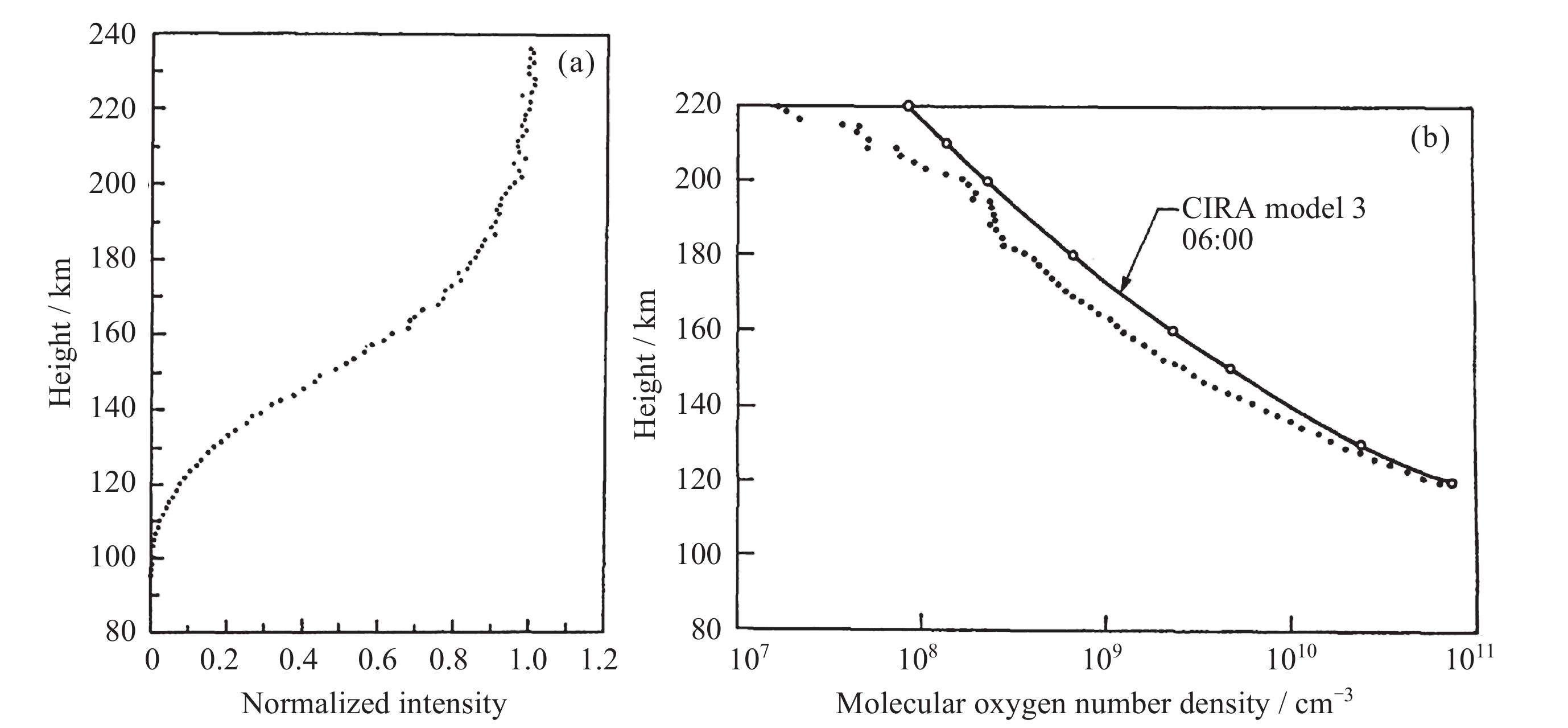
HAYS P B, ROBLE R G. Stellar occultation measurements of molecular oxygen in the lower thermosphere[J]. Planetary and Space Science, 1973, 21(3): 339-348 doi: 10.1016/0032-0633(73)90032-9
|
| [4] |
PITTS M C, THOMASON L W. SAGE III temperature and pressure retrievals: initial results[C]//Proceedings of SPIE 4882, Remote Sensing of Clouds and the Atmosphere VII. Crete: SPIE, 2003: 62-70. DOI: 10.1117/12.463004
|
| [5] |
SUGITA T, YOKOTA T, NAKAJIMA T, et al. Temperature and pressure retrievals from O2 A-band absorption measurements made by ILAS: retrieval algorithm and error analyses[C]//Proceedings of SPIE 4150, Optical Remote Sensing of the Atmosphere and Clouds II. Sendai: SPIE, 2001: 94-105. DOI: 10.1117/12.416949
|
| [6] |
GREER K R, LASKAR F, EASTES R W, et al. The molecular oxygen density structure of the lower thermosphere as seen by GOLD and models[J]. Geophysical Research Letters, 2022, 49(8): e2022GL098800 doi: 10.1029/2022GL098800
|
| [7] |
LI Z, WU X C, TU C, et al. Research on stellar occultation detection with bandpass filtering for oxygen density retrieval[J]. Remote Sensing, 2023, 15(14): 3681 doi: 10.3390/rs15143681
|
| [8] |
LI Z, WU X C, TU C, et al. Oxygen and air density retrieval method for single-band stellar occultation measurement[J]. Remote Sensing, 2024, 16(11): 2006 doi: 10.3390/rs16112006
|
| [9] |
ZHANG S M, WU X C, SUN M C, et al. Using onion-peeling method to inverse ozone density based on the stellar occultation technology in the near space region[J]. Spectroscopy and Spectral Analysis, 2022, 42(1): 203-209 (张斯敏, 吴小成, 孙明晨, 等. 星光掩星剥洋葱法反演臭氧密度[J]. 光谱学与光谱分析, 2022, 42(1): 203-209 doi: 10.3964/j.issn.1000-0593(2022)01-0203-07
ZHANG S M, WU X C, SUN M C, et al. Using onion-peeling method to inverse ozone density based on the stellar occultation technology in the near space region[J]. Spectroscopy and Spectral Analysis, 2022, 42(1): 203-209 doi: 10.3964/j.issn.1000-0593(2022)01-0203-07
|
| [10] |
STAMNES K. RADIATION TRANSFER IN THE ATMOSPHERE | Ultraviolet radiation[M]//NORTH G R, PYLE J, ZHANG F Q. Encyclopedia of Atmospheric Sciences. 2nd ed. London: Academic Press, 2015: 37-44
|
| [11] |
BEVILACQUA R M, SHETTLE E P, HORNSTEIN J S, et al. Polar ozone and aerosol measurement experiment (POAM-II)[C]//Proceedings of SPIE 2266, Optical Spectroscopic Techniques and Instrumentation for Atmospheric and Space Research. San Diego: SPIE, 1994: 374-382
|
| [12] |
LUCKE R L, KORWAN D R, BEVILACQUA R M, et al. The Polar Ozone and Aerosol Measurement (POAM) III instrument and early validation results[J]. Journal of Geophysical Research: Atmospheres, 1999, 104(D15): 18785-18799 doi: 10.1029/1999JD900235
|
| [13] |
LUMPE J D, BEVILACQUA R M, HOPPEL K W, et al. POAM II retrieval algorithm and error analysis[J]. Journal of Geophysical Research: Atmospheres, 1997, 102(D19): 23593-23614 doi: 10.1029/97JD00906
|
| [14] |
LUMPE J D, BEVILACQUA R M, HOPPEL K W, et al. POAM III retrieval algorithm and error analysis[J]. Journal of Geophysical Research: Atmospheres, 2002, 107(D21): 4575
|
| [15] |
NAKAJIMA H, SUZUKI M, MATSUZAKI A, et al. Characteristics and performance of the Improved Limb Atmospheric Spectrometer (ILAS) in orbit[J]. Journal of Geophysical Research: Atmospheres, 2002, 107(D24): 8213
|
| [16] |
KYRÖLÄ E, TAMMINEN J, LEPPELMEIER G W, et al. GOMOS on Envisat: an overview[J]. Advances in Space Research, 2004, 33(7): 1020-1028 doi: 10.1016/S0273-1177(03)00590-8
|
| [17] |
Finnish Meteorological Institute. GOMOS Algorithm Theoretical Basis Document [R]. Helsinki: Finnish Meteorological Institute, 2012
|
| [18] |
BLANOT L, BERTAUX J, HAUCHECORNE A, et al. ALGOM: improvements for GOMOS O2 and H2O Profiles Retrieval [R]. Sophia-Antipolis: ACRI-ST, 2017
|
| [19] |
BAZUREAU A, GOUTAIL F. Validation of ENVISAT products using POAM III O3, NO2, H2O and O2 Profiles[R]. Italy: ESA Special Publication, 2003
|
| [20] |
MCELROY C T, NOWLAN C R, DRUMMOND J R, et al. The ACE-MAESTRO instrument on SCISAT: description, performance, and preliminary results[J]. Applied Optics, 2007, 46(20): 4341-4356 doi: 10.1364/AO.46.004341
|
| [21] |
NOWLAN C R. Atmospheric Temperature and Pressure Measurements from the ACE-MAESTRO Space Instrument[D]. Toronto: University of Toronto, 2006
|
| [22] |
NOWLAN C R, MCELROY C T, DRUMMOND J R. Measurements of the O2 A- and B-bands for determining temperature and pressure profiles from ACE-MAESTRO: forward model and retrieval algorithm[J]. Journal of Quantitative Spectroscopy and Radiative Transfer, 2007, 108(3): 371-388 doi: 10.1016/j.jqsrt.2007.06.006
|
| [23] |
CISEWSKI M, ZAWODNY J, GASBARRE J, et al. The Stratospheric Aerosol and Gas Experiment (SAGE III) on the international space station (ISS) mission[C]//Proceedings of SPIE 9241, Sensors, Systems, and Next-Generation Satellites XVIII. Amsterdam: SPIE, 2014: 924107
|
| [24] |
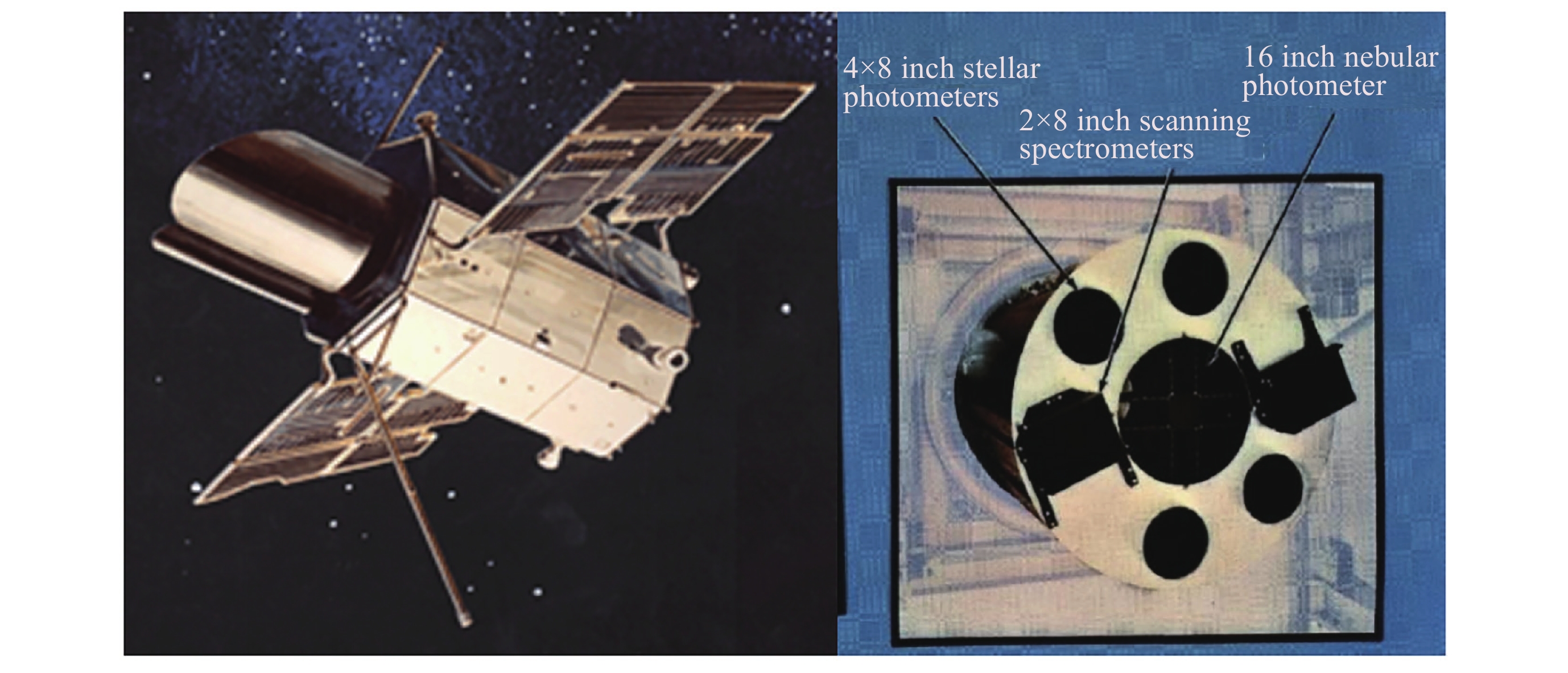
WIESSINGER S, REDDY F. 50th Anniversary of NASA’s OAO 2 Mission [OL]. GREENBELT: NASA’s Goddard Space Flight Center. (2018-12-11) [2025-05-29]. https://svs.gsfc.nasa.gov/12916
|
| [25] |
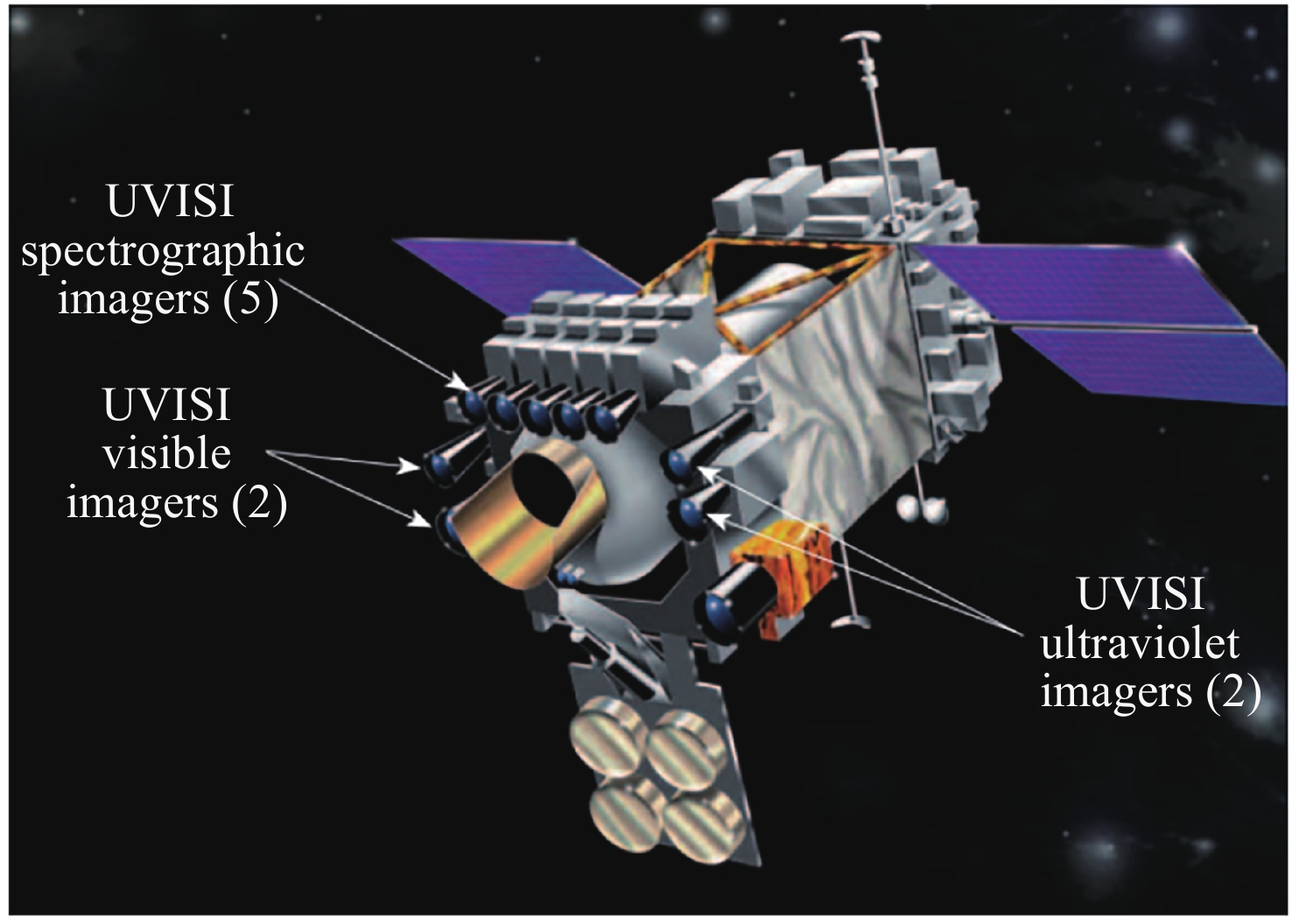
HEFFERNAN K J, HEISS J E, BOLDT J D, et al. The UVISI instrument[J]. Johns Hopkins APL Technical Digest, 1996, 17(2): 198-214
|
| [26] |
VERVACK JR R J, YEE J H, SWARTZ W H, et al. The MSX/UVISI stellar occultation experiments: proof-of-concept demonstration of a new approach to remote sensing of earth’s atmosphere[J]. Johns Hopkins APL Technical Digest, 2014, 32(5): 803-821
|
| [27] |
EASTES R W, MCCLINTOCK W E, BURNS A G, et al. The Global-scale Observations of the Limb and Disk (GOLD) mission[J]. Space Science Reviews, 2017, 212(1/2): 383-408
|
| [28] |
LUMPE J D, MCCLINTOCK W E, EVANS J S, et al. A new data set of thermospheric molecular oxygen from the Global-scale Observations of the Limb and Disk (GOLD) mission[J]. Journal of Geophysical Research: Space Physics, 2020, 125(4): e2020JA027812 doi: 10.1029/2020JA027812
|
Figures(24) / Tables(1)
Journal Introduction
ISSN 2097-7689 CN 11-1783/V
Copyright © Editorial Office of Chinese Journal of Space Science. 京ICP备08100722号
Supported by: Beijing Renhe Information Technology Co., Ltd.



 DownLoad: